Malpelo Island · Colombia · Americas
Max. depth · 35 mLos Tres Mosqueteros, Malpelo: Shark Action Around Seamounts
Descend onto the current-swept pinnacles of Los Tres Mosqueteros for concentrated pelagic encounters at recreational depths.
What makes this site special
- Concentrated pelagic action around three rocky pinnacles.
- Regular encounters with hammerhead sharks and silky sharks.
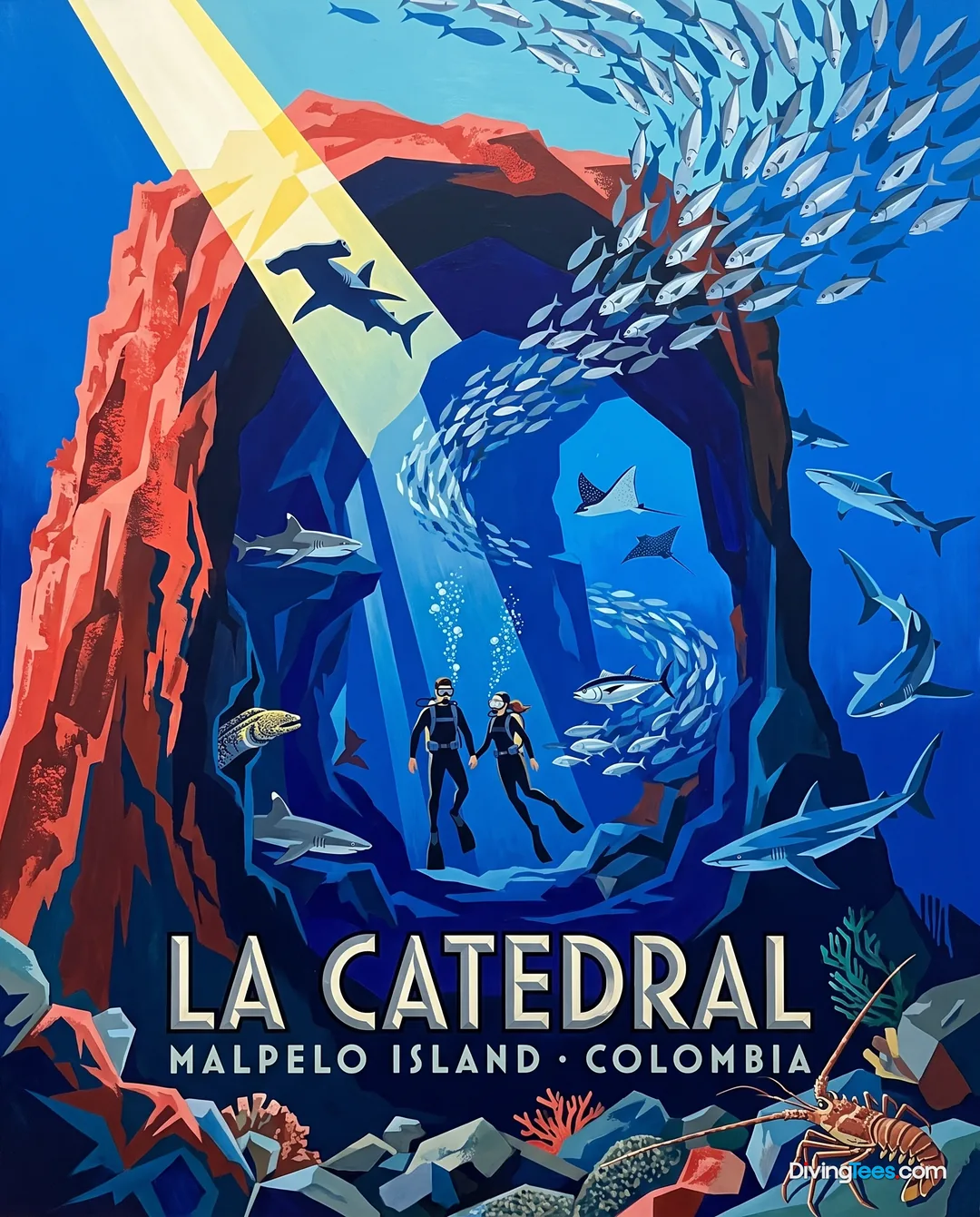
- Swim-through feature known as the Cathedral on the middle islet.
- Strong currents attracting large schools of bigeye jacks.
- Sightings of Galápagos sharks and dogtooth tuna.
- Accessible hammerhead dives within recreational depths.
Los Tres Mosqueteros about the site
Los Tres Mosqueteros, also known as the Three Musketeers, is a distinctive trio of rocky pinnacles located on the northern side of Malpelo Island. As an open-ocean pinnacle dive, the primary interest lies in the vertical relief of these seamounts and the expansive blue water surrounding them. You'll drop onto these formations, navigating their steep rock faces and seeking out the mid-water activity that defines this site. The topography includes a notable swim-through on the middle islet, often referred to as the Cathedral, which adds another dimension to the dive profile as you explore the site's structure.
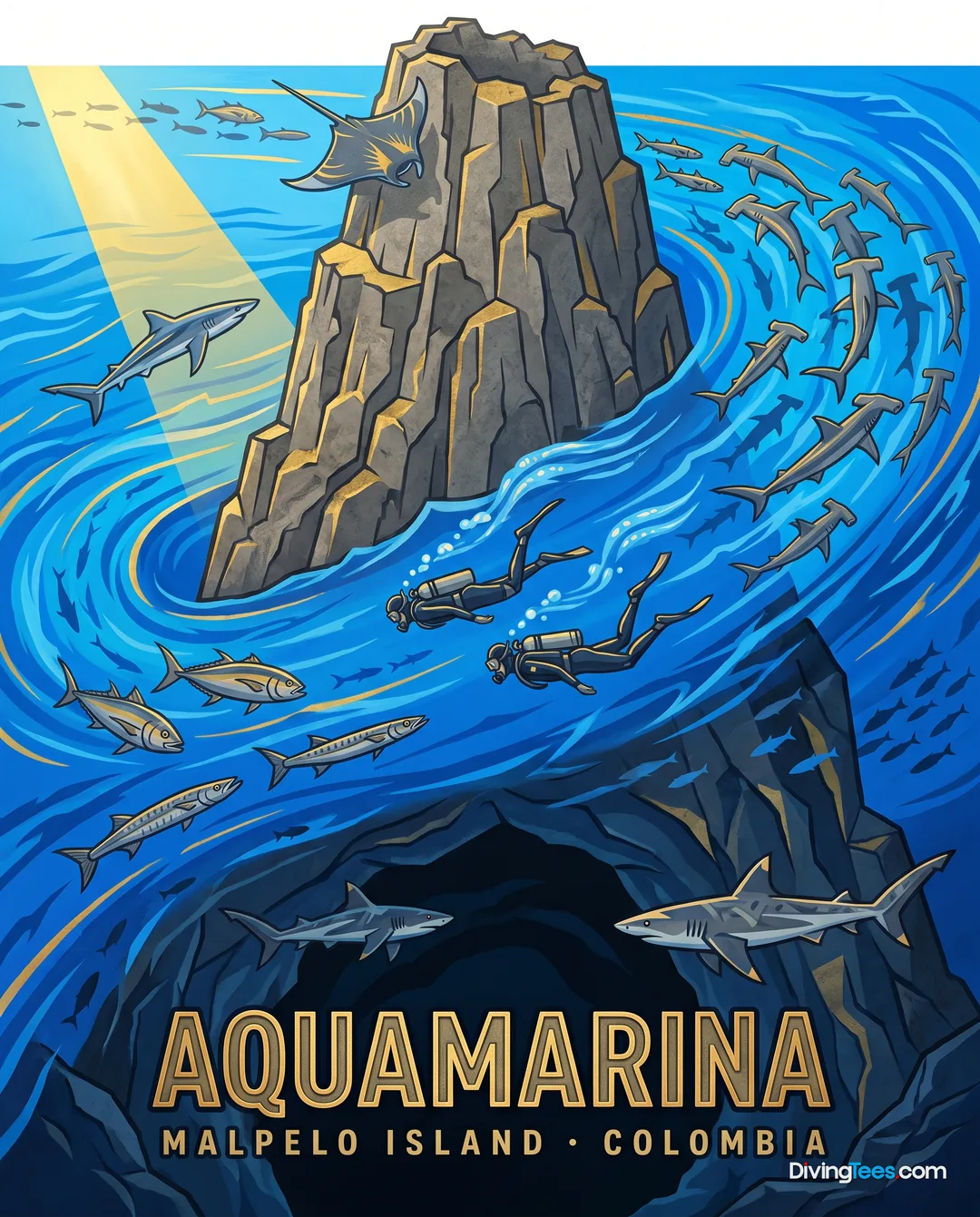
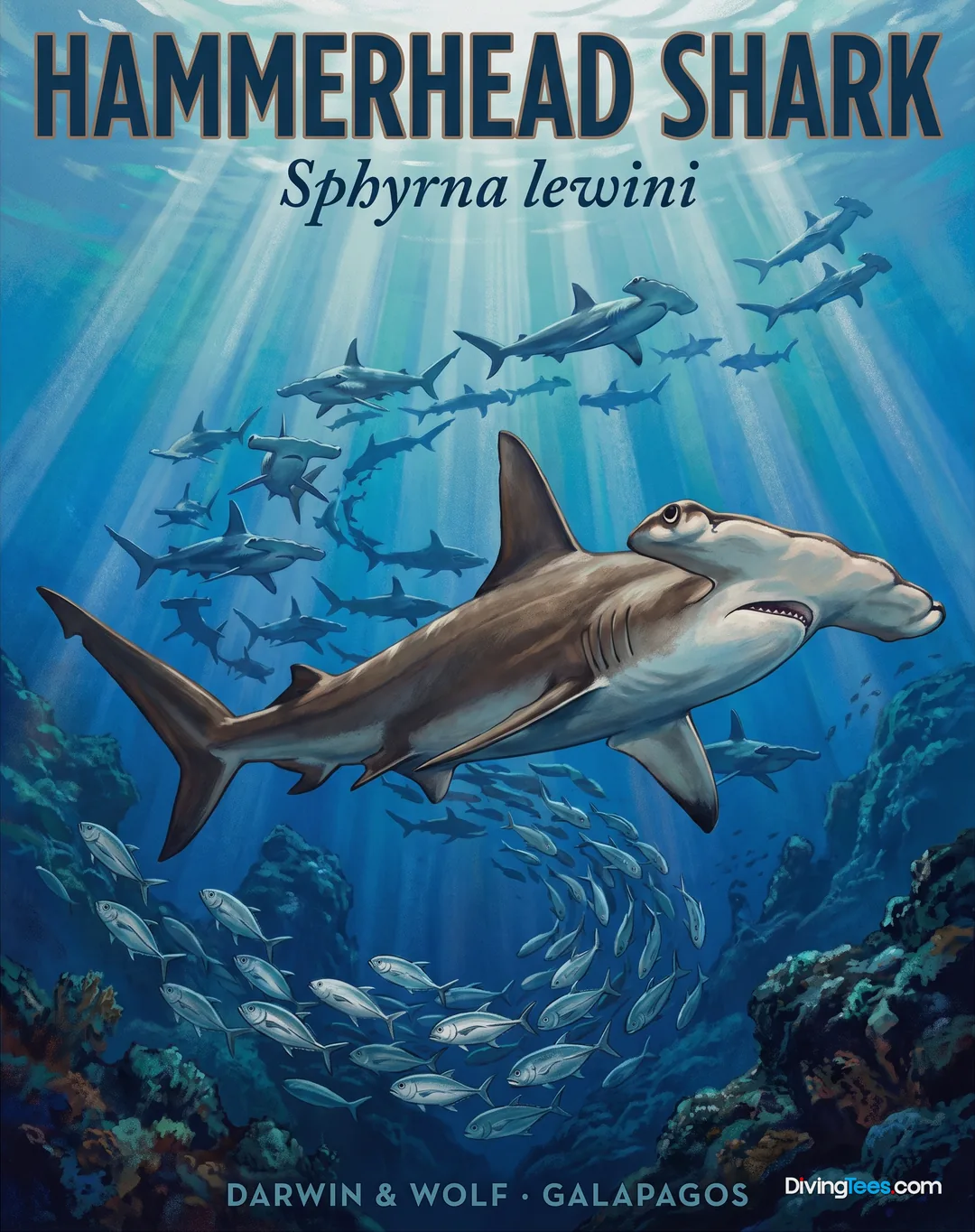
The dive here is characterized by significant pelagic action, with numerous large marine species drawn to the current-swept environment around the closely spaced pinnacles. This site is particularly renowned for its shark encounters; you can expect to see hammerhead sharks (Sphyrna lewini), silky sharks (Carcharhinus falciformis), and Galápagos sharks (Carcharhinus galapagensis) moving through the blue. These predatory fish often congregate in the eddies and current lines, making for frequent and often extended observations as they cruise the nutrient-rich waters.
Beyond the prominent shark populations, the site also hosts other significant pelagic life. Eagle rays (Aetobatus narinari) are regularly sighted, gliding gracefully near the pinnacles, while large schools of bigeye jacks (Caranx sexfasciatus) create dynamic silver walls in the current. You might also encounter dogtooth tuna (Gymnosarda unicolor) patrolling the deeper sections and whitetip reef sharks (Triaenodon obesus) often resting or moving closer to the rocky structures. The sheer volume of these large species moving through the water column is a defining feature of Los Tres Mosqueteros.
Current is a consistent factor at Los Tres Mosqueteros, generally described as strong. These powerful Pacific currents and localized eddies around the pinnacles are what attract the abundance of pelagic life. While intense current can be challenging, it also brings the nutrients that fuel the food chain here, leading to highly productive encounters. The optimal conditions for observing sharks often occur when the current is manageable enough to allow for sustained interaction, highlighting the balance between current flow and observation opportunities.
Diving this site means preparing for a dynamic experience where conditions dictate your approach. Liveaboard operations typically manage descents and positioning around the pinnacles, using the current to your advantage to observe the marine life. Your buoyancy control and finning technique will be tested as you hold position or move with the flow. The interplay between the strong currents and the fixed pinnacles creates an environment where large predators thrive, making it a prime location for those seeking intense blue-water action around Malpelo.
Diving Los Tres Mosqueteros: the marine life you’ll meet
Diving conditions
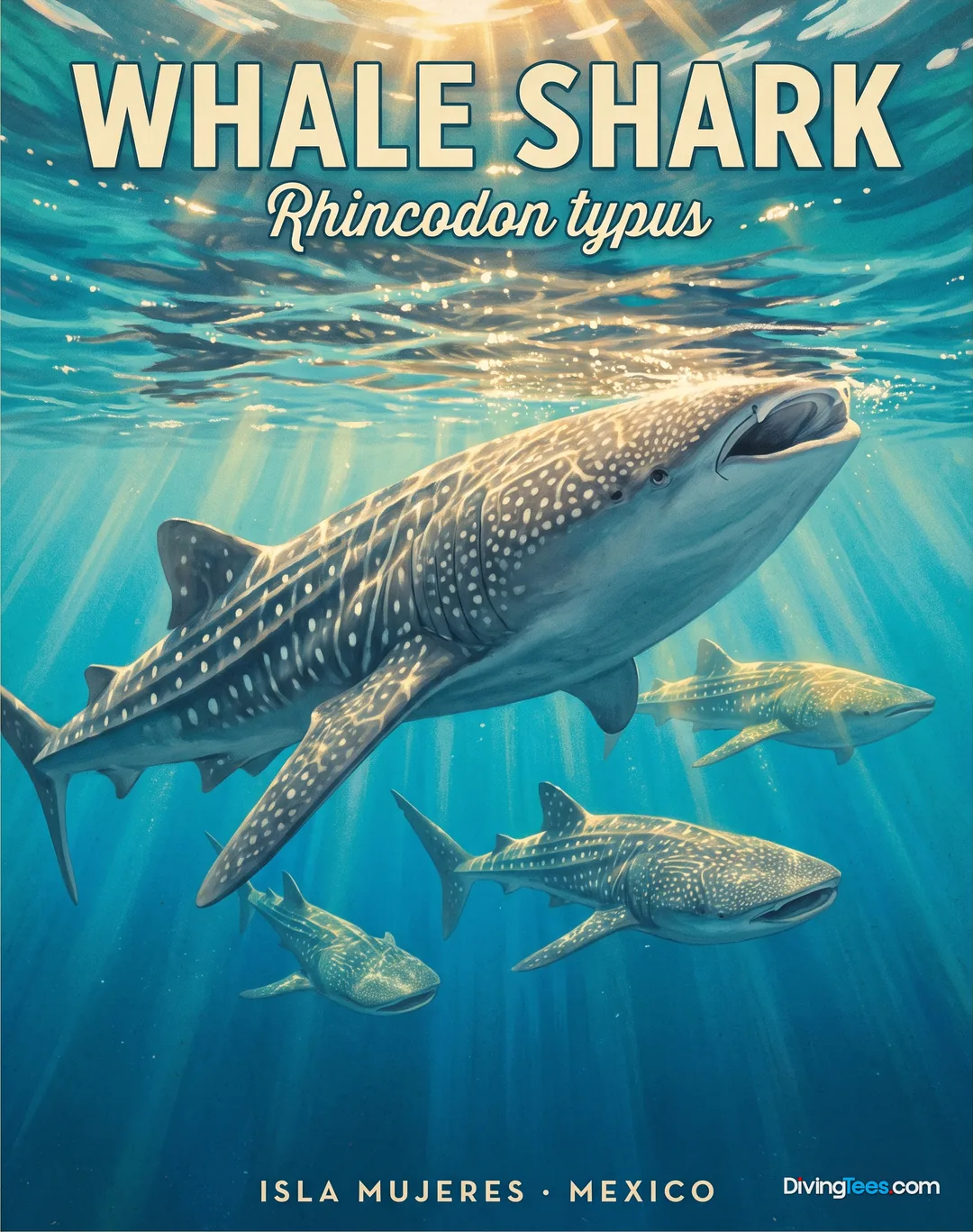
Diving Los Tres Mosqueteros requires an Advanced certification and proven experience in strong currents. The dive depth ranges from a minimum of 22 meters to a maximum of 35 meters, making it accessible within recreational limits. Visibility generally holds between 15 and 25 meters, though it can fluctuate with oceanic conditions. The best time to dive this site is typically between May and November, with whale shark (Rhincodon typus) sightings more common from June to November, peaking around August and September.