
Pan Aqua Diving, Inc.
★ 4.9/5 (114 reviews)
less than 1 km away as the crow flies
United States · Americas
Wreck structure, harbour-influenced visibility and Lake Hydra’s submerged attractions make New York a practical cold-water dive add-on to a city break.
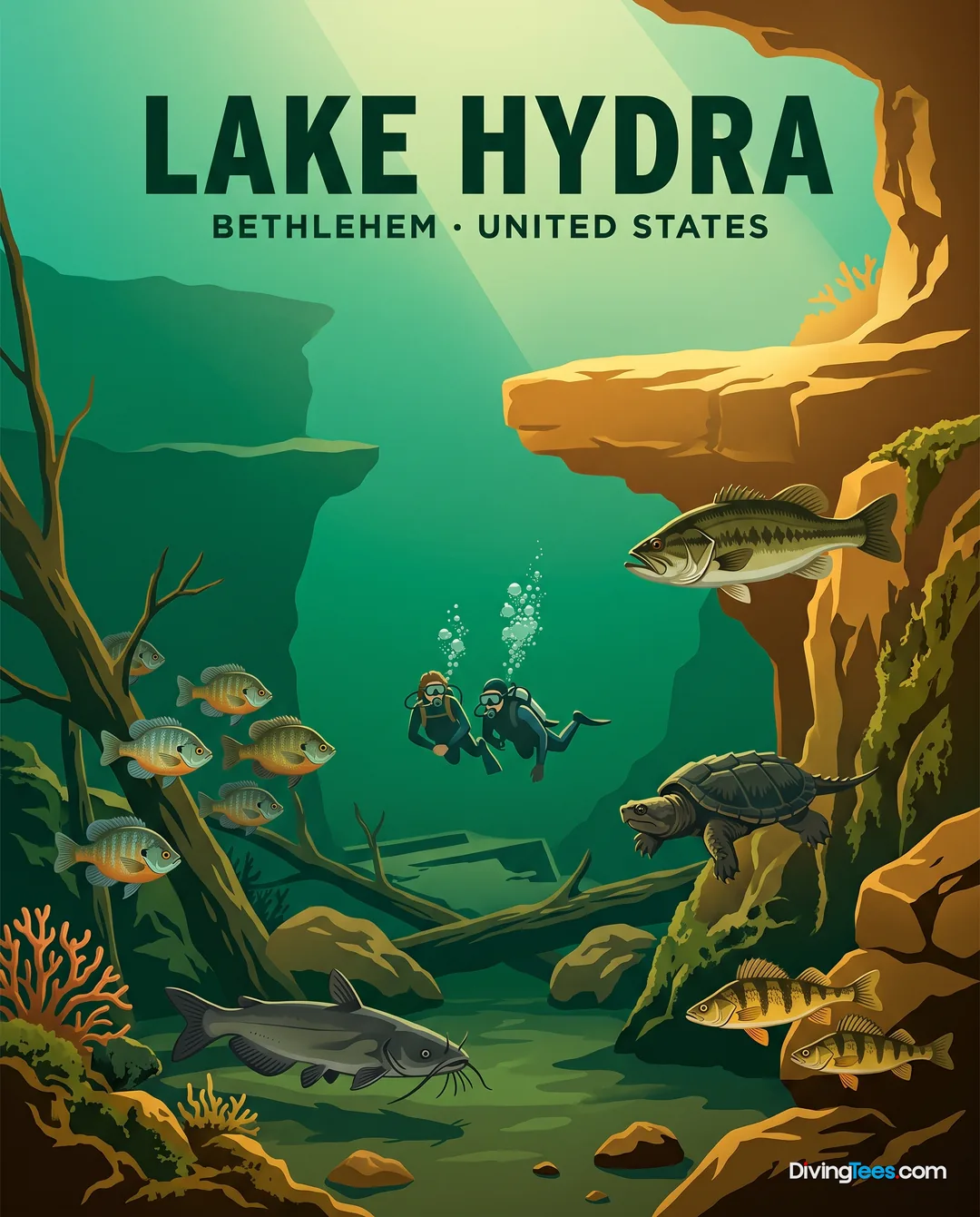
Wreck structure is the reason to put New York City on a diving itinerary. This is not a coral-reef holiday, but an urban base for boat trips, harbour-influenced water and cold-water skills. Lake Hydra, in Bethlehem, Pennsylvania, adds a freshwater training option within the wider regional picture, with submerged attractions and a setting suited to certification work. For travelling divers, the city works best as a land-based stop where a few dives sit alongside museums, waterfront walks and neighbourhood exploring.
The underwater character is structural rather than scenic in the tropical sense: wrecks, artificial reefs and training sites replace coral gardens. Most meaningful wreck diving is reached by day boat, while shore or training dives depend on the site and operator. Currents are variable, and shipping lanes, sediment and harbour influence can all affect the day’s conditions. Visibility is therefore not something to take for granted, particularly around busy maritime areas. Deeper wrecks call for more than basic open-water experience, and a wreck qualification is useful for practising sound line, entry and exit procedures around structure. Advanced Open Water or equivalent experience is appropriate where depth and conditions demand it. Nitrox can be worthwhile over repetitive boat days, but it does not remove the need to manage cold, changing visibility and a potentially demanding surface operation.
The wildlife is occasional rather than the main reason to come. Striped bass may appear during the warmer months, as can summer flounder, while lobster encounters are seasonal and depend on both site and regulations. These are better treated as welcome additions to a wreck or structure dive than as guaranteed sightings. The underwater interest lies in combining the outline of a wreck, artificial structure or submerged training attraction with whatever fish life is using it on the day. Divers looking for coral colour, dense reef activity or a dedicated critter itinerary will find the emphasis misplaced. Those who enjoy temperate-water observation can keep a slower pace around structure and give the local fish life time to show itself.
The measured diving window runs from May to October, which matches the practical advice to plan for late spring, summer or early autumn. Warmer months make cold-water exposure more manageable and generally offer more workable conditions for boat and shore diving. Winter is a poor fit for most recreational visitors because colder water compounds the area’s variable visibility and maritime operating conditions. A thick wetsuit or drysuit is the sensible baseline, with the final choice depending on the site and season. The main season is also the busier one, while outside it the quieter sites come with less forgiving conditions rather than an easier bargain.
This coast is exposed to sargassum strandings, whose intensity varies greatly from year to year.
New York suits experienced divers who are comfortable with cold water, changing visibility and the discipline of wreck diving. Advanced Open Water, or equivalent experience, is useful for deeper wrecks; a Wreck Specialty adds relevant procedures rather than simply another card. BSAC, PADI and SSI divers should look at the actual experience required for the planned boat trip, not just the minimum certification level. Lake Hydra is suitable for all certification levels and can support Open Water training or skills practice, while the wider wreck scene is more demanding.
From London, departures can be arranged from Heathrow or Gatwick, and Manchester is another starting point for reaching New York’s major airports. The transatlantic journey and onward ground transfer typically make the overall trip an eight-to-twelve-hour undertaking. There is no single central dive harbour to which every visitor should head: the relevant marina, coastal departure point or training site depends on the planned dive and the operator. Boat access is the norm for wrecks, while some shore and training dives begin directly from the coast. Once in the city, divers normally use a taxi, rideshare or local transport to reach the shop, marina or coastal meeting point. That final road leg needs planning, because the urban network is dense but the diving departures are dispersed.
Treat New York as a wreck-diving trip with sightseeing attached, not as a reef holiday that happens to have a city nearby. The difference matters: bring or hire cold-water protection, and do not assume ordinary temperate-water kit will be enough for the planned season. Leave slack in the diving schedule, since a poor sea day can disrupt a boat trip more decisively here than at a sheltered tropical destination. If diving is combined with a city break, place the dive days early and keep a non-dive day available afterwards; that preserves the main sightseeing plans if weather cancels a boat. Choose the actual wreck or training site before judging the journey, because access is spread between marinas and coastal points. Nitrox is particularly useful on repetitive cold-water structure dives. Avoid booking an itinerary that depends entirely on settled warm-weather conditions, and avoid expecting easy shore access or tropical visibility across the whole area.
Three to five days is a sensible shape for the visit: a few dive days, some allowance for a weather interruption and at least one day on land. City accommodation can be paired with road transfers to the relevant marina or coastal site. Non-divers have plenty to do without travelling inland, from Hudson and East River waterfront walks to museums, ferries and neighbourhoods. Before flying home, keep the final day land-based rather than filling it with long transfers or further pressure changes.
Hello, I'm Marina, DivingDeal.com's AI assistant. I guide you through destinations, areas and countries.

Thinking about the whole trip and the flights? Talk it over with Edith →
Marina is an AI. Some links are affiliate links: DivingDeal may earn a commission, at no extra cost to you. Bookings are made with the partner.

★★★★
★ 8.9/10 (2,200 reviews)
4.3 km away as the crow flies

★★★★
★ 8.9/10 (956 reviews)
4.2 km away as the crow flies

★★★
★ 8.6/10 (17,285 reviews)
less than 1 km away as the crow flies

★★★
★ 8.6/10 (1,377 reviews)
13 km away as the crow flies
Your last day stays dry: no diving in the 18-24 hours before a flight the perfect window to see the destination from another angle.
 Culture
⏱ 3 h · ★ 5.0 (207 reviews)
from €47
see on Viator ↗
 Culture
⏱ 3 h · ★ 5.0 (106 reviews)
from €101
see on Viator ↗
 City
City⏱ 1 h · ★ 5.0 (51 reviews)
from €66
see on Viator ↗
 Nature
⏱ 3 h · ★ 5.0 (49 reviews)
from €110
see on Viator ↗
Ratings and reviews collected by Viator and Tripadvisor.