
Narcosis, Inc.
Google 4.5/5 (167 reviews)
United States · Americas
M-60 tanks, limestone boulders, lobster and sponge-covered structures make Clearwater a shallow Gulf coast base rather than a tropical reef resort.
For subtitles in English: start the video firstthen click the gearat the top right of the video, select “Subtitles/CC”, then “Auto-translate” and choose “English”.
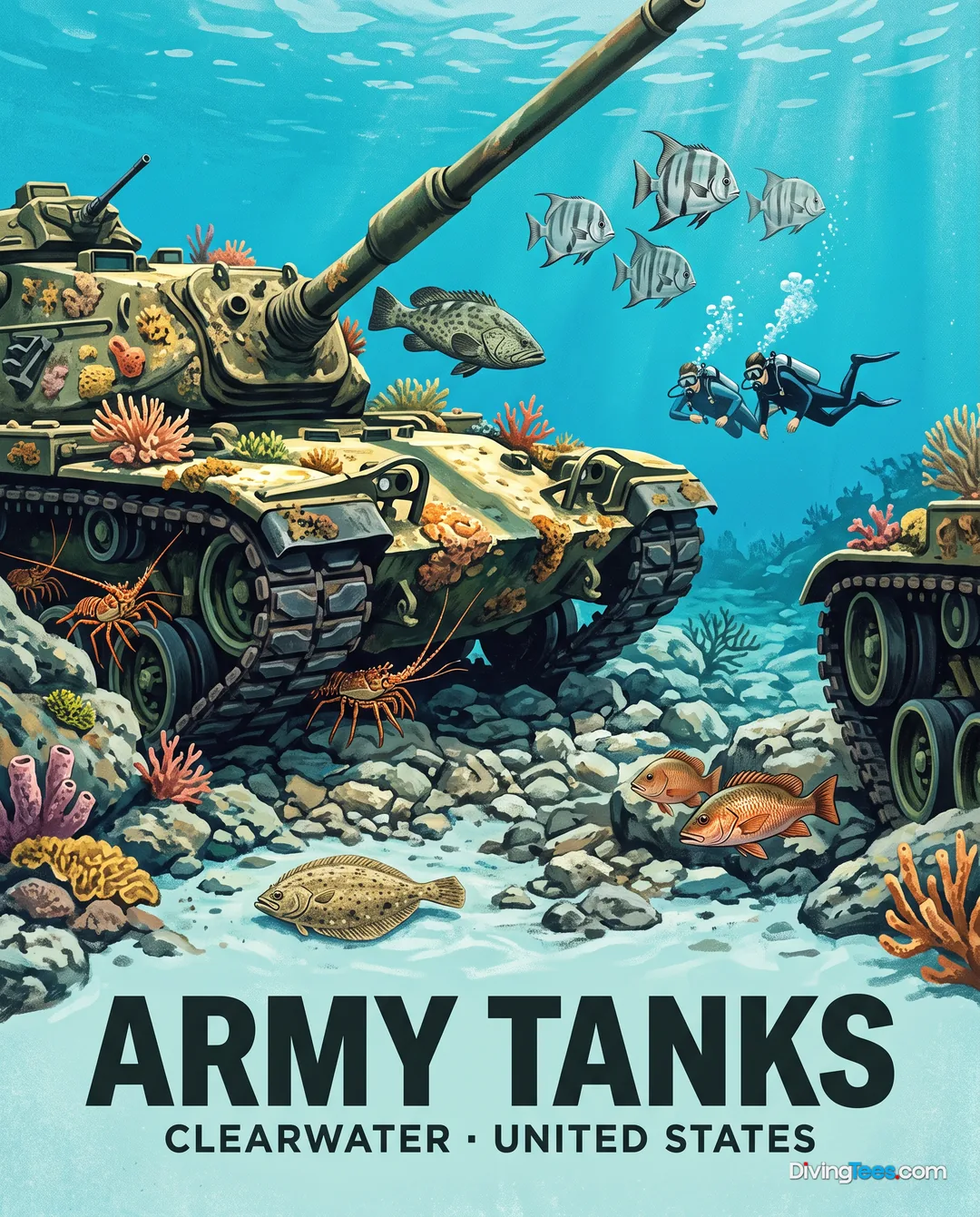
At Army Tanks, two Vietnam-era M-60 tanks rest among 1,060 tons of limestone boulders, with corals and sponges spreading across the structures. That image tells the story of Clearwater better than any brochure: this is a shallow, boat-based Florida Gulf Coast destination built around artificial reefs, local wrecks and convenient coastal access. It suits divers who want a straightforward land-based break, several possible sites and a town where non-divers have plenty to do, rather than a tropical coral-reef holiday.
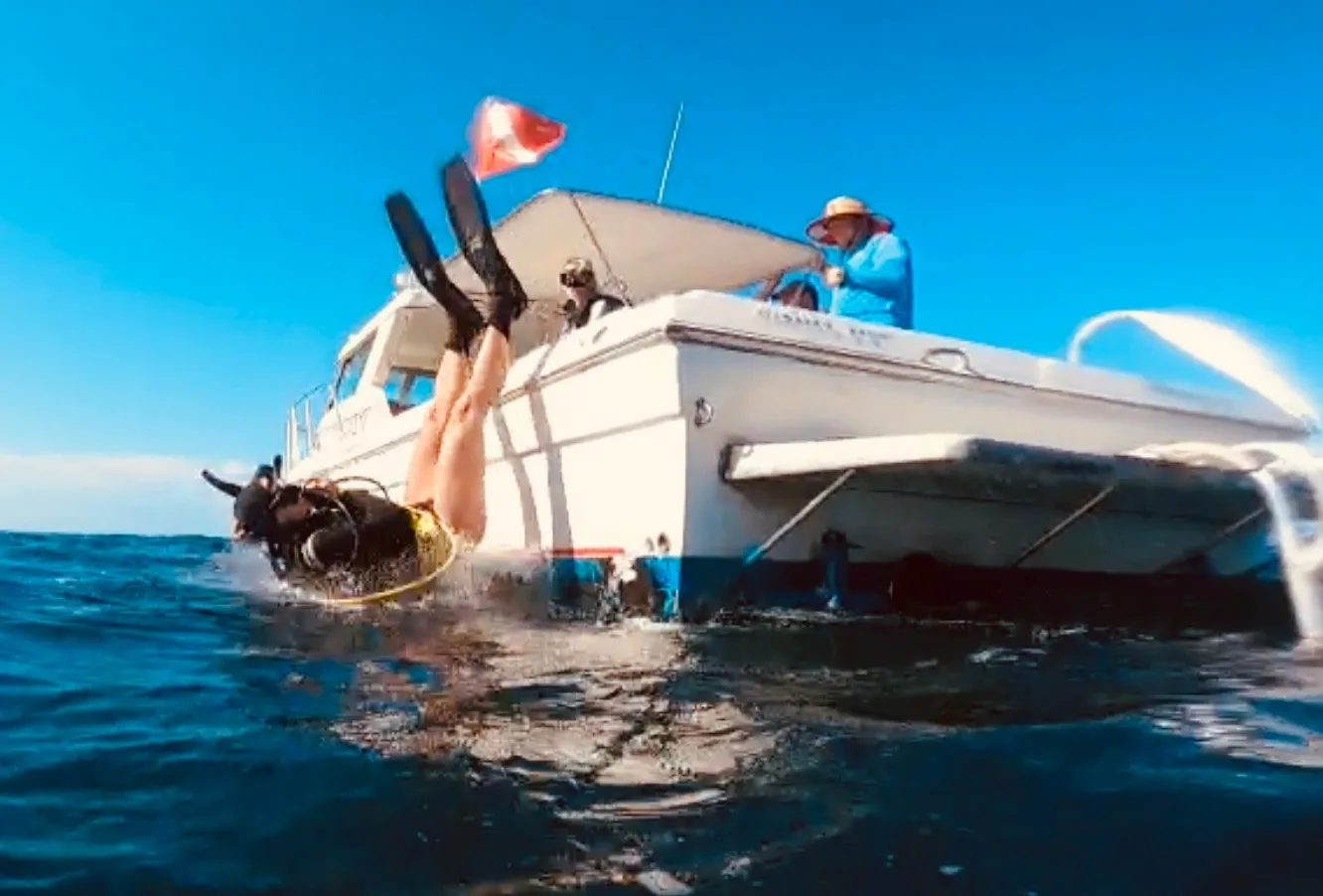
Clearwater's diving is mainly conducted from short boat trips along the coast, with artificial reefs, seabed structures and local wrecks providing the underwater interest. Army Tanks is the clearest example: the tanks and surrounding limestone sit between ten and fourteen metres, allowing a diver to work slowly around the metal shapes, inspect the boulders and look into the growth of corals and sponges. Currents are variable rather than a constant feature, so the sea state and the selected site matter more than a standard current plan. Visibility has no dependable fixed figure in this material, and conditions can change with the weather and location. The sensible approach is to keep the plan flexible, using a site with useful structure rather than insisting on one named objective when the sea is only moderate.
The most distinctive encounter recorded for Clearwater is with lobsters around Army Tanks. They occupy a man-made landscape of M-60 hulls and limestone boulders, while corals and sponges cover parts of the structures and give the site more texture than bare metal alone. The shallow depth makes it possible to spend time examining the tanks, gaps in the rock and the growth on the reef rather than rushing through a deep profile. There is no separate calendar of passing species to build a trip around, so the seasonal advantage here is mainly about seeing the site clearly. September is particularly useful for the Army Tanks area because visibility is typically at its best then.
For diving, April to September is the practical window: the sea is generally calmer during these months, which matters when the programme depends on short coastal boat departures and shallow sites. September is the strongest part of that period for Army Tanks, when visibility is typically better and the tanks, boulders, lobsters, corals and sponges are easier to examine. Rainfall is lowest from November to May, so a land-based holiday may still work outside the main diving window. The choice is therefore straightforward: favour April to September when underwater conditions are the priority, and keep the itinerary flexible rather than treating any month as guaranteed.
This coast is exposed to sargassum strandings, whose intensity varies greatly from year to year. To find out more, see the “Sargassum” panel on this page.
Clearwater can suit beginners when the selected site matches their experience. Army Tanks, at ten to fourteen metres, is within Open Water limits and offers a manageable depth for divers qualified through PADI, SSI or BSAC equivalents. More experienced divers may prefer to add local wrecks, but a wreck qualification is useful only when the plan involves appropriate wreck diving rather than simply visiting an artificial reef. Nitrox is worthwhile for repetitive boat diving and can make a multi-dive schedule less tiring, provided the diver is trained and the operator supports it.
From London Heathrow, London Gatwick or Manchester, the journey normally involves reaching Florida through an American hub, followed by the final road transfer to Clearwater. Total travel time is roughly eleven to fifteen hours, depending on the connections. Tampa is the practical air gateway described for this destination; there is no required ferry or structural sea transfer before the diving begins. Once in the area, divers generally reach the coastal departure point by hire car, taxi or a local shuttle, depending on where they are staying. A hotel near the coast or around Tampa Bay reduces the risk of early-morning traffic turning a simple boat departure into a rushed start. The destination works as a road-and-boat arrangement, not as an island itinerary.
Treat the first diving day as a calibration day rather than reserving it for the supposed highlight. Local sea conditions can change the usefulness of a site, and a flexible skipper may need to move the plan; Clearwater rewards that adjustment more than a rigid booking built around one name. Ask whether the intended site has substantial artificial structure, such as tanks, boulders or wreck material, rather than expecting every outing to resemble a natural tropical reef. Bring a mask that is known to fit and keep personal weight notes, since familiar equipment is helpful when the first dive is being used to settle buoyancy and trim. Nitrox makes sense if several boat dives are planned. Allow extra days around the diving, because a three- to five-day stay leaves room to postpone an outing when the sea is unhelpful. Do not book Clearwater expecting a liveaboard experience: the practical rhythm is a shore-based holiday with day boats.
A sensible stay runs for three to five days, with diving arranged as day trips from the coast rather than as a liveaboard. Keeping the first day adaptable leaves room to adjust weighting, assess the sea and choose between artificial structures, wrecks or a shallower option. Clearwater also works well for mixed groups: while one person is on the boat, others can use the beach, waterfront and wider Tampa Bay area. A quiet land day before flying home is preferable to squeezing in a final dive.
Hello, I'm Marina, DivingDeal.com's AI assistant. I guide you through destinations, areas and countries.
Thinking about the whole trip and the flights? Talk it over with Edith →
Marina is an AI. Some links are affiliate links: DivingDeal may earn a commission, at no extra cost to you. Bookings are made with the partner.
Your last day stays dry: no diving in the 18-24 hours before a flight, the perfect window to see the destination from another angle.

⏱ 2 h · ★ 4.9 (368 reviews)
from £38$51€45
see on Viator ↗
 Nature
⏱ 1 h · ★ 4.9 (81 reviews)
from £75$101€90
see on Viator ↗
 Nature
⏱ 2 h · ★ 4.8 (307 reviews)
from £46$61€54
see on Viator ↗
 City
City⏱ 1 h · ★ 4.7 (104 reviews)
from £30$41€36
see on Viator ↗
Ratings and reviews collected by Viator and Tripadvisor.
April to September is the practical diving window because conditions are generally calmer for shallow boat trips. September is particularly useful around Army Tanks, when visibility is typically better. Keep the itinerary flexible, since weather and location can change conditions. Outside this period, Clearwater may still suit a land-based holiday.
Clearwater can suit beginners when the selected site matches their experience. Army Tanks lies within Open Water limits and offers a manageable shallow profile. More experienced divers can add local wrecks, where suitable wreck training is useful. Nitrox may help with repetitive boat diving if you are trained and the operator supports it.
Clearwater features artificial reefs, local wrecks and seabed structures rather than a tropical reef setting. At Army Tanks, you can examine two M-60 tanks among limestone boulders, with corals and sponges covering parts of the structures. Lobsters live around the tanks, rocks and other artificial reef features.
Plan a shore-based holiday with day-boat departures from the coast, using Tampa as the practical air gateway and arranging a hire car, taxi or shuttle. Keep the first diving day adaptable, allow time for changing sea conditions, and leave a quiet land day before flying home. Clearwater also suits mixed groups.