
Fathom Five Divers
Google 4.9/5 (1,372 reviews)
United States · Americas
Volcanic lava tubes, underwater arches, reef fish and sleeping turtles shape Kauai’s boat diving, with Sheraton Caverns adding a genuine overhead-environment experience.
For subtitles in English: start the video firstthen click the gearat the top right of the video, select “Subtitles/CC”, then “Auto-translate” and choose “English”.
Kauai is a shore-based Hawaiian island destination where diving fits around the wider shape of the island. Boat trips lead to volcanic walls, arches and lava formations, while Sheraton Caverns offers something more enclosed: underwater passages where reef fish gather and turtles sleep. It suits divers who want to combine a handful of carefully chosen dives with coastal sightseeing, walking and other land-based excursions, rather than spend an entire holiday pursuing a long sequence of sites.
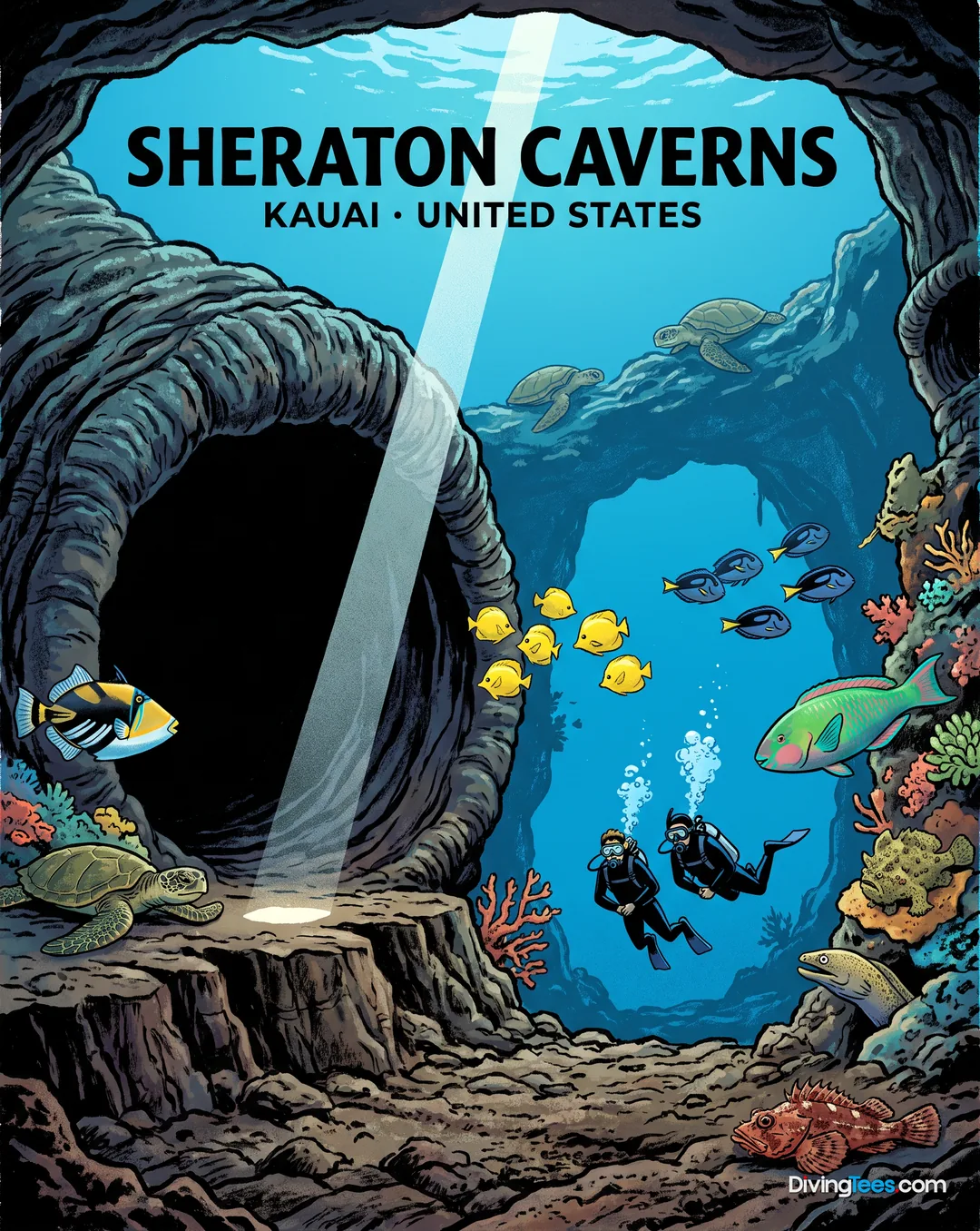
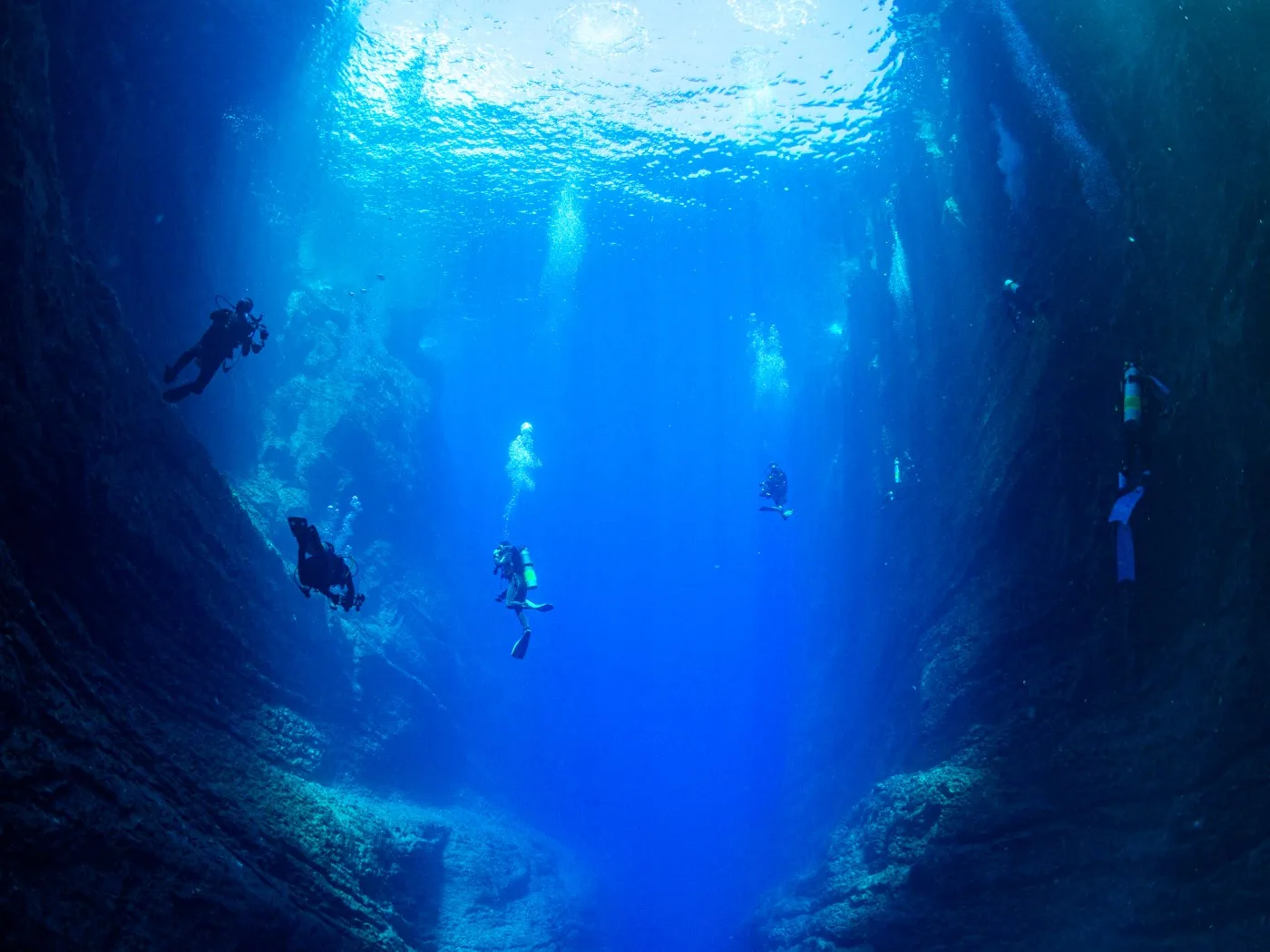
The character of Kauai’s diving comes from volcanic topography rather than a single reef system. Lava formations, arches and drop-offs give the dives their structure, with boat access allowing the day’s programme to follow local sea conditions. Currents are variable, so the same coastline should not be treated as uniformly diveable. Sheraton Caverns is the clearest expression of the island’s geology: a network of underwater lava-tube passages with generally good visibility, although movement and surge from divers can affect conditions inside. The passages are overhead environments, calling for controlled buoyancy, calm navigation and sensible limits on penetration. Currents are not typically significant within the caverns themselves, but surface conditions on the exposed southern coast still matter when planning the outing.
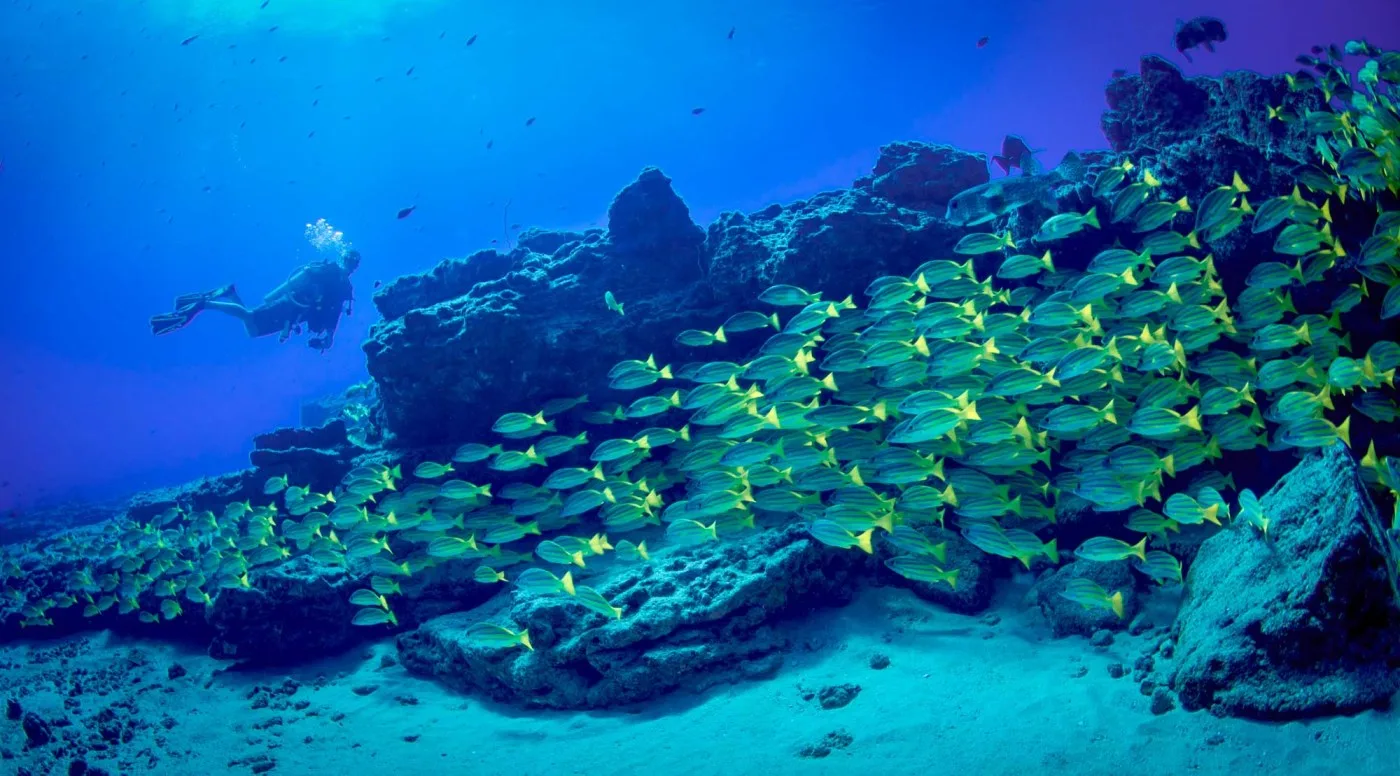
Sheraton Caverns provides the most definite wildlife picture available for Kauai’s diving. Reef fish occupy the volcanic passages, while sleeping turtles can be found resting inside the caverns. A daytime dive shows the formations and fish in their normal setting; at night, the same environment changes noticeably as the character of the passages and the behaviour of the animals shift. The site is diveable throughout the year, so these encounters are not tied to a short migration window. Divers should approach the turtles without disturbing their resting places and allow the lava formations, rather than a long species checklist, to define the experience.
June through December is the clearest seasonal window for Kauai, when rainfall is at its lowest. That matters on an island where boat diving and exposed coastal sites depend on the day’s conditions, even though the diving itself can take place throughout the year. The drier period makes it easier to combine several dive days with walks and coastal excursions, and gives a more reliable framework for planning a mixed holiday. It is still sensible to leave room in the itinerary for the weather and sea state to determine which outing runs on a particular day.
This coast is exposed to sargassum strandings, whose intensity varies greatly from year to year.
Kauai caters for all levels, provided the diver matches the site to current experience. Ordinary boat dives can suit qualified beginners when conditions are appropriate, while Sheraton Caverns demands a more careful approach because it is an overhead environment. Divers should be comfortable with buoyancy, positioning and navigation before entering confined lava passages. PADI, SSI and BSAC qualifications are all relevant starting points, but certification alone does not replace suitable cavern experience and a conservative briefing.
From the UK, the journey begins with a flight from London Heathrow, London Gatwick or Manchester, followed in practice by a connection through a United States hub before reaching Kauai. There is no compulsory sea crossing to reach the island itself. The travel day can be long, and connections need allowing for rather than treated as a simple direct journey. Once on Kauai, the practical movement is by road to the relevant port or dive centre, so a hire car, taxi or arranged transfer becomes part of the plan. Accommodation is best considered alongside the departure point for the boat, since the island’s shore-based diving depends on reaching the port at the agreed time rather than walking straight from a resort to the water.
Do not assume that every part of Kauai’s coast follows the same rules or offers the same conditions. Before entering the water, establish whether the day’s site lies within a marine sanctuary or another protected area, and ask for the rules that apply there rather than relying on habits from elsewhere. This is particularly important for collection: shells, natural debris and underwater objects should stay where they are, as collection may be regulated or prohibited in protected waters. Treat the day’s boat plan as weather-led, especially on exposed coastlines, and keep enough flexibility to accept a different site when conditions change. At Sheraton Caverns, regard the lava passages as an overhead environment, not simply an enclosed reef swim; a calm, controlled approach matters more than trying to push deeper into a passage. The worthwhile preparation is therefore local: understand the site boundaries, the sanctuary rules and the limits of the planned route before descending.
Kauai works best as a mixed island holiday. Arrange boat dives around the weather, keeping the drier June-to-December period in mind, then use non-dive days for coastal walks, beaches, cliffs and longer land excursions. Sheraton Caverns can provide a contrasting daytime or night-time experience, while the rest of the stay should retain enough flexibility for the sea state to shape the programme. Non-divers have plenty to do, so the trip need not revolve around diving.
Hello, I'm Marina, DivingDeal.com's AI assistant. I guide you through destinations, areas and countries.
Thinking about the whole trip and the flights? Talk it over with Edith →
Marina is an AI. Some links are affiliate links: DivingDeal may earn a commission, at no extra cost to you. Bookings are made with the partner.
Your last day stays dry: no diving in the 18-24 hours before a flight, the perfect window to see the destination from another angle.
 Culture
⏱ 7 h · ★ 5.0 (46 reviews)
from £240$320€286
see on Viator ↗
 Culture
⏱ 7 h · ★ 5.0 (45 reviews)
from £722$966€863
see on Viator ↗
 Adventure
⏱ 1 h · ★ 5.0 (5 reviews)
from £228$305€273
see on Viator ↗
 Nature
⏱ 3 h · ★ 4.9 (1125 reviews)
from £110$147€132
see on Viator ↗
Ratings and reviews collected by Viator and Tripadvisor.
Kauai can be dived throughout the year, but June through December offers drier conditions and lower rainfall. That seasonal window can make boat diving and exposed coastal sites easier to plan, while also leaving room for walks and coastal excursions. Weather and sea conditions should still guide each day’s outing.
Kauai offers boat dives that can suit qualified beginners when conditions are appropriate. Sheraton Caverns requires more preparation because its lava passages are overhead environments. You should be comfortable with buoyancy, positioning and navigation before entering confined spaces. Relevant PADI, SSI or BSAC certification does not replace suitable cavern experience or a careful briefing.
Kauai’s volcanic underwater scenery includes lava formations, arches, walls and exposed drop-offs, with reef fish moving through darker structures. At Sheraton Caverns, sleeping turtles may rest inside the passages. Day and night dives show the environment differently, while the changing character of the caverns complements the island’s distinctive geology.
Plan Kauai as a mixed island holiday, arranging boat dives around weather and sea state rather than fixing every outing. Choose accommodation with the boat departure point in mind, and allow for road travel by hire car, taxi or arranged transfer. Keep non-dive days for beaches, cliffs, walks and longer excursions.