Atlantic
Cape Verde: an Atlantic island diving calendar
Boa Vista, Sal and Sao Vicente create a staggered Atlantic season, with eagle rays, reef sharks and turtles shaping the most rewarding island combinations
What makes this country unique
- Boa Vista and Sal from May through October
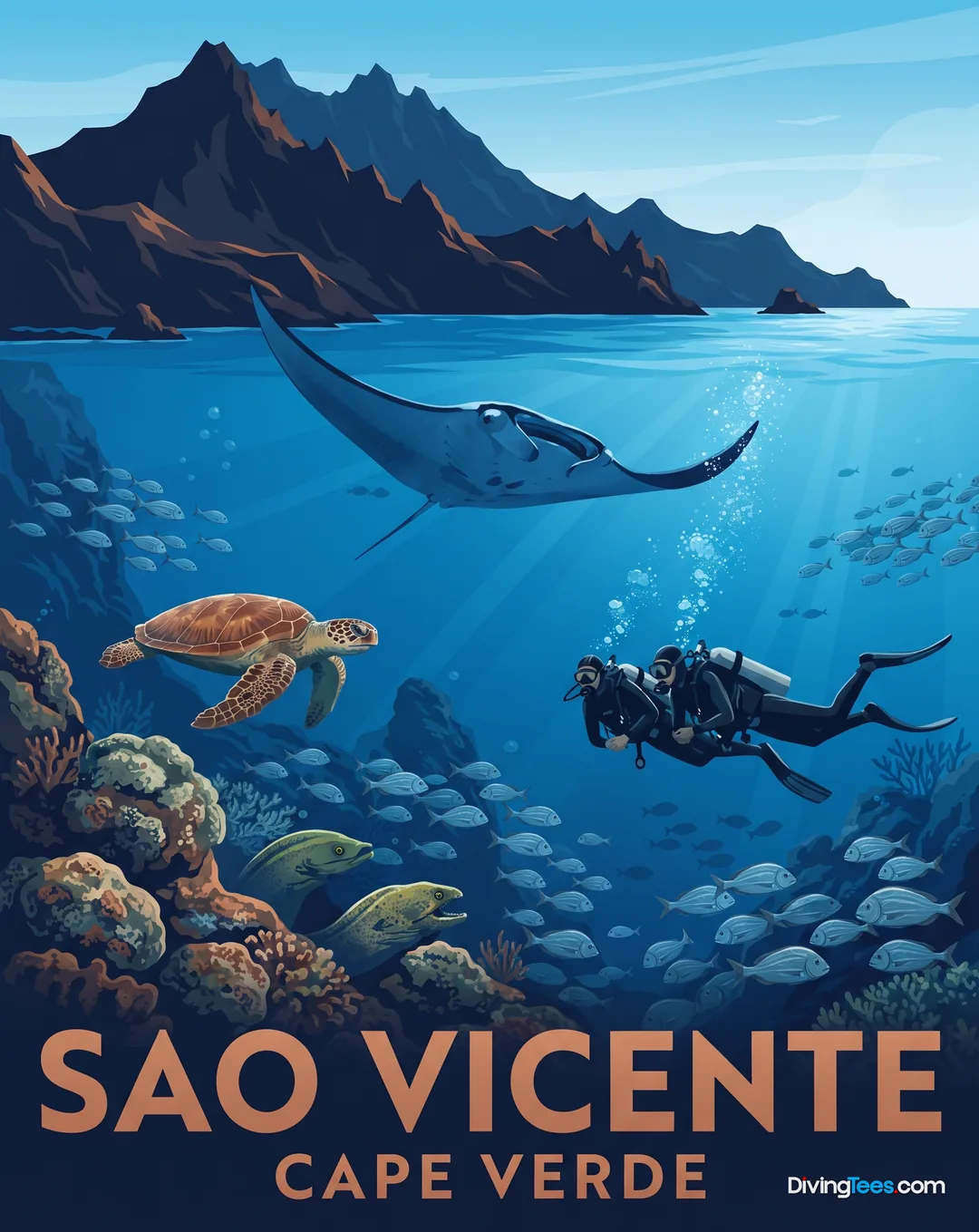
- Sao Vicente joins the season from July
- Eagle rays around Boa Vista and Sal
- Grey reef sharks in the Boa Vista-Sal group
- Turtles and groupers across Boa Vista and Sal
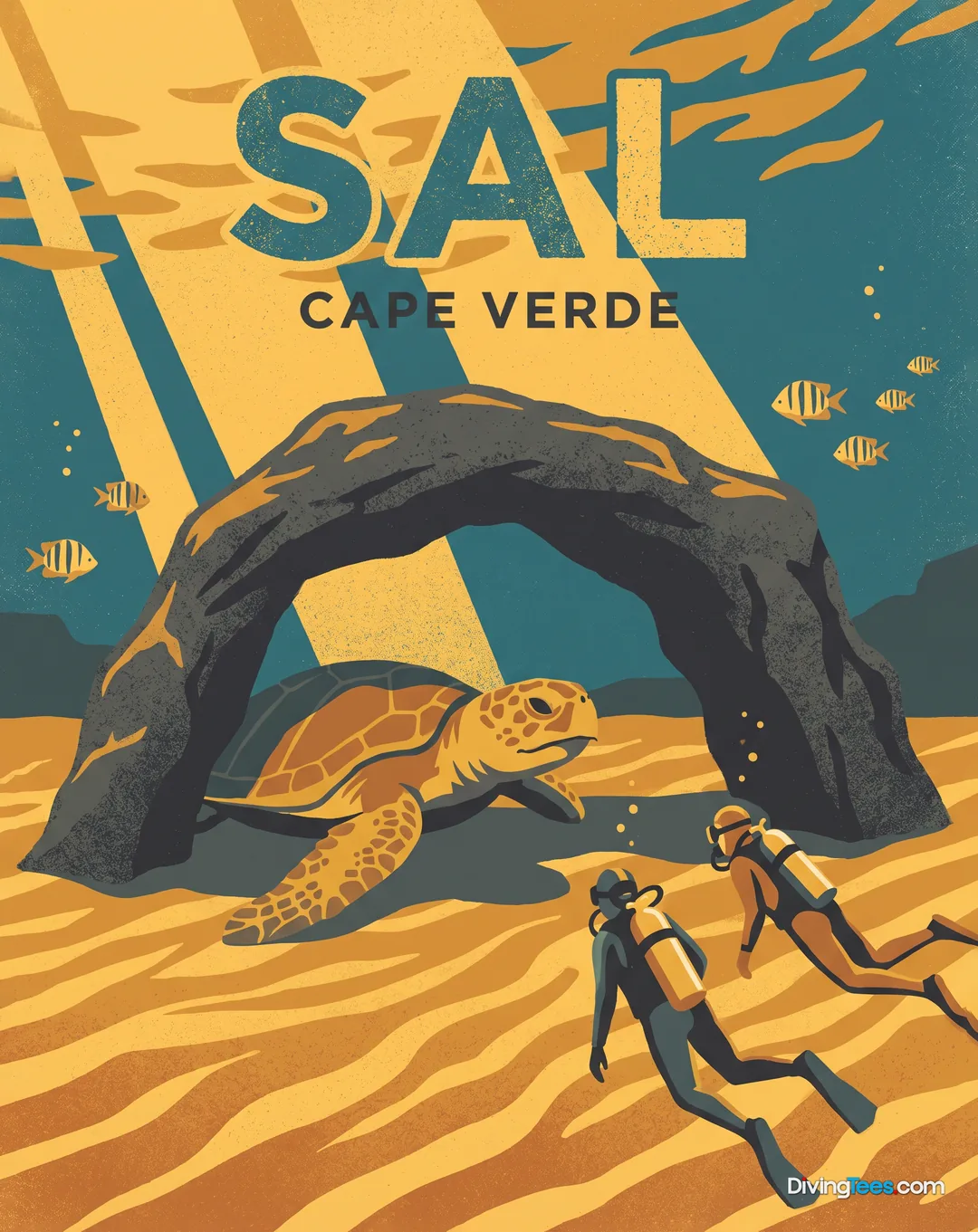
- Boat diving gives Sal its clearest character
- November keeps Sal and Sao Vicente open
For subtitles in English: start the video firstthen click the gearat the top right of the video, select “Subtitles/CC”, then “Auto-translate” and choose “English”.
This country for a diver
Cape Verde is less a single diving area than an Atlantic island chain with a useful seasonal rhythm. Boa Vista and Sal form the most practical pairing, close enough to combine and sharing the country's clearest concentration of named marine life. Sao Vicente belongs to the same broad mixed style as Boa Vista, while Sal is distinguished by boat-led diving. Conditions and currents remain variable across the country, so the appeal is flexibility rather than a uniform reef experience. All levels are represented, with no liveaboard option shaping the trip.
How the country divides
The country breaks into two practical diving groupings. Boa Vista and Sal work as a paired eastern itinerary: they are only 49 km apart, share the same May-to-autumn season, and offer the strongest reason to combine islands without turning the trip into a complicated crossing. Sal is the more explicitly boat-based choice, whereas Boa Vista has a mixed character. Sao Vicente stands apart as a later-season island, open from July to November and also described by a mixed diving profile. That makes it suitable for divers who want to build a separate island stay around a later window, rather than simply add another nearby site. Across all three areas, the level requirement is broad and current is variable, but the operational feel differs: Boa Vista and Sao Vicente leave more room for mixed planning, while Sal centres the boat programme. There is no liveaboard route to use as a shortcut between them.
Diving destinations
Dive centres


Hotels

When to go, and where by month
The calendar starts late. January, February, March and April do not provide a listed in-season area, while May and June open Boa Vista and Sal together. July, August, September and October are the broadest months: all three areas are in season, making this the clearest period for choosing between the paired Boa Vista-Sal itinerary and the separate Sao Vicente option. In November, Sal and Sao Vicente remain open, but Boa Vista drops out. December closes the listed window again. The pattern is staggered rather than based on opposing seasons. Boa Vista and Sal begin together, Sao Vicente joins later, and Sal continues into November; the overlap is therefore the mechanism that lets an itinerary broaden in midsummer and narrow towards the end of the year. A diver focused on Boa Vista should look to the May-to-October run, while a November trip belongs with Sal or Sao Vicente.
Marine life, coast by coast
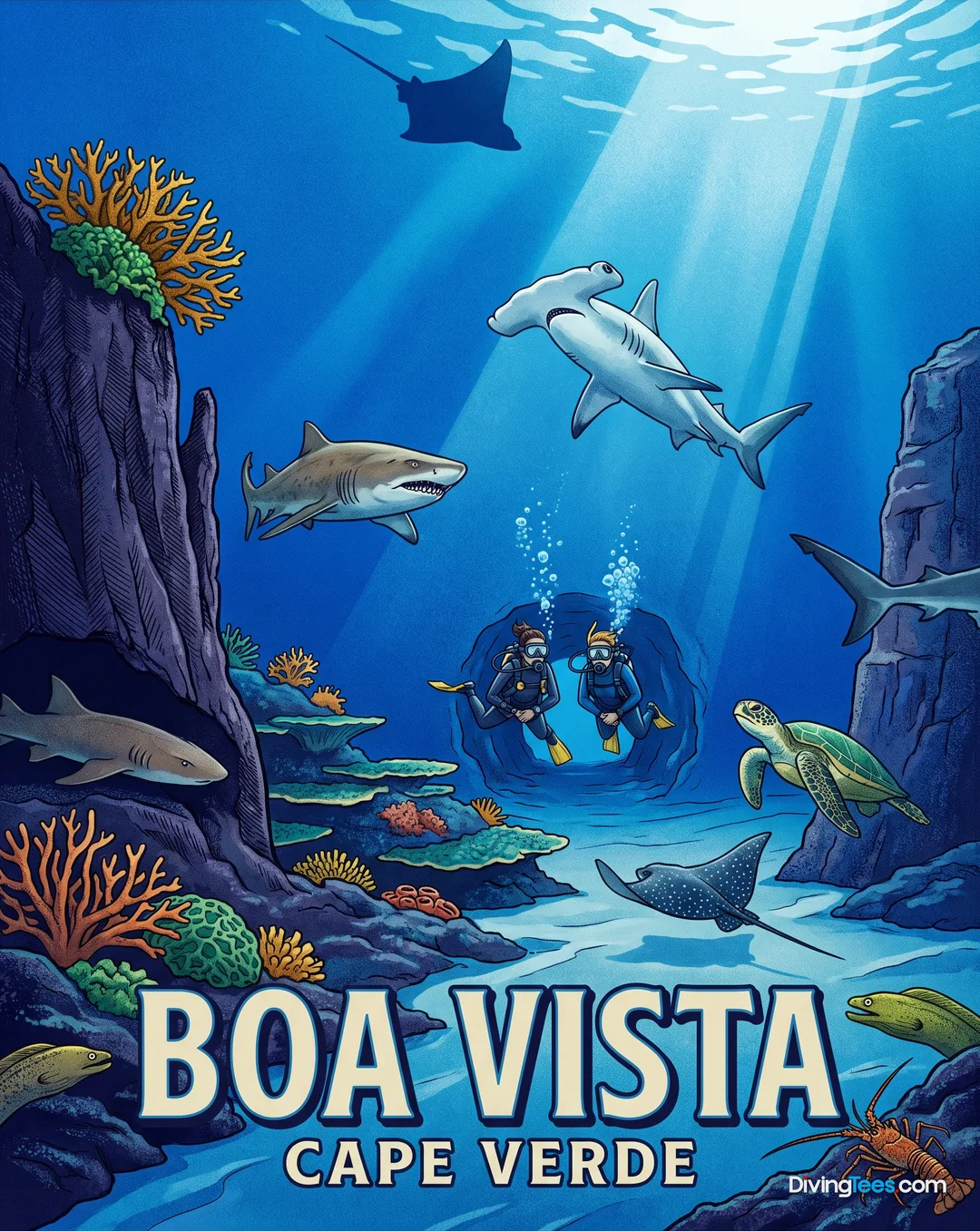
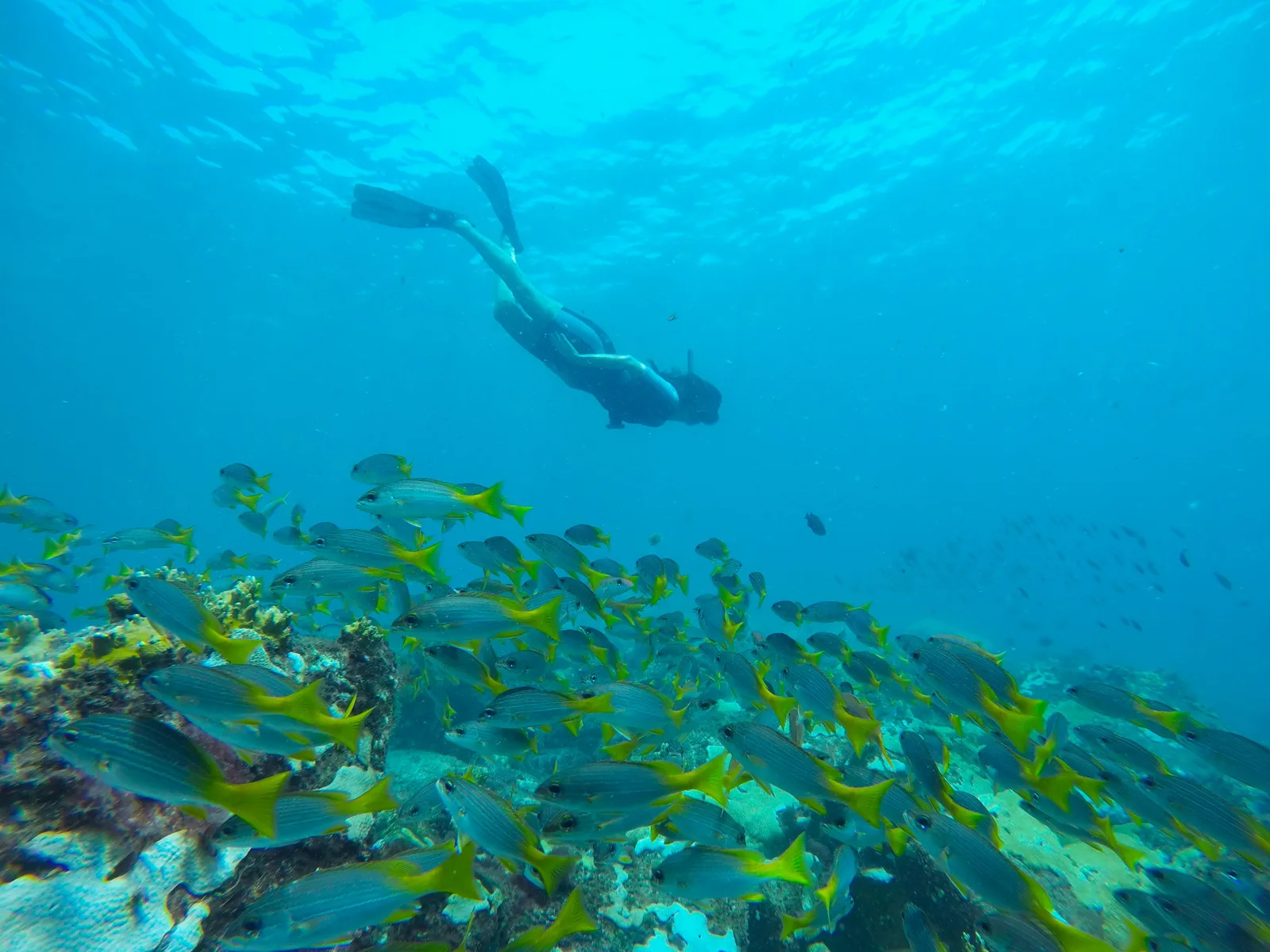
The clearest country-level wildlife plan is built around Boa Vista and Sal. An itinerary linking those islands can include eagle rays, grey reef sharks, nurse sharks and bull sharks, with groupers, morays, scorpionfish and amberjack adding interest on the same broad route. Green turtles and other sea turtles are part of that picture, as are nudibranchs and sea bream. This matters when choosing between an island pair and a standalone stay: the named wildlife concentration sits with Boa Vista plus Sal, rather than offering the same reason to move automatically to Sao Vicente. For a diver who values larger animals, the eagle ray, reef shark, nurse shark, bull shark and turtle combination gives the paired itinerary its strongest identity. The list is varied enough for photographers too, from scorpionfish and morays to nudibranchs, without pretending that every encounter is guaranteed.
Getting between the areas
Boa Vista and Sal are the sensible combination, separated by 49 km and close enough to make an island-pair itinerary coherent. Sao Vicente is a different proposition: it lies 223 km from Sal and 236 km from Boa Vista, so adding it means a separate inter-island transfer rather than a casual extension of the same stay. That distance also makes the final travel day more exposed to disruption, particularly where a ferry or onward connection is involved. Plan the return as though the crossing cannot be delayed, and keep a full buffer before flying home. The distances do not make Sao Vicente impossible, but they change the economics and rhythm of the trip: more transfer planning, less diving flexibility around the move, and a stronger case for treating Sao Vicente as its own base. A country-wide itinerary is therefore most straightforward when built around Boa Vista and Sal, with Sao Vicente added only deliberately.
Take off your mask
Cape Verde's above-water character cannot be described responsibly from the available place-specific material. Boa Vista, Sal and Sao Vicente are identified as the relevant island bases, but there are no supported names for sights, towns beyond those bases, dishes, eating places, local celebrations or everyday customs. It would be misleading to fill that gap with generic claims about Atlantic scenery, island life or Cape Verdean food, because none would tell a traveller what to see or where to eat. The practical conclusion is simple: treat the diving geography as the firm basis for comparing these islands, while researching the land programme separately and specifically. No named attraction can be recommended here, and no dish can be attached to Boa Vista, Sal or Sao Vicente without adding information that is not established. The country therefore remains sharply defined underwater, but deliberately open-ended above the surface in this account.
What holds true everywhere here
Across Cape Verde, build weather margin into the diving plan instead of stacking every immersion at the start. Spreading wildlife-focused dives over several days gives more room for a usable sea window, while a guide's choice of stable rock or wreck matters to photographers when sand and swell would spoil composition. Ask for a programme adapted to the group's real level: boat sites and shifting conditions make flexibility in depth and current exposure valuable, and a stronger qualification can help preserve that choice. On repeated diving days, putting sheltered sites first leaves more exposed options for later. Finally, choose an operator that changes departures with the swell rather than treating the schedule as fixed. That is particularly relevant in Cape Verde's Atlantic setting, where conditions can alter which boat dive is comfortable.
Frequently asked questions about Cape Verde
When should you plan a Cape Verde diving trip?
Plan around Boa Vista and Sal from May through October, when their season includes eagle rays, reef sharks and turtles. Sao Vicente joins from July, while November keeps Sal and Sao Vicente open. These staggered island seasons can help you choose one island or combine destinations during your stay.
What can you see while diving in Cape Verde?
Diving around Boa Vista and Sal can include eagle rays, grey reef sharks, nurse sharks, bull sharks and turtles. You may also encounter groupers, morays, scorpionfish, amberjack, nudibranchs and sea bream. The range includes larger animals and smaller subjects for photographers, without guaranteeing any particular encounter.
How should you plan a Cape Verde island itinerary?
Build your wildlife-focused itinerary around Boa Vista and Sal, where the named concentration includes rays, sharks, turtles and varied reef life. You can link those islands rather than treating Sao Vicente as an automatic addition. Sao Vicente has its own seasonal place, joining from July and remaining open in November.
What makes boat diving part of a Cape Verde stay?
Include Sal if boat diving is important to your plans, because it gives the island its clearest character. Pairing Sal with Boa Vista also places you on the route associated with eagle rays, grey reef sharks, turtles and varied reef species, while Sao Vicente offers a separate seasonal option.