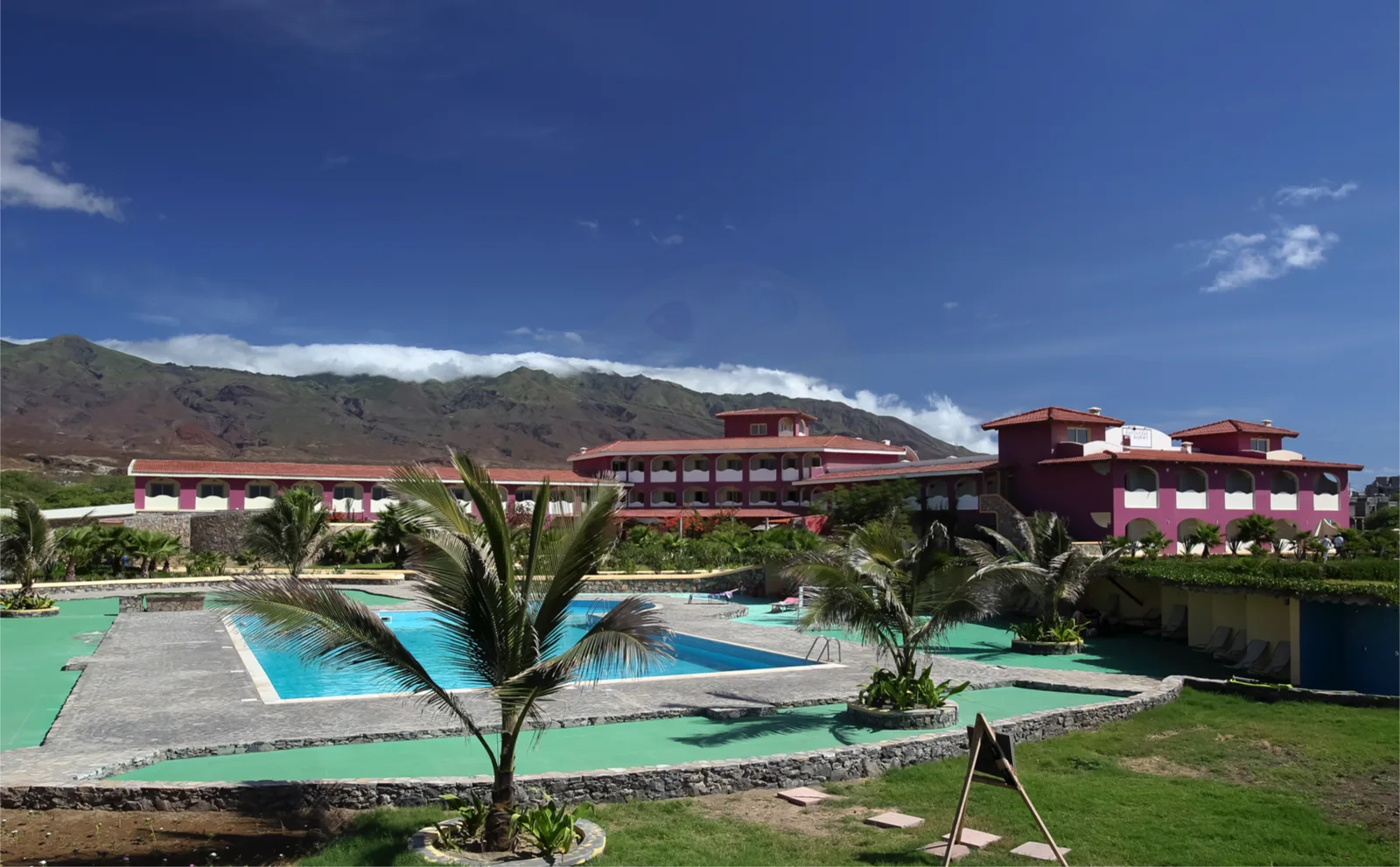

Green Turtle Diving Center
Google 4.6/5 (35 reviews)
Cape Verde · Atlantic
Volcanic walls, canyons, arches and a shallow wreck meet macro life in boat diving from Porto Novo, with Santo Antão’s valleys beyond the harbour.
Volcanic walls, arches and cavities give Porto Novo a clear identity underwater. This is a shore-based stay with boat diving around Santo Antão, not a beach-diving holiday. Expect rocky drop-offs, canyons, labyrinths and a shallow wreck, with the best rewards often tucked into holes and cracks rather than spread across coral gardens. Above water, the same island adds steep valleys, mountain roads and villages, so a week to ten days can sensibly combine diving with walking and island touring.
Most outings leave Porto Novo in a semi-rigid boat for rocky sites around Santo Antão. The underwater landscape is built from walls, canyons, arches, caves and narrow cavities, with an occasional shallow wreck changing the pace. Some sites reach about 30 metres, while others are shallower and more sheltered. Current is variable, so a relaxed reef circuit can give way to a drift dive, particularly on the return section of a trip. This is exploration diving rather than a sequence of identical coral gardens: look into cracks, pass beneath arches and follow the contours of the rock. Ask about the planned depth and current before boarding, and treat the visibility and sea state as part of that day’s decision rather than as fixed features of the destination.
Fish schools are part of the picture, but Porto Novo’s underwater appeal lies especially in the small life found in rock. Holes, cracks, cavities and sheltered corners provide the places to slow down and search, making a macro lens more useful here than a wide-angle set-up chosen only for large animals. The shallow wreck adds another surface for close inspection, while walls and canyons give the fish room to move around the diver. There is no particular wildlife window to build the trip around, so approach the diving as a year-round search for what is hiding in the geology, not as a seasonal big-animal appointment.
Porto Novo is best planned around flexibility rather than a named calendar season. Sea conditions can affect both the boat outing and the compulsory ferry, so a broad travel window with spare days is more useful than an itinerary built around consecutive dives. Check the forecast and local sea state before committing to the more exposed sites, and allow room for a change of plan. The island’s walking conditions also matter: keep at least one day for Santo Antão’s valleys and mountain roads, rather than treating every day as a diving day. This approach makes the trip less vulnerable to a rough crossing or an unsuitable boat day.
Beginners can find suitable shallow, sheltered outings for introductions and courses, provided the day’s site is matched to their experience. The destination also suits qualified divers who are comfortable with boat procedures, changing conditions and rocky terrain. An Advanced Open Water qualification is useful for dives approaching 30 metres. BSAC, PADI and SSI training all provide a sensible basis, but certification alone is not the whole answer: ask about current, depth and whether the return involves a drift dive before joining a particular trip.
From London Heathrow or Gatwick, or from Manchester, the structural point to plan around is that Porto Novo has no airport. The normal route reaches Mindelo on São Vicente, followed by the compulsory ferry to Porto Novo, a crossing of roughly an hour. Check the ferry timetable before fixing the rest of the journey, and do not build a tight flight connection around the crossing, since rough conditions can disrupt it. Once on Santo Antão, continue by road to accommodation and dive departures. Porto Novo is the practical base, but distances between individual accommodation and the diving operation vary, so arrange local transport rather than assuming every stay is within an easy walk.
Treat the ferry as the trip’s hinge. Leave real space around the São Vicente to Santo Antão crossing, and never place a closely timed onward flight immediately after it. Underwater, ask exactly how deep the planned site is and whether current or a drift dive is expected; Porto Novo is not simply a collection of easy shore entries, and some dives approach 30 metres. Bring a macro lens if close searching appeals, because the holes and crevices are where much of the interest sits. Keep one day free for hiking instead of filling the itinerary with boat trips. Santo Antão’s valleys, villages and mountain roads are a substantial part of the journey, not an afterthought. Finally, do not assume that a shallow wreck or sheltered site represents every outing. Match the day to your experience and leave a proper gap between the final dive, the ferry back to São Vicente and any subsequent flight.
A seven to ten-day stay works well because the ferry journey deserves some slack and Santo Antão rewards time on land. Use Porto Novo as the base for semi-rigid boat outings, then alternate diving with road trips into the valleys, visits to villages and walks through the volcanic landscape. A day can also be kept for the coast, Tarrafal de Monte Trigo or a boat-based look at the shoreline. Non-divers have plenty to do while the boat is out, making this a practical shared island trip rather than a diving-only break.
Hello, I'm Marina, DivingDeal.com's AI assistant. I guide you through destinations, areas and countries.
Thinking about the whole trip and the flights? Talk it over with Edith →
Marina is an AI. Some links are affiliate links: DivingDeal may earn a commission, at no extra cost to you. Bookings are made with the partner.
You can approach Porto Novo as a year-round search for life in volcanic rock rather than plan around a seasonal wildlife event. Choose a broad travel window with spare days, because sea conditions may affect boat outings and the ferry. Check the forecast and local sea state before committing to exposed sites.
You can find shallow, sheltered outings in Porto Novo for introductions and courses, while qualified divers should be comfortable with boat procedures, changing conditions and rocky terrain. An Advanced Open Water qualification is useful for deeper dives. Before boarding, ask about depth, current and whether the return section involves drift diving.
You can explore volcanic walls, canyons, arches, caves, labyrinths and narrow cavities around Santo Antão, along with a shallow wreck. Fish schools are present, but much of the interest is in macro life hiding inside holes, cracks and sheltered corners. Bring a macro lens if close searching appeals to you.
Use Porto Novo as a base for semi-rigid boat trips, but leave flexibility around the ferry from São Vicente because rough conditions can disrupt the crossing. Arrange local transport to your accommodation and dive departures, keep a day for Santo Antão’s valleys and villages, and alternate diving with walks and island touring.