
Porto Santo Sub
Google 4.9/5 (203 reviews)
Madeira · Portugal · Atlantic
Max. depth · 34 mExplore a 70-metre cargo ship broken into two sections resting on a sandy seabed south of Porto Santo.
The O Madeirense is a significant wreck located roughly one mile south of Porto Santo, resting on a relatively flat, sandy seabed. This cargo ship was intentionally sunk to serve as an artificial reef, providing a structured environment in an otherwise open area. The vessel measures approximately 70 metres in length and has broken into two distinct sections over time. This separation creates two separate areas of interest for your dive profile, allowing you to explore different parts of the structure during a single descent.
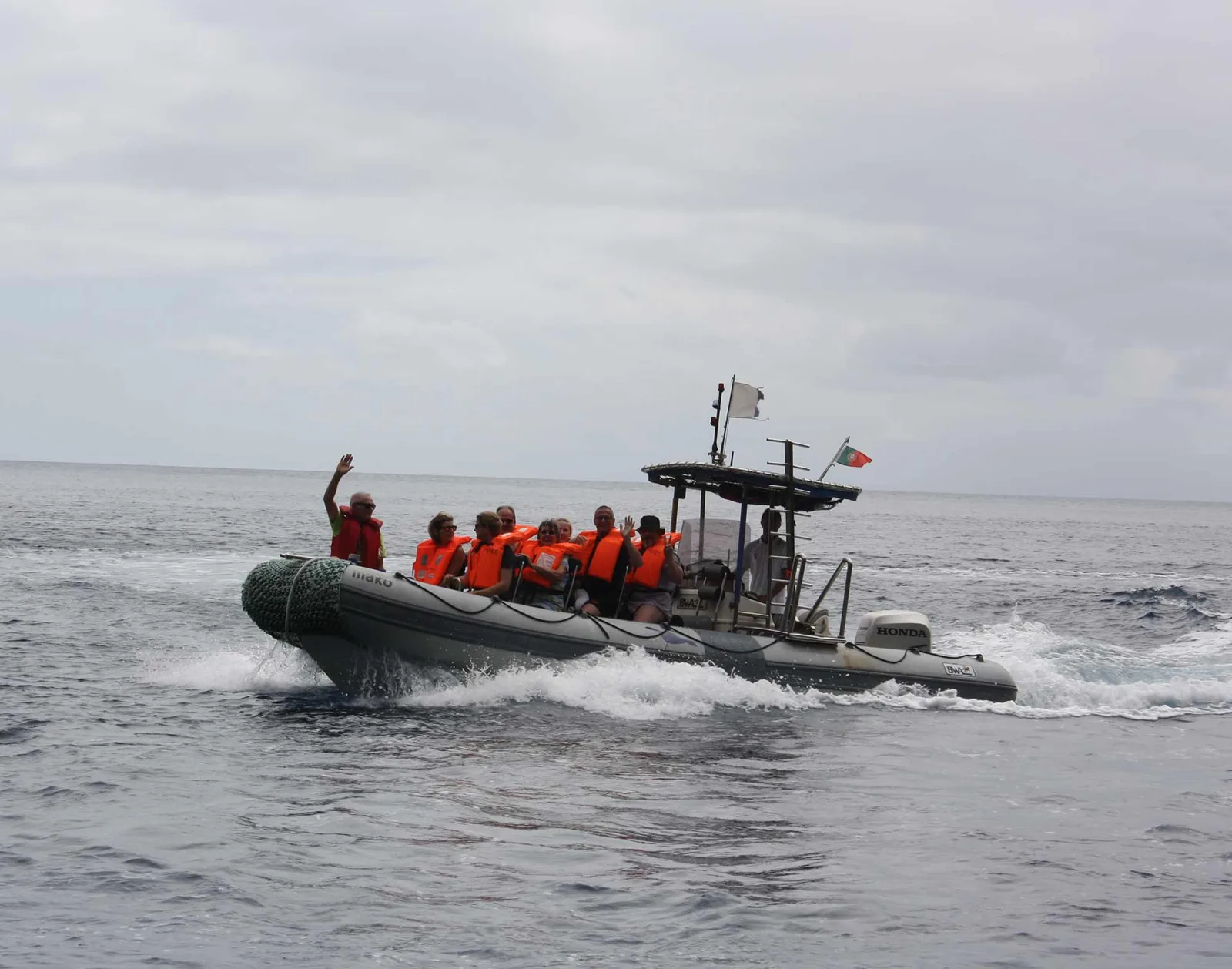
Your dive begins with a descent into open water from a boat, as there are no fixed lines or natural structures to guide you down to the wreck. The stern section sits at a shallower depth of approximately 24 metres, providing a good starting point for your exploration. As you move along the structure toward the deeper parts of the ship, the seabed drops to between 30 and 34 metres. This depth profile requires careful gas management and a clear understanding of your decompression limits.
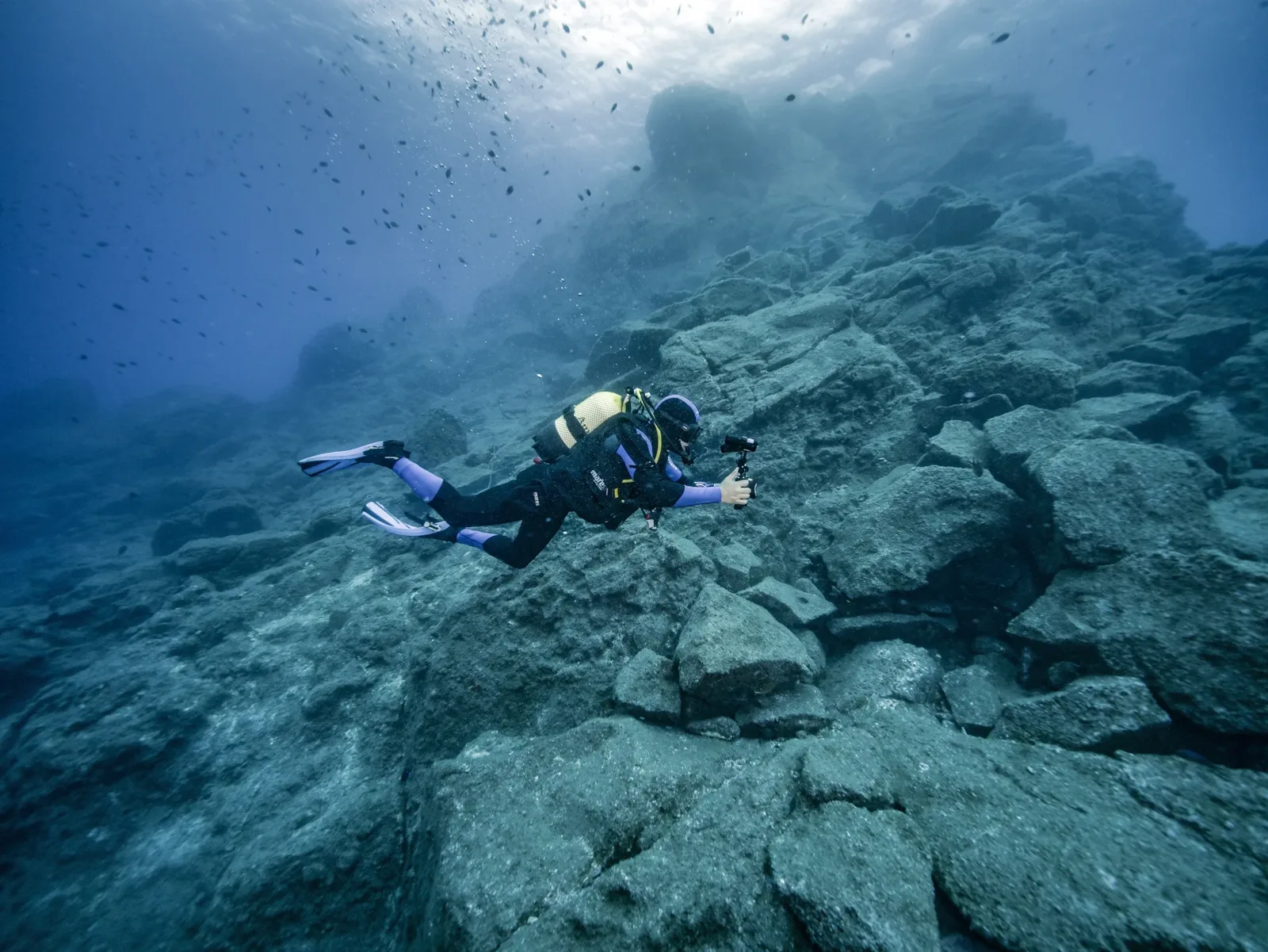
The topography of the wreck itself is complex, with several sections of the hull and internal cabins remaining accessible for exploration. These areas are heavily colonised by marine life, including algae, bryozoans, and various corals that have claimed the metal surfaces. Moving through these sections allows you to see how the ship has integrated into the local ecosystem. The broken nature of the hull means you can often observe the transition from the solid metal structure to the surrounding sandy floor.
Because the wreck is positioned in a sheltered area, it is relatively protected from the prevailing winds and heavy surge. This makes the site a reliable option for diving throughout much of the year, provided the general sea state remains manageable. The lack of significant current at the wreck site allows for more controlled movement, especially when you are navigating through the tighter spaces of the cabins or the hull. This stability is one of the primary reasons the site is a staple for local divers.
The visual environment is defined by high visibility, which frequently ranges between 24 and 40 metres. This clarity allows you to see the silhouette of the wreck from a distance as you approach the site. The light penetrates well to the maximum depth of 34 metres, making it easier to identify the textures of the organisms growing on the ship. This visibility also helps in maintaining spatial awareness while navigating the different segments of the broken vessel.
Marine life at the O Madeirense is concentrated around the structure, where the various organisms find shelter. You will frequently encounter moray eels tucked into the crevices of the hull and anemones clinging to the metal surfaces. Spider crabs are also common residents, often found scavenging near the bottom or within the wreckage. These smaller inhabitants add a layer of detail to the larger structure of the ship, rewarding a slow and observant approach to your dive.
In the water column around the wreck, you can observe various fish species that use the site as a feeding ground. Wrasse and bream are frequently seen cruising the perimeter of the ship or hovering near the deeper sections. The presence of these fish, combined with the complex habitat provided by the corals and bryozoans, makes the wreck a highly active biological zone. The combination of a large, penetrable structure and stable conditions makes it a distinct experience compared to the nearby natural reefs.
The dive depth ranges from 24 to 34 metres. An Advanced level is required, and deep-wreck experience is strongly recommended due to the depth and the nature of the site. The wreck is located in a sheltered area with no significant current, though conditions are subject to the general sea state. Expected visibility is between 24 and 40 metres. The site is accessible year-round, depending on weather and sea conditions.
You can access Madeirense year-round, provided the weather and general sea conditions are manageable. Its sheltered location offers protection from prevailing winds and heavy surge, but the site remains dependent on the state of the sea. Check conditions before departing by boat for the open-water descent.
Madeirense requires an Advanced level, with deep-wreck experience strongly recommended. The wreck ranges from 24 to 34 metres, with the stern at approximately 24 metres and deeper sections between 30 and 34 metres. You need careful gas management and a clear understanding of your decompression limits.
Madeirense lies in a sheltered area with no significant current at the wreck, allowing controlled movement around the structure and through accessible cabin or hull sections. Conditions can still be affected by the general sea state, including weather, prevailing winds and surge, so stability is not independent of surface conditions.
At Madeirense, you can explore a 70-metre cargo wreck broken into two sections, including penetrable hull and cabin areas. Algae, bryozoans and corals cover the metal, while moray eels, anemones and spider crabs live around it. Wrasse and bream move around the wreck, which rests on sand as an artificial reef.