
Scuba Elite
Google 5/5 (340 reviews)
15 km away as the crow flies
Bonaire · Caribbean
Max. depth · 120 mRed Slave offers a unique dive experience where shallow reef encounters with eagle rays transition to deep historical exploration of ancient anchor fields.
For subtitles in English: start the video firstthen click the gearat the top right of the video, select “Subtitles/CC”, then “Auto-translate” and choose “English”.
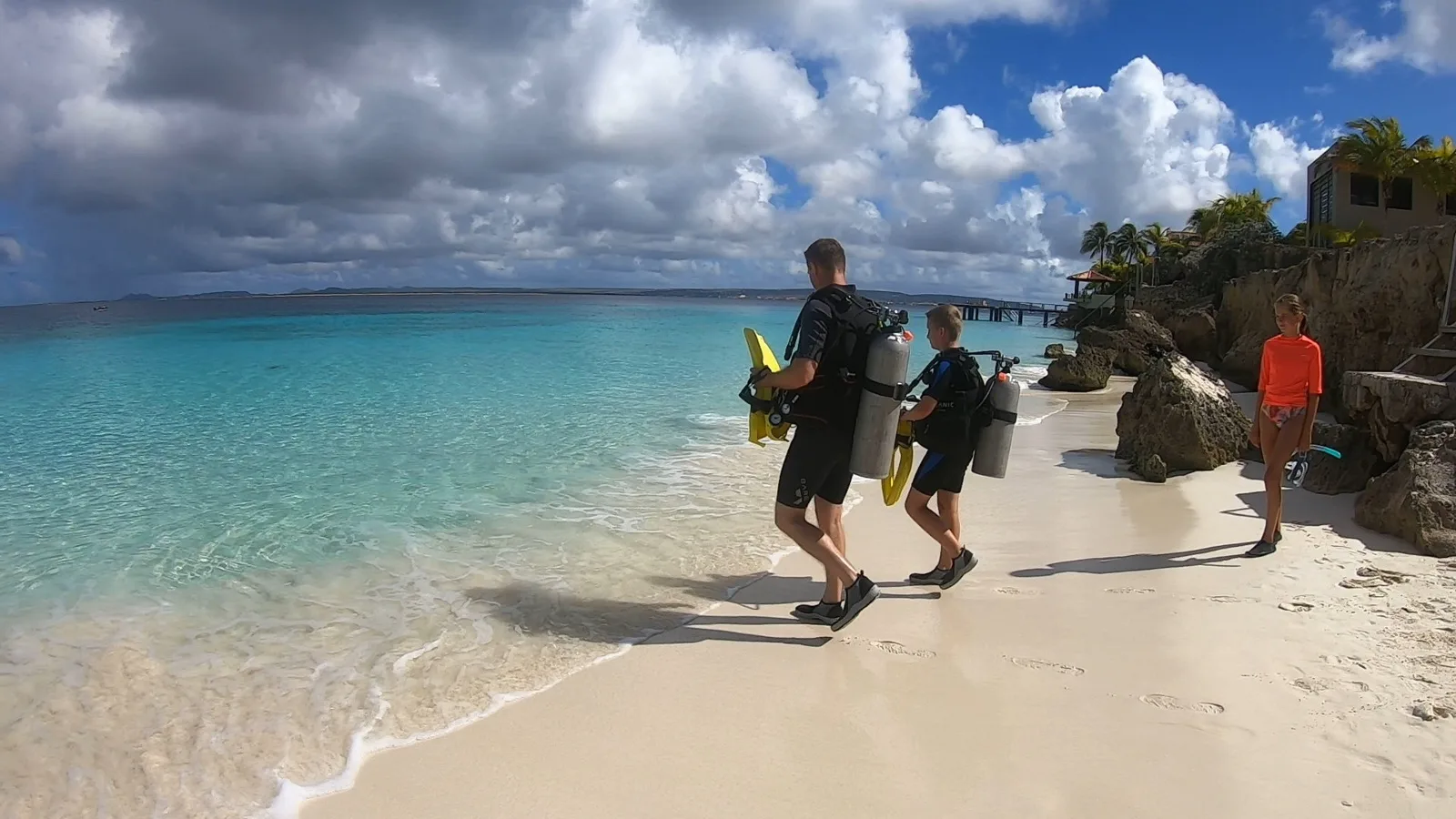
Red Slave, located on Bonaire's coast near Kralendijk, presents itself as a sloping reef that gives way to a substantial drop-off. The entry point is straightforward, leading onto a gently descending incline which makes the initial part of the dive accessible. As you move away from the shore, the reef begins to deepen, revealing a rich expanse of soft coral gardens that thrive in the nutrient-rich water flow.
The topography changes as the reef continues down, unfolding into a vibrant slope filled with gorgonians and brain corals that extend to depths of at least 49 metres. This gradual descent offers ample opportunity to observe the thriving ecosystem at various depths. The visibility here consistently allows for a broad appreciation of the reef's structure and the abundant marine life interacting with it.
While the shallower areas are home to eagle rays (Aetobatus narinari) and stingrays, especially in the sand flats adjacent to the reef, the deeper sections hold historical significance. As you descend past 49 metres, the seascape changes, giving way to areas where historic anchors from Bonaire's early salt trade era can be found. These artifacts lie scattered on the seafloor, acting as silent witnesses to centuries of maritime activity.
For those with the training and equipment for deeper exploration, the site extends to impressive depths, reaching 120 metres. Here, massive chains and a large ancient anchor rest, embedded in the substrate. These deep-water relics provide a target for technical divers, offering an archaeological dive in addition to the natural reef experience, requiring careful planning and execution.
The marine life encountered at Red Slave includes barracuda (Sphyraena barracuda) and horse-eye jacks (Caranx latus) that patrol the reef edge, often schooling in the mid-water column. These encounters are more frequent at certain times, influenced by current and prey movement. The interplay between the living reef and the historical elements makes for a dynamic dive profile, appealing to different diving preferences and specialties.
The consistent presence of diverse marine species, even during decompression stops, ensures that the dive remains engaging from start to finish. This site illustrates how natural beauty and historical context can intertwine, providing more than just a typical reef dive. It's a place where you can observe a thriving ecosystem while engaging with tangible pieces of history from the island's early economic life.
Red Slave is accessible for all levels of divers for the shallower reef sections, with the main reef slope extending to 49 metres. For deeper exploration, particularly to reach the historic anchor fields at 60 metres or the massive chains and ancient anchor at 120 metres, an advanced certification for technical depths is required. The regional water temperature ranges between 26°C and 29°C, and visibility often reaches 40 metres. The site can be dived year-round, with calmer winds generally between August and October.
You can dive Red Slave year-round. Regional water temperatures range from 26°C to 29°C, and visibility often reaches 40 metres. Winds are generally calmer between August and October, which may provide more settled conditions for exploring the sloping reef, coral gardens, and deeper historical features.
Red Slave is accessible to all levels of divers in its shallower reef sections, including the gently descending entry area. The main reef slope reaches 49 metres. Reaching the historic anchor fields at 60 metres or the ancient anchor and chains at 120 metres requires advanced certification for technical depths.
Red Slave descends gradually from the shore, with the main reef slope extending to 49 metres. Historic anchor fields lie at 60 metres, while massive chains and a large ancient anchor rest at 120 metres. The deeper targets are intended for technical divers with suitable training and equipment.
At Red Slave, you can see soft coral gardens, gorgonians, brain corals, eagle rays, and stingrays near the shallow reef and adjacent sand flats. Barracuda and horse-eye jacks patrol the reef edge. Nutrient-rich water flow supports the reef, while current and prey movement influence when schooling fish appear.