
Blue Water Divers
Google 5/5 (118 reviews)
British Virgin Islands · Caribbean
Tortola puts sheltered reefs, steep walls and the RMS Rhone within a boat-based week among Norman Island and Cooper Island.
For subtitles in English: start the video firstthen click the gearat the top right of the video, select “Subtitles/CC”, then “Auto-translate” and choose “English”.
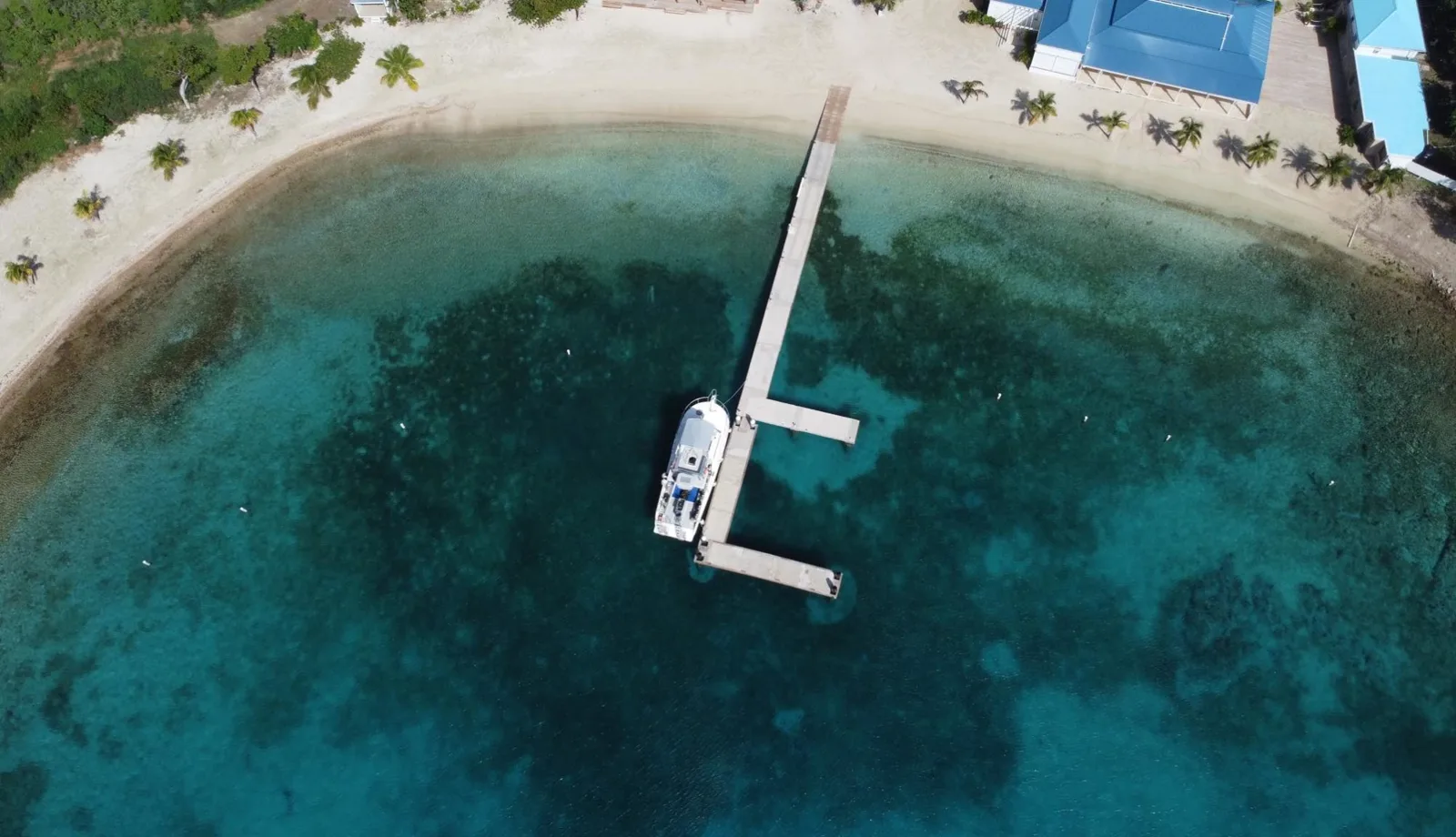
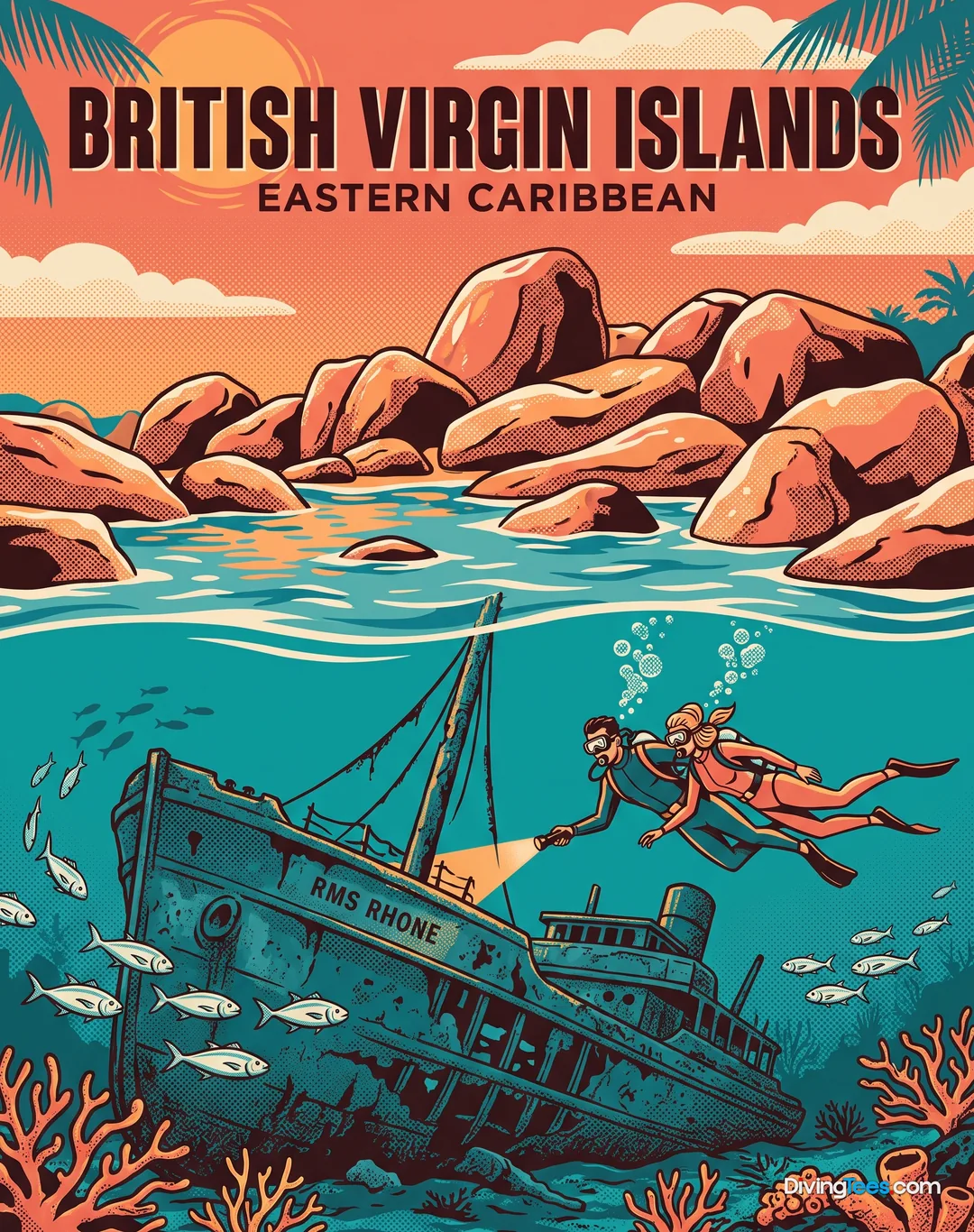
Tortola is a land base for diving the British Virgin Islands by boat, not a shore-diving resort. From the island, daily runs reach Tortola’s reefs, pinnacles and walls, then continue to Norman Island, Cooper Island and the RMS Rhone. The reward is a proper island-hopping dive holiday: stay ashore, vary the terrain, and keep non-diving days for beaches, sailing, walks and the neighbouring islands.
Most diving starts from a boat, with routes covering reefs, pinnacles, walls and wrecks around Tortola and the nearby islands. Currents are generally light to moderate, so sheltered coastal sites can work well for a first dive, while exposed walls and deeper wrecks demand more judgement. Visibility is best from December to April and can reach about 30 metres when conditions line up. The RMS Rhone is a planned boat outing from Tortola, not a site on the island’s coast. Expect short to medium transfers between sectors rather than a string of dives from one harbour. That variety is the point: one day can combine a calm reef with a more committed wall or wreck, while a change in wind or sea state may send the boat towards another island. There is little reason to force a particular site when the archipelago offers alternatives.
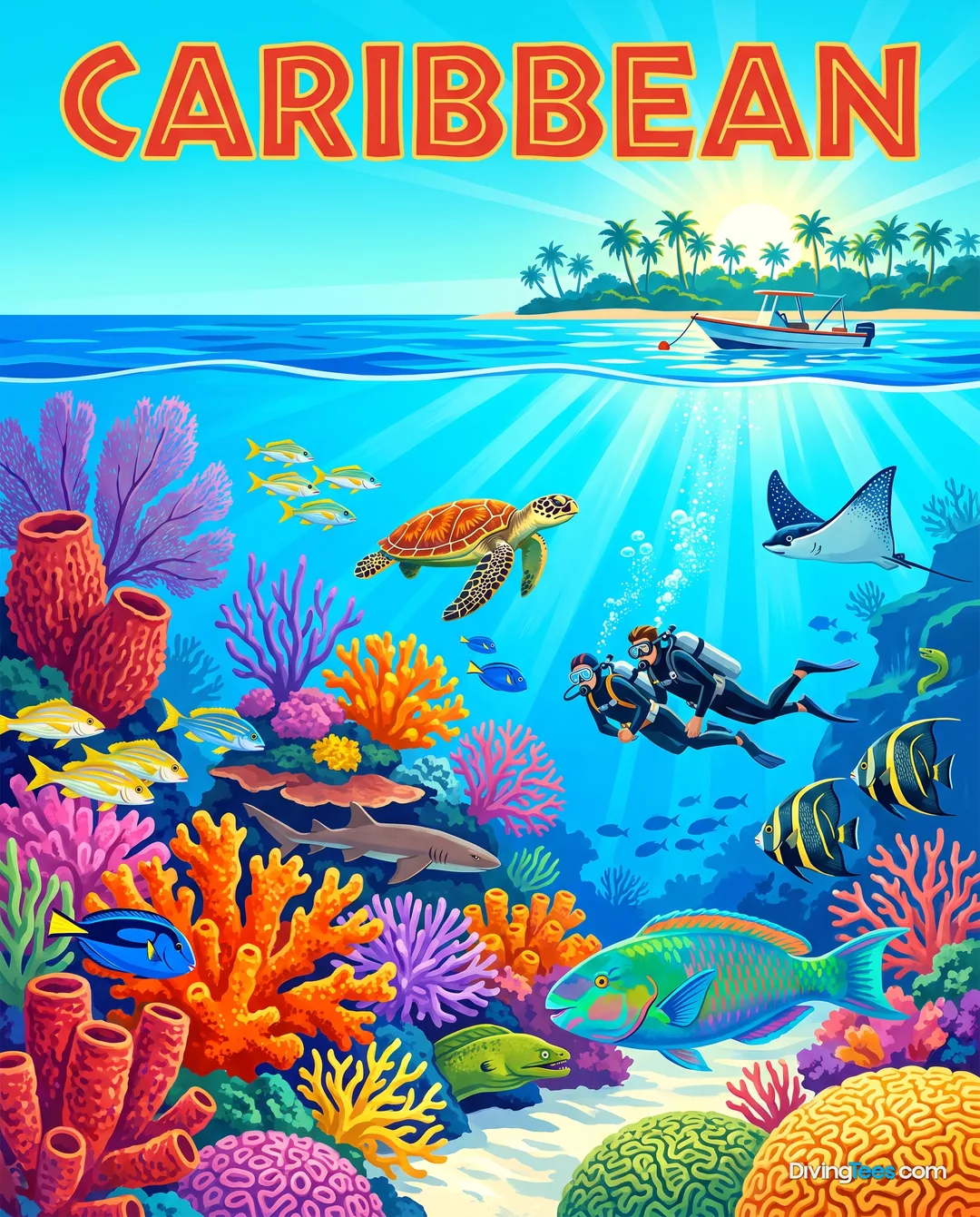
Tarpon are the wildlife encounter to put on the summer calendar, especially where schools of young fish are dense. Their appearance gives a warm-weather visit a particular focus, although sightings naturally depend on where those schools gather. Away from that seasonal possibility, the character of a dive is shaped as much by the reef itself as by any single animal: pinnacles, walls and wreck structure create different spaces to search with a torch and mask, snorkel and fins. The protected moorings around sensitive areas also help keep divers over the reef rather than an anchor scar. Tortola therefore suits visitors who enjoy changing underwater scenery, with tarpon adding a seasonal reason to return in the summer.
December to May is the most dependable period for a Tortola diving holiday, with lighter winds, drier weather and generally better visibility. December to April is the clearest window if seeing walls, pinnacles and wreck structure matters most. The destination remains diveable throughout the year, so there is no need to treat the other months as closed season. Summer can bring the added interest of tarpon when young-fish schools are dense. High season and cruise periods also bring more boats to the better-known sites, making an early departure or a less obvious island route worthwhile.
Tortola works for all levels, provided the itinerary matches the diver. Sheltered reefs with little current are suitable for beginners and for a gentle first day after travelling. Deeper wrecks and some walls call for sound buoyancy, comfort in open water and appropriate experience. Advanced Open Water is useful for the deeper wreck work. BSAC, PADI and SSI divers should check the planned depth and conditions with the centre rather than assuming every famous site is a beginner dive.
From London Heathrow, London Gatwick or Manchester, reach Tortola via a North American or Caribbean gateway and a regional connection. There is no straightforward direct European route to rely on, so allow sensible time between the long-haul and island sectors. The alternative is to fly to nearby Saint Thomas and take a ferry to Tortola, with the crossing to Road Town taking roughly 45 to 60 minutes. Ferry timetables and connection margins matter, particularly if the journey involves more than one onward leg. Once on Tortola, Road Town and its surroundings can sometimes be managed on foot or with a short taxi ride. Coastal and eastern accommodation usually needs a taxi or an arranged shuttle to the boat departure point.
Treat Tortola as a boat destination from the start. Do not book the trip assuming the well-known diving is just offshore: Norman Island, Cooper Island and the RMS Rhone all require planning around the day’s boat route. Ask for a balance between Tortola and the neighbouring islands, since exposure and boat traffic change markedly from one sector to another. Keep the first dive on an enclosed coastal reef, then leave deeper wrecks and walls until everyone is settled. A famous wreck should not dictate the whole week, because weather and sea conditions can shift the plan towards a reef or another island. Ask the centre to confirm that the National Parks Trust mooring permit is covered. These moorings are for daytime use, not overnight stays, and carry time and speed restrictions. Choose a departure near your accommodation where possible, request an early run to reduce competition, and pack a flexible thermal layer: a 3 mm suit is the usual starting point, with 5 mm useful for colder-sensitive divers in January and February. If arriving by ferry, leave room for a delayed crossing before a booked boat dive.
Allow seven to ten days for a sensible land-based stay. Daily boat trips can divide the week between Tortola’s own reefs and walls, Norman Island, Cooper Island and the outer wrecks, without making every day a full diving day. Road Town is the practical base for services and maritime links, while coastal accommodation may offer a quieter setting but usually adds taxi or shuttle movements. Non-diving companions have beaches, sailing, walks, snorkelling and island excursions to fill the gaps.
Hello, I'm Marina, DivingDeal.com's AI assistant. I guide you through destinations, areas and countries.
Thinking about the whole trip and the flights? Talk it over with Edith →
Marina is an AI. Some links are affiliate links: DivingDeal may earn a commission, at no extra cost to you. Bookings are made with the partner.
Visit Tortola from December to May for lighter winds, drier weather and generally better visibility. December through April is a clearer window for viewing walls, pinnacles and wreck structure. Diving remains possible throughout the year, while summer adds the possibility of seeing tarpon around dense schools of young fish.
Tortola suits divers of different experience levels when the itinerary matches their ability. Sheltered reefs with light current can suit beginners and provide a gentle first dive. Deeper wrecks and some walls require sound buoyancy, open-water comfort and appropriate experience. Advanced Open Water training is useful for deeper wreck diving.
Diving around Tortola includes sheltered reefs, pinnacles, steep walls and wrecks reached by boat. Routes can extend to Norman Island, Cooper Island and the RMS Rhone. Tarpon may appear in summer around dense young-fish schools, while protected moorings help keep divers over sensitive reef areas without anchor damage.
Plan Tortola as a boat-based island-hopping stay rather than a shore-diving trip. Base yourself near suitable boat departures, ask for routes covering Tortola and neighbouring islands, and keep the schedule flexible for changing sea conditions. Allow non-diving days for beaches, sailing, walks, snorkelling and island excursions, with Road Town offering practical services.