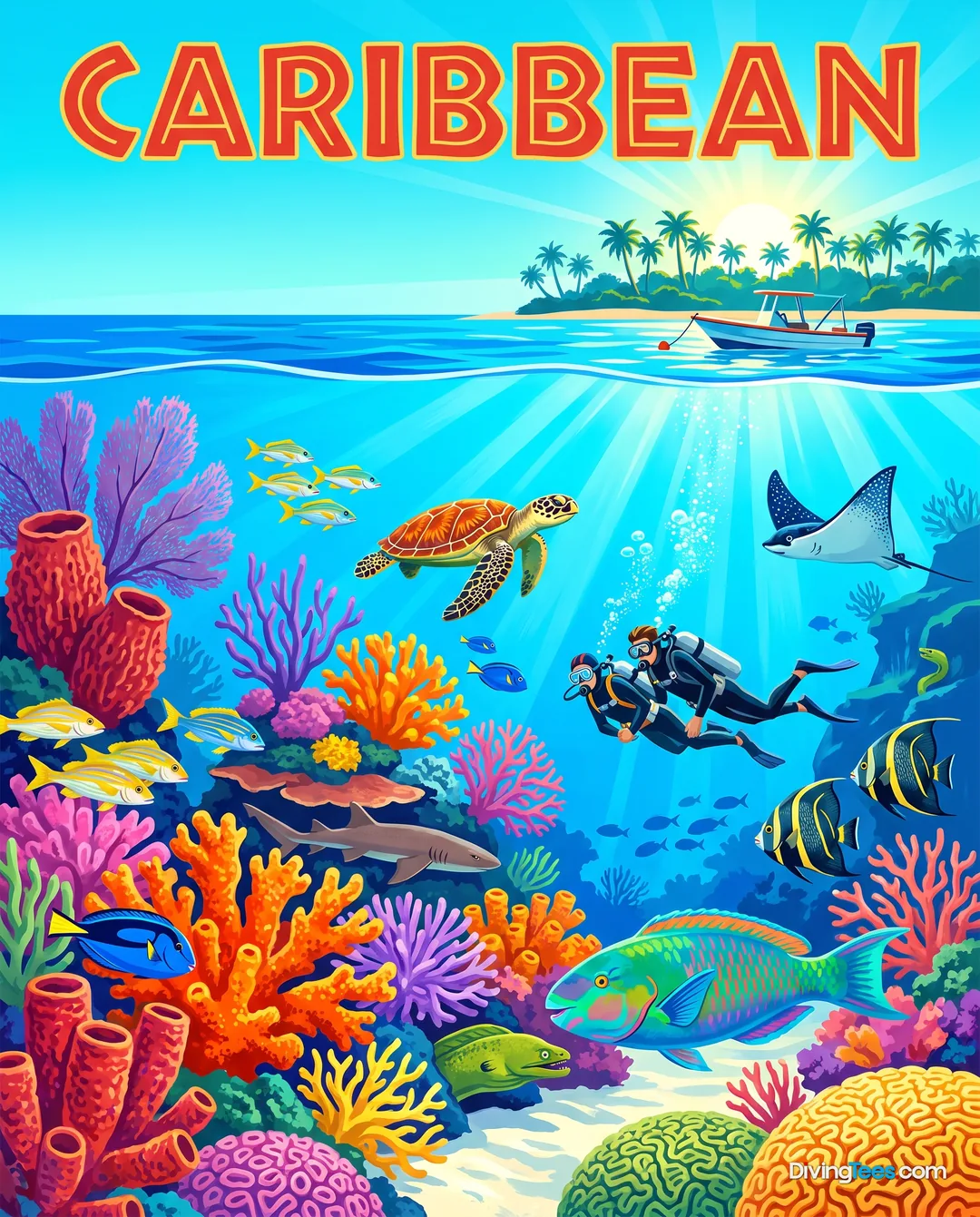
Caribbean
Dominica: a volcanic island of forest and water
From Portsmouth to Roseau and Soufrière, Dominica pairs year-round diving with rainforest trails, clear rivers, waterfalls and a distinctly low-key Caribbean atmosphere.
What makes this country unique
- Portsmouth, Roseau and Soufrière remain available year-round
- Roseau and Soufrière linked by a seven-kilometre transfer
- Tropical forest, rivers and waterfalls across Dominica
- Cabrit national park and its Caribbean setting
- Three thousand trails to hot springs and viewpoints
- Clear water, preserved marine life and shore access
- A Caribbean atmosphere without mega-resorts or mass tourism
For subtitles in English: start the video firstthen click the gearat the top right of the video, select “Subtitles/CC”, then “Auto-translate” and choose “English”.
This country for a diver
Dominica is a volcanic Caribbean island between Guadeloupe and Martinique, but it feels notably less built-up than its neighbours. There are no large hotel complexes or mega-airport distractions; the character is closer to the Caribbean of the 1950s, with a population of roughly 80,000 and nature occupying much of the island. For divers, Portsmouth, Roseau and Soufrière share a year-round season, variable current and mainly boat diving, with shore access also possible at numerous sites. Diving suits all levels, while a liveaboard is not part of the picture.
How the country divides
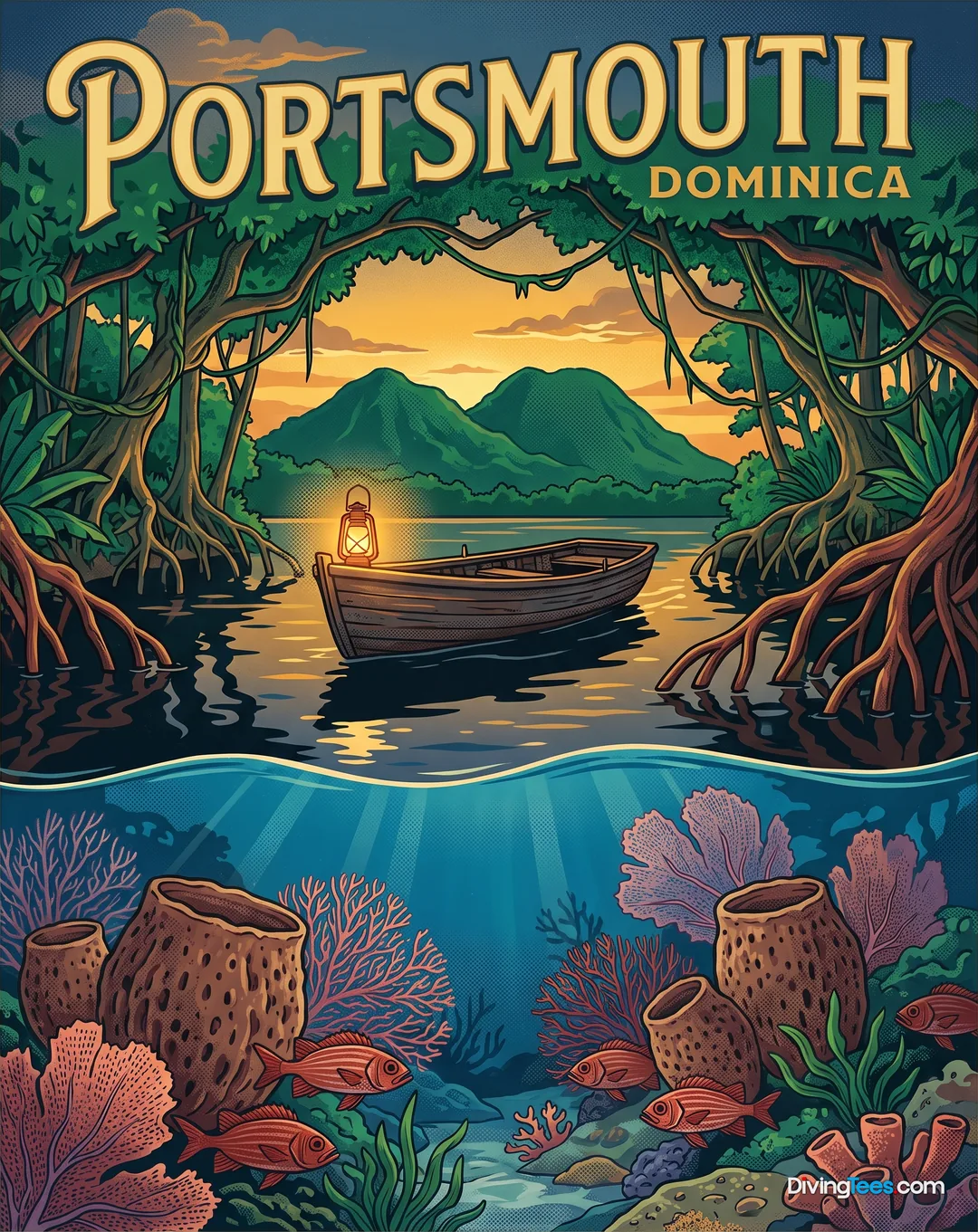
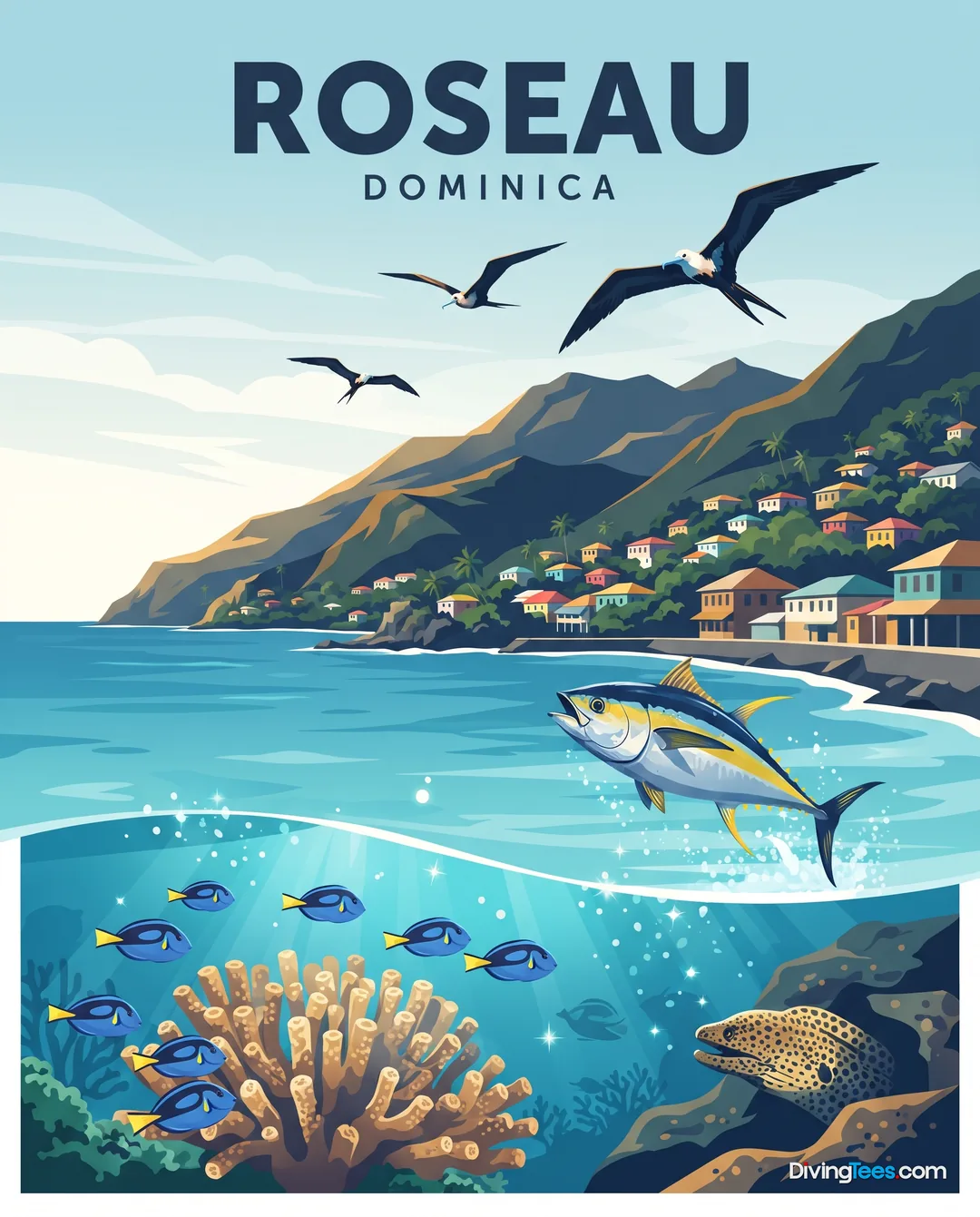
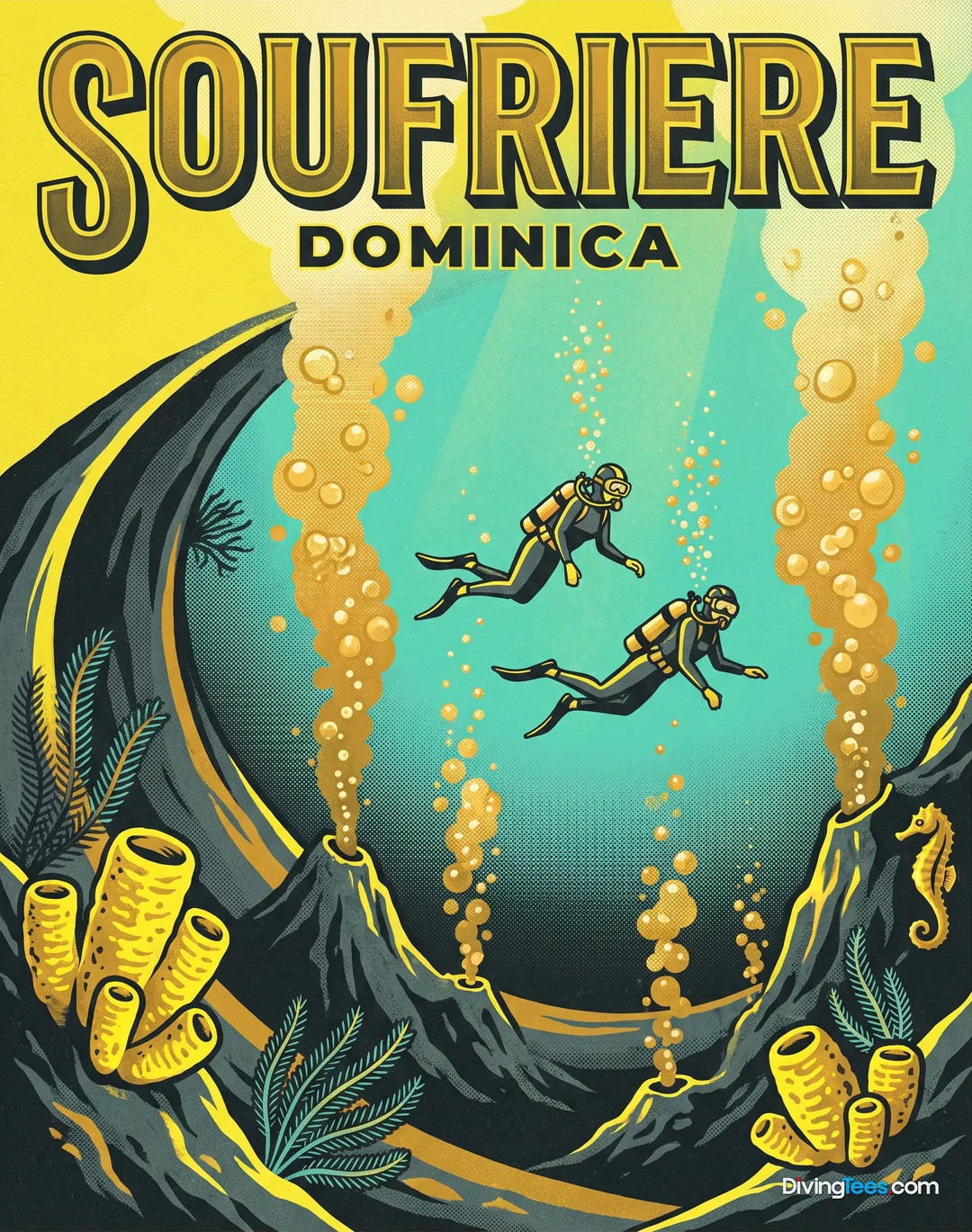
Dominica’s diving map is best understood as one connected island group rather than opposing coasts with different seasons. Portsmouth gives a northern base, Roseau a central urban base, and Soufrière a southern base; each has its own zone page for the actual diving detail. The useful distinction here is logistical. Roseau and Soufrière are only seven kilometres apart, making them the obvious pairing when you want to change base without turning the trip into a major transfer. Portsmouth is 31 kilometres from Roseau and 38 kilometres from Soufrière, so it can still be combined, but the northern end deserves deliberate planning rather than an assumed quick hop. This layout works for divers wanting one settled base, as well as those prepared to move around for a broader island itinerary. Since all three zones are available throughout the year, the choice is about where you want to stay and how much transferring you are willing to absorb, not about chasing a particular seasonal coast.
Diving destinations
Dive centres

Hotels
When to go, and where by month
There is no month in which one of Dominica’s three diving zones takes a seasonal lead. Portsmouth, Roseau and Soufrière are all in season from January through December, so January, February and March offer the same broad choice as April, May and June; the pattern continues through July, August, September, October, November and December. This is not an itinerary built around a north-versus-south seasonal switch. Instead, keep the flexibility to move outings if the sea becomes formed towards the end of a short stay. Booking dives for the first days leaves room to shift them later, rather than losing the opportunity altogether. A buffer day is sensible, particularly when transfers or onward flights are involved. For a European trip planned around one or two annual holidays, the practical advantage is straightforward: choose the island base that suits the land itinerary, then let local sea conditions influence the order of dives rather than the month on the calendar.
Marine life, coast by coast
Dominica’s underwater identity is described through preserved fauna and flora rather than a particular headline animal tied to one coast. No zone-specific wildlife pattern changes the route between Portsmouth, Roseau and Soufrière, so an itinerary should not be built around crossing the island for a named species. The more consistent attraction is the combination of clear water, varied volcanic underwater terrain and a setting where the island’s protected, forested character continues below the surface. That makes the choice of base primarily a question of transfers and accommodation, not a gamble between one side for large animals and another for reef life. Divers interested in wildlife should still treat every briefing as local: conditions, current and the character of the site will shape what appears on the day.
Getting between the areas
The three bases are close enough to combine, but not so close that transfers should be treated as an afterthought. Roseau and Soufrière are separated by seven kilometres, making that pairing the least demanding change of base. Portsmouth to Roseau is 31 kilometres, while Portsmouth to Soufrière is 38 kilometres; adding the northern end therefore creates a longer island crossing and a more involved travel day than the map may suggest. Sea and road conditions can make the timetable less predictable. On a short visit, start diving early in the stay, leaving room to move outings if the sea is formed later. Do not schedule a tight connection after the final dive: the transfer across the island and onward travel both need breathing space.
Take off your mask
Dominica’s character is terrestrial and thoroughly volcanic. National parks cover much of the island, with tropical forest, rivers, cascades and hot-water springs shaping the landscape around the towns. The island’s 3,000 trails lead from waterfalls to natural spas and on to viewpoints over the summits; a proper pair of walking shoes is more useful than polished resort footwear. In the Cabrit national park, the Couleurs Caraïbes tourism office is one named point of interest, while elsewhere the appeal lies in moving through scenery that is difficult to reach by road alone. A day can involve swimming, walking, jumping into clear pools or descending by rappel through lush surroundings. Canyoning adds a more active option, and the open, friendly population reinforces the island’s unhurried Caribbean feel. Dominica has deliberately avoided the scale of its neighbours: there are no mega-resorts, no oversized airport complex and no mass-tourism atmosphere. The result is a country best experienced through its forest paths, watercourses, parks and small-island pace.
What holds true everywhere here
Across Dominica, the practical lesson is to protect flexibility. Small-island boat diving rewards calm finning and precise buoyancy more than pushing distance, particularly when current varies. Follow a strict no-touch, no-collection and no-anchor approach around the reef, and treat each briefing as relevant to the day rather than as routine. Many sites can also be reached from shore, so the island allows a useful mix of boat outings and simpler entries when conditions or plans change. Reserve dives early on a short stay, keep a spare day for weather disruption, and avoid placing a flight or tight connection immediately after the last dive. These are not luxuries in Dominica: sea conditions and island transfers can decide the timetable more readily than the calendar.
Frequently asked questions about Dominica
When can you go diving in Dominica?
You can plan diving in Dominica year-round, with Portsmouth, Roseau and Soufrière available throughout the year. The destination also combines diving with tropical forest, clear rivers, waterfalls, trails, hot springs and viewpoints, giving you options beyond the water whenever you visit.
What diving level should you have for Dominica?
You should use the local briefing to judge how Dominica’s conditions suit your experience. Current, conditions and the character of each site can shape the dive, so your planning should account for the specific location and the guidance provided before entering the water.
What can you see while diving in Dominica?
You can expect clear water, preserved marine life and varied volcanic underwater terrain in Dominica. Its underwater identity focuses on preserved fauna and flora rather than a named animal tied to one coast. Shore access adds another way to explore, while each site’s conditions influence what appears.
How should you plan your stay in Dominica for diving?
Choose your base in Dominica mainly around transfers and accommodation, rather than a particular wildlife zone. Portsmouth, Roseau and Soufrière are available year-round, with Roseau and Soufrière linked by a seven-kilometre transfer. You can also combine diving with rainforest trails, rivers, waterfalls and Cabrit national park.