

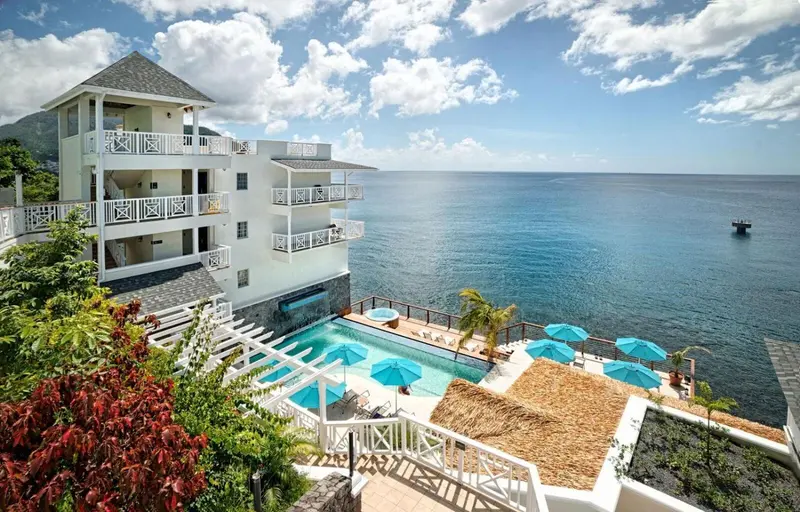
 Dive centre in the hotel
Fort Young Hotel
★★★★
Google 4.3/5 (758 reviews)
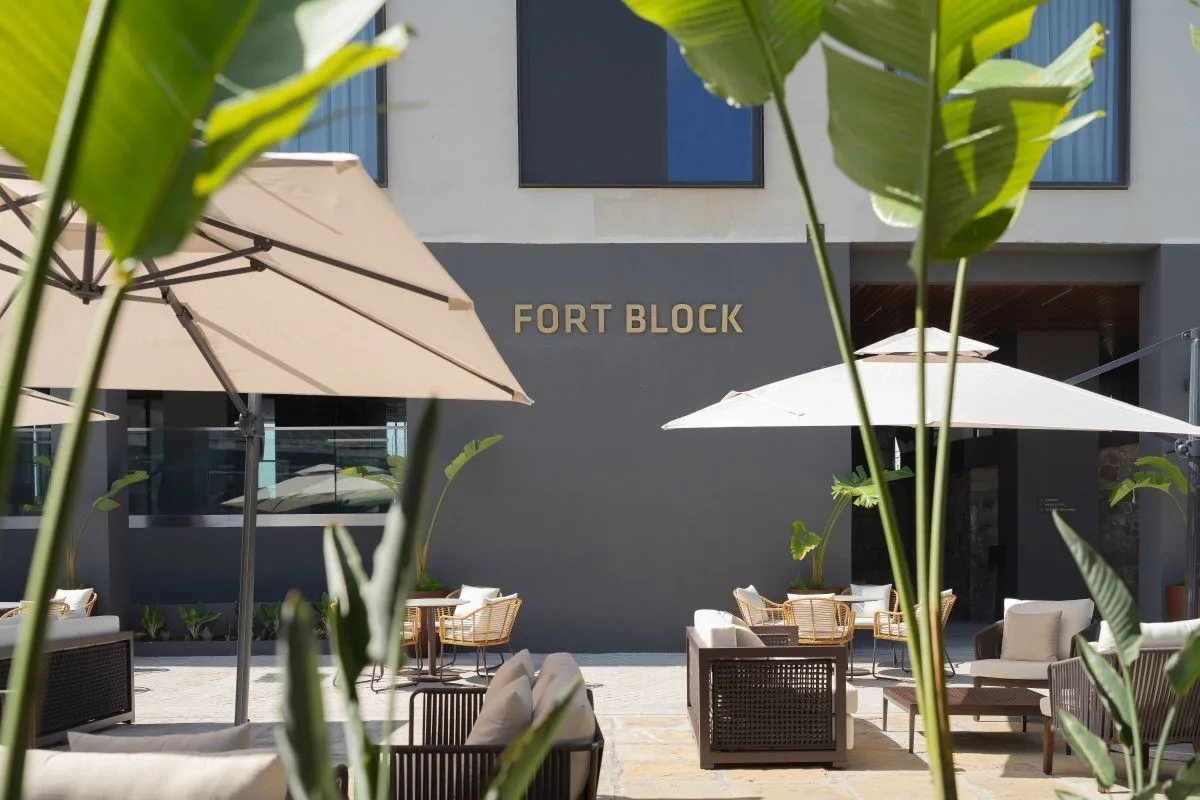
The dive centre
Fort Young Dive
PADI
Google 4.3/5 (769 reviews)
Dives: Champagne Reef, Scott’s Head Pinnacle, Dangleben's Pinnacles
Dominica · Caribbean
Volcanic craters, bubble vents and walls dropping beyond recreational depths frame boat diving from Roseau, with seahorses, turtles and barracudas in view.
For subtitles in English: start the video firstthen click the gearat the top right of the video, select “Subtitles/CC”, then “Auto-translate” and choose “English”.
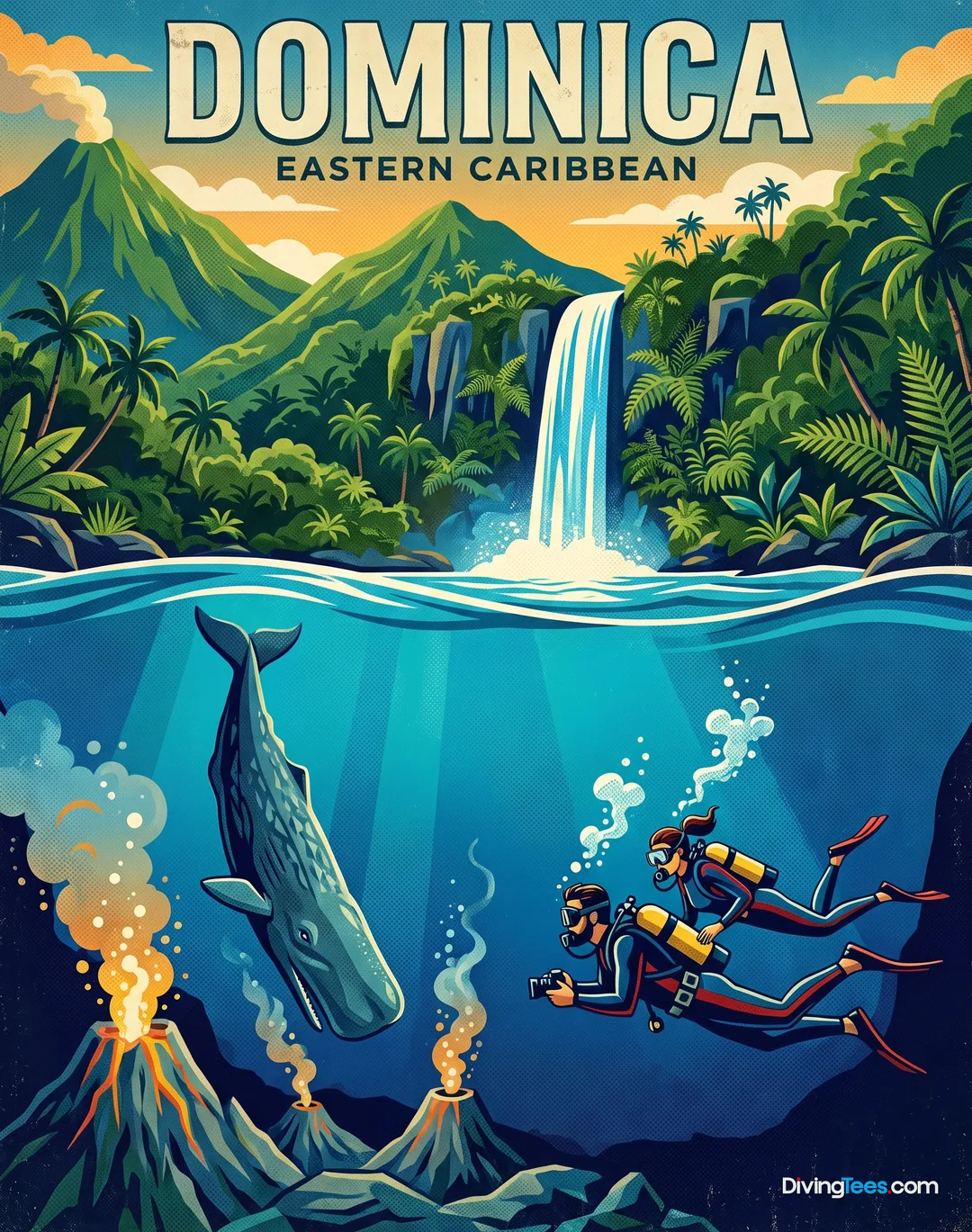
Roseau is Dominica's practical west-coast base for boat diving rather than a self-contained dive island. The underwater landscape is unmistakably volcanic: Scott's Head Pinnacle begins in a rocky passage at ten metres before falling along a wall to thirty-six, while Champagne Reef releases steady bubbles from thermal vents. Around the dives, the town provides a straightforward base for a wider island stay, with mountain walking, rainforest and waterfalls available to non-divers or on no-dive days.
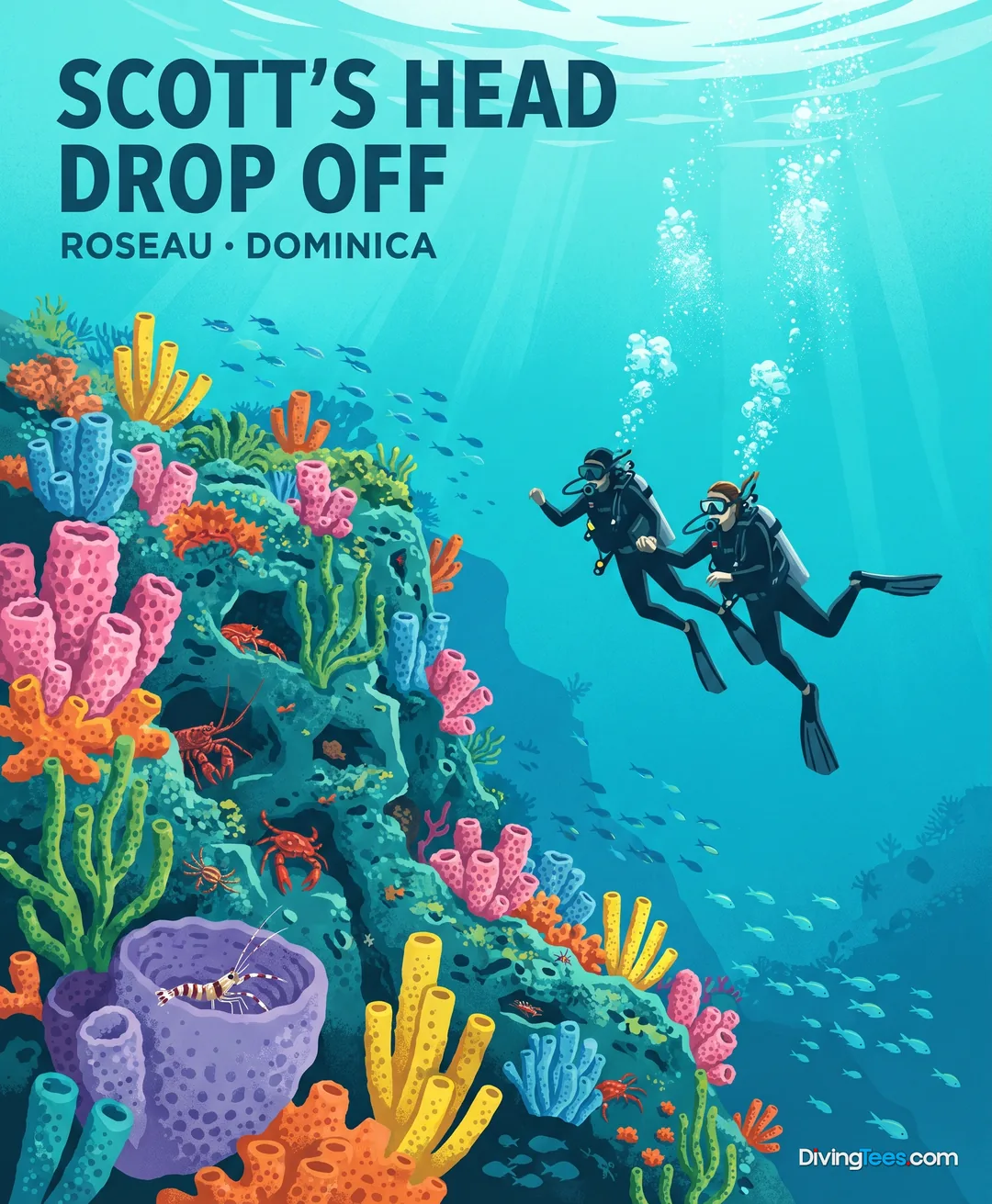
The diving follows volcanic structure: steep walls, pinnacles, sloping reefs, crater edges and occasional exposed points. Scott's Head Drop Off runs from twelve to thirty metres through intensely coloured sponges and small crustaceans, while L'Abym starts on a shelf at about seven metres before the cliff continues far beyond recreational limits. At Coral Gardens North, finger corals and large sponges slope away from twelve metres; the water may be almost still or produce a proper drift with strong current. Champagne Reef is the gentler exception, with calm water, light current and time to watch bubbles rising through the reef. Most diving is by day boat, and the operator's choice of site matters: a sheltered wall and an exposed pinnacle are very different outings when wind and swell change.
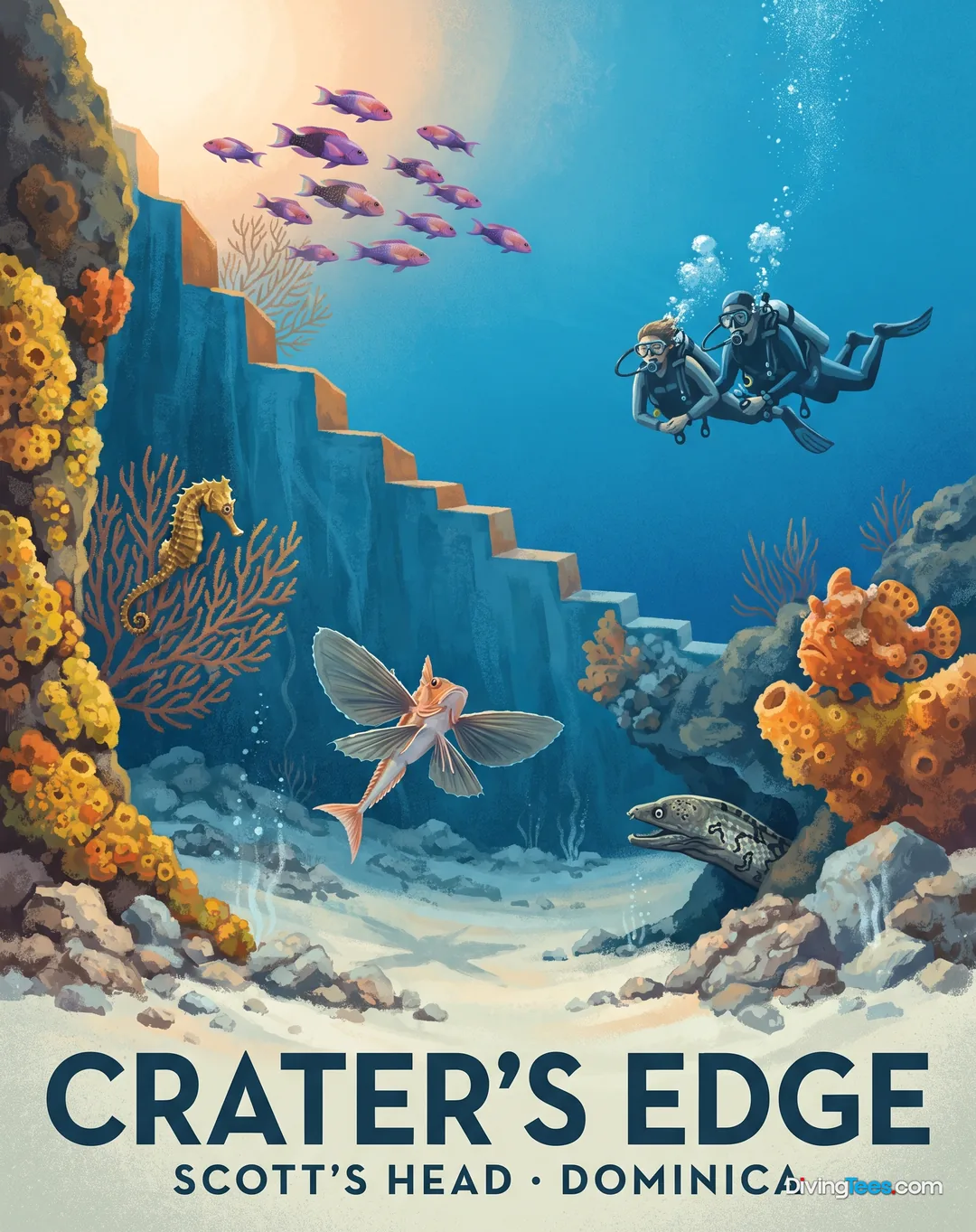
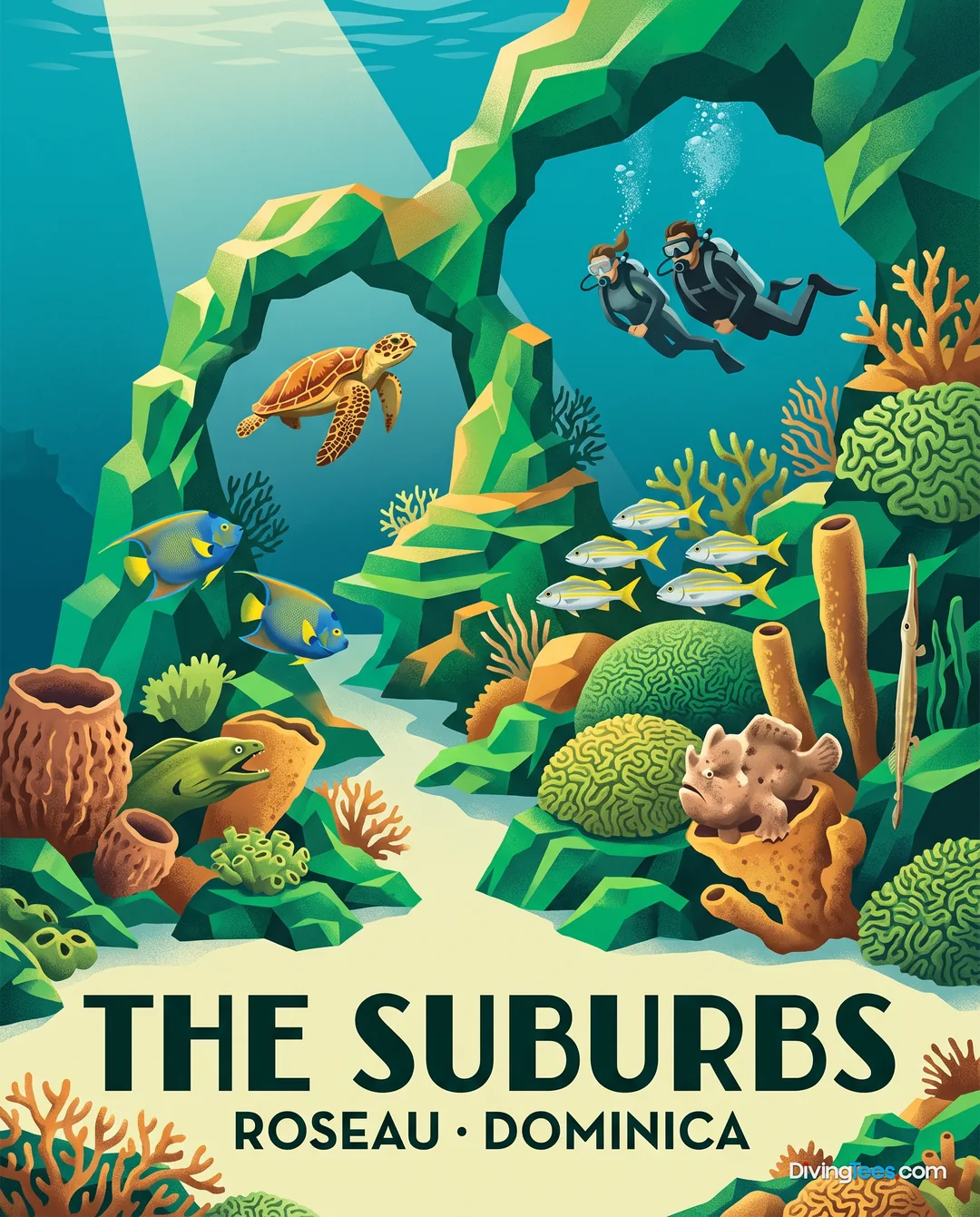
Small life rewards a deliberate pace. Seahorses may be found at L'Abym, Pointe Guignard and The Suburbs, while frogfish are associated with Pointe Guignard and the volcanic scenery provides plenty of cracks for crabs and lobsters. Scott's Head Drop Off is particularly good for looking into sponge-covered recesses rather than simply following the wall. Turtles turn up around Coral Gardens North and L'Abym, with seasonal visits noted at Pointe Guignard. Larger movement comes at Crater's Edge, where black jacks and tuna school along the ridge, and at sites such as The Suburbs, where barracudas and rays can pass beyond the reef. Great barracuda also belongs on the area’s list of possible encounters. These are site-based sightings, not a guaranteed seasonal procession.
Roseau suits divers who can let the sea state set part of the timetable. There is no single dependable month to build the whole trip around: wind, swell and coastal run-off can alter visibility and determine whether an exposed point is sensible on a given day. A flexible period with room to move boat dives is therefore more useful than chasing a narrowly defined season. The practical reason for allowing slack is simple: sheltered sites such as Champagne Reef may remain comfortable while a more open wall or pinnacle is less attractive. Keep a reserve day rather than treating every planned departure as fixed.
This coast is exposed to sargassum strandings, whose intensity varies greatly from year to year. To find out more, see the “Sargassum alert” panel on this page.
All levels can find suitable diving, especially on calmer sites and shallower sections such as Champagne Reef or L'Abym's shelf. The destination makes more sense for divers already comfortable with boat procedures and changing conditions, particularly when a trip moves towards exposed pinnacles or deeper walls. An Advanced qualification is useful for the deeper profiles, while Drift training helps when Coral Gardens North is running current. BSAC, PADI and SSI divers should bring an honest assessment of their current comfort in open water, rather than relying on the calmest previous dive.
From London Heathrow, Gatwick or Manchester, Roseau is reached through an island journey by international flight, with ferry travel also possible. The exact routing varies, and connections can add an overnight transit, so the transfer should not be treated like a simple resort hop. Once on Dominica, the route continues by road to Roseau on the west coast; the dive boats then leave from the shoreline rather than requiring an inter-island ferry for diving from Roseau itself. Accommodation in town or along the nearby coast keeps the final approach manageable. Depending on where a diver stays, reaching the dive base means walking, taking a taxi or using a local shuttle. Build the journey around flexible connections rather than a tight chain immediately before the first dive.
Use Roseau, or the coast just south of town, as the base if short road transfers to the embarkation point matter. Book the first diving days early in the stay, not the last ones: a rough sea can move a boat plan, and there is then time to reschedule. Keep one full day free as weather margin. Before boarding, ask whether the plan is a sheltered reef, a wall, a pinnacle or an exposed point; the character of the dive changes markedly between them. Do not arrive expecting a shore-diving holiday, because the area works chiefly through boats and day trips. Divers who are particular about fit should pack their own small comfort items, as an urban Caribbean base may not offer a wide rental selection. A navigation speciality is less relevant here than being relaxed with boat entries, exits and changing current. Finally, leave generous space before flights or further connections after the final dive.
A five- to seven-day stay gives the journey room to breathe, allows several boat outings and leaves a spare day if the sea turns rough. Diving can be mixed with a day in Roseau, visits along the west coast, or walks into Dominica's mountainous interior to see rainforest trails and waterfalls. Non-divers have more to do here than at a purely dive-focused island, although the underwater programme remains the trip's organising thread.
Hello, I'm Marina, DivingDeal.com's AI assistant. I guide you through destinations, areas and countries.
Thinking about the whole trip and the flights? Talk it over with Edith →
Marina is an AI. Some links are affiliate links: DivingDeal may earn a commission, at no extra cost to you. Bookings are made with the partner.
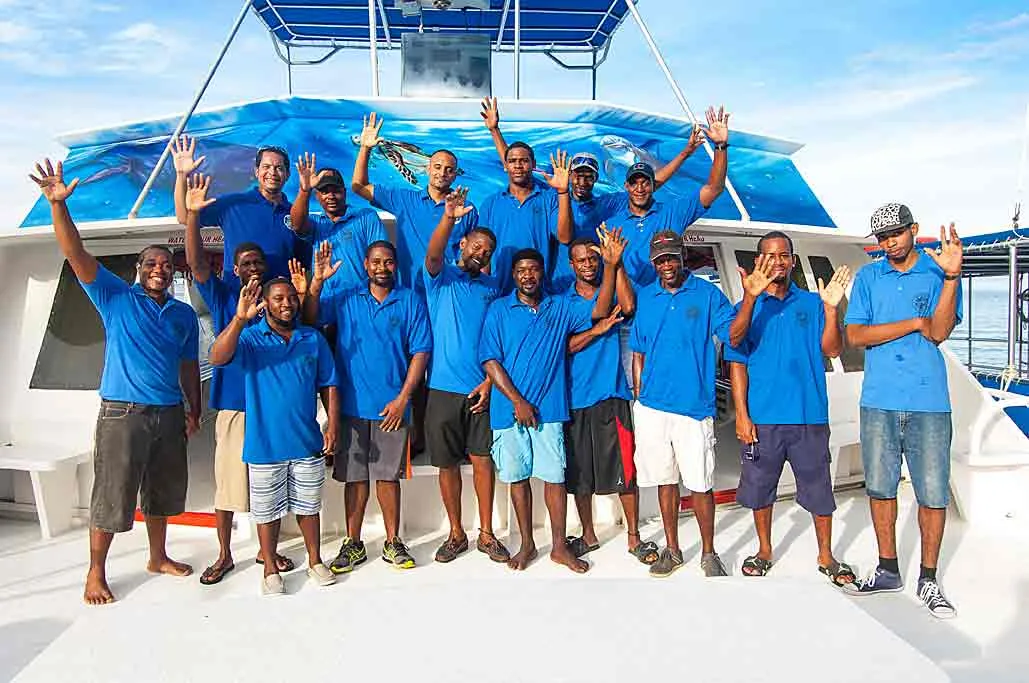
In each one, the dive centre is inside the hotel: step out of your room and go diving.
Dive centre in the hotel★★★★
Google 4.3/5 (758 reviews)
The dive centre
Fort Young Dive
PADI
Google 4.3/5 (769 reviews)
Dives: Champagne Reef, Scott’s Head Pinnacle, Dangleben's Pinnacles
Your last day stays dry: no diving in the 18-24 hours before a flight, the perfect window to see the destination from another angle.
 Nature
⏱ 4 h · ★ 5.0 (15 reviews)
from £72$97€86
see on Viator ↗
 Culture
⏱ 4 h · ★ 5.0 (14 reviews)
from £380$508€454
see on Viator ↗
 Culture
⏱ 5 h · ★ 5.0 (7 reviews)
from £64$85€76
see on Viator ↗
 Nature
⏱ 3 h · ★ 4.5 (27 reviews)
from £59$79€71
see on Viator ↗
Ratings and reviews collected by Viator and Tripadvisor.
Roseau does not have a single dependable month to plan around. Wind, swell and coastal run-off can change visibility and affect exposed walls and pinnacles. Choose a flexible period, keep a reserve day, and allow boat dives to move. Sheltered Champagne Reef may remain comfortable when open sites are less suitable.
Roseau offers options for all levels, particularly at calmer sites and shallower sections such as Champagne Reef and L'Abym's shelf. You should be comfortable with boat procedures and changing open-water conditions. Advanced training helps with deeper walls, while Drift training is useful when Coral Gardens North has current.
Diving in Roseau combines volcanic walls, pinnacles, crater edges, bubble vents and sloping reefs. You may encounter seahorses, frogfish, turtles, crabs, lobsters, barracudas, rays, tuna and black jacks. Coral Gardens North has finger corals and large sponges, while Champagne Reef offers warm bubbles rising through the reef.
Use Roseau or the coast south of town as a base for boat diving, and book your first dive days early so rough seas leave time to reschedule. Keep a full day free as weather margin. Plan flexible travel connections, leave space after your final dive, and consider rainforest walks or waterfalls.