
CMAS
Diaj
Google 5/5 (245 reviews)
Martinique · Caribbean
Volcanic reefs, dark rock gullies and the Épave du Tamaya at 85 metres define Saint-Pierre’s quieter, boat-based diving.
For subtitles in English: start the video firstthen click the gearat the top right of the video, select “Subtitles/CC”, then “Auto-translate” and choose “English”.
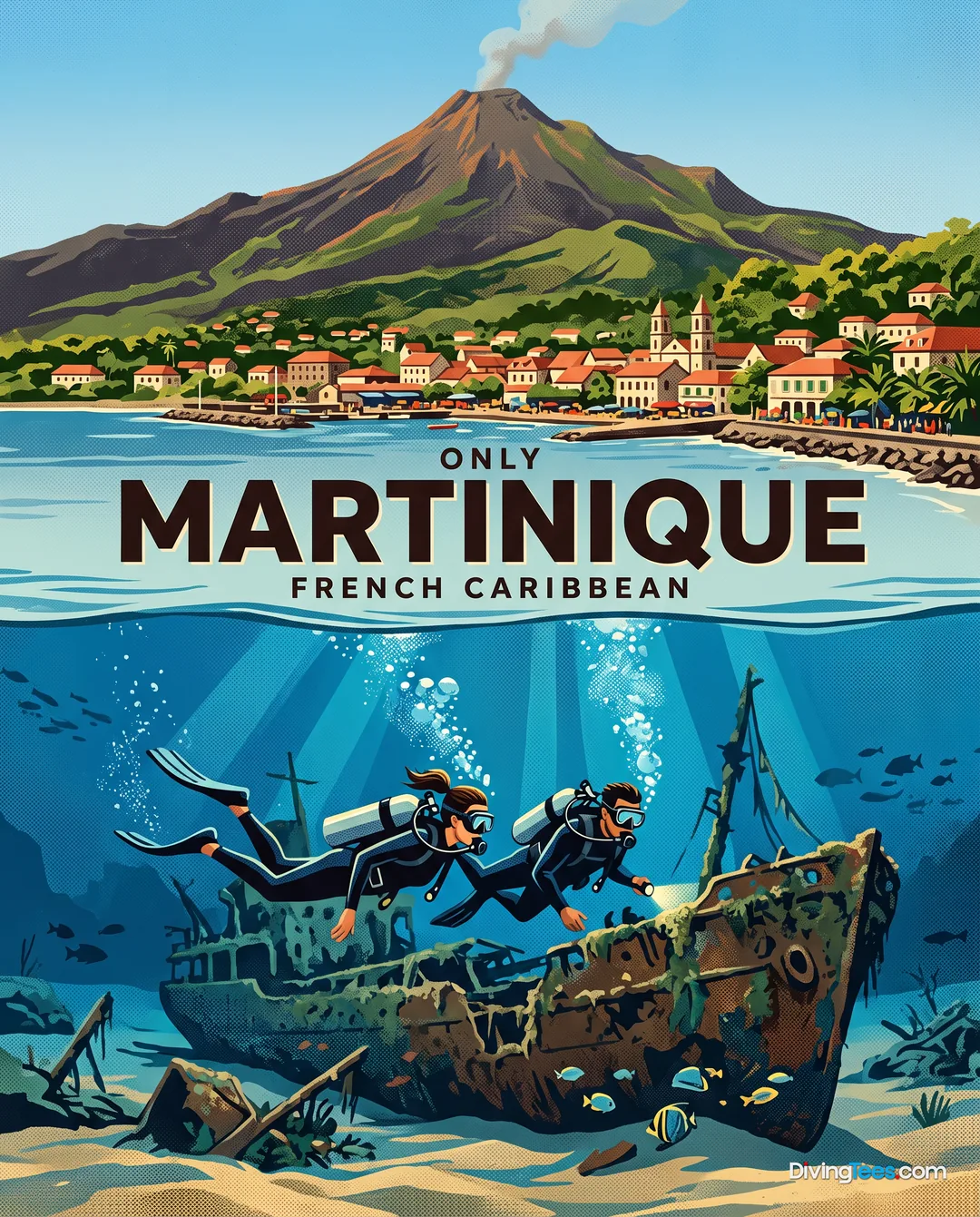
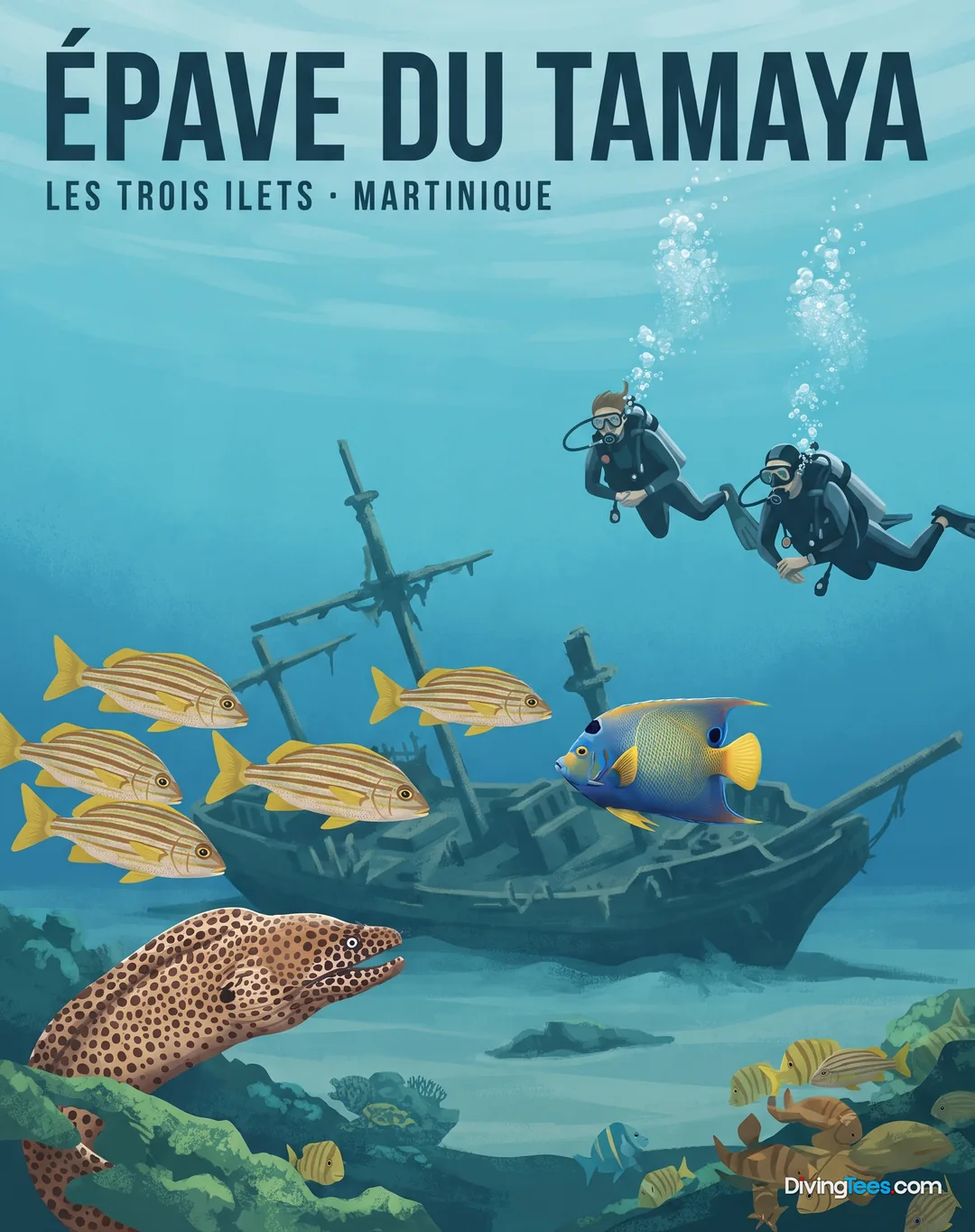
At 85 metres, the Épave du Tamaya takes Saint-Pierre’s maritime history into technical territory: the sailing ship was lost during the 1902 volcanic eruption and now rests in the bay. Above that demanding site, Saint-Pierre works as a shore-based holiday base for boat dives along Martinique’s north-west coast. Volcanic relief, boulders, tropical marine life and historical wreck sites provide the substance, while the town offers a quieter alternative to the island’s larger resort areas.
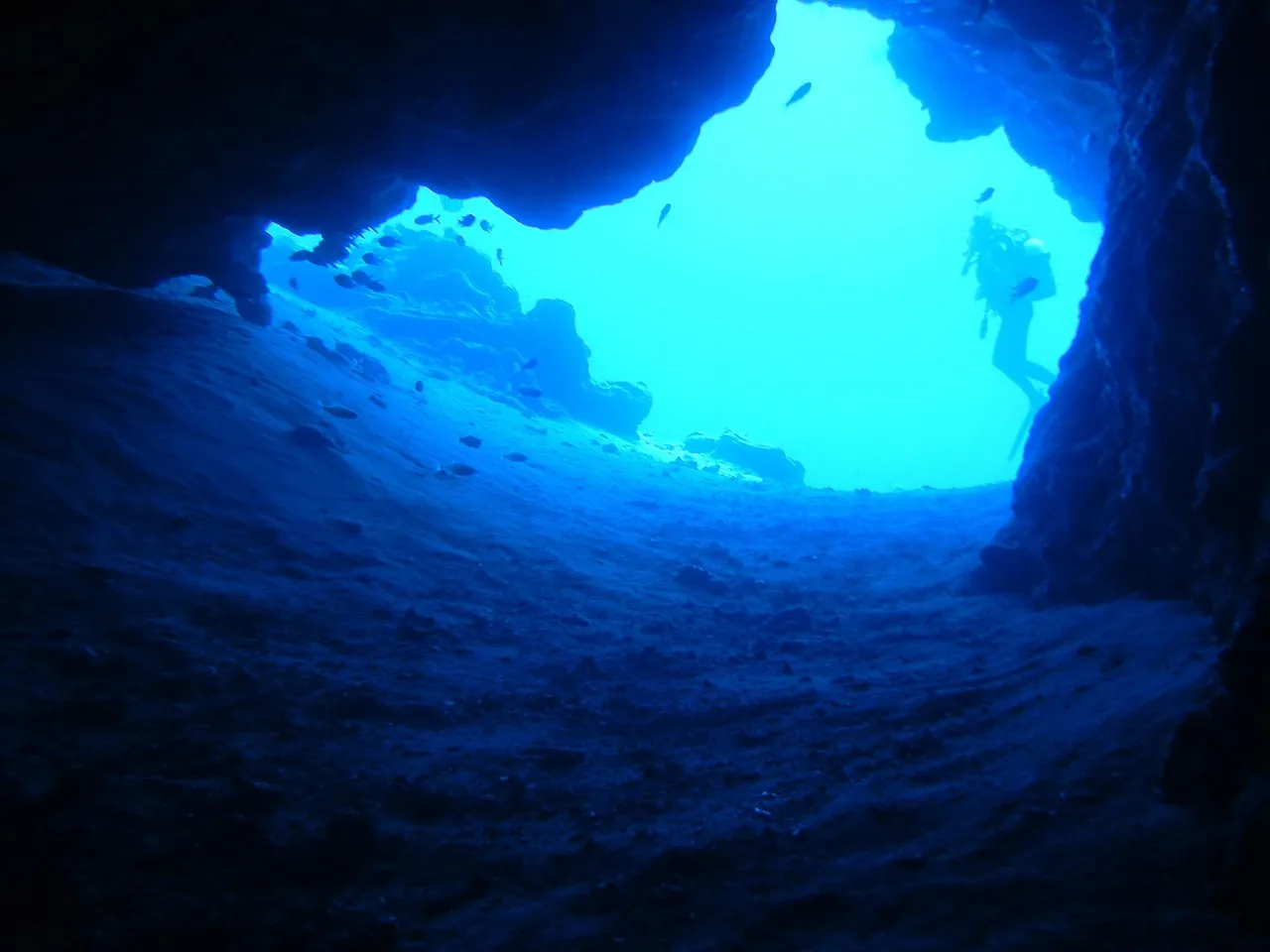
The diving is principally from a boat, following the volcanic coastline rather than relying on unlimited shore entries. Expect dark rock relief, walls, boulder fields and broken ground, with tropical life using the cracks and overhangs. Currents are generally light, which keeps the profiles readable for divers who prefer to spend their attention on the terrain rather than fighting the water. Visibility can be good, particularly on the deep Tamaya site, where conditions are described as unexpectedly clear and the current virtually absent. Most recreational outings are suitable for a range of qualifications, but the Épave du Tamaya is a separate proposition: at 85 metres it is an exclusively technical Trimix dive. A simple dive light is worthwhile in the darker volcanic recesses, even when the main reef profile is bright enough.
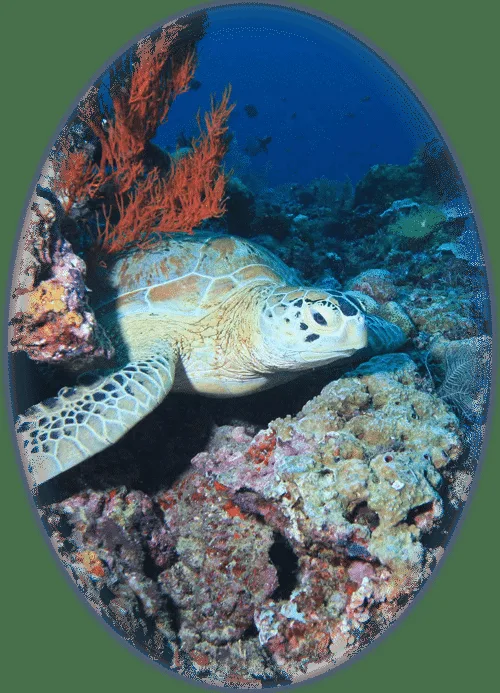
Saint-Pierre is about looking closely rather than arriving with a fixed species checklist. Tropical marine life is associated with the volcanic rocks, boulder fields and broken ground, where fish and smaller reef creatures can occupy cracks, shaded recesses and the edges of the relief. The darker structure gives photographers useful subjects in the anfractuosities, particularly with a compact light or a reliable backup torch. Historical sites add another kind of interest: the Épave du Tamaya is a 1902 sailing ship, not simply an artificial reef, and its appeal lies in reading the wreck as part of Saint-Pierre’s story. No particular seasonal species encounter is established for this area, so the sensible approach is to plan around sea conditions and enjoy the resident tropical life encountered on each outing.
Saint-Pierre is best treated as a flexible, conditions-led destination rather than one tied to a guaranteed calendar window. The north-west coast determines whether a boat outing is comfortable and whether the volcanic relief can be seen properly, so a spell of unsettled sea can change the programme. For that reason, several days on land work better than a tightly packed short break: outings can be placed early, moved when necessary and balanced with time ashore. The lack of a stated seasonal wildlife pattern also makes this a practical choice for divers who value the town, the wreck history and the underwater landscape more than a single annual animal event.
This coast is exposed to sargassum strandings, whose intensity varies greatly from year to year. To find out more, see the “Sargassum alert” panel on this page.
The area suits beginners and qualified recreational divers when the selected site matches their experience. Light currents and boat access make ordinary profiles approachable, while the volcanic terrain still rewards calm buoyancy and careful finning around rock and boulder fields. Nitrox is useful for repeated recreational dives, especially during a run of boat outings. The Tamaya is not an extension of that easy-going brief: its 85-metre depth requires appropriate technical training, Trimix certification and wreck-diving competence. PADI, SSI and BSAC divers should therefore distinguish ordinary local dives from this specialist objective.
From London Heathrow, London Gatwick or Manchester, the practical route is to fly to Martinique’s international airport at Fort-de-France, then continue overland to Saint-Pierre. There is no structural ferry crossing required for the diving, but the transfer to the north-west coast is part of the journey and should be arranged rather than treated as an airport-side arrival. Once in town, accommodation near the centre or waterfront usually keeps the walk to the dive operation short. A taxi or hire car covers the remaining cases. The boat trips leave from Saint-Pierre or its immediate surroundings, so there is no additional daily island transfer built into the normal diving pattern.
Book the first boat outings early in the stay, leaving room to move them if the north-west coast becomes rough. A spare day is more useful here than a tightly engineered schedule, because the destination depends on sea conditions rather than a liveaboard timetable. Stay in or close to the town centre or waterfront if avoiding a car before an early departure matters. Ask for volcanic relief and boulder sites as well as wrecks; the character of Saint-Pierre is in the combination, not in treating every dive as a hunt for history. Carry a simple light or backup torch for the dark gaps in the rock. Do not arrive expecting unlimited shore diving: the local pattern is boat-based. Nor should a standard recreational itinerary be confused with the Tamaya, an 85-metre Trimix wreck dive. Keep the technical wreck as a separate objective, with the right certification and equipment.
Four to seven days allows a sensible series of boat dives around Saint-Pierre, with enough flexibility to move an outing when the sea is unhelpful. The stay works on land rather than aboard a dedicated dive vessel: mornings belong to the boat, while afternoons can be given to the waterfront, the town’s eruption history or short excursions around the north-west. Non-divers have genuine reasons to stay, so the destination suits couples and mixed groups better than a purely dive-focused base.
Hello, I'm Marina, DivingDeal.com's AI assistant. I guide you through destinations, areas and countries.
Thinking about the whole trip and the flights? Talk it over with Edith →
Marina is an AI. Some links are affiliate links: DivingDeal may earn a commission, at no extra cost to you. Bookings are made with the partner.
Your last day stays dry: no diving in the 18-24 hours before a flight, the perfect window to see the destination from another angle.
 City
City⏱ 5 h · ★ 4.9 (113 reviews)
from £80$106€95
see on Viator ↗
 Culture
⏱ 7 h · ★ 4.9 (27 reviews)
from £126$168€150
see on Viator ↗
 Nature
⏱ 2 h · ★ 5.0 (30 reviews)
from £9$12€11
see on Viator ↗
Ratings and reviews collected by Viator and Tripadvisor.
Saint-Pierre suits a flexible, conditions-led trip rather than one built around a seasonal wildlife event. Sea conditions along the north-west coast can affect boat outings and visibility of the volcanic relief, so allow several days on land. This gives you room to move dives and balance underwater time with town activities.
Saint-Pierre offers ordinary boat dives suitable for beginners and qualified recreational divers when you select profiles matching your experience. Light currents and readable terrain help, although calm buoyancy and careful finning matter around rocks and boulders. The Épave du Tamaya is different, requiring technical training, Trimix certification and wreck-diving competence.
Saint-Pierre features volcanic walls, dark rock relief, boulder fields, broken ground and tropical marine life around cracks, shaded recesses and overhangs. You can also explore historical wreck sites, including the Épave du Tamaya, a sailing ship lost during the 1902 eruption. A dive light helps reveal darker volcanic structures.
Plan Saint-Pierre as a shore-based holiday with boat dives along Martinique’s north-west coast. Fly to Fort-de-France, arrange the overland transfer, and consider staying near the town centre or waterfront for easier access to the dive operation. Book early outings, keep spare time for changing sea conditions, and do not expect unlimited shore diving.