Martinique Plongée
Google 5/5 (564 reviews)
Martinique · Caribbean
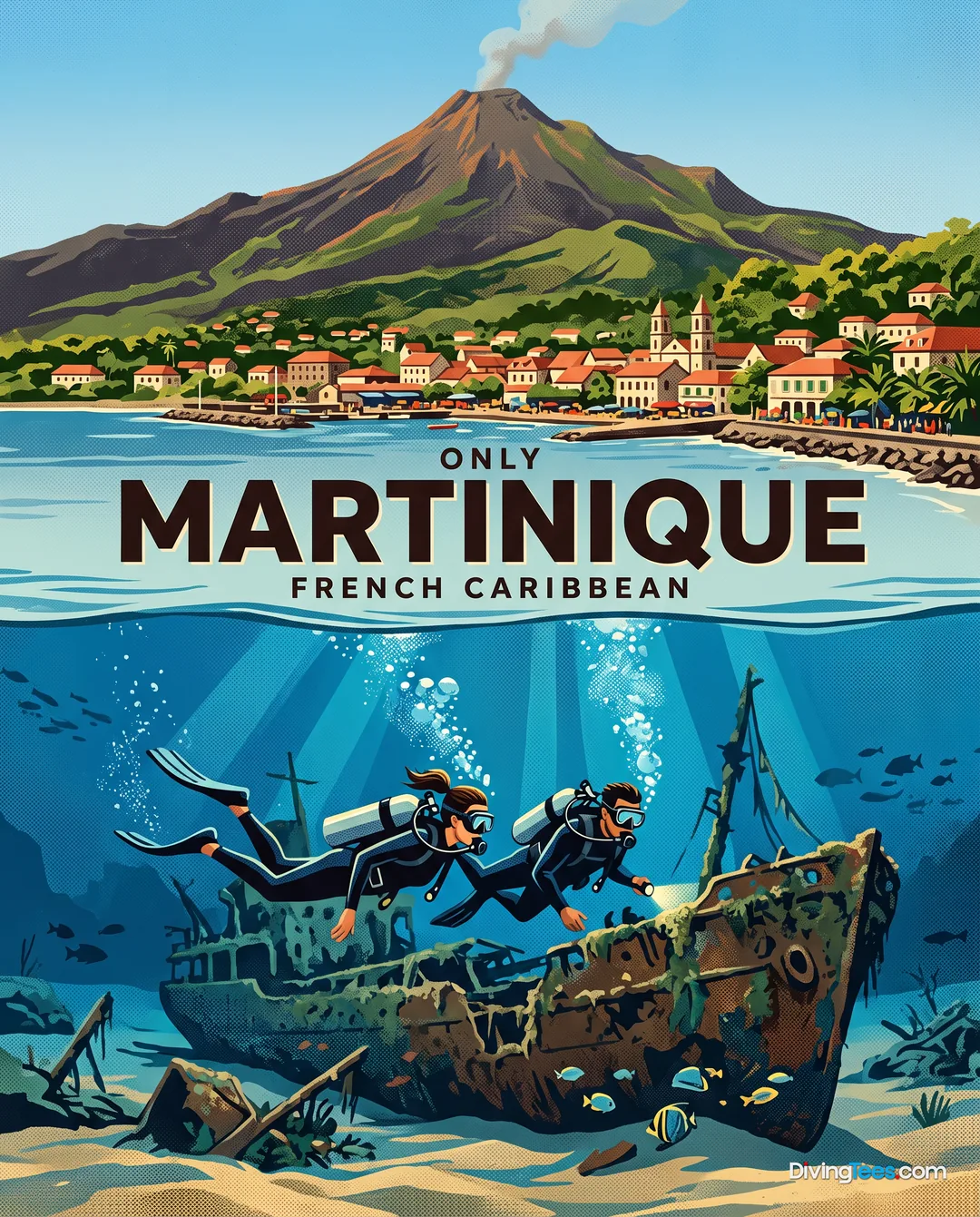
From the Nahoon at 36 metres to shallow coral gardens and 60-metre walls, Les Trois Ilets pairs turtle encounters with varied Caribbean underwater terrain.
For subtitles in English: start the video firstthen click the gearat the top right of the video, select “Subtitles/CC”, then “Auto-translate” and choose “English”.
Les Trois Ilets suits divers who want calm reef dives without giving up deeper features. Shallow sites such as Anse 3 Airs combine rocky formations, coral gardens and a small cargo wreck, while the Nahoon provides a very different day around an intact three-masted ship at 36 metres. Turtles appear regularly along gentle slopes, and the local diving can accommodate a first experience as comfortably as a seasoned diver looking for a relaxed warm-water itinerary.
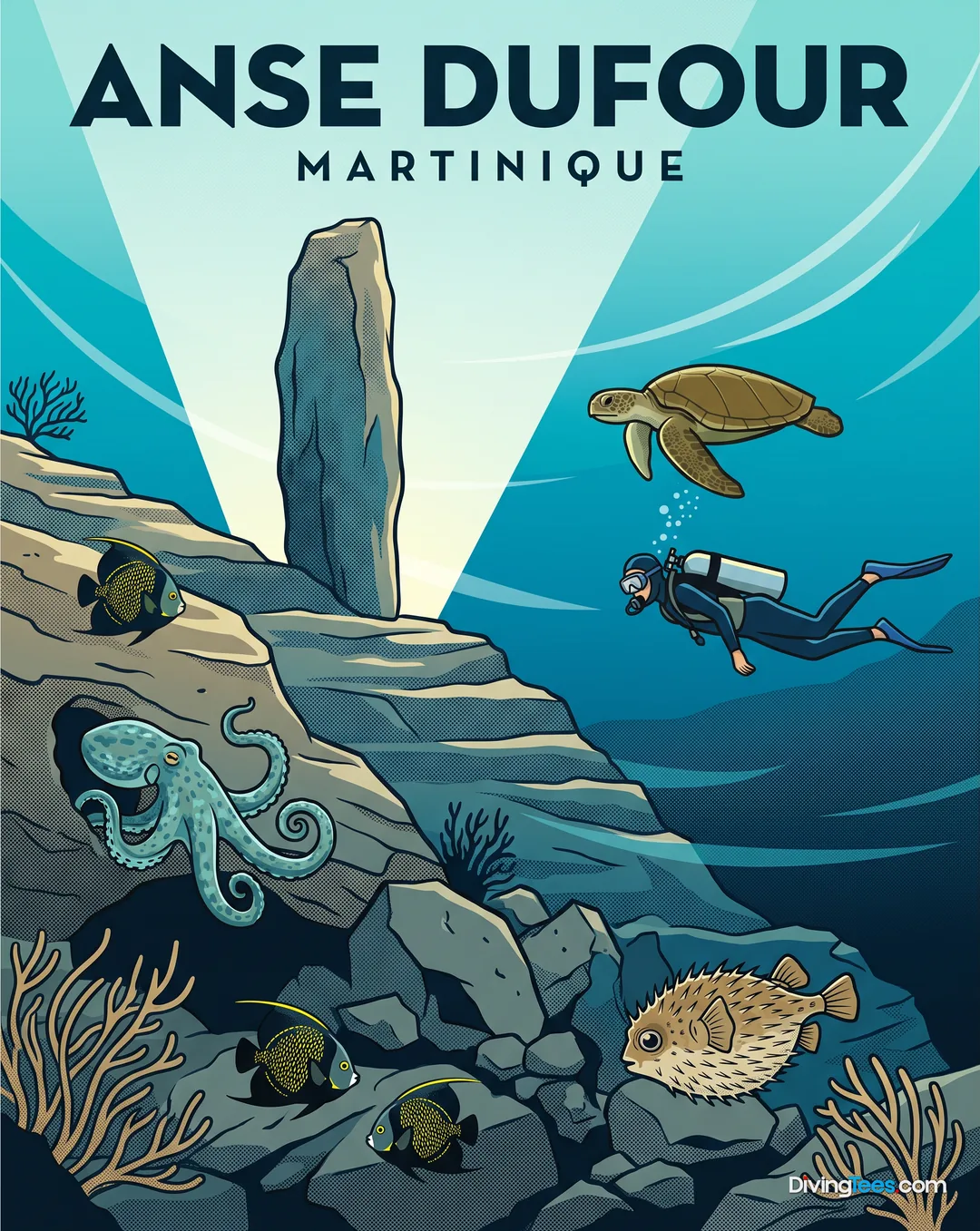
The underwater landscape is mostly made up of gentle slopes, rocky outcrops, coral masses and sandy patches. Jardin de Salomon descends to 20 metres through soft corals and reef fish, while Cap Enragé adds a maze of small underwater canyons. Several sites are calm and lightly current-affected, including Anse Dufour, where a progressive drop-off to 25 metres lends itself to an easy drift. The exception is Les petites et les grandes Jorasses: its sand circuses and wall falling towards 60 metres are exposed and regularly current-swept, with bigeye trevally, Spanish mackerel and rays as possible rewards. Visibility is often around 25 metres at individual sites, with 30 to 40 metres reported for the Nahoon and some regional conditions. Depths range from shoreline shallows to serious deep-water diving.
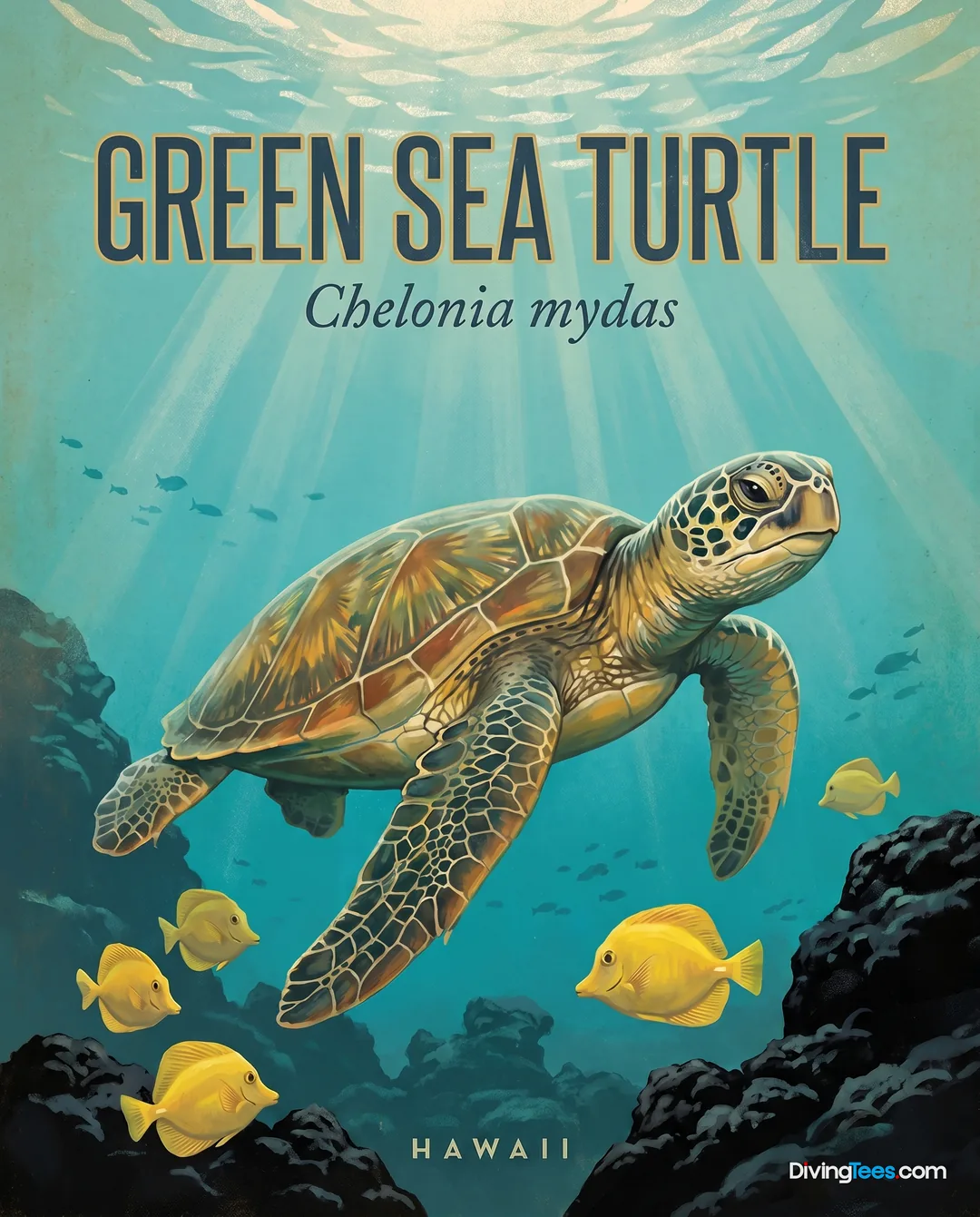
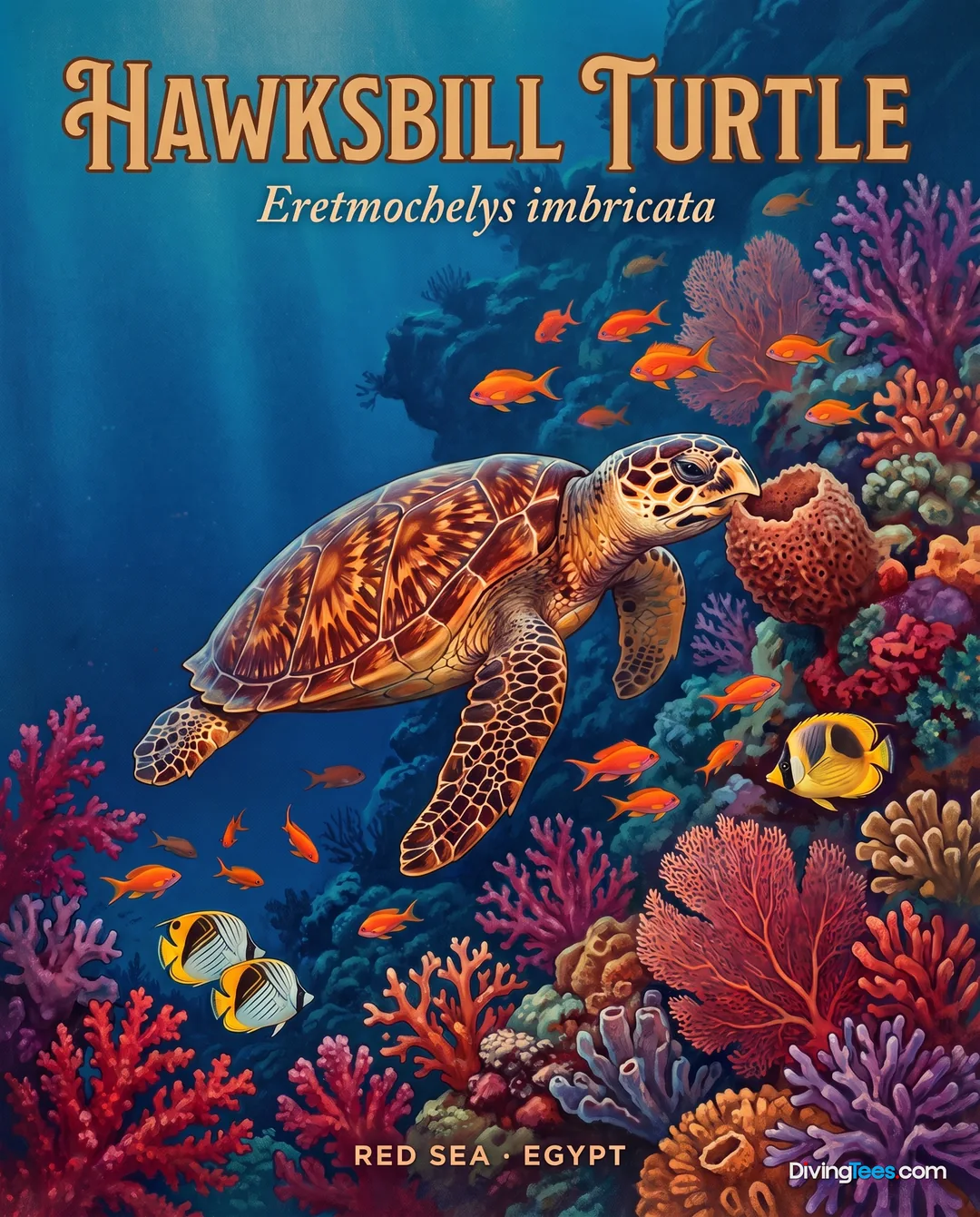
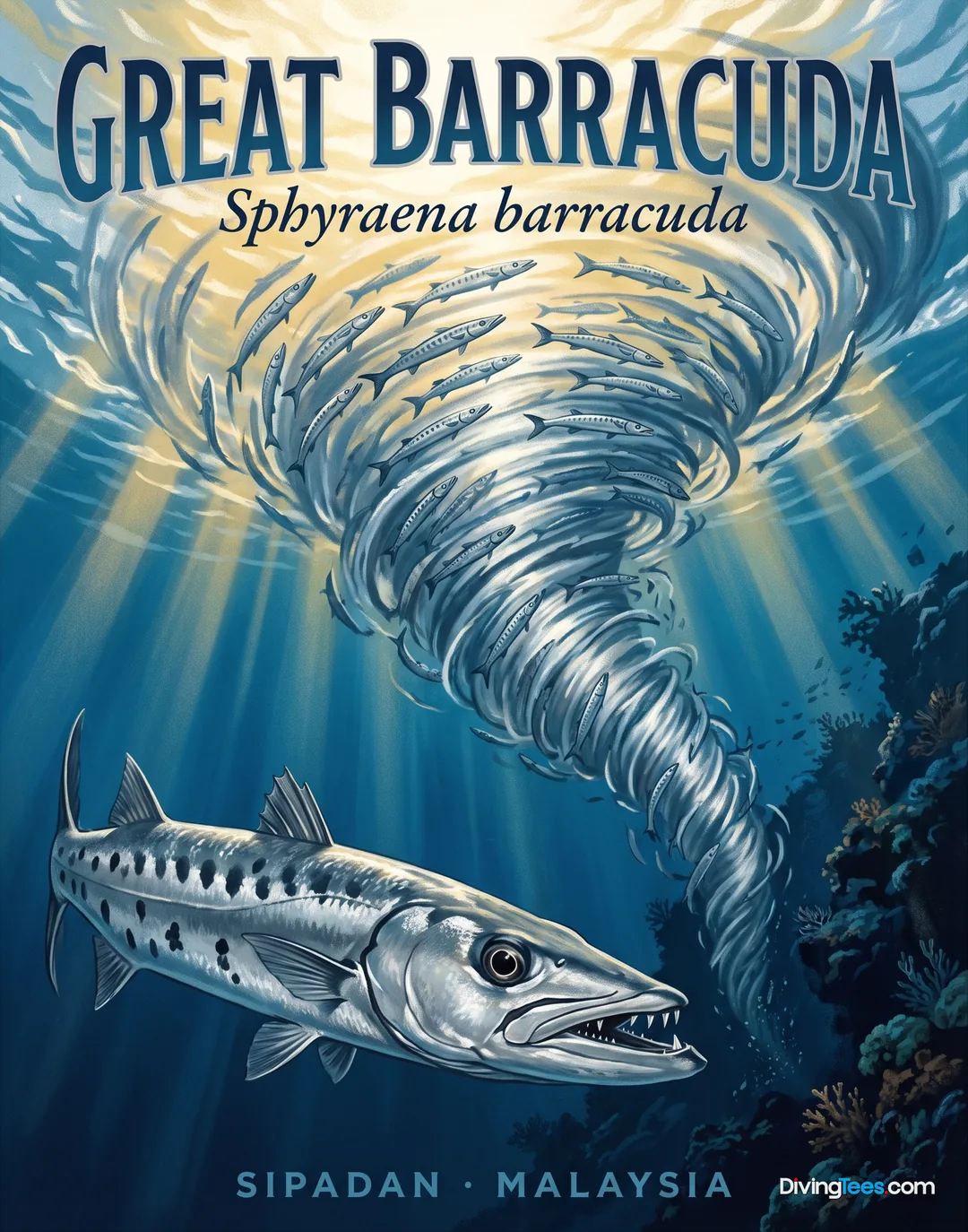
Sea turtles are the dependable attraction, appearing frequently at Pointe de la Baleine, L'arbre mort, Jardin de Salomon and La Pointe de la Lézarde. Rocky debris and coral masses provide plenty to examine at a slower pace: octopus, moray eel, spiny lobster, spider crabs, marine worms and spirographs occupy the smaller recesses. Parrotfish, angelfish and royal angelfish add colour over the reef, while sardines and bigeye trevally bring movement to the blue. Spanish mackerel, great barracuda, plumed jacks and southern stingrays are among the larger encounters, particularly where the terrain opens out. No separate migration window is given for these species, so the sensible expectation is resident tropical life throughout the diving year, with conditions rather than a single animal season shaping the choice of site.
August to October is the measured sweet spot: the sea is at its calmest then, making the gentle slopes and drift profiles easier to enjoy and giving the more exposed Jorasses a better chance of running comfortably. December to May brings the lowest rainfall, which may suit a longer holiday above water, although the sea is not measured as calmest in that period. Diving remains possible throughout the year, with water temperatures typically around 27 to 28°C. For the clearest individual dives, Pointe de la Baleine and L'arbre mort are reported at up to 25 metres, while the Nahoon can reach 30 to 40 metres.
This coast is exposed to sargassum strandings, whose intensity varies greatly from year to year. To find out more, see the “Sargassum alert” panel on this page.
Much of Les Trois Ilets is suitable for all levels, including first dives: Anse 3 Airs, Jardin de Salomon, Cap Tranquille and L'arbre mort all keep the profile manageable. Open Water level is enough for Cap Enragé, while the Nahoon requires Level 2 or PE40 certification. Les petites et les grandes Jorasses is not a beginner proposition in practice, despite the listed Level 1 / PE20 access, because strong currents and a wall towards 60 metres demand sound judgement, buoyancy and comfort in moving water. BSAC, PADI and SSI divers should match their qualification and logged experience to the site briefing.
For departures from London or Manchester, the journey needs to be planned as an air itinerary reaching Martinique, followed by the onward transfer to Les Trois Ilets. The practical detail is the connection between the arrival point and the dive base: allow enough margin for luggage, dive equipment and any late-running flight, rather than building the first boat outing around a tight arrival. Once in the area, the sites are reached either from shore, as at Anse Dufour, or by arranging the local boat movement for offshore locations. Keep the accommodation and diving base close together where possible; this makes early departures and equipment handling less tiring. Exact airlines, flight times and local transfer arrangements should be checked when booking.
Build the week around the sea state rather than promising the deepest dive on a particular day. Keep Les petites et les grandes Jorasses flexible: the strong current is part of the site, not a minor inconvenience, so a calm reef alternative is sensible if the briefing does not suit the group. Put the Nahoon on a day when the certified divers are rested; at 36 metres, its intact hull and artificial-reef life deserve more than a rushed bottom time. Use the shallow cargo wreck at Anse 3 Airs as an unhurried orientation dive, especially after travel. The 27 to 28°C water is warm, but a light exposure layer remains useful for repeated dives and longer boat time. At the turtle sites, slow the pace over the coral masses and rocky debris: Pointe de la Baleine, L'arbre mort and Jardin de Salomon reward patient looking rather than covering distance. A calm site such as Cap Tranquille is the better choice when the aim is simply to settle into the week.
A four- to seven-night stay gives enough time to mix shallow reef work, turtle dives and one deeper objective without making every day demanding. Start with Anse 3 Airs, Jardin de Salomon or Cap Tranquille, then move towards the Nahoon or the deeper relief when the group is settled. Leave flexibility for the Jorasses, whose current may decide the day. Non-divers can share the shore-based rhythm around the bays, while divers alternate boat outings with slower surface intervals.
Hello, I'm Marina, DivingDeal.com's AI assistant. I guide you through destinations, areas and countries.
Thinking about the whole trip and the flights? Talk it over with Edith →
Marina is an AI. Some links are affiliate links: DivingDeal may earn a commission, at no extra cost to you. Bookings are made with the partner.
Your last day stays dry: no diving in the 18-24 hours before a flight, the perfect window to see the destination from another angle.
 Nature
⏱ 2 h · ★ 5.0 (30 reviews)
from £9$12€11
see on Viator ↗
 City
City⏱ 5 h · ★ 4.3 (86 reviews)
from £60$81€72
see on Viator ↗
 Culture
⏱ 4 h · ★ 3.0 (2 reviews)
from £54$73€65
see on Viator ↗
 Culture
⏱ 6 h
from £142$189€169
see on Viator ↗
Ratings and reviews collected by Viator and Tripadvisor.
Diving is possible throughout the year, with water temperatures typically around 27 to 28°C. August to October brings calmer seas, which can make gentle slopes, drift profiles and the exposed Jorasses easier to enjoy. December to May has the lowest rainfall, so it may suit a longer holiday above water.
Les Trois Ilets offers manageable sites for all levels, including first dives at Anse 3 Airs, Jardin de Salomon, Cap Tranquille and L'arbre mort. Open Water level is enough for Cap Enragé. The Nahoon requires Level 2 or PE40, while the current and depth at the Jorasses demand sound judgement and comfort in moving water.
You can encounter turtles frequently at Pointe de la Baleine, L'arbre mort, Jardin de Salomon and La Pointe de la Lézarde. The underwater scenery includes coral gardens, soft corals, rocky outcrops, sandy patches, canyons and walls. Expect reef fish, octopus, moray eels, lobsters, rays, barracuda and the intact Nahoon wreck.
Allow enough time for your flight, luggage, dive equipment and onward transfer to the dive base. Keep accommodation near the diving base where possible, then begin with a shallow site such as Anse 3 Airs or Jardin de Salomon. Leave the Jorasses flexible, schedule the Nahoon when certified divers are rested, and mix boat outings with slower surface intervals.