
Tobago Dive Experience
Google 5/5 (48 reviews)
34 km away as the crow flies
Tobago · Trinidad & Tobago · Caribbean
Max. depth · 21 mDescend into Cove Reef's gentle current on Tobago's Atlantic side, where serene drift dives bring you face-to-face with turtles, nurse sharks, and vast schools of reef fish.
For subtitles in English: start the video firstthen click the gearat the top right of the video, select “Subtitles/CC”, then “Auto-translate” and choose “English”.
Cove Reef presents itself as a captivating drift dive on Tobago's Atlantic coast, catering to intermediate divers with its gentle current and diverse topography. The dive often unfolds primarily around 12 metres, allowing for extended bottom time, typically up to an hour. As you descend, you'll immediately feel the subtle push of the current, guiding you effortlessly along the reef's contours. This relaxed drift allows for a truly immersive experience, giving ample opportunity to observe the vibrant marine ecosystem without strenuous finning.
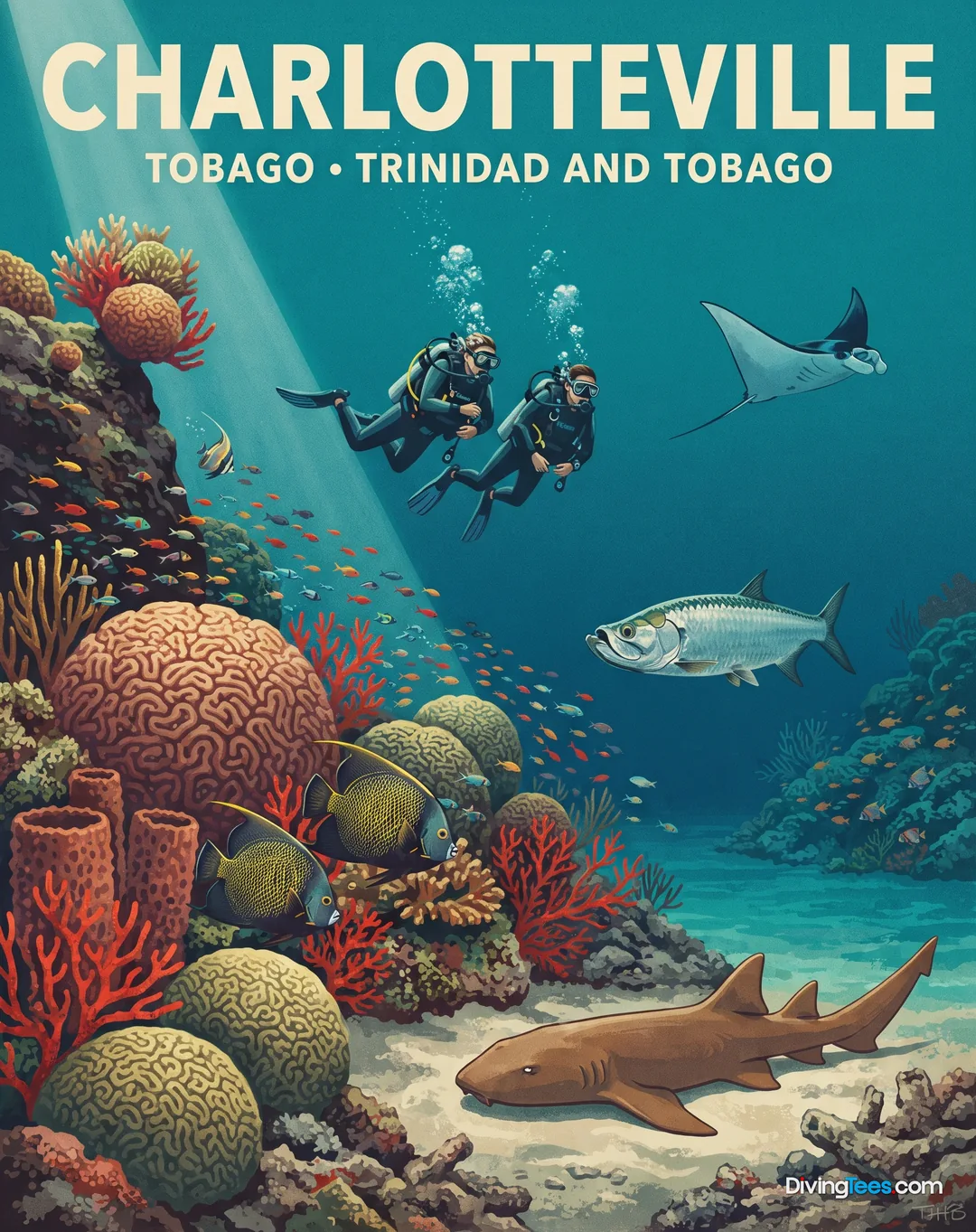
The site is characterized by two distinct reef sections. The shallower margin, extending from approximately 11 to 15 metres, is a haven for larger marine life. Here, you'll frequently encounter turtles gracefully navigating the corals, along with the more elusive nurse sharks and sand sharks resting in the sandy patches or cruising past. Keep an eye out for impressive Cubera snapper that find refuge in the small caves and the intricate coral formations, often ambushing unsuspecting prey.
Moving along the shallower reef, the scene transforms into a living aquarium as you pass through dense schools of reef fish. The sheer numbers and diversity create a mesmerizing spectacle, with every crevice and coral head teeming with activity. The light current ensures this section of the dive remains calm and allows for detailed observation of the smaller inhabitants that blend seamlessly into the vibrant hard and soft corals.
The deeper side of Cove Reef dips down from 11 metres to its maximum depth of 21 metres, revealing an equally healthy and visually stunning coral ecosystem. This area is adorned with a rich tapestry of gorgonian corals, colossal barrel sponges, and expansive fields of staghorn corals. The structural complexity of this deeper reef provides shelter and hunting grounds for larger predatory fish, enhancing the dynamic feel of the dive.
As you explore the deeper sections, you may witness the powerful presence of enormous groupers, often seen moving in and out of the intricate staghorn coral formations. These resident giants are a testament to the reef's health and abundance. Furthermore, large schools of Bermudan Chub often cruise along the edge of the reef, their synchronized movements adding a sense of grandeur to the dive as they navigate the currents.
Cove Reef is an intermediate dive site with depths ranging from 11 to 21 metres. Divers should anticipate a weak current, which facilitates a relaxed drift dive experience. The shallow depth of much of the site allows for extended bottom times, often reaching up to an hour.
Cove Reef is an intermediate dive site on Tobago’s Atlantic coast. Its gentle current supports a relaxed drift dive, while the varied reef sections offer different environments to explore. You should be comfortable with drift diving and with depths ranging from the shallow margin to the deeper reef.
Cove Reef ranges from 11 to 21 metres, with much of the dive unfolding around 12 metres. The shallow margin extends from 11 to 15 metres, while the deeper reef reaches 21 metres. These relatively shallow depths can allow extended bottom times, often reaching up to an hour.
Cove Reef has a weak, mild current that guides you gently along the reef contours. This creates a relaxed drift dive without strenuous finning and lets you observe the reef closely as you move. The current also carries you past shallow coral areas and the deeper reef sections.
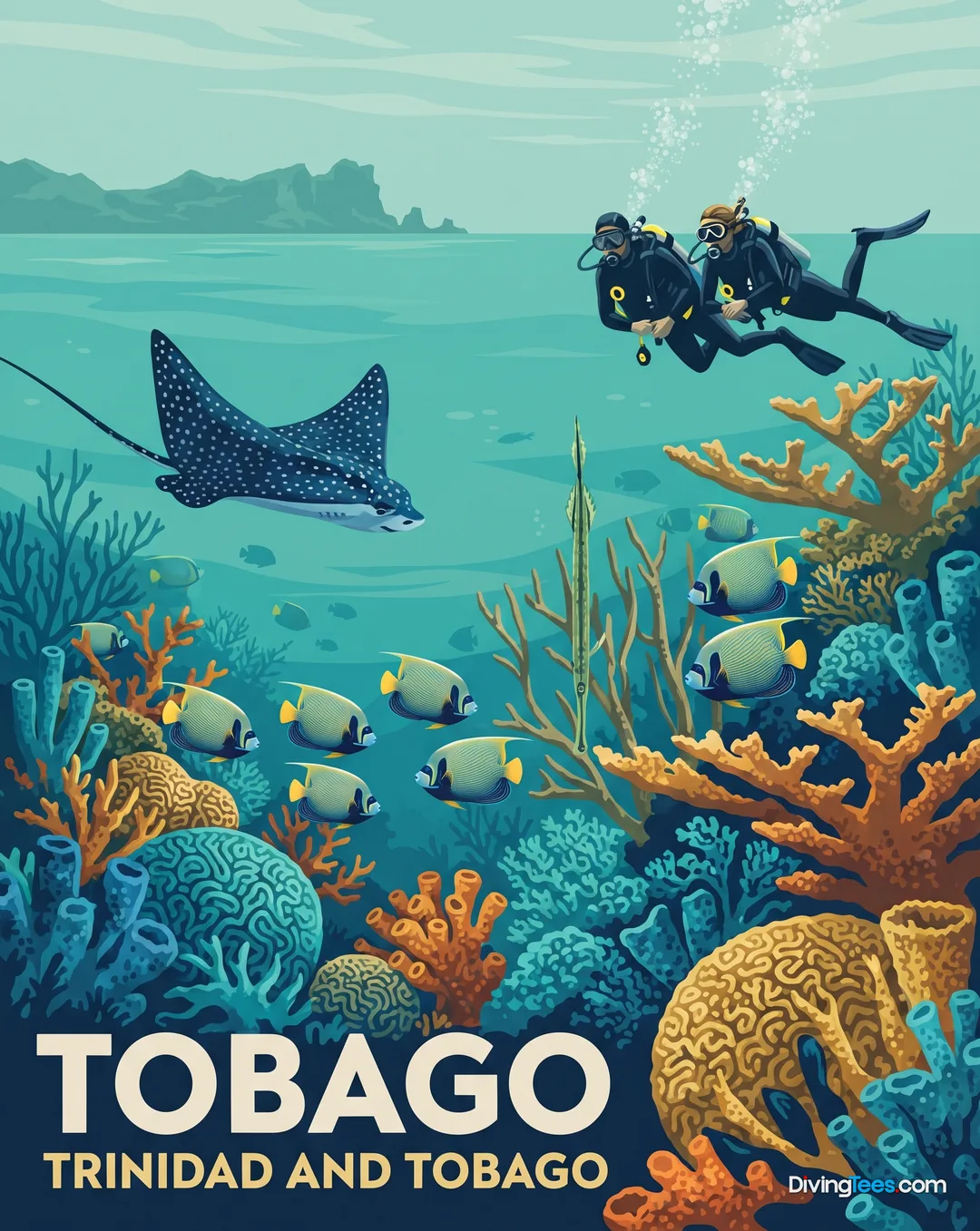
At Cove Reef, you can encounter turtles, nurse sharks, sand sharks, and large Cubera snapper sheltering in caves. Schools of reef fish fill the coral formations, while deeper areas feature gorgonian and staghorn corals, barrel sponges, large groupers, and schools of Bermudan Chub.