Liveaboards · Antarctica
Hondius Antarctica Diving — a modern polar expedition ship
What makes this boat unique
- Built in 2019, Hondius carries the highest polar ice class among ice-strengthened vessels.
- The ship offers Antarctic itineraries from 11 days / 10 nights to 23 days / 22 nights.
- Zodiac excursions, naturalist-led landings, hiking, photography workshops and kayaking shape the expedition.
- Cabins range from porthole and window categories to suites, with private bathrooms and air conditioning.
- Most recorded voyages leave from and return to Ushuaia; one route runs from Puerto Madryn to Ushuaia.
The invitation
Hondius is for travellers who want Antarctica as an expedition rather than a conventional cruise. The ship takes its passengers out by Zodiac for shore excursions, then brings the landscape into focus through naturalist guidance, photography workshops, hiking and kayaking when those activities form part of the voyage. Its strongest argument is the combination of polar capability and expedition infrastructure: a high ice class, a fleet of Zodiacs and enough indoor space to remain comfortable when weather closes in. Diving is available on selected Antarctic voyages through an optional diving pack, but the boat’s identity is broader than a dedicated dive liveaboard. Choose Hondius when the priority is to reach Antarctic scenery and wildlife with a serious expedition team, while keeping diving as one part of the journey rather than the entire programme.
Boarding
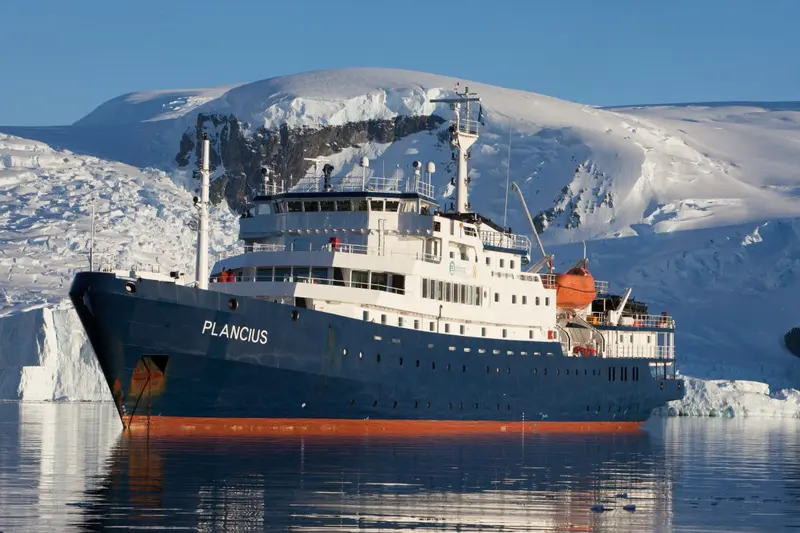
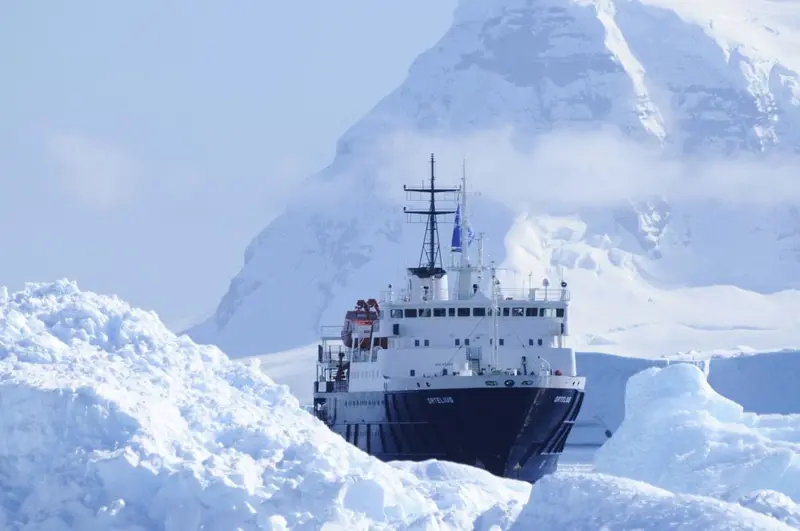
Hondius makes a purposeful first impression. Built in 2019, it has the clean, practical look expected of a vessel designed for polar waters rather than a converted pleasure boat. Its highest ice class among ice-strengthened vessels is not a decoration: it is the reason the ship can operate in an environment where ice, weather and distance govern the route. Once aboard, the scale is immediately apparent. This is an expedition ship with the capacity for up to 170 passengers, not an intimate yacht where everyone knows every cabin by the second morning. The layout is built around movement between cabins, public rooms, observation areas and the Zodiac operation. The naturalist team gives the ship its purpose; the vessel provides the platform and protection needed to get close to the Antarctic coast without pretending conditions can be controlled.
The atmosphere on board
Hondius feels more like a working expedition base than a formal cruise ship. The crew’s role is visible ashore and aboard: guides organise excursions, explain the local ecosystem and polar science, and keep safety at the centre of each outing. Passengers describe staff who are knowledgeable, professional, kind and attentive, with the hospitality team adding good food and an easy onboard manner. English is the working language. In the evening, the day comes back into the ship through briefings, talks, photographs and conversations about what was seen from the Zodiacs. That combination matters in Antarctica. The crew does not simply open doors and serve meals; it turns changing weather and uncertain landings into a coherent expedition while keeping the atmosphere informal rather than ceremonial.
Between dives
The hours between landings are built around watching the polar world rather than filling time with resort entertainment. The observation deck gives the clearest place to follow ice, coastline and wildlife from the ship, while the terrace offers an outdoor alternative when conditions allow. Inside, passengers can move between the lounge, library and bar, or use the audio and video entertainment. Naturalist-led talks add context to the scenery, local ecosystem and polar science instead of treating the voyage as a succession of viewpoints. Kayaking, hiking and photography workshops provide more active options on selected voyages; kayaking is an optional extra. The useful rhythm is simple: return from a Zodiac, warm up, eat, listen, look outside and decide whether the next activity calls for boots, a camera or another layer.
What you eat aboard
Food is organised for long days outside. Full board covers all meals, with snacks available throughout the day, so a Zodiac outing or landing does not leave passengers waiting for the next formal service. The dining offer combines buffet meals with à la carte dinner and Western cooking, alongside vegan and vegetarian choices. Beer, wine, cocktails and a selection of higher-end wines are available on board, while water, tea and coffee are provided. The point of the table here is practical: after cold air, wet landings and time in a Zodiac, a proper meal becomes part of the expedition’s recovery. The dining room is not merely a break from the programme; it is where the day’s observations are compared, photographs reviewed and the next outing discussed.
Nights at sea
The cabins are designed for recovery after a day outside, not for spending the voyage indoors. Every category has a private bathroom and air conditioning, from Quadruple Porthole and Triple Porthole cabins through Twin Porthole, Twin Window and Twin Deluxe options to Superior Cabins, Junior Suites and the Grand Suite with Private Balcony. Standard windows are available, while selected cabins have accessible balconies. Daily housekeeping, towels, toiletries, a hair dryer and a cabin safe cover the practical side of life at sea. The upper-deck cabin location and sea views give the better-positioned categories a more direct connection with the weather and light outside. In rough conditions, the useful luxuries are simple ones: a private bathroom, a warm cabin and somewhere to put wet expedition clothing before the next landing.
Quadruple Porthole
Triple Porthole
Twin Porthole
Twin Window
Twin Deluxe
Superior Cabins
Junior Suite
Grand Suite Private Balcony
What to know before boarding
Most recorded Hondius Antarctic itineraries depart from and return to Ushuaia. One listed route runs from Puerto Madryn to Ushuaia, while the longer Falkland Islands, South Georgia and Antarctic Peninsula voyages also use Ushuaia for embarkation and disembarkation. Airport and hotel transfers are included. Arriving in the departure city the night before remains the sensible choice for a voyage whose boarding depends on a fixed port operation.
Deck plan
Itineraries, dates and prices
Prices per person. Each month shows its lowest price: click a month, or pick an itinerary.
Next departures · 4 departuresfrom £7,196$9,620€8,595
December 2026
November 2027
January 2028
February 2028
See dates and prices
If you click these links and make a purchase on the partner site, DivingDeal may earn a commission, at no extra cost to you.
Dates and prices taken from liveaboard.com, updated 22 October 2026
- Year built
- 2019
- Length
- 107.6 m
- Beam
- 17.6 m
- Maximum number of passengers
- 170
- Number of cabins
- 80
- Engines
- 2 × ABC main engines; total 4200 kW
- Website
- oceanwide-expeditions.com ↗
Hello, I'm Marina, DivingDeal.com's AI assistant. I answer in detail about hotels, dive centres and liveaboards.
Thinking about the whole trip and the flights? Talk it over with Edith →
Marina is an AI. Some links are affiliate links: DivingDeal may earn a commission, at no extra cost to you. Bookings are made with the partner.