Liveaboards · Antarctica
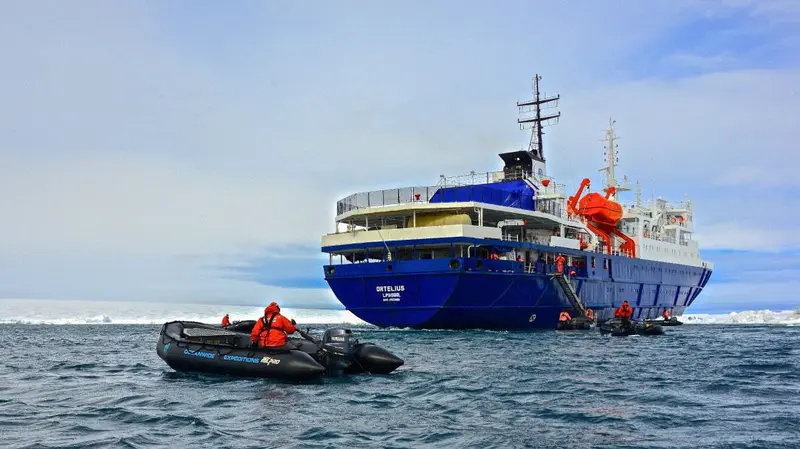
Plancius Antarctica Diving — a former naval vessel built for polar expeditions
What makes this boat unique
- Plancius is a former marine vessel built in 1976 and renovated in 2009.
- The ship carries up to 108 passengers and uses 10 Mark V Zodiacs for shore excursions and water access.
- The routes depart from and return to Ushuaia, with voyages lasting from 10 to 43 days.
- Daily diving takes place alongside naturalist-led polar exploration.
- Non-divers and snorkelers are welcome on board.
For subtitles in English: start the video firstthen click the gearat the top right of the video, select “Subtitles/CC”, then “Auto-translate” and choose “English”.
The invitation
Plancius is an expedition ship first, with diving added to the polar program rather than a purpose-built dive liveaboard. That distinction matters. The reason to choose it is the combination of daily dives, Zodiac outings, shore excursions and close approaches to Antarctic ice, with enough space for non-divers to join the journey too. You come aboard to see a side of Antarctica that cannot be reached from a conventional cruise: low in the water in a Zodiac, alongside drifting ice, then back on board for a naturalist briefing or a hot drink. It suits divers who want the wider expedition as much as the time underwater, and who accept that polar conditions shape the itinerary.
Boarding
The first impression is practical rather than yacht-like. Plancius began life as a marine vessel in 1976 and was renovated in 2009, and that history gives the ship a working character suited to cold-water exploration. The layout is made for moving between the cabins, public rooms, observation areas and the boarding points for the Zodiacs. It is a sizeable expedition platform, not an intimate boat where everyone knows the whole crew immediately. The reward is stability, operational range and a proper base for landings, wildlife watching and diving in Antarctic waters.
The atmosphere on board
The crew’s role is central to the experience. Passenger feedback consistently points to staff who are competent, kind and attentive to safety, both on board and during shore excursions. That is particularly important on an expedition vessel, where weather and ice can change the plan and the crew has to keep the operation clear without making it feel heavy. Evenings are informal: the day’s sightings, the next landing and the changing conditions become the conversation. The food receives the same strong response as the staff, giving the ship a notably comfortable side after a day outside.
Who puts you in the water
The crew speaks English, and daily dives are led by expert guides within the wider naturalist expedition team. The vessel carries oxygen, first-aid kits, life jackets and lifeboats, supported by radar, sonar, GPS and radio communications for navigation and contact in polar waters.
The dive deck and the gear
Plancius offers daily diving with expert guides and carries 10 Mark V Zodiacs, the working link between ship and water in Antarctica. Dive packages, additional dives and equipment rental are optional extras rather than automatic inclusions. Snorkelers and non-divers are welcome, making this a mixed expedition platform: the Zodiacs serve diving, wildlife watching and shore excursions, not only the dive groups.
Between dives
Between excursions, the ship gives the expedition room to continue without putting on a show. The observation deck is the place to watch ice, birds and the coastline pass at water level; the library and audio-video facilities suit the quieter stretches. Kayaks are carried on board for departures where the activity is offered. Naturalist guides add context through talks about the ecosystem, polar science and regional history, so a gap between outings can become preparation for the next landing rather than dead time.
A day on board
A day on Plancius is organized around excursions rather than a fixed resort timetable. Daily diving sits alongside Zodiac exploration and shore landings, with naturalist briefings giving the group the context for what lies outside. Meals and snacks break up the time between outings, while the observation deck keeps the landscape in view when the ship is underway. Some days may be shaped by ice, weather or wildlife, which is the point of an expedition itinerary: the order of diving, landing and sailing matters more than a promise of exact hours. The route may last 10, 11, 12, 13, 15, 33 or 43 days depending on the departure.
What you eat aboard
Meals are served as a full-board plan, with buffet service and à-la-carte dinners. The kitchen covers Western cooking and includes vegetarian and vegan options, with snacks available throughout the day. Beer, wine and cocktails are available, while tea, coffee and drinking water are included. On a trip built around early outings and repeated time outside, that matters more than elaborate dining: food arrives regularly, gives the body time to recover and lets the table become part of the expedition rather than a separate performance.
Nights at sea
The cabin choice runs from quadruple, triple and twin porthole cabins to twin-window, twin deluxe and superior cabins. Cabins are air-conditioned, non-smoking and have private bathrooms; standard windows or portholes provide the outside view rather than the broad glass of a modern hotel. The ship’s working design is felt more in the useful details than in decoration: daily housekeeping, towels, toiletries and a place to retreat after a cold Zodiac ride. For a polar voyage, the cabin is a warm berth between excursions, not the main event.
Quadruple Porthole
Triple Porthole
Twin Porthole
Twin Window
Twin Deluxe
Superior Cabin
What to know before boarding
The cruises depart from and return to Ushuaia, except for the Atlantic Odyssey itineraries, which end in St. Helena or Praia. Airport and hotel transfers are available as optional services rather than included elements. Arriving in Ushuaia the night before embarkation is sensible, leaving room for a delayed flight before the expedition begins.
Deck plan
Itineraries, dates and prices
Prices per person. Each month shows its lowest price: click a month, or pick an itinerary.
Next departures · 6 departuresfrom £6,823$9,121€8,149
March 2027
February 2028
March 2028
See dates and prices
If you click these links and make a purchase on the partner site, DivingDeal may earn a commission, at no extra cost to you.
Dates and prices taken from liveaboard.com, updated 22 October 2026
- Year built
- 1976
- Year renovated
- 2009
- Length
- 89 m
- Beam
- 14.5 m
- Maximum number of passengers
- 108
- Number of cabins
- 52
- Engines
- 3 × diesel-electric
- Cruising speed
- 10 knots
- Tenders
- 10 Mark V zodiacs
- Website
- oceanwide-expeditions.com ↗
Hello, I'm Marina, DivingDeal.com's AI assistant. I answer in detail about hotels, dive centres and liveaboards.
Thinking about the whole trip and the flights? Talk it over with Edith →
Marina is an AI. Some links are affiliate links: DivingDeal may earn a commission, at no extra cost to you. Bookings are made with the partner.