Princesse Bora Lodge & Spa
★★★★
Google 4.4/5 (181 reviews)
Madagascar · Indian Ocean
Wrecks, coastal reefs and humpback whales in the Sainte-Marie Channel shape a land-based diving holiday with a distinctly seasonal rhythm.
For subtitles in English: start the video firstthen click the gearat the top right of the video, select “Subtitles/CC”, then “Auto-translate” and choose “English”.
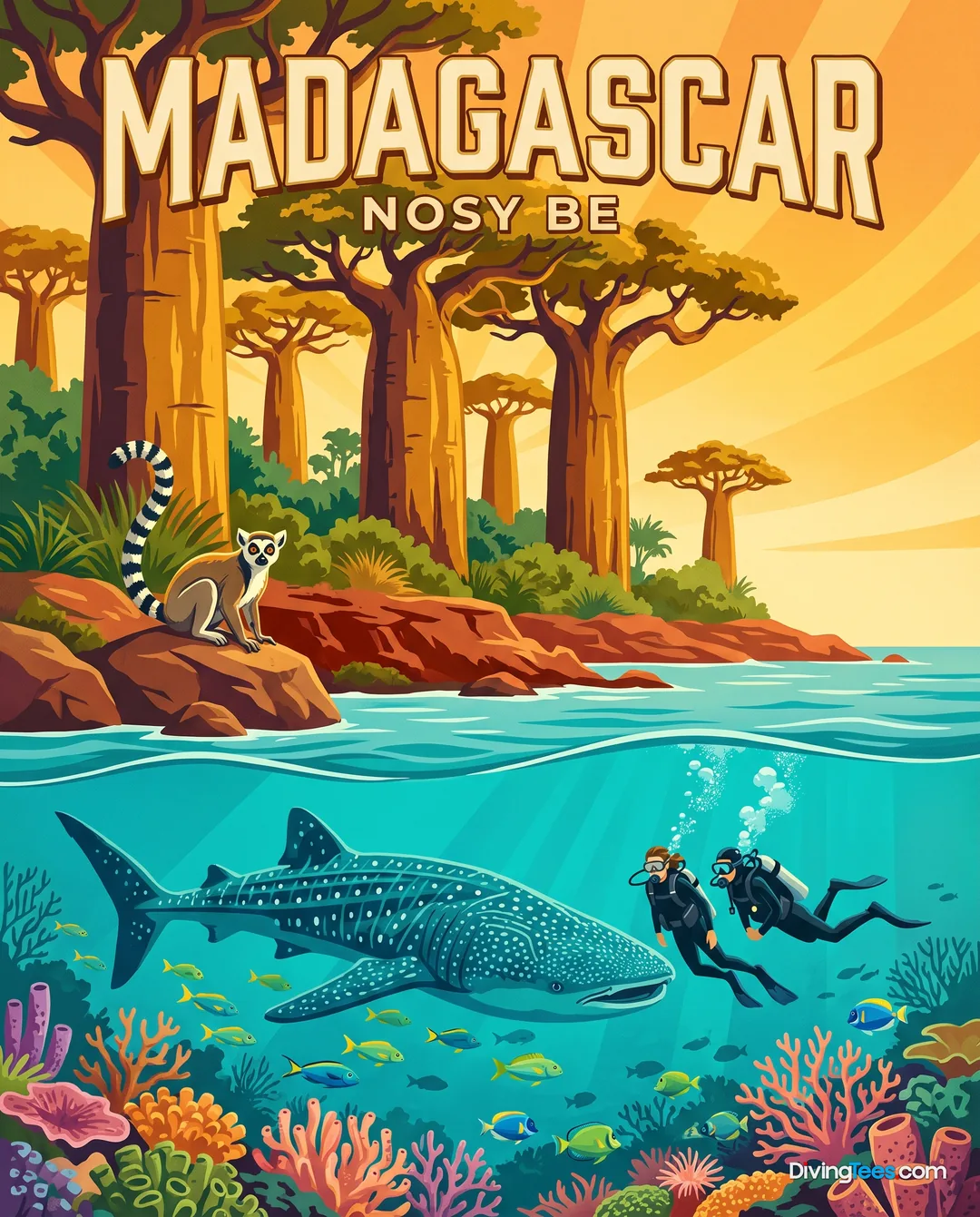
Wrecks are the clearest reason to come to Sainte-Marie, also known as Nosy Boraha, but they are only part of the island’s appeal. Dives from a shore-based operation combine coastal reefs, boat outings and the chance of hearing humpback whales singing underwater during their migration. Above the surface, the same base works for whale-watching trips, beaches and the pirate cemetery. This is a destination for a proper island stay rather than a quick diving stop, with seven to ten days allowing room for weather, boats and excursions.
The underwater menu here is built around coastal reefs, wrecks and boat dives rather than a large, easily interchangeable network of named reef sites. Conditions can include variable current, so the character of a dive may change with the day and the position of the wreck or reef. Visibility is generally favoured from October to January, while the whale season brings a different reason to spend time in the water. Ask locally which wrecks match your certification, depth comfort and experience before booking a run of dives. Advanced Open Water is useful for deeper wreck work, and an appropriate wreck-diving qualification can add confidence when the route, penetration or depth demands it. Sainte-Marie suits divers who enjoy combining planned boat outings with a slower island routine, rather than expecting every day to deliver identical conditions.
Humpback whales are the defining seasonal encounter. They usually visit the Sainte-Marie Channel from July to September, sometimes into October, and their calls may be audible underwater during this migration. Hearing a whale beneath the boat or during a dive is not the same experience as joining a dedicated whale-watching outing, and neither guarantees a close encounter. Whale sharks are possible but occasional, so they should not shape the whole itinerary. The reef and wreck diving provide the more consistent structure of the holiday, with the whales adding a powerful seasonal dimension. If marine wildlife is the priority, July to September makes sense; if clear water matters more, October to January is the stronger general choice.
Choose July to September for the humpback migration and the possibility of hearing their song underwater, accepting that this is not necessarily the clearest period for diving. October to January is generally the better window when visibility is the main reason for travelling. The transition between September and October offers the most tempting compromise, with a chance of late whales and improving diving conditions, though neither benefit is assured. There is no single perfect month for both priorities, so decide whether the holiday is centred on wrecks and reefs or on seasonal wildlife before fixing the dates.
Sainte-Marie works for all levels on its reefs and more straightforward outings, provided you are comfortable with boat diving and variable current. Deeper wrecks call for more experience, and Advanced Open Water is useful, with wreck-diving training worth considering where depth or the nature of the site demands it. BSAC, PADI and SSI divers should ask about the planned depth and profile rather than relying on the word “wreck” alone. Recent wreck experience and sensible gas planning matter more than collecting a particular speciality for its own sake.
From London Heathrow, London Gatwick or Manchester, the practical air route normally involves reaching Antananarivo first, then taking a domestic flight to Sainte-Marie. Treat the international, domestic and island legs as separate parts of the journey, leaving proper space between connections and the first booked dive. The alternative is an overland journey to Soanierana-Ivongo followed by a boat crossing to the island. The crossing takes a few hours depending on the vessel and sea conditions, and departures can vary, so it is not a segment to squeeze into a tight schedule. Once on Sainte-Marie, base yourself on the island and organise diving and whale outings around locally arranged boat departures.
Build a buffer around the Soanierana-Ivongo crossing if you travel by boat. A late departure or rougher sea can remove a booked dive, so keep the first day flexible and have a land-based alternative ready. Do the same around domestic connections if flying, rather than planning a first-day wreck dive immediately after arrival. Ask which wrecks fit your certification and depth experience, especially if you are considering Advanced Open Water or wreck-diving work. Do not choose July or August purely for visibility: those months are principally about humpback whales, while October to January is generally the clearer-water period. September into October is the useful compromise, not a guarantee. Bring an own mask, computer and any specialist camera or equipment that would be difficult to replace locally. Finally, separate a whale-watching trip from the possibility of hearing whale song underwater, and treat whale sharks as an occasional bonus rather than an itinerary cornerstone.
Plan on a land-based stay of seven to ten days. That gives the island’s boat schedule, the crossing or flight connections and several diving days room to coexist without turning every morning into a deadline. Leave space for a whale-watching outing, beaches, snorkelling, coastal excursions and the pirate cemetery. Non-divers have enough to do while a boat is away, and the island lends itself to mixing diving days with slower terrestrial ones rather than filling every day with immersion.
Hello, I'm Marina, DivingDeal.com's AI assistant. I guide you through destinations, areas and countries.
Thinking about the whole trip and the flights? Talk it over with Edith →
Marina is an AI. Some links are affiliate links: DivingDeal may earn a commission, at no extra cost to you. Bookings are made with the partner.
Visit Sainte-Marie from July to September if humpback whales and the possibility of hearing whale song underwater are your priority. Choose October to January when visibility matters more. September into October can offer a possible transition between whale season and improving conditions, but neither late whales nor clearer water is assured.
Sainte-Marie suits divers of all levels on coastal reefs and more straightforward boat outings, provided you are comfortable with boat diving and variable current. Deeper wrecks require more experience. Advanced Open Water is useful, while wreck-diving training may add confidence when depth, penetration or the site profile demands it.
Sainte-Marie offers coastal reefs, wrecks and boat dives along Madagascar’s east coast. Humpback whales visit the channel from July to September, and their calls may sometimes be heard underwater. Whale sharks are an occasional possibility rather than a dependable focus, while beaches, whale-watching trips and the pirate cemetery add variety between dives.
Plan a land-based stay long enough to accommodate diving, boat departures, weather and island excursions without tight deadlines. Reach Sainte-Marie via Antananarivo and a domestic flight, or travel overland to Soanierana-Ivongo for a boat crossing. Leave buffers around connections, keep the first day flexible, and combine dives with beaches and whale watching.