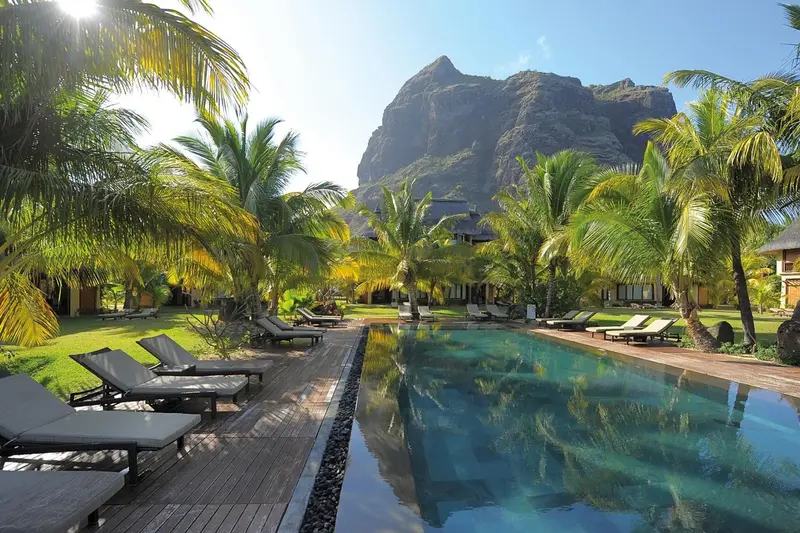
Dinarobin Beachcomber Golf Resort & Spa
★★★★★
Google 4.8/5 (2,787 reviews)
Mauritius · Indian Ocean
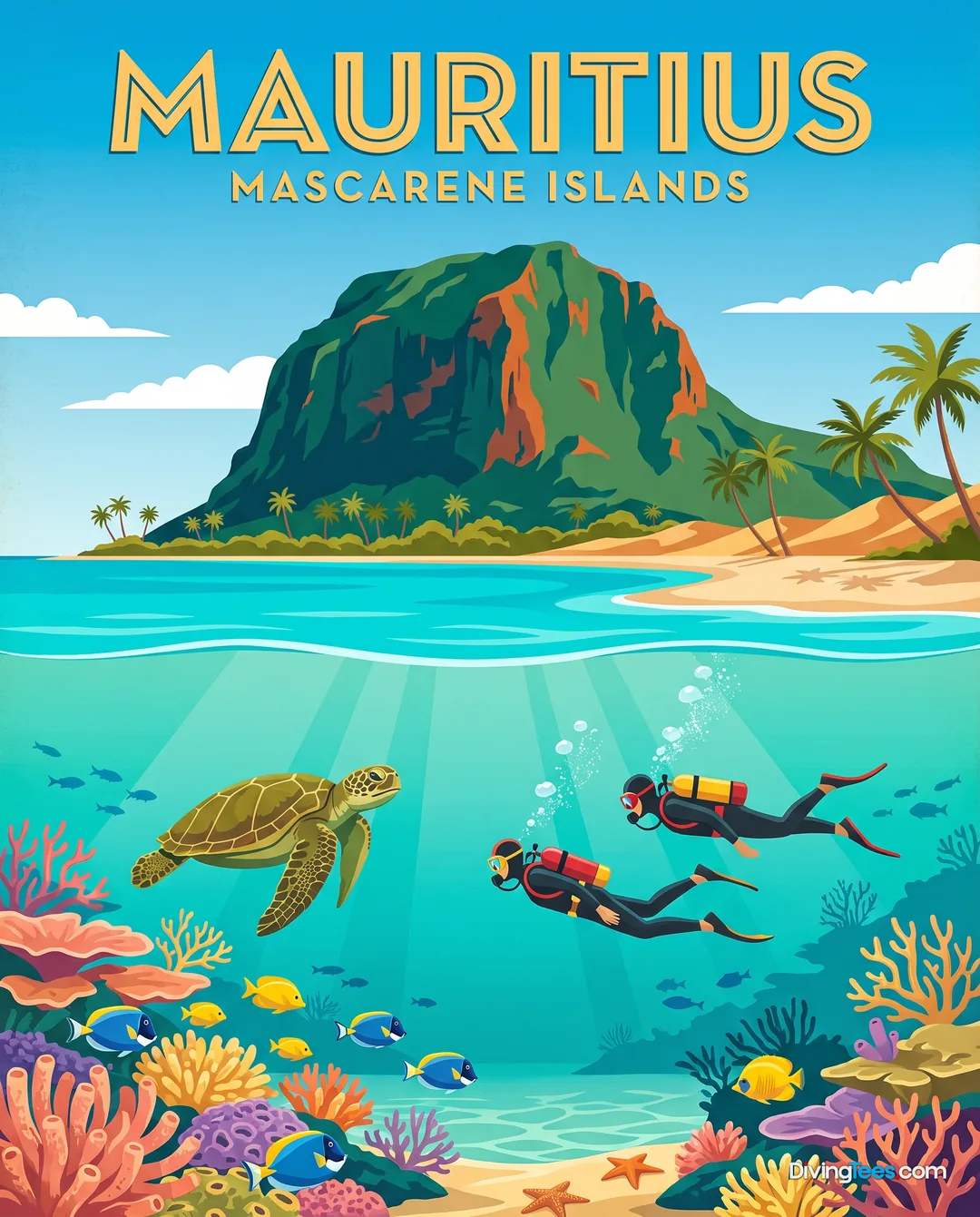
La Cathédrale’s dark underwater relief, barracuda above the reef and the silhouette of Le Morne Brabant give these boat dives a strong sense of place.
For subtitles in English: start the video firstthen click the gearat the top right of the video, select “Subtitles/CC”, then “Auto-translate” and choose “English”.
La Cathédrale’s rock formations are the clearest reason to come to Le Morne, but the appeal lies in the change of pace around the peninsula. Boat dives range from sheltered reef water to walls and passes where current brings larger shoals into view. It is a land-based destination rather than a liveaboard proposition, with enough topside character to occupy non-divers too. The underwater experience suits a mixed group, provided everyone accepts that the outer sites can be considerably more demanding than the lagoon.
The diving moves between reef, wall and pass rather than following one predictable pattern. La Cathédrale gives the eye solid underwater structure, while Shark Point and the outer sectors bring greater exposure and the possibility of a more pronounced current. Conditions are variable, and a site described as a drift dive may involve anything from a gentle water movement to a faster ride through a pass. Visibility is commonly around 20 to 30 metres, although rain, swell and suspended coastal particles can reduce it. Expect boat outings, with the day’s plan adjusted to the sea state. Ask whether the booking is for the lagoon, an outer wall or a pass, because those labels describe very different dives. Advanced Open Water training is useful for deeper work, while a drift qualification or equivalent experience helps when the current becomes the main feature.
Barracuda and trevally are regular sights, particularly where moving water concentrates fish around the outer reef and passes. Eagle rays and reef sharks occur throughout the year, but neither should be treated as a dependable appointment on every outing. The warmer period from October to March is the time to keep in mind for a passing whale shark. It is an occasional encounter, not a guarantee, and the animal is a visitor rather than the defining feature of every dive. Larger fish are most likely to reward patience on the more exposed boat trips, where current and relief create the conditions they favour. Reef life remains part of the picture, but Le Morne is more compelling when the solid terrain, moving water and chance of a pelagic appearance are considered together.
Le Morne can be dived throughout the year, but September to May generally offers the more forgiving window, with the austral summer bringing calmer seas and greater marine activity. October to March also gives the best chance of a passing whale shark. Visibility is often strongest from April to December, with particularly useful windows in May to early July and September to early December. June, July and August can bring rougher surface conditions, especially at exposed sites, so a winter trip needs more flexibility. Heavy rain can load coastal water with particles, which is another reason not to judge the destination solely by its usual visibility.
Beginners can be accommodated on selected sheltered, shallower reef dives, but Le Morne is not a place to book every outing blindly. The passes, walls and drift dives need honest recent experience in current and a sensible site choice. Advanced Open Water is useful for deeper sites, while a Drift speciality is relevant when moving water is central to the dive. BSAC, PADI and SSI qualifications can all be discussed with the local team, but certification alone does not replace current experience or comfort with a boat entry and changing conditions.
From London Heathrow, London Gatwick or Manchester, reach Mauritius by air, usually with a connection or on a seasonal service. Allow roughly 14 to 20 hours for the complete journey from western Europe, including the road transfer after landing. Le Morne is reached by road from Mauritius’s international airport or from elsewhere on the island, so there is no ferry or domestic flight to arrange. On the peninsula, accommodation is spread out rather than gathered around one obvious centre. Depending on where you stay, getting to the departure point may mean walking, using a base shuttle or arranging a taxi. Confirm that connection before booking, particularly if you are travelling without a hire car.
The useful question before any boat trip is not simply which site is planned, but whether it is a lagoon reef, an outer wall or a pass. The difference determines how much current and exposure you may meet. Put several diving days into the itinerary, with spare weather time, rather than making an exposed site the sole purpose of a short visit. Morning departures usually make sense because surface conditions are often more settled, and they reduce the chance of a shortened trip. After heavy rain, expect poorer coastal visibility and do not chase the usual 20 to 30 metres. The famous underwater cascade is a surface or snorkelling phenomenon linked to sediment and relief, not a submerged cavern or technical dive. If whale sharks are the aim, travel between October and March, but treat any sighting as luck. Take sun and wind protection for the boat, check the return transfer to your accommodation, and leave a proper interval between the final dive and flying.
Plan Le Morne as a seven- to ten-day land-based stay, not as a compressed run of boat departures. That gives the exposed sites several weather windows and leaves room for sheltered diving when the sea turns. Accommodation is scattered around the peninsula, so confirm transport to the departure point in advance. Non-divers have the mountain of Le Morne Brabant, beaches, snorkelling, kitesurfing and excursions into the south-west, making it easy to build rest days around the diving.
Hello, I'm Marina, DivingDeal.com's AI assistant. I guide you through destinations, areas and countries.
Thinking about the whole trip and the flights? Talk it over with Edith →
Marina is an AI. Some links are affiliate links: DivingDeal may earn a commission, at no extra cost to you. Bookings are made with the partner.
You can dive Le Morne throughout the year, while September to May generally brings calmer seas and greater marine activity. Visibility is often strongest from April to December, with useful windows in May to early July and September to early December. October to March offers the best chance of a passing whale shark.
Beginners can join selected sheltered, shallower reef dives, but you should choose each outing carefully. Walls, passes and drift dives require recent experience with current and changing conditions. Advanced Open Water training is useful for deeper sites, while drift experience helps when moving water is central. Certification does not replace comfort with boat entries and variable conditions.
You may explore La Cathédrale’s dramatic underwater rock formations, along with reefs, walls and current-affected passes. Barracuda and trevally are regular sights, while eagle rays and reef sharks occur throughout the year. From October to March, a passing whale shark is possible, though sightings are occasional. Good conditions can bring visibility around twenty to thirty metres.
Plan Le Morne as a land-based stay with several diving days and spare weather time, rather than a compressed series of boat departures. Confirm transport from your scattered accommodation to the departure point, and ask whether each trip visits a lagoon reef, outer wall or pass. Leave room for sheltered diving and rest days when sea conditions change.