
Progetto Sub Sardegna
Google 5/5 (131 reviews)
Italy · Mediterranean
Rocky walls and caves in the Gulf of Angels lead towards deeper wrecks and the protected reefs of Capo Carbonara near Villasimius.
For subtitles in English: start the video firstthen click the gearat the top right of the video, select “Subtitles/CC”, then “Auto-translate” and choose “English”.
Cagliari puts a working Mediterranean city behind your dive day and the Gulf of Angels beneath your fins. Local outings mix shore dives with boat trips over rocky walls, cavities, drop-offs and wrecks. The appeal is the change of scene: one day around the gulf, another on the protected coast of Capo Carbonara near Villasimius, with Cagliari’s old quarters, beaches and coastal walks available when the sea turns awkward. It suits a land-based week rather than a liveaboard itinerary.
Underwater, expect hard rock rather than a uniform reef landscape. Walls drop away into deeper water, cavities interrupt the rock, and wrecks add a different shape and profile to boat dives in the Gulf of Angels. Some shallower sites can be reached from shore, but the wrecks and deeper walls are generally boat outings, often beyond the depth normally covered by an entry-level qualification. Currents are variable, with wind and swell affecting exposed sites and the practical choice of the day. Visibility is usually most favourable from June to October, but can fall after swell, coastal run-off or seasonal plankton blooms. This is not a destination built around a single style of dive. It is better approached as a sequence of local shore dives, gulf boat trips and a separate excursion towards Capo Carbonara.
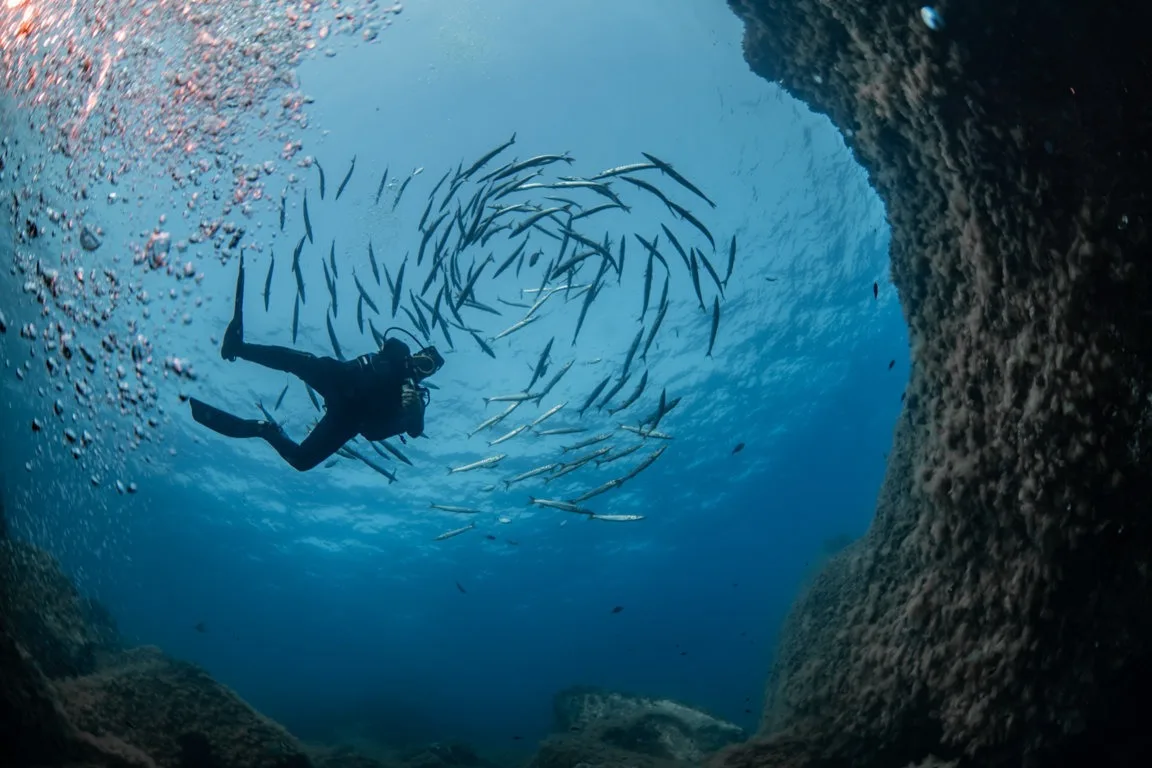
The underwater character here comes from the meeting of rock, open walls, cavities and wreck structure. Around Cagliari, a dive may move from a broken rocky ledge into a darker recess, while a boat trip changes the view to a larger drop-off or the outline of a wreck. Capo Carbonara adds protected coastal habitats around Villasimius, Isola dei Cavoli and Serpentara, where access is controlled to limit pressure on the seabed. Conditions shape what you see as much as the calendar does: swell can reduce visibility, while plankton blooms can temporarily soften the view. There is no dependable seasonal wildlife encounter to build the trip around, so come for the terrain and the protected setting, not a promised parade of named animals.
June, September and October are the most sensible months for a Cagliari dive holiday. June usually brings the start of the more dependable boat season, while September keeps useful sea conditions after the busiest summer period. October remains workable, but wind and swell need more room in the plan. July and August are the busiest months for boats and popular sites, so they suit divers who value the broadest summer operating window more than quiet water. Winter, especially December to February, makes boat departures less predictable. Spring and autumn can be calmer on land, but a reserve day matters because exposed sites may be moved or cancelled when the weather changes.
Cagliari works for beginners when the itinerary stays with suitable shallow shore dives or straightforward guided outings. Open Water divers should not assume that the celebrated wrecks and deeper walls are included within their qualification. Advanced Open Water is useful for deeper sites and wreck trips, while a Deep qualification is appropriate for the deeper profiles. A Wreck certification matters if the plan involves more than looking at the outside. Experience with changing wind and swell is valuable, even when the current itself is not strong.
From London Heathrow, Gatwick or Manchester, fly to Cagliari, directly when a suitable service operates or with a connection, then continue by road to the chosen dive centre or harbour. The journey is generally a half-day affair from western Europe, followed by local ground transport. Cagliari city centre can be reached from the airport by train in about ten minutes, but that does not put every dive departure within walking distance. Check the harbour for each booking. Villasimius and Capo Carbonara are reached by road from Cagliari, usually in about an hour depending on the starting point, so allow for a hire car, taxi or arranged transfer. A ferry from mainland Italy is an alternative, not a requirement, and leaves a longer road journey across Sardinia.
Build flexibility into the booking rather than fixing every dive on consecutive calendar dates. Wind and swell can move a boat trip, particularly towards exposed sites, so keep a spare day for the gulf or Capo Carbonara. Ask for the exact harbour each morning: Cagliari, Villasimius and Capo Carbonara are close on a map of southern Sardinia but not interchangeable meeting points. If Capo Carbonara is on the plan, check the permission arrangements before travelling. Autonomous diving there requires the area manager’s approval or an authorised operator, and the protected sectors have their own access conditions. For wrecks, confirm maximum depth, boat time and whether the dive is external viewing rather than penetration. Do not build a beginner holiday around the wrecks, and do not book the return flight immediately after a deep or repetitive final day. June, September or October will generally be less crowded than August.
Stay in Cagliari if you want the city, the Poetto beach area and a choice of local outings within one base. Group Gulf of Angels dives together, then set aside a separate road day for Villasimius and Capo Carbonara, since the departure harbours may differ. Five to seven days gives enough time for several boat trips, a protected-area excursion and weather cover. A non-diving companion has plenty to do, from the historic upper quarters and coastal wetlands to villages and archaeological sites in southern Sardinia.
Hello, I'm Marina, DivingDeal.com's AI assistant. I guide you through destinations, areas and countries.
Thinking about the whole trip and the flights? Talk it over with Edith →
Marina is an AI. Some links are affiliate links: DivingDeal may earn a commission, at no extra cost to you. Bookings are made with the partner.
June, September and October are sensible choices for a Cagliari dive holiday. June begins the more dependable boat season, while September often retains useful sea conditions after the busiest summer period. October can work, although wind and swell need flexibility. July and August offer a broader summer operating window but busier boats and sites.
Cagliari can suit beginners who stay with suitable shallow shore dives or straightforward guided outings. Open Water divers should not assume the deeper walls and wrecks fit their qualification. Advanced Open Water is useful for deeper sites, while a Deep qualification suits deeper profiles. Wreck certification matters if you plan anything beyond external viewing.
Cagliari offers hard-rock scenery rather than one uniform reef landscape. You may explore rocky walls, cavities, broken ledges, darker recesses, drop-offs and wreck structures. Capo Carbonara near Villasimius adds protected coastal habitats around Isola dei Cavoli and Serpentara. Conditions affect visibility, so come for varied terrain and protected settings rather than guaranteed wildlife encounters.
Use Cagliari as a land-based base, grouping Gulf of Angels dives together and reserving a separate road day for Villasimius and Capo Carbonara. Keep a spare day because wind and swell can move boat trips. Confirm each harbour, access arrangements, wreck depth and whether viewing is external. Arrange suitable local transport for differing departure points.