
Bluforia
Google 4.9/5 (355 reviews)
Italy · Mediterranean
Limestone walls, shadowed caverns, wrecks such as KT-12 and Nasello, barracuda and grouper define boat diving from Cala Gonone into the Gulf of Orosei.
For subtitles in English: start the video firstthen click the gearat the top right of the video, select “Subtitles/CC”, then “Auto-translate” and choose “English”.
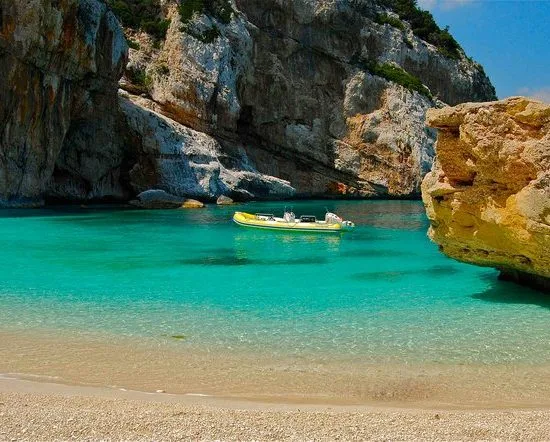
Cala Gonone is a shore-based boat base for exploring the limestone coast of the Gulf of Orosei. Underwater, cliffs drop into walls, rocky passages and caverns, with wrecks including KT-12 and Nasello adding a different kind of dive. Shallow sites suit newer Open Water divers, while deeper walls, wrecks and cave penetrations demand more experience. It also works well for a mixed holiday: non-divers have coves, beaches, boat trips, kayaking and coastal walking close at hand.
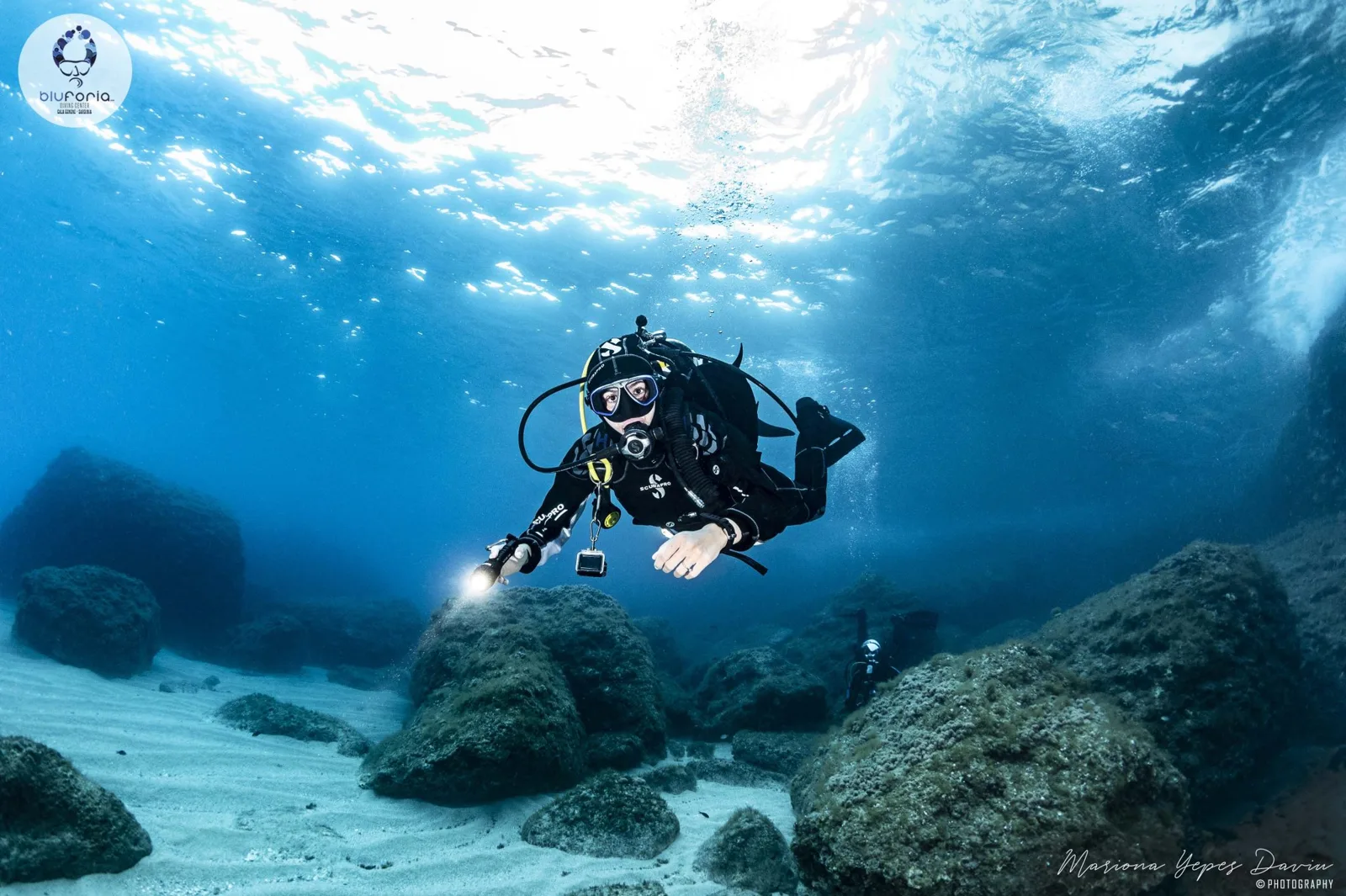
Most diving starts from the harbour, with morning double dives, afternoon trips, night dives and longer runs towards the southern gulf. The scenery is distinctly limestone: sheer underwater walls, rocky pinnacles, overhangs, cave entrances and passages where daylight fades across the roof. Some sites remain shallow and straightforward, while others descend well beyond recreational depth, particularly around the deeper wrecks and walls. Currents are variable rather than a constant feature, so a site may involve calm exploration on one day and a more demanding water movement on another. Visibility commonly falls between 10 and 30 metres, with about 20 metres often reported, but swell, coastal run-off and current can reduce it. This is boat diving rather than a shore-diving base, and the day's plan depends on sea conditions as much as on certification.
Summer brings the most dependable encounters with barracuda, grouper and brown meagre around the rocky walls and open water. Amberjack are an occasional bonus, while tuna and ocean sunfish are possible rather than expected. Octopus are regular from May through October, making them a realistic year-round-season target even when larger fish keep their distance. Stingrays may also appear in the warmer diving months. The appeal is not a coral reef crowded with small tropical fish. It is the combination of Mediterranean life with limestone relief: a grouper tucked beneath an overhang, a barracuda passing along a wall, or an octopus working its way across rock. Treat ocean sunfish, tuna and amberjack as fortunate encounters, not reasons to judge a particular day's diving.
The main diving season runs from mid-May to the end of October, when the sea is generally more settled and boats can reach the farther sites more regularly. Summer offers the clearest usual conditions and the strongest expectation of barracuda, grouper and brown meagre, but it also brings the busiest coves and boat traffic, especially around midday. May, June, September and October usually offer a quieter balance. November to April is a poorer choice for a diving holiday because fewer trips operate and exposed sites may be harder to reach. Build flexibility into the plan: a calm forecast can change, and one reserve day is more useful here than a tightly packed schedule.
Newer divers can enjoy the shallower rocky sites, provided the centre matches the dive to their qualification and recent experience. Advanced Open Water, or an equivalent BSAC or SSI qualification, is useful for deeper walls and wrecks such as KT-12 and Nasello. Cave entrances and limited passages are not automatically cave diving: anything beyond the daylight zone calls for proper Cavern Diver training, suitable equipment and a planned penetration. Variable currents and boat conditions reward comfortable buoyancy and sensible depth choices.
From London Heathrow, London Gatwick or Manchester, reach Olbia by air when seasonal services suit your dates. The other practical route is a ferry from mainland Italy to Olbia. From Olbia, Cala Gonone is reached by road, with roughly an hour and a half of driving from the port area. There is no ferry between Olbia and Cala Gonone, so the final leg needs a hire car, pre-arranged road transfer or taxi. Allow a full day for the journey from Britain once connections and the drive are included. Cala Gonone itself is compact enough for some visitors to walk between accommodation, the harbour and a dive operation, while a car or taxi is more useful if staying outside the port area.
Ask for the depth, current and qualification required before booking each day's site. KT-12, Nasello, deeper walls and any southern-gulf run are not interchangeable with a shallow introductory dive. Book morning departures in summer where possible: they avoid some of the midday boating pressure and leave room to adapt if the sea worsens later. Keep a non-diving day in reserve, particularly if the plan includes a long boat trip or repeated deep dives. A 5 mm suit is a sensible starting point for the season, with personal tolerance and repeated diving deciding whether more protection is needed. Confirm in advance that specialist cave equipment and the gases required for deeper work are actually available. Do not assume every cavern is a cave dive, every claim of more than 20 metres' visibility will hold, or that a calm-looking itinerary guarantees access to the exposed southern sites.
Plan on a week rather than a compressed long weekend. That allows several boat days, a weather reserve and time for the coves and trails around the Gulf of Orosei. A typical stay can mix morning double dives with an afternoon off, a night dive or a longer southern excursion. Non-divers have boat and kayak trips, sheltered snorkelling, beaches and coastal walks, while Dorgali adds an archaeological museum and nuragic hinterland. Cala Gonone therefore works as a holiday base, not simply a place to sleep between dives.
Hello, I'm Marina, DivingDeal.com's AI assistant. I guide you through destinations, areas and countries.
Thinking about the whole trip and the flights? Talk it over with Edith →
Marina is an AI. Some links are affiliate links: DivingDeal may earn a commission, at no extra cost to you. Bookings are made with the partner.
The main diving season runs from mid-May to the end of October, when the sea is generally more settled and boats reach distant sites more regularly. Summer usually brings clearer conditions and more barracuda, grouper and brown meagre. May, June, September and October offer a quieter balance, while winter has fewer trips.
Newer Open Water divers can enjoy the shallower rocky sites when the centre matches each dive to your qualification and recent experience. Deeper walls and wrecks such as KT-12 and Nasello suit Advanced Open Water or equivalent training. Cavern passages beyond daylight require proper Cavern Diver training, equipment and planning.
You can explore limestone walls, rocky passages, pinnacles, overhangs, caverns, arches and illuminated cave entrances, with KT-12 and Nasello offering wreck dives. Summer may bring barracuda, grouper and brown meagre, while octopus are regular from May through October. Amberjack, tuna, ocean sunfish and stingrays are possible encounters.
Plan a week to allow several boat days, a weather reserve and time for coves and coastal trails. Most diving leaves from the harbour, with morning double dives, afternoon trips, night dives and longer southern-gulf outings. Keep a non-diving day available, and arrange road transport from Olbia.