
Dive Deep Blue by ABC Diving
Google 5/5 (547 reviews)
Malta · Mediterranean
Rocky reefs around Qawra and Saint Paul, offshore wrecks, octopus in the crevices, and boat days towards Comino and Gozo shape a flexible Maltese base.
For subtitles in English: start the video firstthen click the gearat the top right of the video, select “Subtitles/CC”, then “Auto-translate” and choose “English”.
Bugibba is a practical place to stay when Malta’s northern diving interests you more than one fixed site. Walk from accommodation in Bugibba, Qawra or Saint Paul to local centres and shore entries, then use the same base for boat trips to wrecks, caverns and reefs farther north. Ċirkewwa, Comino and Gozo all sit within reach for day outings. Above water, the promenade, bathing spots and Malta’s historical sights give non-divers plenty to do.
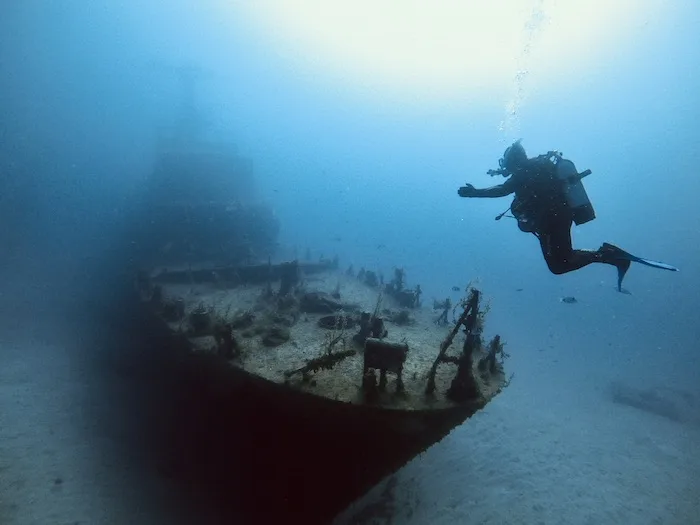
Bugibba’s diving alternates between rocky coastal ground and boat trips to reefs, caverns, walls and wrecks. Qawra Reef, Sirens Bay and sites near Saint Paul suit a first look at the local terrain, with shore entries available around Bugibba and Qawra. Further afield, centres may run to Ċirkewwa, Comino or Gozo, although a Gozo day can involve a road transfer before the ferry rather than a direct departure from Bugibba. Currents are variable, so the site and route are sensibly chosen on the day. Visibility commonly sits between 15 and 30 metres, but swell, plankton and runoff after bad weather can reduce it. Wreck diving adds depth and, where penetration is planned, overhead-environment considerations. Boat days are the more exposed option, while shore diving gives useful flexibility when conditions interrupt the schedule.
The most dependable encounters are small and well camouflaged. From April to November, look into rocky cracks, around artificial structures and along wrecks for octopus, while grouper can turn up on the same ground. Seahorses are occasional rather than something to build the whole trip around, and barracuda and amberjack are likewise possible visitors during this warmer part of the diving year. The mix of rock, wreck and sheltered coastal habitat gives a patient diver more to search than a quick swim-through suggests. A torch is useful for looking into crevices and darker recesses, particularly on caverns and wrecks, though the attraction here is the range of terrain as much as any single animal. Autumn can be especially agreeable for watching this life without the busiest summer traffic.
Diving is possible throughout the year, but May, June, September and October make the easiest all-round choice. From May into summer, warmer water and long boat days favour trips to Comino, Gozo and the northern wrecks. September and October retain a useful marine season while July and August crowds begin to thin. Visibility is often at its most rewarding from March to May and again in October, although local conditions decide the day. Winter brings quieter sites and shore options, but exposed coasts and boat departures are more vulnerable to weather. A 5 mm suit suits the shoulder seasons, with lighter protection in summer and more substantial kit in winter according to personal tolerance.
Bugibba works for beginners, experienced recreational divers and mixed groups. Shallow coastal sites around Saint Paul and Qawra provide a sensible start before moving to a more exposed boat outing or a wreck. PADI, SSI and BSAC divers can use the local centres, while wreck qualifications become relevant for deeper or penetrable wrecks. Nitrox is useful on repetitive days and wreck itineraries. Experience, depth and the day’s visibility should decide whether a penetration is appropriate, not simply the label attached to an excursion.
From London or Manchester, fly to Malta and continue by road to Bugibba. Allow a full travel day, since the connection combines the flight with the road transfer rather than a domestic hop or a ferry. Once based in Bugibba, Qawra or Saint Paul, several centres and local shore sites are within walking distance. For distant diving, centres generally arrange the road transport or take divers to a boat departure point. Gozo requires the road journey to Ċirkewwa followed by the ferry, unless an organised boat trip provides another arrangement. Comino is reached by boat. Check whether a planned outing leaves directly from Bugibba or includes a substantial road transfer before committing to the day.
Treat Bugibba as a base for the northern half of Malta and the islands, not as a promise that every day starts at the nearest harbour. Ask whether an outing is local, bound for Comino, or involves the road to Ċirkewwa or Gozo. In July and August, reserve boat places ahead, then keep shore diving as your useful fallback when weather disrupts departures. Let the centre choose between exposed and sheltered sites on the day, and start with Qawra or Saint Paul before booking a demanding wreck. Check its depth, the visibility expected and the exact penetration plan against your qualification and experience. Do not assume that a wreck described as suitable for beginners is suitable for every beginner. Leave room in the itinerary for a changed site, and do not schedule a flight immediately after a run of dives without allowing the recommended surface interval.
About a week gives Bugibba enough time to mix local shore dives with one or two outings towards Comino or Gozo, while leaving weather space and non-diving days. Mornings can be given to the coast or a boat, with the promenade and bathing spots close at hand afterwards. Companions can join island boat trips, walk the northern coastline or spend a day visiting Malta’s historical and archaeological sights. Bugibba’s urban setting makes this an easier mixed holiday than a stay devoted solely to diving.
Hello, I'm Marina, DivingDeal.com's AI assistant. I guide you through destinations, areas and countries.
Thinking about the whole trip and the flights? Talk it over with Edith →
Marina is an AI. Some links are affiliate links: DivingDeal may earn a commission, at no extra cost to you. Bookings are made with the partner.