
Mermaid Diving Club
Google 4.9/5 (6,716 reviews)
7.2 km away as the crow flies
Fethiye · Türkiye · Mediterranean
Max. depth · 10 mAquarium Reef, known locally as Akvaryum Koyu, offers a gentle introduction to Fethiye's underwater landscape with a broad, sandy bottom and rocky formations.
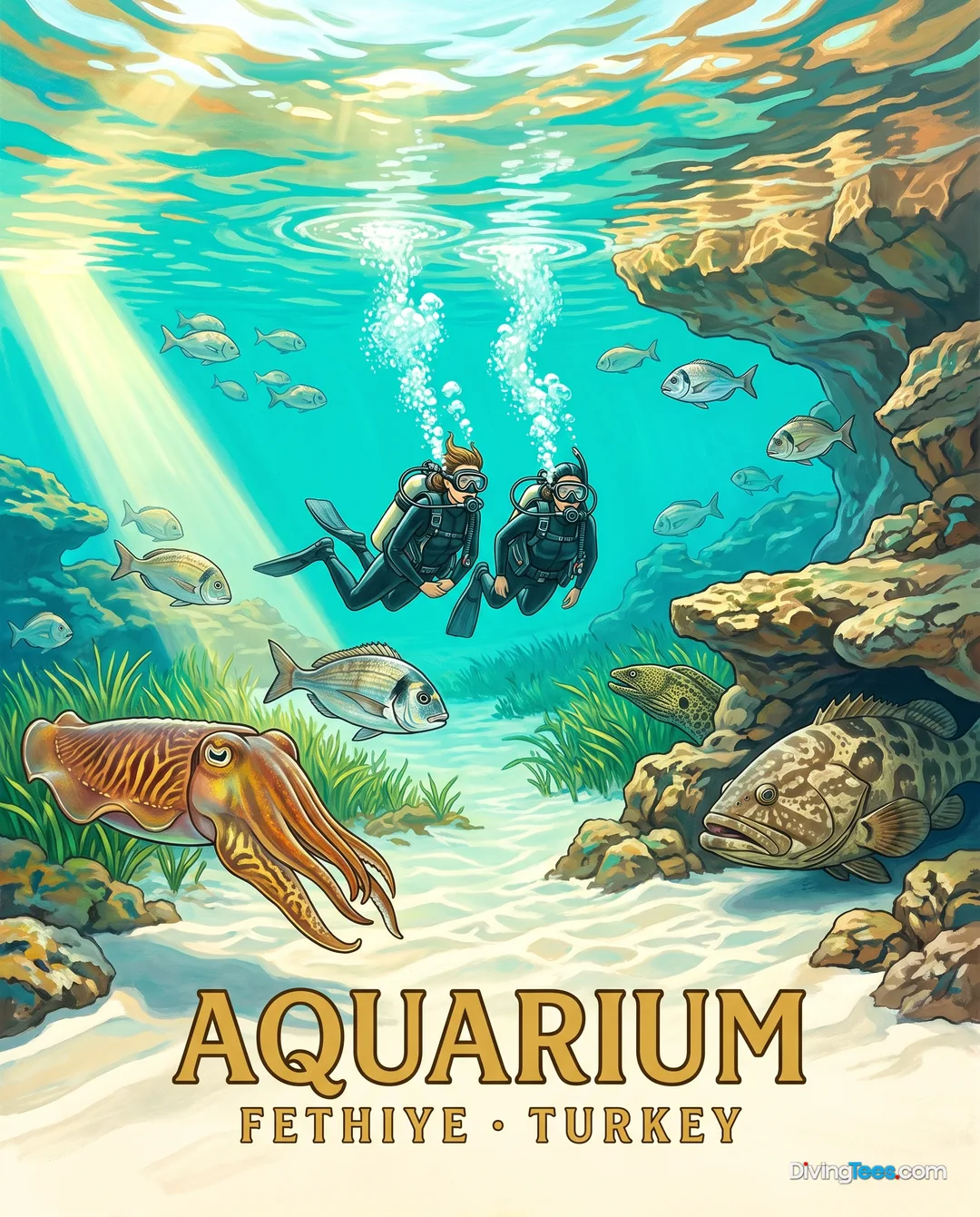
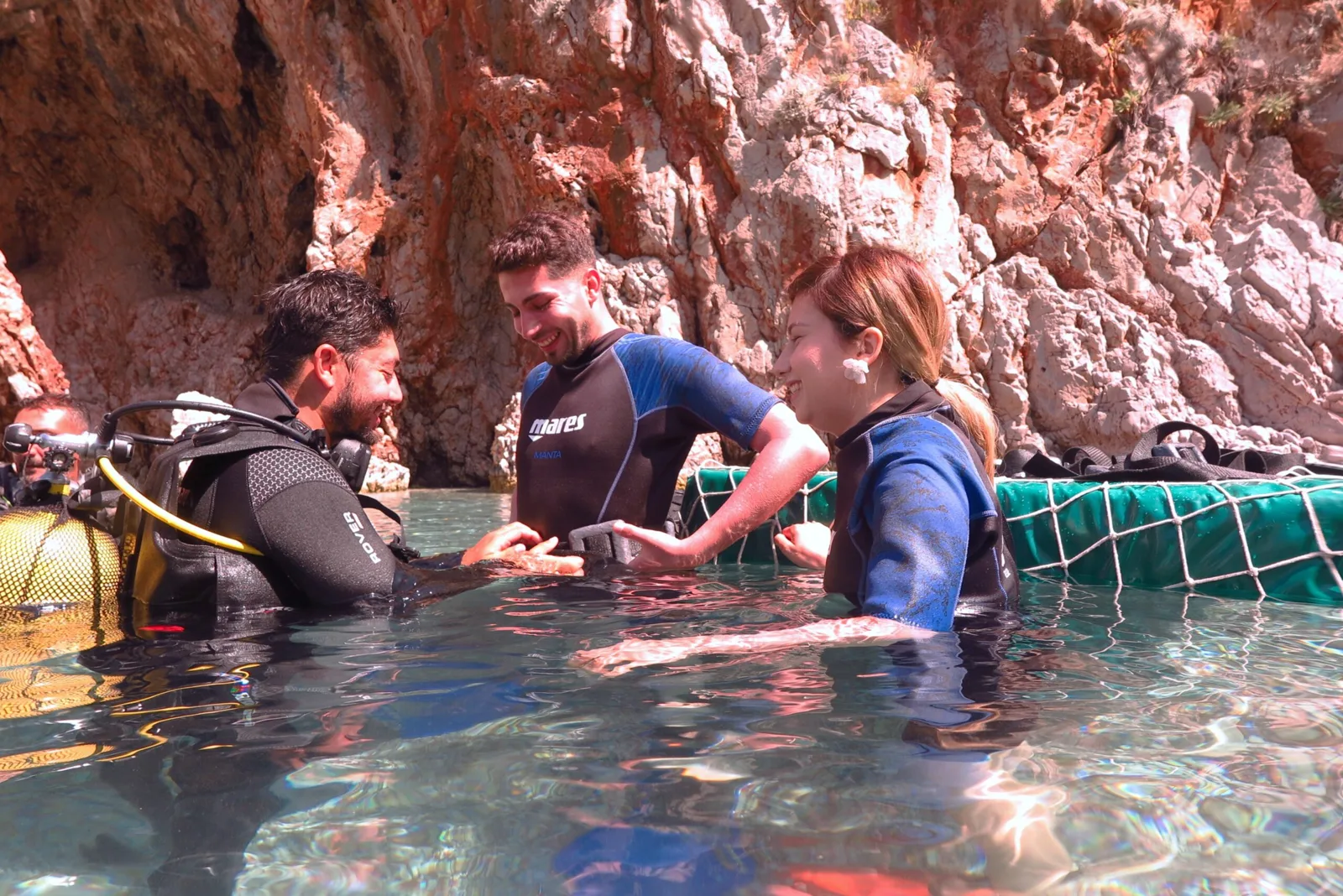
Aquarium Reef, or Akvaryum Koyu, presents itself as a sheltered lagoon, a contrast to some of the area's deeper sites. You'll find a broad, gently sloping profile here, moving from very shallow sections out to a maximum depth of around 10 metres. The bottom transitions between sand and scattered rocky outcrops, providing a varied terrain that is easy to navigate and explore.
The overall topography of Aquarium Reef supports a relaxed dive, allowing you to focus on the resident marine life without the added challenge of complex navigation or significant depth changes. This makes it a suitable location for those building confidence in their buoyancy control and bottom time management. The site's natural shelter contributes to its consistent calm, setting the stage for unhurried observation.
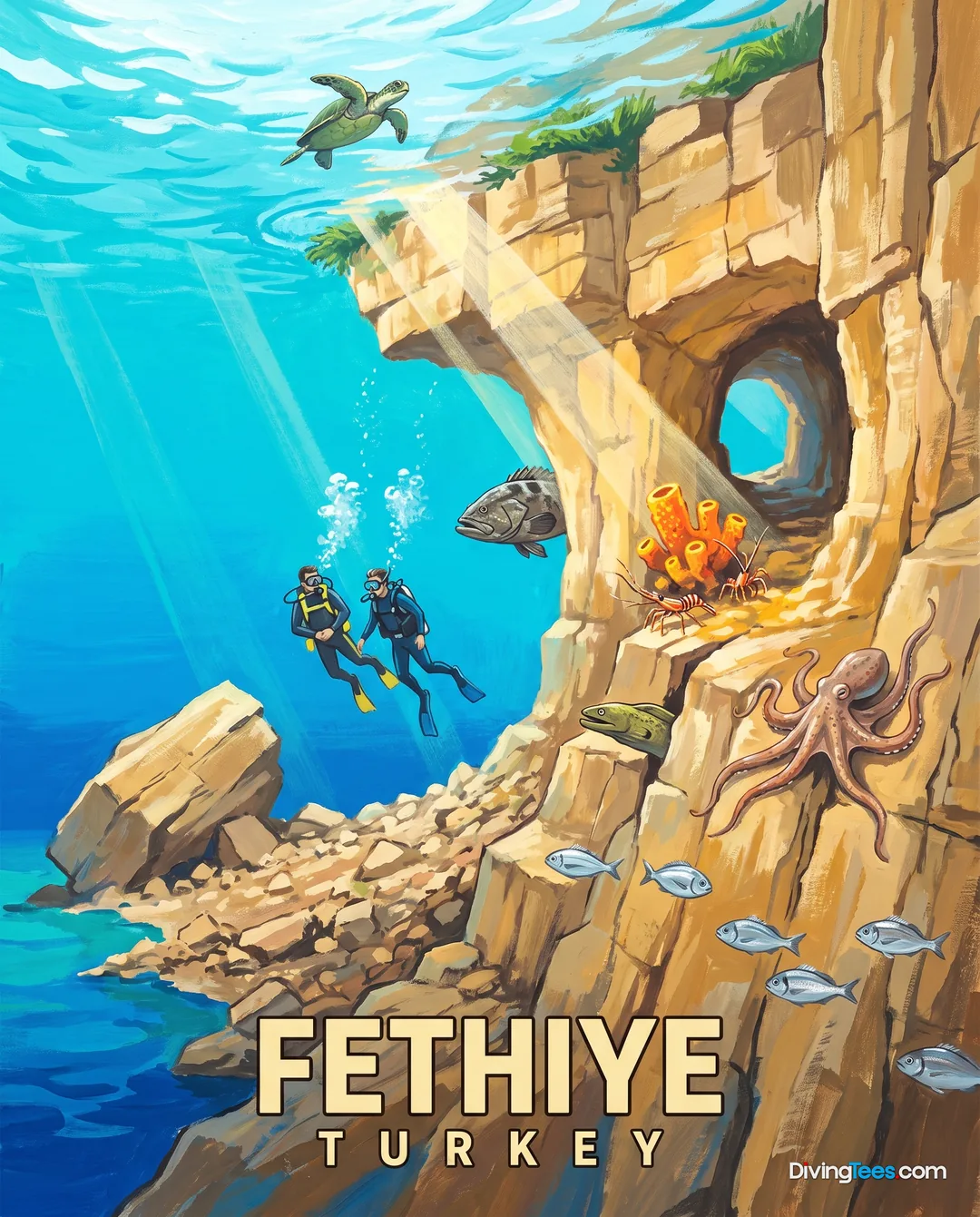
As you traverse the reef, keep an eye out for orange sponges adorning the rocky areas, providing habitat and texture to the underwater scenery. Sand gobies often dart across the sandy patches, blending seamlessly with their surroundings. Groupers can be found holding territory around the larger rocks, while octopuses occasionally reveal themselves from their hiding spots, offering a chance for closer inspection.
You may also encounter sea bass moving through the water column and scorpionfish, masters of camouflage, nestled amongst the rocks. The site’s shallow nature means ambient light penetrates effectively throughout the dive, enhancing colours and visibility. This consistent light also supports the vibrant growth of the sponges and algae that form the base of the reef's ecosystem.
This lagoon-like environment stands out from other Fethiye sites, which often feature deeper walls or more exposed reef structures. Aquarium Reef's specific characteristics make it versatile; it's a calm environment for initial dives, a comfortable location for night diving where you can experience a different shift of marine activity, and even suitable for snorkeling due to its accessible shallow areas.
The absence of strong currents is a defining feature of Akvaryum Koyu. This calm water makes it easier to practice skills and enjoy longer periods of observation, particularly for divers new to open water environments. The sheltered aspect ensures a stable, predictable dive experience, regardless of conditions that might affect more exposed sites in the region.
Aquarium Reef is accessible from Open Water Diver level, offering a maximum depth of 10 metres. The site is known for its good visibility and typically experiences no significant current, making it a calm environment for all divers. Access is generally by boat from Fethiye dive centres.
You can dive Aquarium Reef during the day or at night. Its sheltered, lagoon-like setting supports relaxed exploration, while night diving offers a chance to experience a different shift in marine activity. Shallow areas also make the site suitable for snorkeling, and access is generally by boat from Fethiye dive centres.
Aquarium Reef is accessible from Open Water Diver level and offers a calm setting for building confidence. Its gently sloping profile, sheltered conditions, and lack of significant current allow you to practise buoyancy control and bottom time management while exploring without complex navigation or major depth changes.
Aquarium Reef reaches a maximum depth of 10 metres, with very shallow sections leading gradually to deeper areas. The bottom changes between sand and scattered rocky outcrops, creating varied terrain that is easy to navigate. Ambient light reaches throughout the dive, helping you observe colours and details clearly.
Aquarium Reef typically has no significant current because its lagoon-like environment is sheltered, creating calm water for unhurried observation. You may see groupers around larger rocks, octopuses in hiding spots, sand gobies over sandy patches, sea bass in the water column, and camouflaged scorpionfish among orange sponges.