Yasawa · Fiji · Pacific
Max. depth · 32 mNavigator Wreck, Yasawa, Fiji: Artificial Reef Exploration
Descend onto the Navigator, a purpose-sunk longliner now thriving as an artificial reef at 32 metres in Fiji's Yasawa Islands.
What makes this site special
- Purpose-sunk longliner artificial reef
- Maximum depth of 32 metres
- Rapid coral and fish colonisation since 2016
- Home to white-tip reef sharks and turtles
- Part of a twin-wreck dive area
- Accessible by short boat ride from local resorts
Navigator about the site
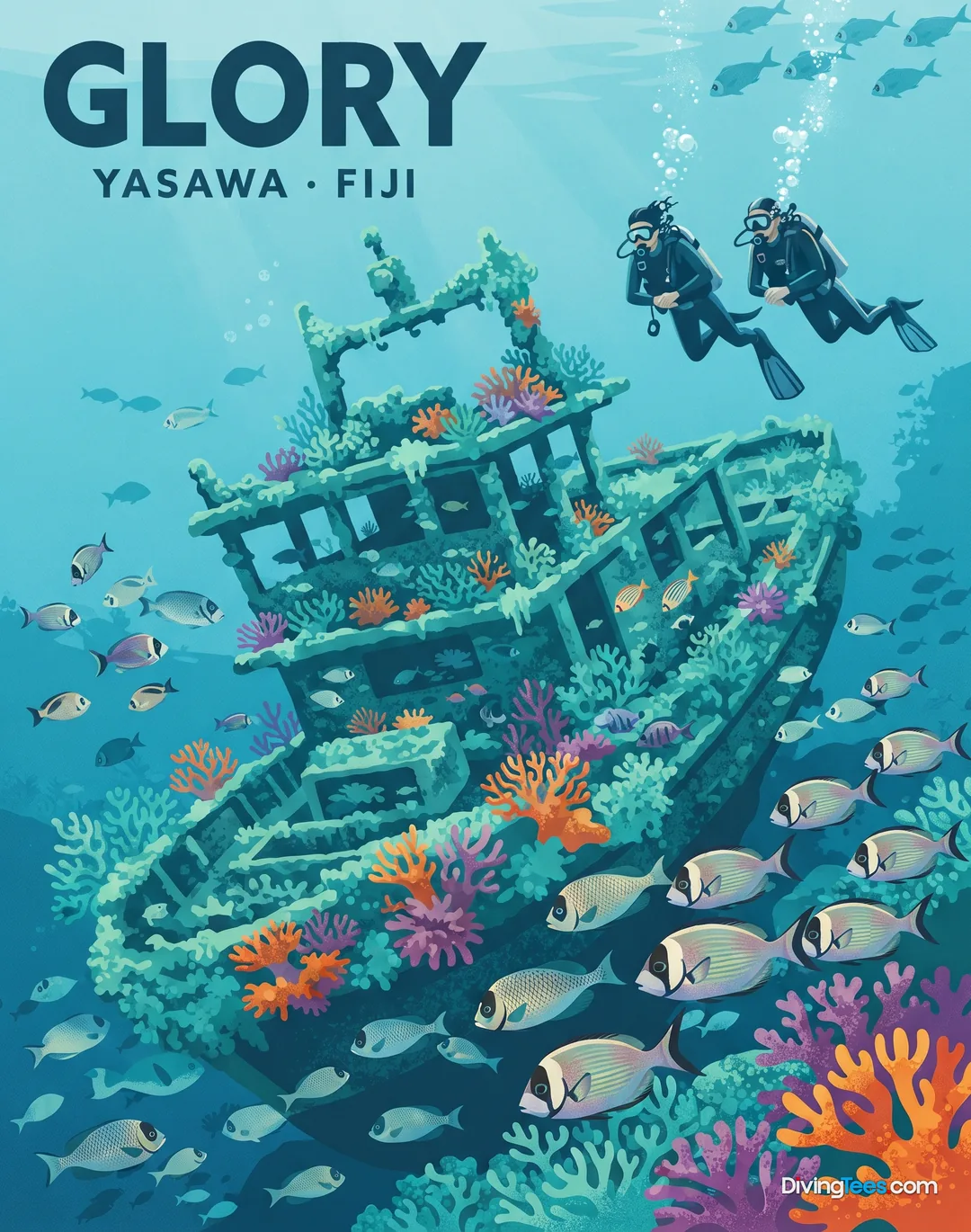
Dropping onto the Navigator, you immediately recognise this isn't a wreck born of accident, but one intentionally placed to foster a new ecosystem. Sunk in 2016, this former Chinese longliner now rests on the seabed, its 49-metre length providing a clear silhouette against the ambient light. The descent carries you through the clear waters, and from the moment you arrive, the vessel's structure allows for straightforward navigation around its decks and hull.
The Navigator settles at a maximum depth of 32 metres, with its shallower sections starting around 20 metres. As you approach, the sheer volume of marine growth that has colonised the wreck in a few short years becomes apparent. This rapid colonisation is a testament to the ocean's ability to reclaim and regenerate, transforming metal into a living habitat. Your dive profile will typically involve circuits around and above the main decks, allowing you to appreciate the scale of this developing artificial reef.
Circling the vessel, you'll discover specific areas where fish have already established territories. Schooling damselfish dart between the decaying metal and nascent coral formations, while larger territorial species have found refuge and food sources here. The wreck's contours, once designed for fishing, now offer intricate hiding spots and nurseries, making every turn around the structure a chance to observe new residents establishing their homes.
The site is a dynamic environment, with coral and fish life continuously establishing themselves since the wreck's sinking. You'll encounter various fish species, along with gorgonians and anthias that have begun to adorn the structure. Fusiliers often school around the wreck, adding to the vibrant scene. Keep an eye out for white-tip reef sharks and turtles, which are also known to frequent the area, using the wreck as a point of interest or shelter.
While the Navigator is an artificial reef, its location in the Yasawas means you're diving in an area known for diverse marine topography. This wreck sits among a region characterised by caves, drop-offs, pinnacles, and natural coral gardens. The site is part of a twin-wreck area, with the Navigator being the deeper of the two, generally presented as the more advanced dive compared to its sister wreck, Glory.
Access to the Navigator is typically by boat, with dive centres in the Nanuya Balavau and Naviti areas offering guided dives. The boat ride is short, often just a few minutes, placing you quickly on site. The wreck's open-water location means conditions can be dynamic, and while specific current information for Navigator varies, the region is known for currents that can shift, requiring attention to dive planning.
Diving conditions
The Navigator wreck is designated for advanced divers due to its maximum depth of 32 metres. While Open Water certification may be accepted by some operators, the depth and potential for dynamic conditions make it more suitable for divers with significant experience. Visibility is generally good, offering clear views of the wreck and its marine life. Currents can be variable; while not consistently strong, be prepared for changing conditions. Diving is possible year-round, though manta rays are more frequently sighted in the broader Yasawa region between May and October.