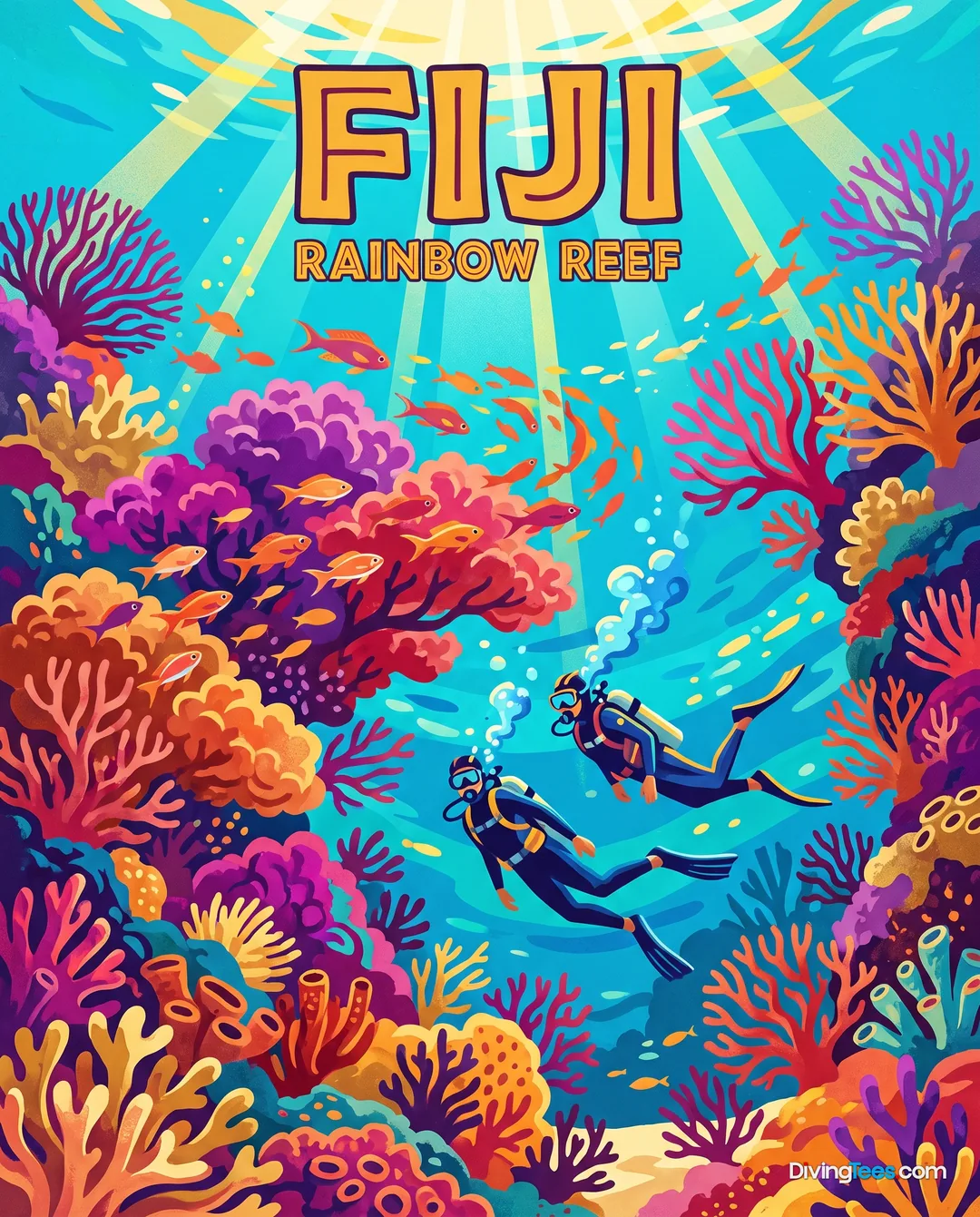
Fiji · Pacific
Diving Yasawa: Wrecks, walls and current-washed reefs
Wall dives drop towards 30 metres, fishing boats shelter anthias and fusiliers, and sea turtles appear among gorgonians, corals and reef sharks.
What makes this destination special
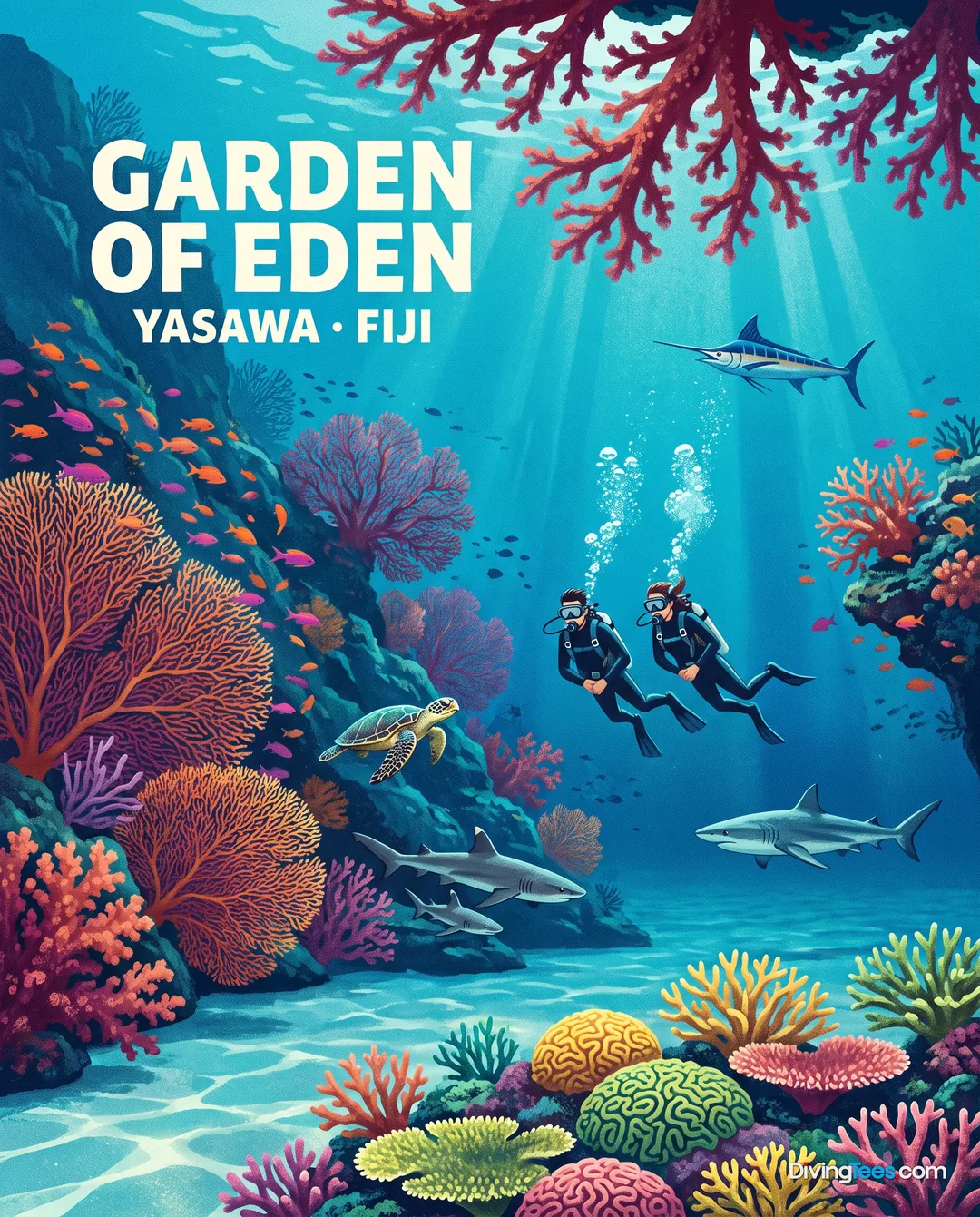
- Garden of Eden wall descending from three to 30 metres
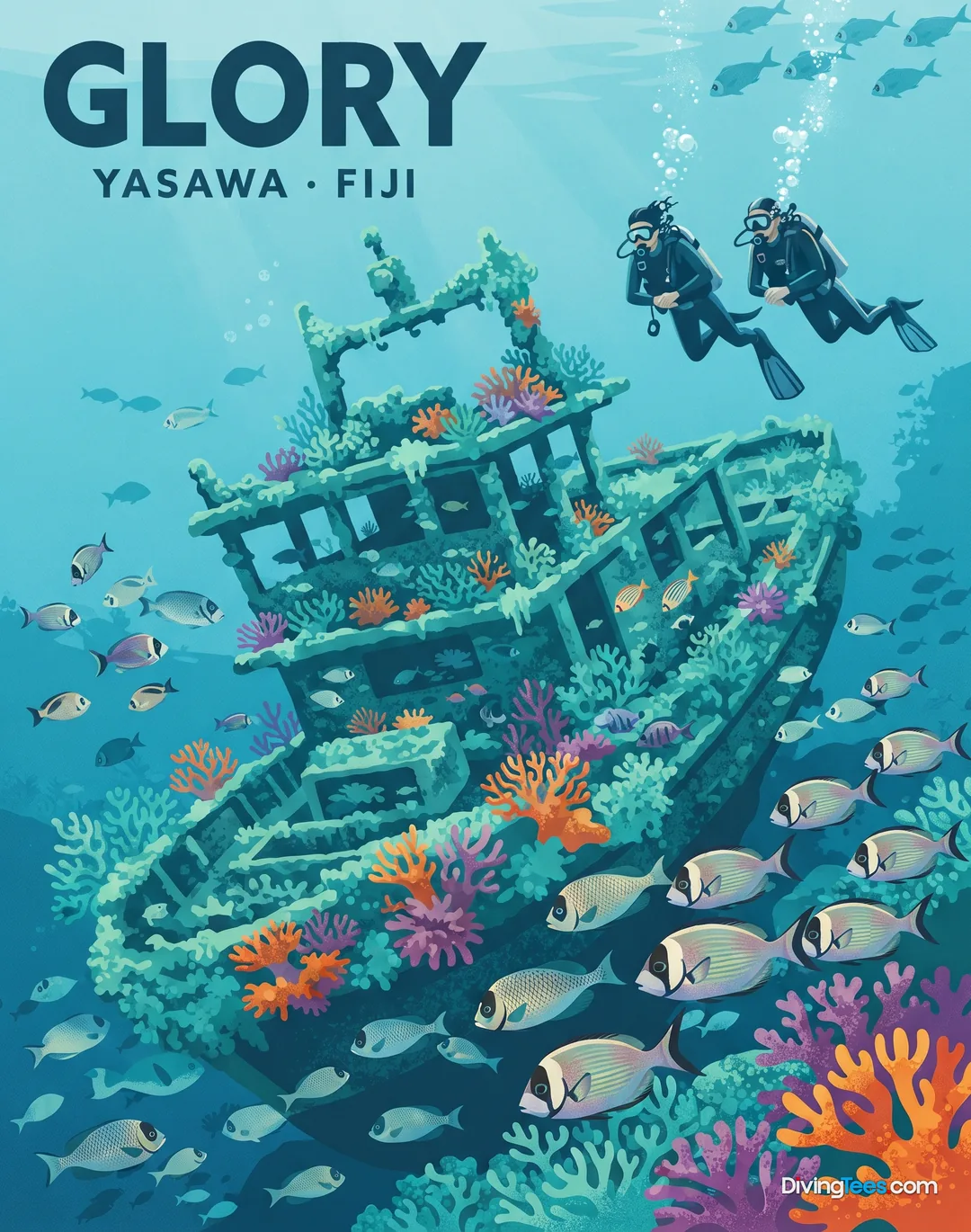
- Glory wreck, colonised by fish and corals
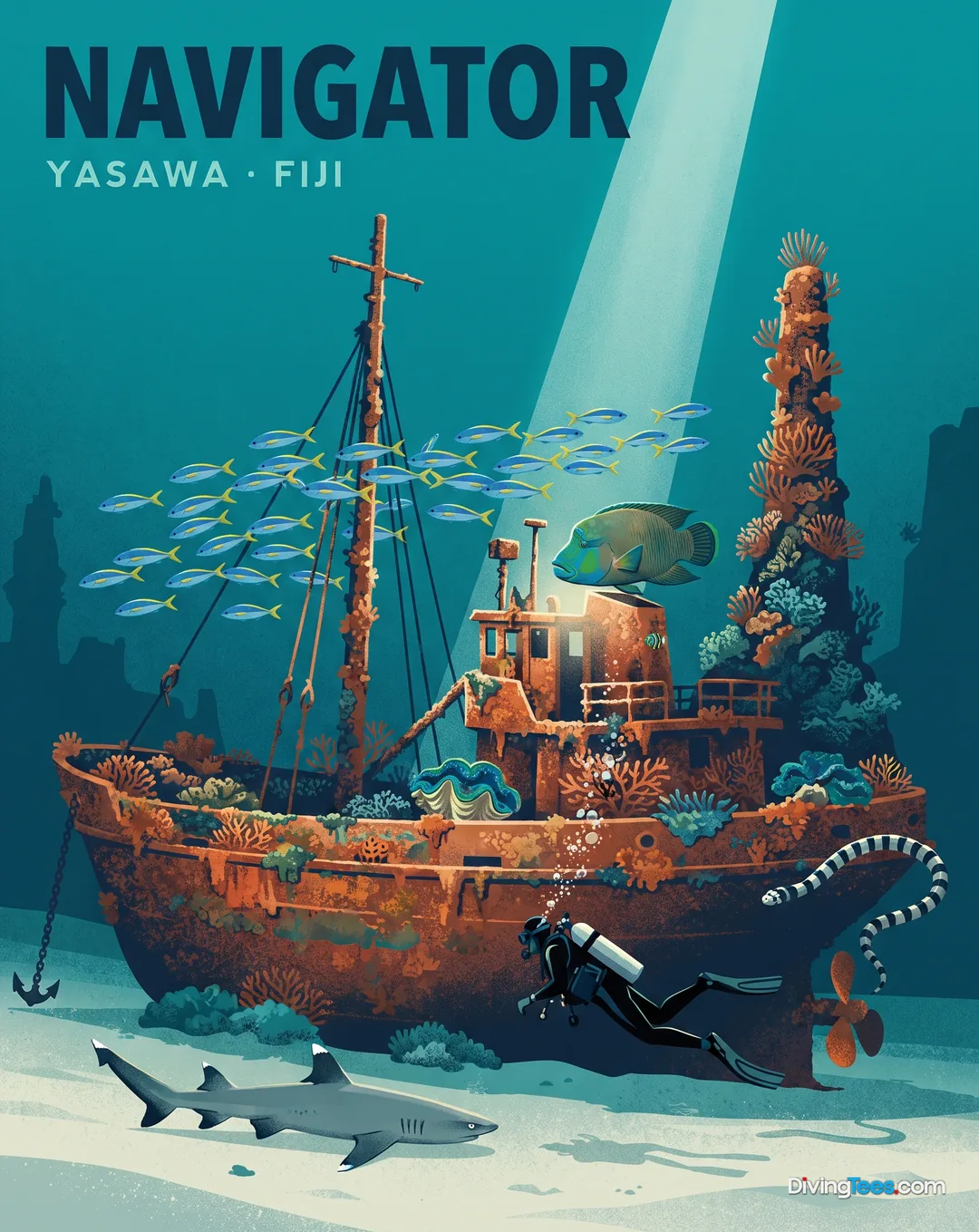
- Navigator wreck reaching 32 metres for advanced divers
- Schools of anthias and fusiliers along the walls
- Regular sightings of sea turtles and white-tip reef sharks
- Visibility on wrecks clearest from July through December
- Passes and exposed reefs where currents shape the dive
For subtitles in English: start the video firstthen click the gearat the top right of the video, select “Subtitles/CC”, then “Auto-translate” and choose “English”.
Overview
Garden of Eden begins in only three metres and follows a wall down towards 30 metres, with gorgonians, anthias, fusiliers, sea turtles and white-tip reef sharks in the picture. That neatly sums up the Yasawa: an island-reef destination explored by boat, combining natural walls and passes with young artificial reefs. The archipelago suits divers who are happy to let ferry timetables and sea conditions shape the week, rather than expecting a road-linked shore-diving base.
Diving here
The diving is predominantly from boats, with reefs, walls and passes providing the main underwater structure. Garden of Eden offers an easy-to-read profile, starting at three metres before dropping to 30 metres in places; it rewards a controlled descent and a steady inspection of the wall rather than a hurried circuit. The Glory rests between 20 and 30 metres, while Navigator reaches 32 metres and demands more depth discipline. Currents vary with the pass, weather and exposure, so the briefing matters: the entry, drift direction and pick-up plan are central to the dive. Visibility can be very good, with the Glory described as reaching 30 metres, although conditions are not uniform across the group. These are boat dives in the proper sense, and transfer time between islands is part of the experience, not an incidental detail.
Three dives not to miss
The underwater wildlife
The reefs carry the familiar movement of tropical fish, with anthias and fusiliers schooling along walls and around the wrecks. Garden of Eden adds large gorgonians to the scene, while sea turtles and white-tip reef sharks are regular possibilities there. On Glory and Navigator, fish and corals are settling onto former fishing boats, turning straightforward wreck inspection into a look at an artificial reef in progress. The wildlife is not presented as a calendar-led spectacle; the appeal lies in combining reef residents with the changing character of walls, passes and wreck structure. A slow pace pays off: look into the gorgonians, scan the blue around the wall, then check the shaded spaces and superstructure where fish have established themselves.
Possible underwater encounters
When to go
For the clearest wreck conditions, July through December is the useful planning window, with September described as the peak month on Glory. That period is a sensible choice when the purpose of the trip is to see the wrecks clearly and spend time examining their fish and coral growth. Elsewhere in the Yasawa, wind exposure, swell and tidal flow can matter as much as the calendar, particularly at passes and open reefs. The practical approach is to leave room for the sea to dictate the order of dives, rather than building the whole holiday around one fixed site or one fixed departure.
Level required
The destination can suit all levels, provided the individual dive matches the conditions. Garden of Eden is described as suitable for all divers, while Glory is open to certified Open Water divers and above. Navigator is a different proposition: at 32 metres, with potentially dynamic conditions, it is better suited to an experienced advanced diver. PADI and SSI Open Water qualifications, or a comparable BSAC qualification, cover the basic entry point; depth, current experience and comfort with boat recovery should determine the more demanding dives.
On the ground
From London Heathrow, London Gatwick or Manchester, reaching the Yasawa requires onward travel before the island transfer. There is no direct road route into the group: access is normally by ferry from the coast of Viti Levu, with island stops, or by seaplane or private boat depending on the chosen base. Ferry and domestic-flight schedules therefore need to be treated as part of the dive plan. A late arrival or missed connection can cost a full diving day. Once on the chosen island, the final approach may be on foot from a resort, by accommodation shuttle or by local water taxi. Dive luggage also moves between links in that chain, so packing lightly is practical rather than cosmetic.
Local tips
Book the ferry transfers alongside the accommodation, because the timetable governs when diving can start and when an island change is realistic. Allow a proper buffer around every ferry or domestic flight; in the Yasawa, a delay can remove the entire following dive day. Keep the bulky kit to a minimum, as bags are repeatedly handled on island connections. Do not approach the destination as a conventional shore-based holiday: the boat is the route to the reefs, walls and passes. For current-influenced sites, listen specifically for the entry point, drift direction and diver-recovery plan, not just the maximum depth. A base offering departures towards several islands gives more scope when wind or swell rules out one exposed sector. If the itinerary includes more than one island, remember that each move can consume half a day; a single base often leaves more actual time underwater. Keep one day flexible for weather and sea conditions rather than filling every transfer slot.
Planning your stay
Five to seven days gives the journey its proper value, allowing several boat outings without turning every day into a transfer exercise. A resort-based stay works well for repeated day trips, while a liveaboard-style cruise is useful for covering more than one island and limiting shore logistics. Non-divers are well served by beaches, lagoon swimming, coastal walks, boat trips and island-hopping days. The most comfortable rhythm is to mix diving with a day left open for the archipelago itself.
Hello, I'm Marina, DivingDeal.com's AI assistant. I guide you through destinations, areas and countries.

Thinking about the whole trip and the flights? Talk it over with Edith →
Marina is an AI. Some links are affiliate links: DivingDeal may earn a commission, at no extra cost to you. Bookings are made with the partner.