

Kokomo Dive Center
Google 4.6/5 (129 reviews)
Fiji · Pacific
Great Astrolabe Reef brings coral-covered pinnacles, shark encounters, wreck diving to thirty metres, and current-shaped passes reached from a quiet island base.
For subtitles in English: start the video firstthen click the gearat the top right of the video, select “Subtitles/CC”, then “Auto-translate” and choose “English”.
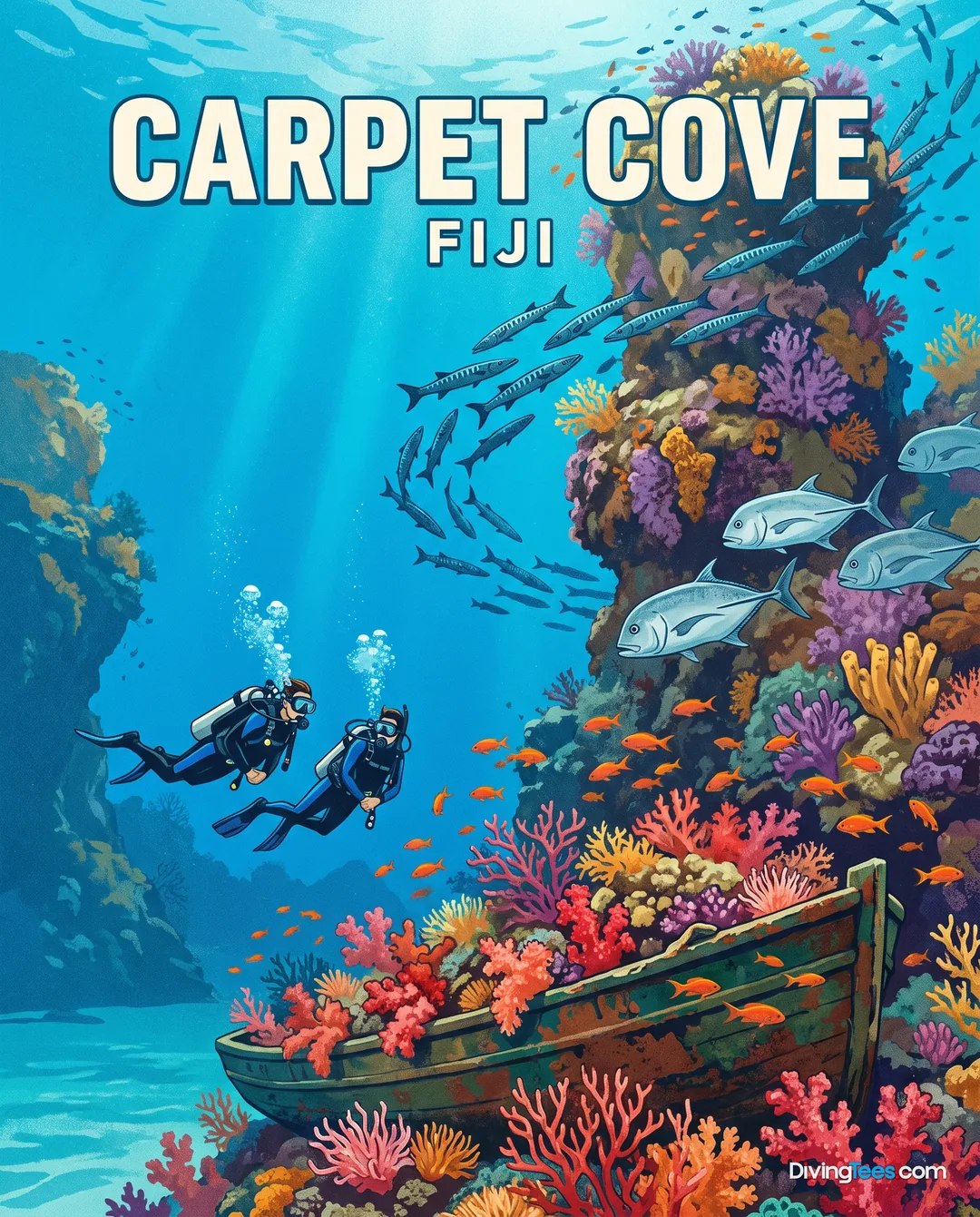
Carpet Cove’s soft-coral-covered fishing vessel, resting at thirty metres beneath pinnacles that rise towards the surface, captures Kadavu’s appeal. This is a Fiji destination built around boat diving on the Great Astrolabe Reef, its passes and offshore walls, rather than a polished resort circuit. The pace is unhurried and the visitor numbers remain modest, but the island setting makes the journey and daily logistics less forgiving than at better-connected bases. Five to seven days gives the weather and boats room to work.
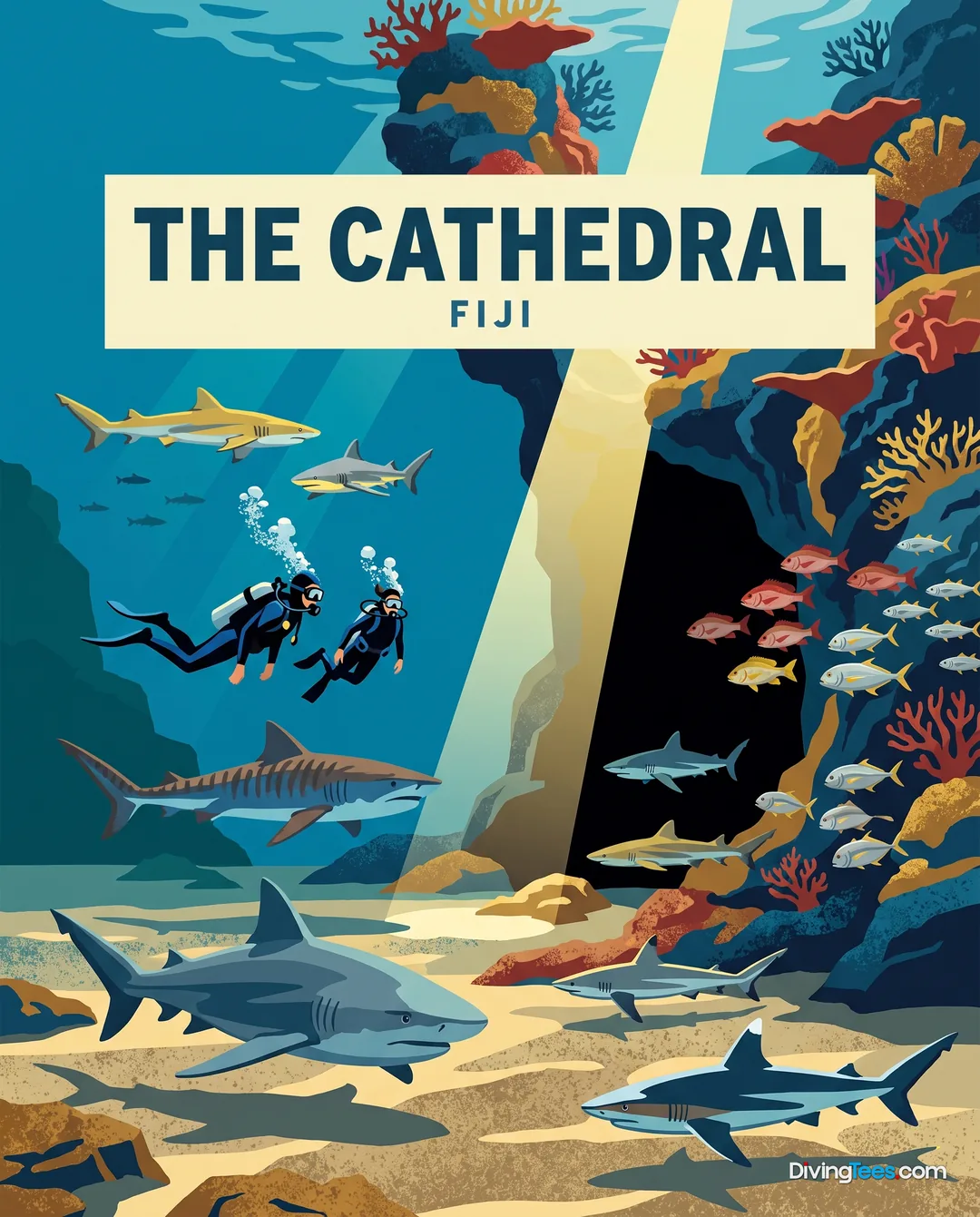
Kadavu’s underwater landscape is a mixture of reef, passes, walls and offshore structures, with the Great Astrolabe Reef providing the main framework. Some dives are straightforward reef exploration, while exposed sites can turn into current-led outings where positioning and a controlled ascent matter more than simply following a route. Carpet Cove combines a wreck at thirty metres with pinnacles crowded by life, giving divers a clear physical objective for the dive. The Cathedral Shark Dive drops to twenty metres and is aimed at experienced divers comfortable with a more demanding encounter. Visibility can reach forty metres, although conditions are variable rather than guaranteed. Diving is organised from boats, and local knowledge of the day’s current and sea state is important. Drift and Advanced training are useful additions for divers planning to make full use of the passes and outer reef.
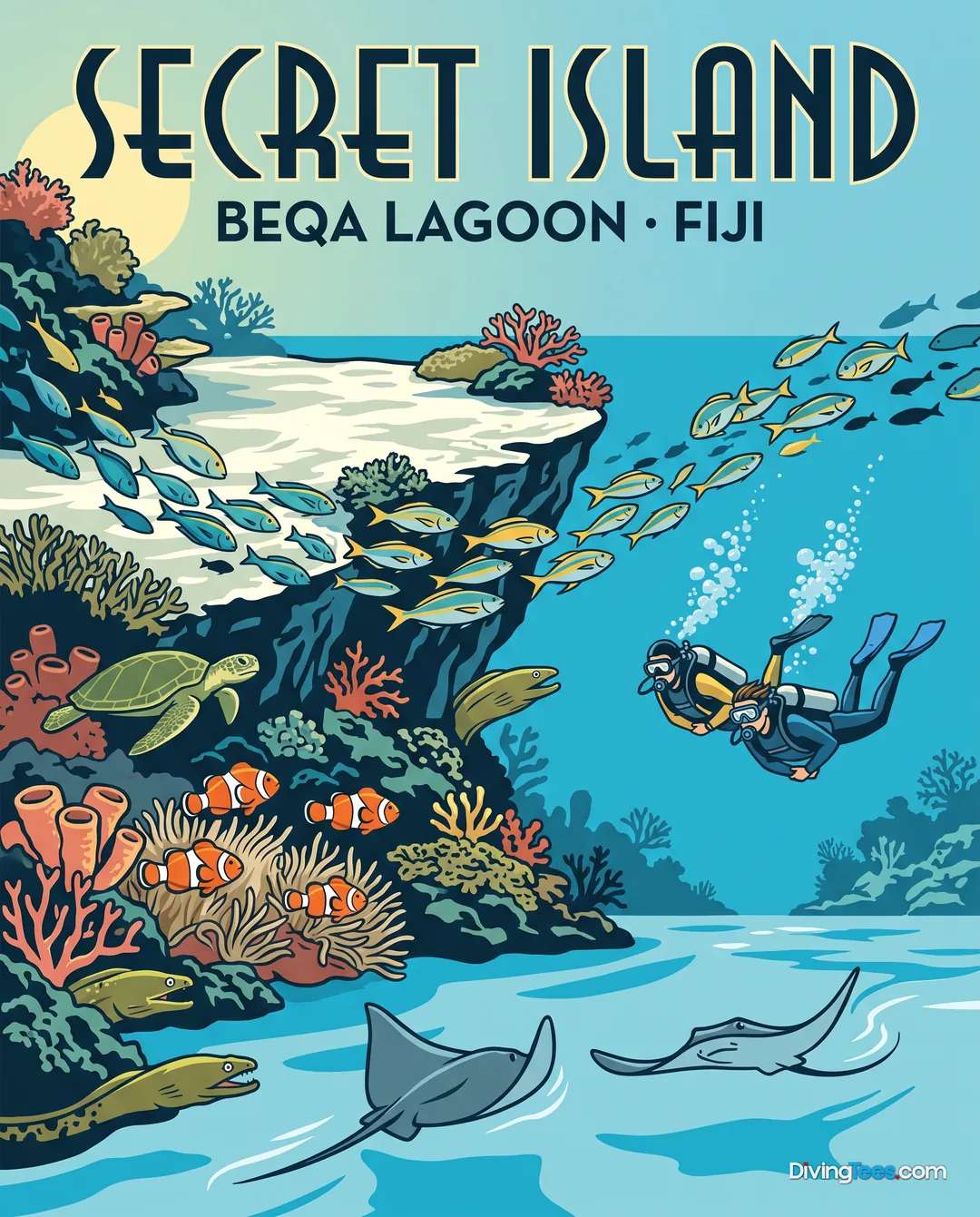
The reef scenery is as important as any single animal encounter. At Carpet Cove, soft corals cover the fishing vessel while schools of Chevron barracuda and trevally move around the pinnacles above it. The Cathedral Shark Dive is the deliberate choice for divers who want sharks, with a range of shark species encountered in water reaching twenty metres. Secret Island offers a gentler contrast: rays, eels, turtles and friendly reef sharks over clear, sandy shallows. Shark encounters are described as possible throughout the year, so Kadavu does not require a narrowly timed wildlife trip. The strongest reason to choose a particular day is usually the combination of visibility, boat conditions and manageable current, rather than a promise of one seasonal species.
April to October is the clearest practical window in the available seasonal record, with the lowest rainfall during those months. That does not turn Kadavu into a fixed-condition destination: the important daily variable remains exposure around the outer reef, passes and walls. A drier spell is useful because it gives boat crews more workable days and divers more chances to reach the sites that define Kadavu, rather than settling for sheltered water. The destination is also less pressured than Fiji’s major diving hubs, although limited accommodation and boat capacity mean that busy periods are felt locally. A five- to seven-day stay leaves some room for a weather delay.
Kadavu is open to all levels in principle, and sites such as Carpet Cove and Secret Island can suit less experienced divers. The outer reef is a different proposition. Variable current, boat entry and exposure can make a dive uncomfortable for anyone still uncertain in open water. PADI or SSI qualifications are understood in the same way as BSAC experience, but Drift training is particularly useful and an Advanced qualification helps with deeper or more exposed sites. A diver does not need to be an expert, but should be self-reliant and honest about current comfort.
From London Heathrow, London Gatwick or Manchester, the journey involves at least one long-haul connection to Fiji, followed by either a domestic flight to Kadavu’s aerodrome or a ferry or boat connection from Viti Levu. There is no direct road transfer from the mainland, so the final leg is part of the destination rather than an afterthought. Connections are less flexible than at a main Fiji hub; a tightly packed itinerary leaves little protection against a delayed flight or crossing. Once on Kadavu, reaching the diving operation may mean walking from nearby accommodation, using a boat shuttle or arranging a local transfer, depending on where the stay is based. Sleeping close to the embarkation point is generally the simplest arrangement.
Build the journey around Kadavu’s transport rather than treating the island connection as a minor transfer. Keep spare time around the domestic flight or ferry, and avoid booking a return connection so tightly that one disruption removes a day of diving. Put the exposed passes and walls on the days when the sea is most settled; they are the reason to come, but they are not a sensible assumption in every set of conditions. Do not arrive expecting only calm lagoon diving: the Great Astrolabe Reef can demand better open-water control and comfort in current. Group dives on consecutive days, which makes better use of the limited boat logistics than scattering them between travel and rest days. Sleeping near the departure point reduces local transfers, and bringing personal items of kit is sensible where rental choice may vary. Keep one day available for a weather-related change of plan rather than filling every day in advance.
Kadavu works best as a fixed island stay with repeated boat departures to the Great Astrolabe Reef, rather than as a liveaboard itinerary. Five to seven days allows several diving days, a weather buffer and a quieter final day before travelling on. Non-diving time can be spent walking lightly, visiting coastal villages, taking a boat trip along the reefs and passes, or simply resting ashore. It suits a companion who enjoys nature and an unhurried island setting, less so someone seeking town life or a broad programme of cultural activities.
Hello, I'm Marina, DivingDeal.com's AI assistant. I guide you through destinations, areas and countries.
Thinking about the whole trip and the flights? Talk it over with Edith →
Marina is an AI. Some links are affiliate links: DivingDeal may earn a commission, at no extra cost to you. Bookings are made with the partner.
April through October is Kadavu’s drier season and gives boat crews more workable days for reaching the Great Astrolabe Reef, passes and walls. Conditions still vary, especially around exposed sites, so plan some flexibility. Shark encounters are possible throughout the year, while daily visibility, sea state and current usually matter most.
Kadavu suits different experience levels, with Carpet Cove and Secret Island offering options for less experienced divers. The outer reef, passes and walls can involve current, boat entries and exposure, so you should be self-reliant and comfortable in open water. Drift training is useful, while Advanced certification helps with deeper or more exposed sites.
Kadavu offers coral-covered pinnacles, reef passes, walls and offshore structures. At Carpet Cove, soft corals cover a fishing vessel beneath pinnacles surrounded by Chevron barracuda and trevally. The Cathedral Shark Dive reaches twenty metres and features sharks, while Secret Island has rays, turtles, eels and reef sharks over clear, sandy shallows.
Plan a fixed island stay with repeated boat departures to the Great Astrolabe Reef, and allow five to seven days for diving, weather flexibility and a quieter final day. Keep spare time around the domestic flight or ferry, sleep near the departure point, group dives on consecutive days and leave room for changing sea conditions.