
Big Blue Vanuatu
Google 4.8/5 (166 reviews)
Efate · Vanuatu · Pacific
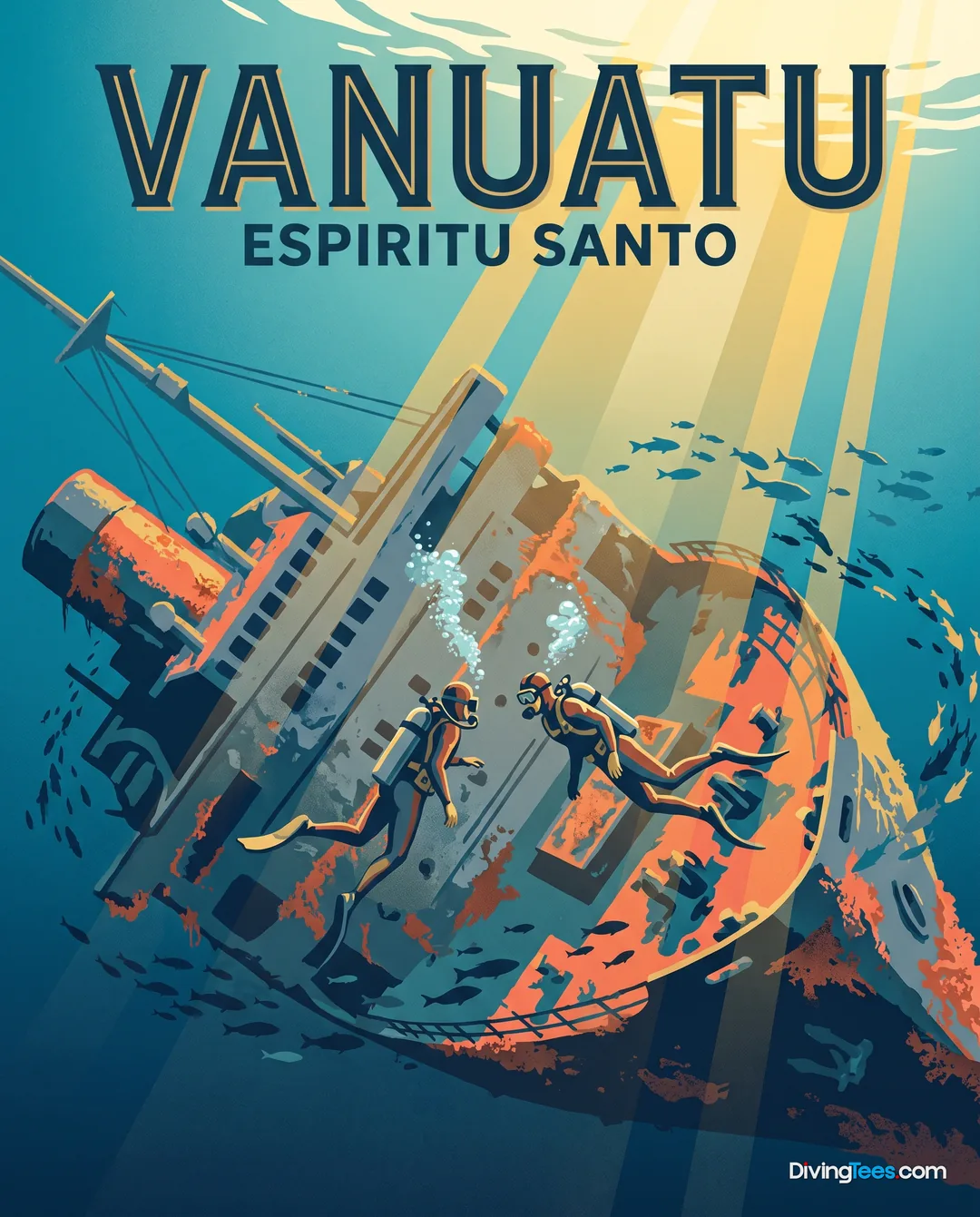
Max. depth · 55 mDescend onto the Semele Federesen, an inter-island cargo ship resting upright on the sand, with its uppermost structure at 30 metres.
The Semele Federesen began its life as an inter-island cargo vessel before its deliberate scuttling in 1985. Initially, it settled at around 30 metres, but the powerful Cyclone Uma in 1987 dramatically altered its resting place. The storm dragged the wreck along the reef, moving it to its current, deeper location, which defines its distinct profile today. This relocation exposed different structural elements and created new access points that were not part of the original scuttling plan, adding a layer of natural modification to its artificial reef status.
Today, the wreck lies on a sandy bottom, with its deepest section reaching 55 metres. The highest points of the ship's superstructure start at 30 metres, making the initial descent straightforward onto the main body of the wreck. As you explore, the depth gradually increases towards the stern and bow sections, providing a clear progression for your dive profile. The orientation of the wreck, settled after the cyclone, often means you are exploring sections that were once higher up, but are now angled or partially buried in the sand, creating varied topography for penetration if you are equipped and trained.
Visibility at the Semele Federesen is often a key feature for this dive. It is not uncommon to encounter conditions where underwater visibility extends to 40 to 50 metres. This clarity provides a panoramic view of the entire wreck from a distance, allowing you to gauge its scale and orientation before approaching. Inside the wreck, this visibility still holds, making penetration less confined and allowing light to filter into deeper sections, which can be useful when navigating the interior spaces.
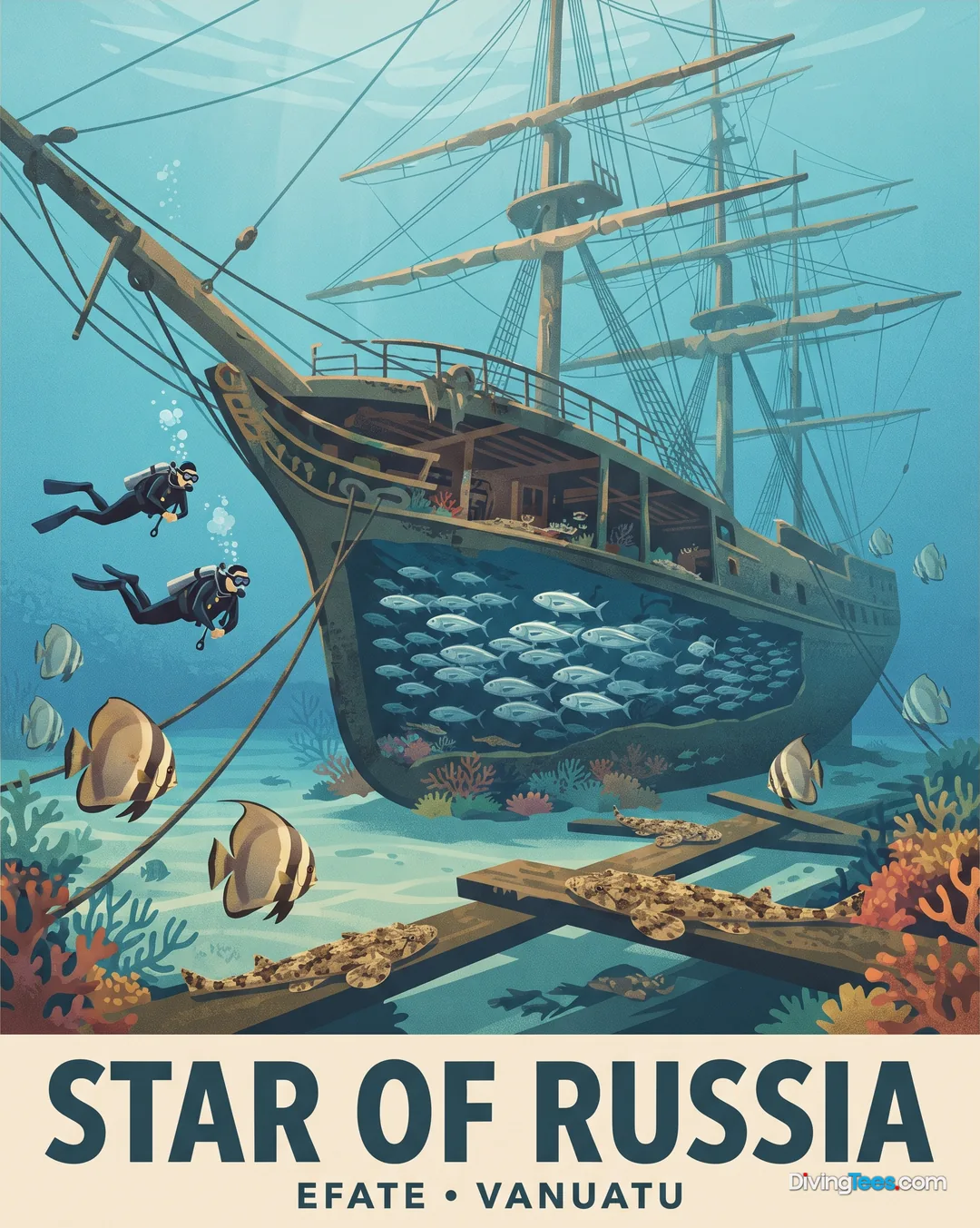
The hull of the Semele Federesen is richly encrusted, forming an artificial reef. You will find vivid soft corals and large gorgonian sea fans covering the structure. Various reef fish dart through the superstructure, and moray eels (Muraenidae) often find shelter within the ship's holds. The open sand areas around the wreck's base might also host cleaner shrimp (Stenopodidae) or gobies (Gobiidae), though the primary focus here remains the unique wreck itself and its deep, clear water environment.
The Semele Federesen is an inter-island trading vessel, and its cargo holds and cabins offer opportunities for penetration. These interior spaces, combined with the stern section, provide a complex environment for exploration. The excellent visibility aids in navigating these areas, allowing you to appreciate the scale of the vessel and the way marine life has colonised its interior. Guided dives are recommended for those looking to explore inside the wreck.
Due to the depths involved, bottom times are inherently limited, and careful gas planning is essential for any dive on the Semele Federesen. A single tank dive might allow for limited exploration of the shallower sections, while twinset configurations provide the necessary gas for a more thorough exploration of the deeper parts and penetration opportunities. Regardless of your gear, constant depth monitoring and strict adherence to your dive plan are critical due to the profile and the potential for decompression obligation.
Dive depth at Semele Federesen ranges from a minimum of 30 metres to a maximum of 55 metres. Due to these depths, the site is classified for experienced divers with deep-diving training. Visibility is typically excellent, often reaching 40 to 50 metres. Current is variable, and while not a defining feature, it should be considered given the offshore location; plan your dive as a deep, planned exploration rather than a drift.
Semele Federesen is classified for experienced divers with deep-diving training because the wreck lies between 30 and 55 metres. Penetration opportunities through cargo holds, cabins, and other interior spaces require suitable training and equipment. Guided dives are recommended if you plan to explore inside the wreck, where careful gas planning and depth monitoring are essential.
Semele Federesen rests on a sandy bottom, with the highest points of the superstructure at 30 metres and the deepest sections reaching 55 metres. The depth increases gradually toward the stern and bow. This makes the dive a planned deep exploration, with limited bottom times and possible decompression obligations requiring strict attention to your profile.
Current at Semele Federesen is variable and is not described as a defining feature of the dive. Because the wreck is offshore, you should still consider current when planning. Treat the site as a deep, planned exploration rather than a drift dive, while maintaining constant depth monitoring and following your dive plan.
Semele Federesen offers exploration of an inter-island cargo ship wreck, with soft corals and large gorgonian sea fans covering its structure. Reef fish move through the superstructure, while moray eels shelter in the holds. Around the sandy base, you may encounter cleaner shrimp or gobies, with the wreck's cabins and cargo holds offering penetration opportunities.