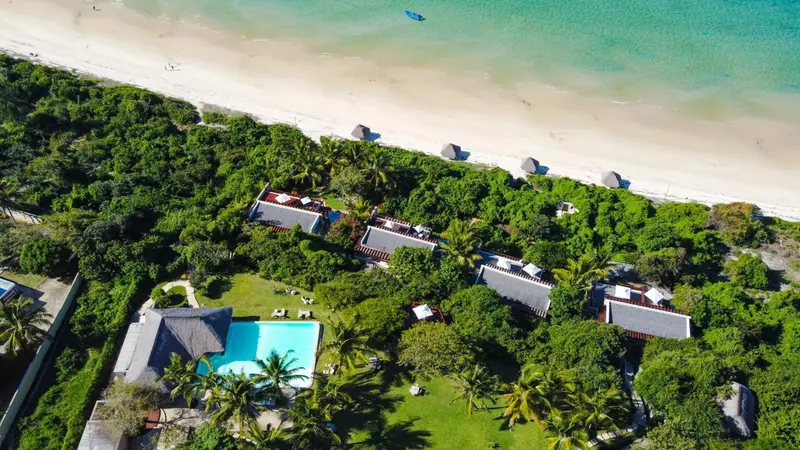
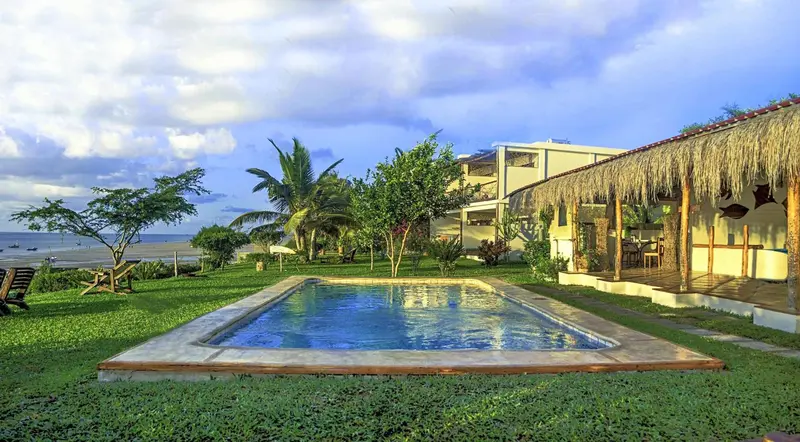
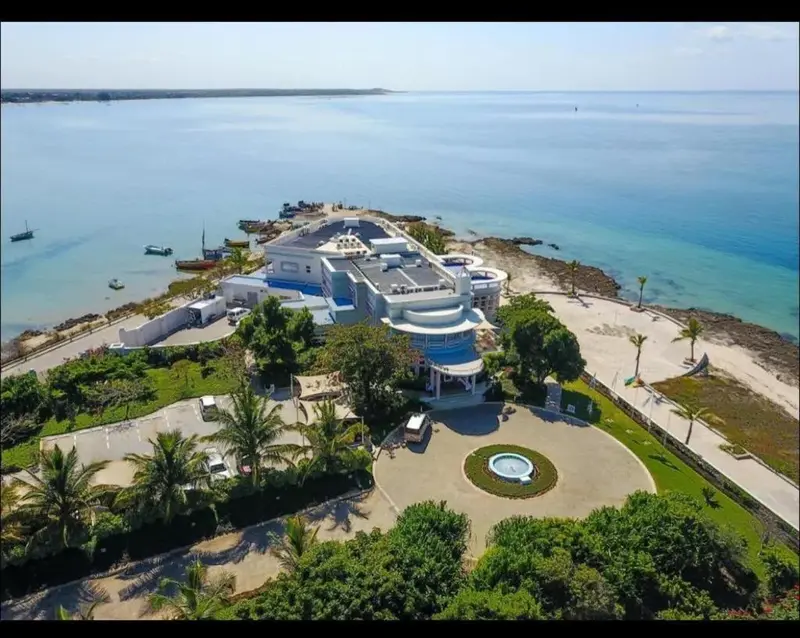
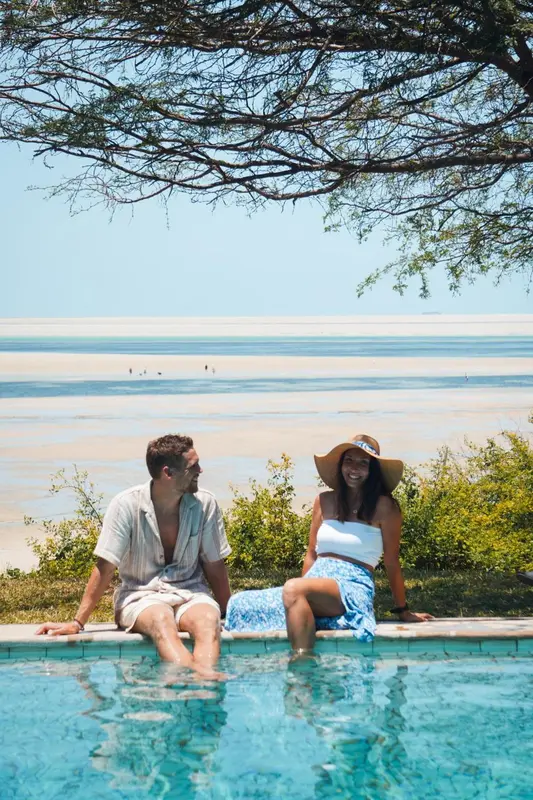
 Dive centre in the hotel
Casa Babi
Google 4.8/5 (112 reviews)

The dive centre
Odyssea Dive
Google 4.7/5 (150 reviews)
Dives: Two Mile Reef
Mozambique · Africa
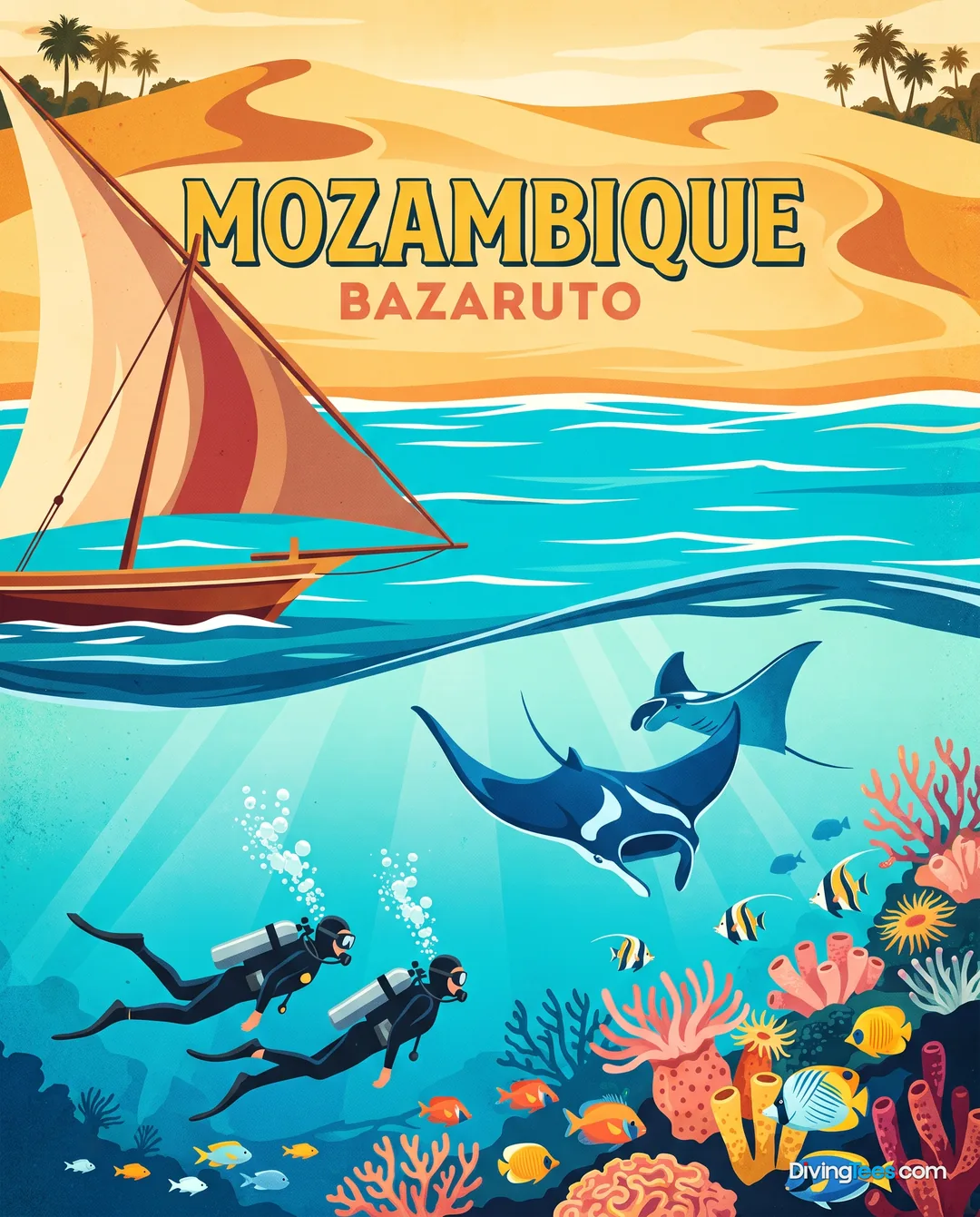
Coral reefs, sandy islands, reef sharks, turtles and humpback whales await on boat trips from Vilanculos into the Bazaruto archipelago.
For subtitles in English: start the video firstthen click the gearat the top right of the video, select “Subtitles/CC”, then “Auto-translate” and choose “English”.
Coral reefs, sandy islands and pelagic wildlife define diving from Vilanculos. The town is a mainland base for boat trips into Bazaruto National Park, where reefs, drop-offs and pinnacles sit beyond the bay. Expect turtles, reef sharks, rays and larger fish underwater, with humpback whales passing offshore in the austral winter. This is a shore-based holiday rather than a liveaboard, and the surrounding islands, beaches and shallow water make it workable for non-divers too.
Diving is predominantly by fast boat from the coast, with the archipelago’s coral reefs, drop-offs and pinnacles providing the underwater structure. Some shallow reefs suit training and relaxed diving, while deeper pinnacles demand more depth experience and can involve stronger or less predictable water movement. Currents are variable rather than a constant feature, and tides, wind and swell can change the character of a site during the day. Visibility commonly falls between 12 and 30 metres, but it is not fixed: tidal movement, weather and runoff during the rainy season can all reduce it. The practical rhythm is a day trip, with the chosen reef matched to the sea and tide rather than selected by name alone. This is not a shore-diving destination disguised as one. The principal Bazaruto dives require a boat crossing, and a safety stop takes place before the return journey.
Marine turtles are a year-round possibility, with nesting reported on some sectors between November and January. Reef sharks, rays and larger reef fish add substance to the coral scenery, while manta rays may appear at any time but are not guaranteed. Humpback whales are the seasonal draw, with sightings most often reported from July to October as they move through the area. Whale sharks are occasional rather than a dependable seasonal target, and dugongs are present but notoriously difficult to find. Dolphins may also be seen during boat outings. The appeal is therefore spread between what happens below the boat on a reef and what may break the surface during the crossing. A day here can involve a turtle on the reef, a ray over sand and a whale in the distance, but none should be treated as a fixed appointment.
May to October is generally the most sensible window, as the dry season usually brings more settled boat conditions and better visibility. February and March are the awkward months: wind, swell and rainy-season conditions can interrupt regular departures, with runoff also capable of clouding the water. July to October adds the possibility of humpback whales, making the drier period attractive for both diving and surface wildlife. Even in the favourable months, tides and local weather still decide whether a particular reef is comfortable. Build flexibility into the itinerary rather than assuming every planned boat day will run exactly as booked.
Vilanculos can suit beginners because some shallow reefs are used for training, but the destination should not be treated as uniformly easy. Boat travel, changing sea conditions and variable currents are part of the experience. Advanced Open Water is useful if the plan includes deeper reefs and pinnacles, particularly where depth and water movement combine. Experienced BSAC, PADI and SSI divers should still discuss the day’s site with the crew, as the suitable choice depends on tide, wind and swell rather than certification alone.
From London or Manchester, plan on a regional connection through Johannesburg or Maputo before continuing to Vilanculos. There is also a road option from Maputo along the EN1, but the journey is roughly 700 kilometres and takes substantially longer than a domestic flight. Once in Vilanculos, the diving departs by fast boat from the coast, not by a compulsory regular ferry to an island base. Accommodation and dive centres are along the Vilanculos shoreline, so the final transfer may be walkable or may require a local land transfer, depending on where you stay. Allow connection time on the way in and avoid building a boat departure into a tight onward travel plan.
Keep several spare days in the programme. Wind, swell and tide can remove a Bazaruto boat day, particularly outside the dry season, so two tightly packed diving days are a poor plan. Ask which reef fits that day’s tide and sea state rather than booking around a famous name. An early departure is usually the sensible choice, before the wind strengthens and the sea becomes harder to manage. Treat Vilanculos as the mainland base it is: the islands are reached by boat, and there is no liveaboard arrangement to fall back on. Allow time for the park conservation fee and its arrangements before leaving the shore. Take your own computer and any essential personal equipment if you rely on a particular model. Keep a full no-diving day before flying, since a delayed return from the archipelago can otherwise remove the margin you need.
Plan on seven to ten days based in Vilanculos, with several boat-diving days, reserve time for unsettled weather and at least one day away from scuba. The rhythm is flexible rather than cruise-like: depart from the mainland, spend the day around Bazaruto’s reefs or islands, then return to the same coastal base. Non-divers can fill the gaps with beaches, sandbanks, island trips, snorkelling, fishing and whale watching. That combination gives the destination its shape, rather than a diving schedule alone.
Hello, I'm Marina, DivingDeal.com's AI assistant. I guide you through destinations, areas and countries.
Thinking about the whole trip and the flights? Talk it over with Edith →
Marina is an AI. Some links are affiliate links: DivingDeal may earn a commission, at no extra cost to you. Bookings are made with the partner.
In each one, the dive centre is inside the hotel: step out of your room and go diving.
Dive centre in the hotelGoogle 4.8/5 (112 reviews)
The dive centre
Odyssea Dive
Google 4.7/5 (150 reviews)
Dives: Two Mile Reef
May to October generally offers more settled boat conditions and better visibility. July to October also brings the possibility of humpback whale sightings. February and March can be awkward because wind, swell, rain and runoff may disrupt departures or reduce water clarity. Tides and local weather still influence each day.
Vilanculos can suit beginners because some shallow reefs are used for training, but boat travel, changing sea conditions and variable currents remain part of the experience. Advanced Open Water is useful for deeper reefs and pinnacles, where depth and water movement may combine. Discuss the day’s site with the crew.
Diving from Vilanculos can include coral reefs, turtles, reef sharks, rays and larger reef fish around Bazaruto’s reefs, drop-offs and pinnacles. Manta rays may appear, while humpback whales are most often seen from July to October. Dolphins, occasional whale sharks and elusive dugongs are possible, but wildlife is never fixed.
Use Vilanculos as a mainland base for fast-boat trips into Bazaruto National Park, rather than expecting a liveaboard. Build flexibility around wind, swell and tides, keep spare days for missed departures, and allow for the park conservation fee. Arrange connections carefully, leave a full no-divining day before flying, and include time for non-diving activities.