
CT Mergulho
Google 4.7/5 (11 reviews)
Brazil · Americas
Rocky islands, the Carolina wreck, 18 to 40-metre drops and cold-water upwelling shape boat diving around Cabo Frio off the Brazilian coast.
For subtitles in English: start the video firstthen click the gearat the top right of the video, select “Subtitles/CC”, then “Auto-translate” and choose “English”.
Rocky islands, sheltered coves and wrecks make Cabo Frio a boat-diving destination with a distinctly nautical rhythm. From the harbour, outings head towards Ilha Comprida, Ilha dos Papagaios, Ilha Dois Irmãos and other coastal islands, where choosing a lee side can turn a rough day into a workable one. Shallow rock reefs suit newer divers, while deeper walls and wreck profiles give experienced divers a reason to return. A four- to seven-day land stay leaves room for changing weather.
Most diving takes place from a boat around rocky islands and islets, rather than directly from the beach. Underwater, expect reefs, cavities, walls and occasional wrecks, with profiles ranging from shallow sections to roughly 40 metres. Ilha Comprida, Ilha dos Papagaios and Ilha Dois Irmãos are useful names to discuss with the skipper, but the practical choice is usually the island face offering shelter that day. Currents are variable, and the cold-water upwelling can alter both visibility and the feel of the dive. Visibility commonly falls between 8 and 20 metres, though it can change with wind and sea state. Some distant sites involve around 50 minutes of navigation. At exposed locations, the boat may need to follow divers because there is no comfortable shelter for a fixed wait, making the ascent and safety stop part of the day’s planning.
Marine life at Cabo Frio changes with the cold-water upwelling, so the same rocky wall or island cove can look quite different from one outing to the next. Nutrient-rich water helps explain the area’s reputation for abundant marine life, but it also brings variation in clarity and conditions rather than a fixed wildlife calendar. Look closely around cavities, rock reefs, drop-offs and wreck structure, where the underwater relief creates shelter and feeding ground. The islands and their lee-side coves are the places to concentrate when the sea is unsettled. This is not a destination to book for one guaranteed animal encounter. Its appeal lies in seeing what the water brings to the rocks, walls and wrecks on the day.
September to April is generally the most workable period, with more manageable seas and visibility that is often better for island diving. October, November and April can be quieter than the height of the austral summer holidays, while still sitting within that favourable window. Winter remains diveable, but the cold-water upwelling, colder water and increased agitation can close off exposed or distant sites. Cabo Frio therefore rewards a forecast-led itinerary rather than a rigid one. Keep at least one spare day for the boat, especially if your plans depend on a remote island or a deep wreck.
Cabo Frio can suit beginners when the day’s plan uses a sheltered, shallow reef and the centre matches the site to the conditions. It also offers more demanding profiles, including wrecks and sites around 18 to 40 metres. An Advanced Open Water qualification, or equivalent experience, is useful for those dives. PADI, SSI and BSAC divers should check the exact depth, exposure and current before booking a particular outing, rather than treating the destination as uniformly easy.
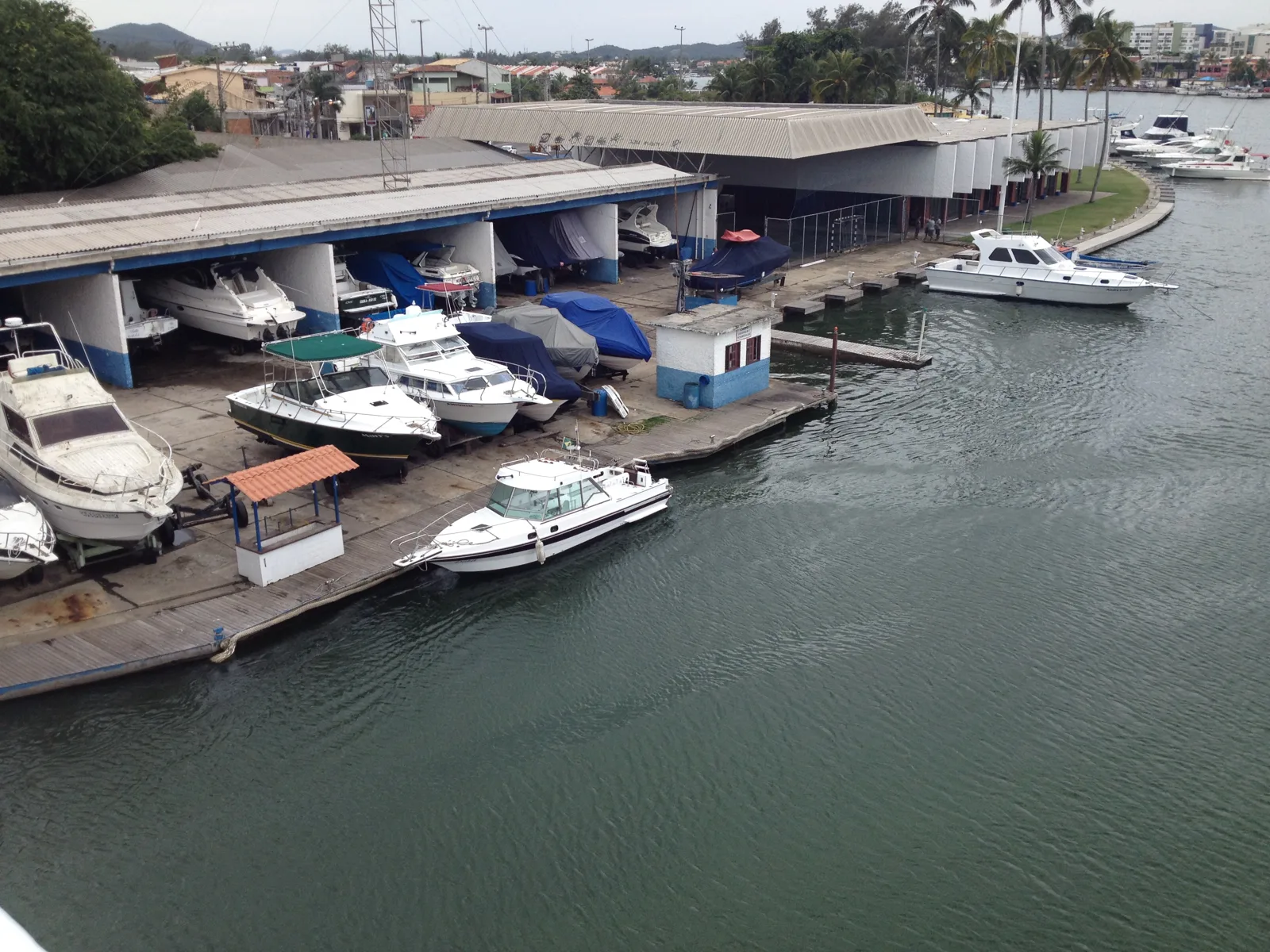
From London or Manchester, a typical journey to Cabo Frio takes around 15 to 20 hours via Rio de Janeiro, excluding connection waits and the road transfer. The final approach is mainly by road, usually allowing roughly two and a half to three and a half hours from Rio depending on traffic. Domestic flights may serve Cabo Frio, but their frequency needs checking before you commit to an itinerary. Once in town, dive departures leave from harbour and marina areas. Central accommodation may be within walking distance of some departures; elsewhere, a taxi is the practical assumption. No public ferry is needed to reach Cabo Frio or the main departure points.
Do not reserve the trip in your head around one named island. Ask on the day whether the boat is heading for a sheltered cove or an exposed face, because the useful site depends on the wind and the available lee. Ilha Comprida, Ilha dos Papagaios and Ilha Dois Irmãos are options to discuss, not guarantees of calm water. Keep a spare day for weather, particularly if a distant outing involves about 50 minutes of navigation. Ask for the exact depth and profile before committing to a wreck or deep wall, and check whether the boat must follow divers during the safety stop because a fixed mooring is impractical. Do not mistake one clear dive for a promise of clear water throughout the stay. The cold-water upwelling can change visibility and temperature, while stronger wind can make an exposed island uncomfortable or inaccessible. Avoid packing every day with the most exposed sites, as a cancellation there is harder to reorganise.
Cabo Frio works best as a land-based stay, with day boats selected around the wind and sea state. Allow four to seven days so several boat days remain possible if an exposed island is cancelled. Harbour and marina areas can be reached on foot from some central accommodation, otherwise by taxi. Non-divers have beaches, coves, island excursions, coastal walks and the historic centre, with Arraial do Cabo or Búzios suitable for a day away from the boat.
Hello, I'm Marina, DivingDeal.com's AI assistant. I guide you through destinations, areas and countries.
Thinking about the whole trip and the flights? Talk it over with Edith →
Marina is an AI. Some links are affiliate links: DivingDeal may earn a commission, at no extra cost to you. Bookings are made with the partner.
September to April is generally the most workable period for island diving, with more manageable seas and visibility that is often better. October, November and April can be quieter than the height of the austral summer holidays. Winter remains diveable, but colder water, upwelling and increased agitation may close exposed or distant sites.
Cabo Frio can suit beginners when the plan uses a sheltered, shallow reef and the dive centre matches the site to conditions. Deeper walls and wrecks around 18 to 40 metres are more demanding. An Advanced Open Water qualification or equivalent experience is useful, and you should confirm depth, exposure and current beforehand.
Around Cabo Frio, boat dives visit rocky islands and islets such as Ilha Comprida, Ilha dos Papagaios and Ilha Dois Irmãos. Underwater, you can explore reefs, cavities, walls, drop-offs and the Carolina wreck. Cold-water upwelling changes visibility and marine life, so what appears around the rocks and wreck structure varies between outings.
Plan Cabo Frio as a land-based trip with boat departures from harbour and marina areas, choosing sites according to wind, sea state and shelter. Allow four to seven days so cancellations can be rearranged, especially for exposed or distant outings. Ask about the exact profile, depth, currents and safety-stop arrangements before booking.