Liveaboards · Colombia
Vivax, a focused Malpelo liveaboard for serious pelagic diving
What makes this boat unique
- Vivax takes divers to Malpelo, where only one boat is allowed in the reserve at a time.
- The 2024-refitted steel vessel carries up to eight passengers in air-conditioned cabins with private bathrooms and hot water.
- Free nitrox is produced through a membrane system and cascade system, with two Coltri 13.5 hp compressors.
- Two Norsafe Magnum 8.5 m tenders, each with a Yamaha 250 hp outboard, handle transfers to and from the dive sites.
- The trip requires at least 50 logged dives and an AOWD certification or equivalent.
For subtitles in English: start the video firstthen click the gearat the top right of the video, select “Subtitles/CC”, then “Auto-translate” and choose “English”.
The invitation
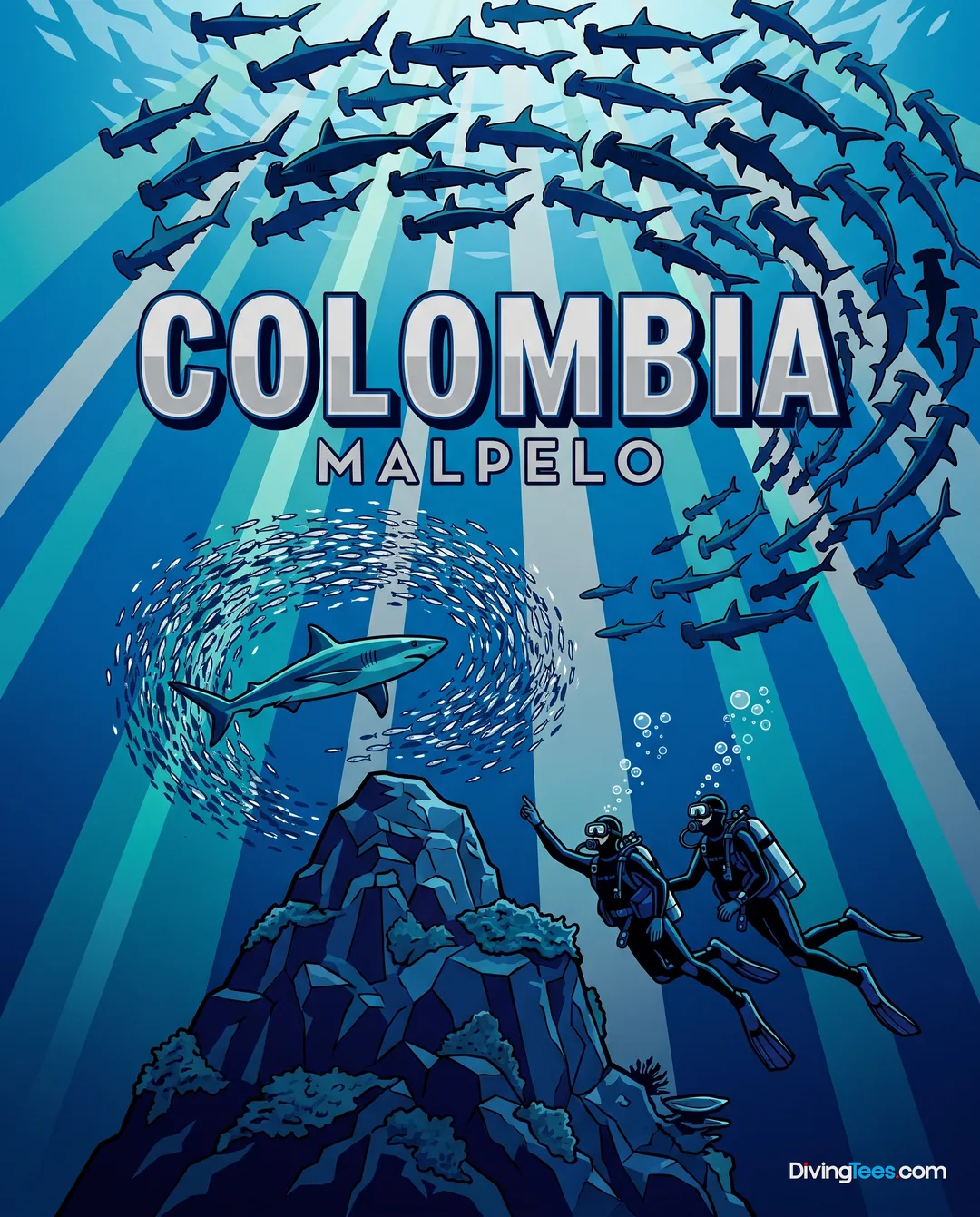
Vivax is for divers who come to Malpelo for the animals, not for a resort routine with occasional diving added on. The defining advantage is access to a reserve where only one boat is allowed at a time, so the sites are not shared with a fleet of liveaboards. The route is built around strong currents, steep volcanic formations and schooling pelagics, with hammerheads and silky sharks as the central attraction. It suits divers who already understand current diving and want several days in one of the Pacific's most concentrated big-animal environments. The boat also follows a clear conservation line: shark feeding is not used to alter the encounters.
Boarding
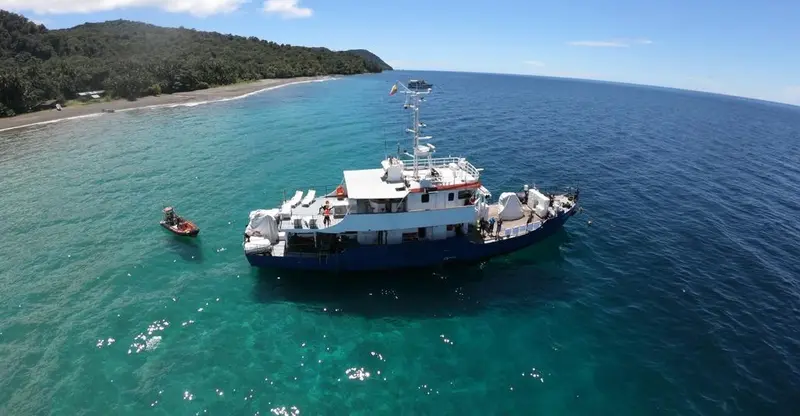
Vivax was built in 1991 and refitted in 2024, so arrival is less about polished yacht styling than about stepping onto a working steel dive vessel that has been brought up to date for its job. The impression is practical and expedition-focused. There is an indoor saloon for meals and briefings, a sun deck for open air, and a dive deck arranged around quick transfers to the tenders. With a maximum of eight passengers, the boat remains a small group operation rather than a floating crowd. English is the crew language, and the Malpelo crossing begins from Buenaventura after the land transfer from Cali.
The atmosphere on board
The atmosphere is shaped by a small passenger group and guides who know Malpelo from repeated seasons there. The guides have been diving these sites for more than ten years, so their role is not limited to leading a line down a wall. They set the pace around current, keep the group focused and help divers read a place where conditions can change the character of a site. Evenings are quiet and practical after a day in the water, with meals, conversation and the next day's plan taking the place of entertainment. The conservation approach is equally direct: encounters are not created through shark feeding, and the food chain is left alone.
The sites you’ll dive
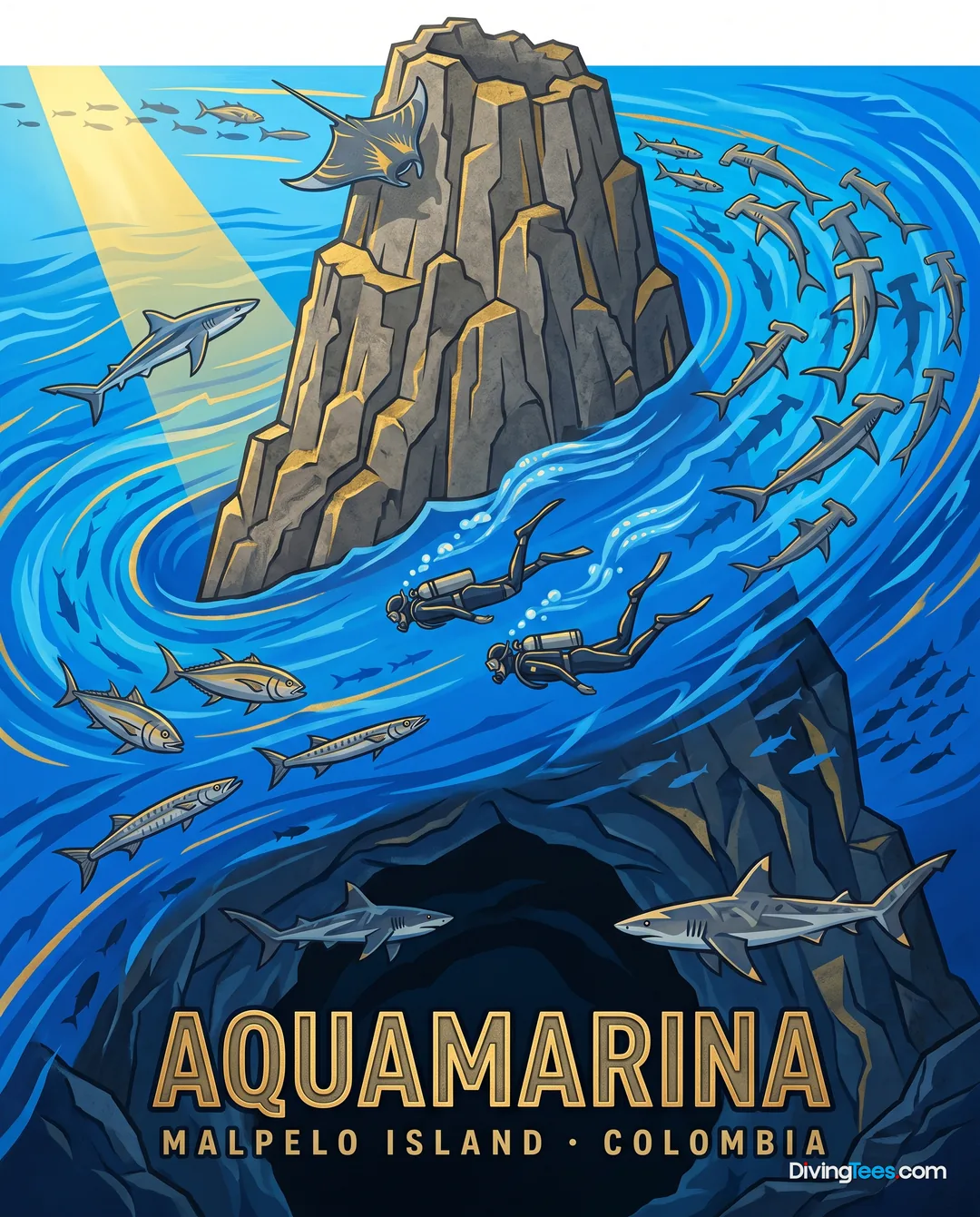
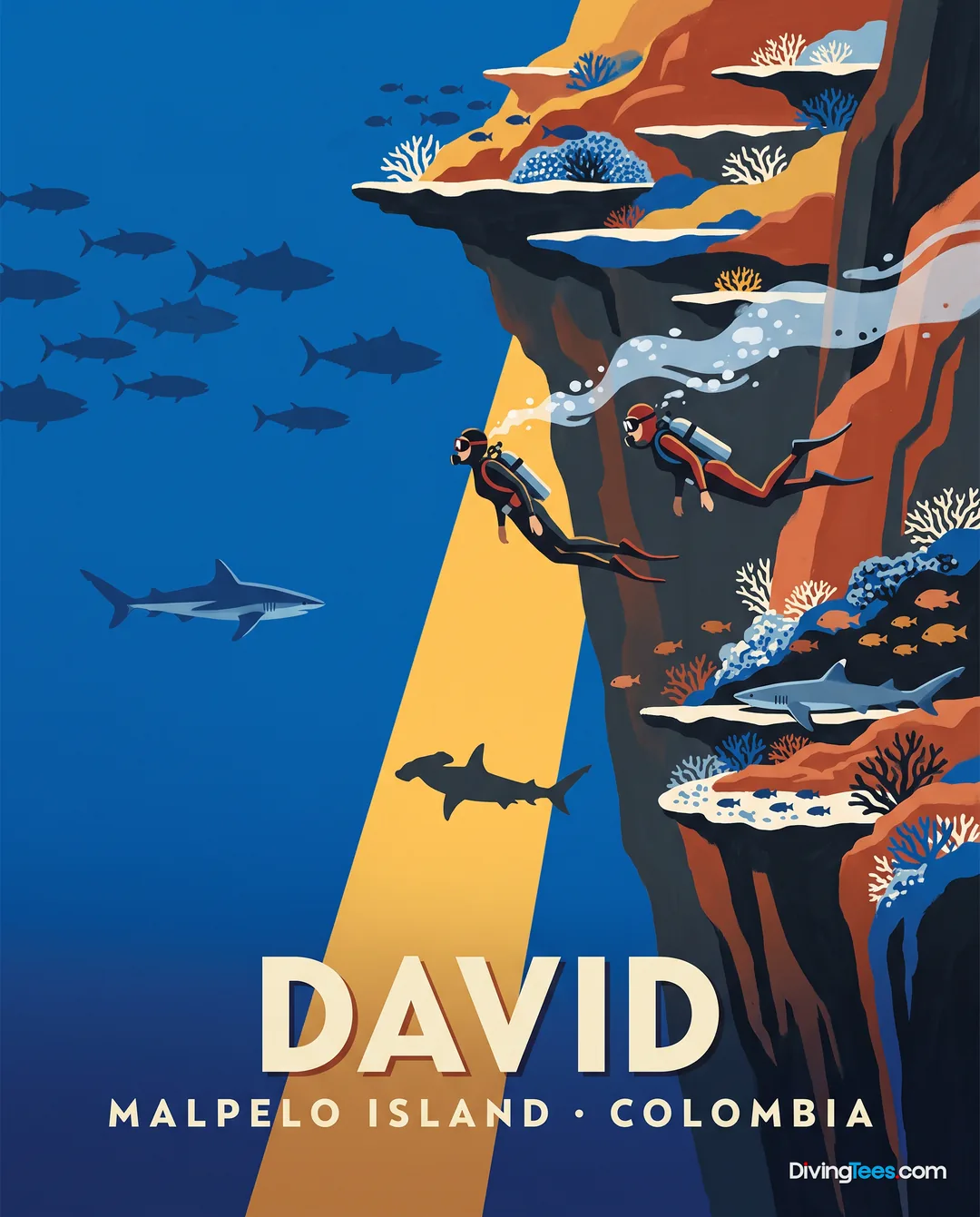
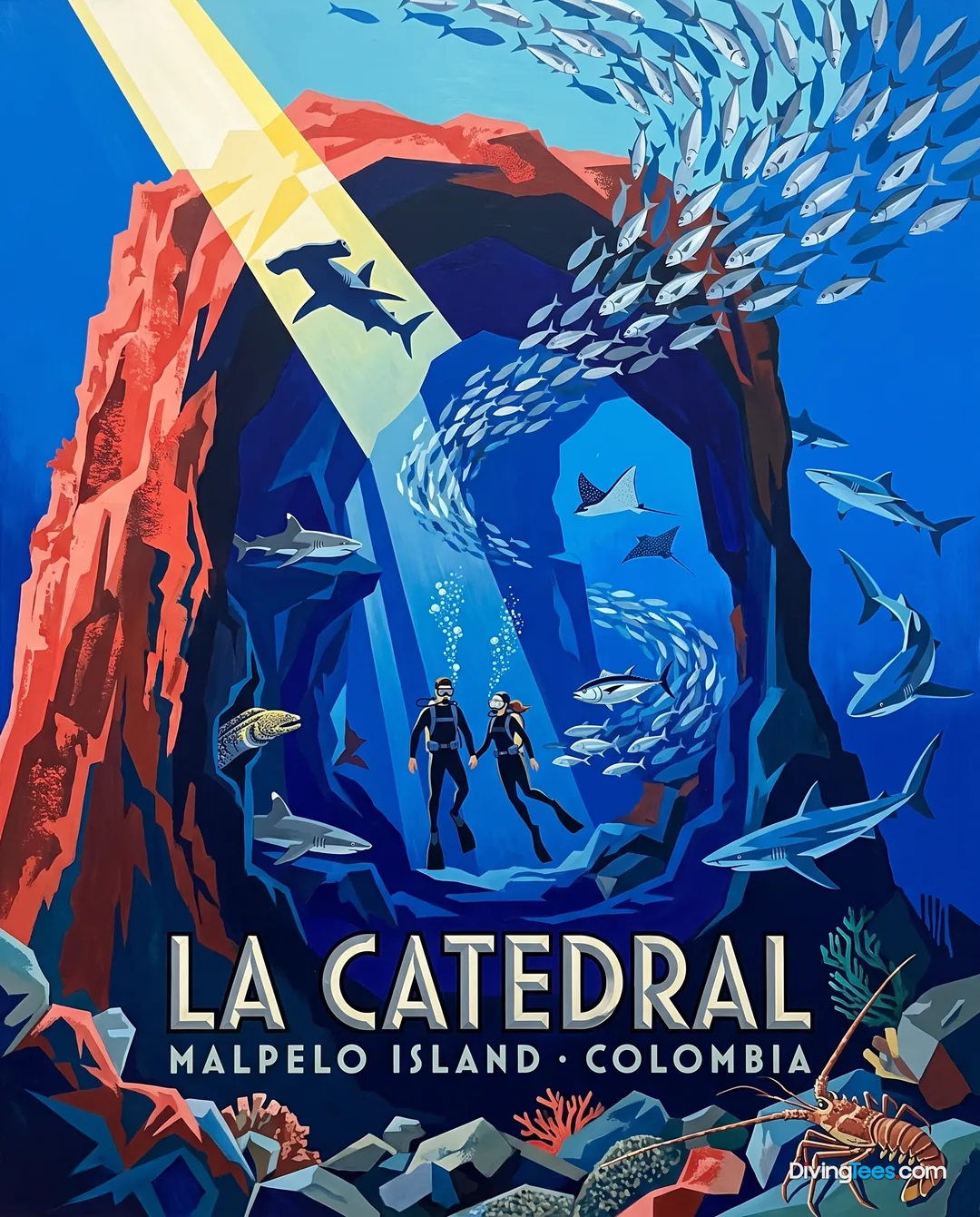
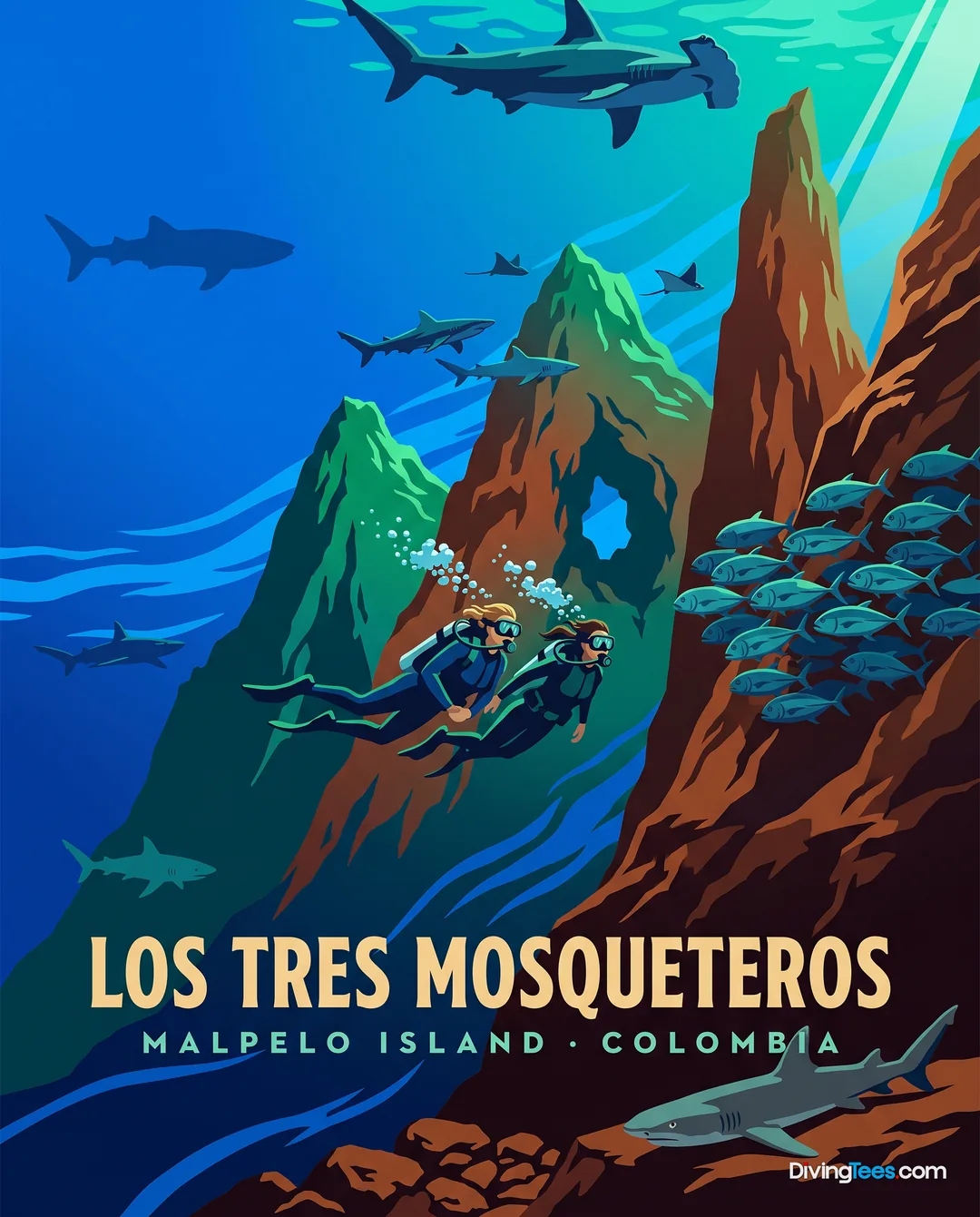
Malpelo is the reason to board Vivax, and the dives stay close to the island's volcanic pinnacles and walls. At Aquamarina, the pinnacle drops to a maximum of -35 m, with strong current and regular opportunities for large pelagics, especially hammerheads and silky sharks. David is a vertical granite-wall dive to -45 m, where the deep blue and current bring schooling pelagics and large sharks close to the wall. La Catedral reaches -40 m and passes through a natural tunnel cut into a massive pinnacle, a sheltered line through open-ocean water where pelagics gather. Los Tres Mosqueteros reaches -35 m across current-swept pinnacles, concentrating pelagic encounters at recreational depths. Recorded departures run from six to eight diving days, with Cali to Cali itineraries of 10 to 12 days and nights, plus one recorded 7-diving-day itinerary of 14 days and 13 nights.
Itineraries, dates and prices
Prices per person. Each month shows its lowest price: click a month, or pick an itinerary.
Next departures · 13 departuresfrom £3,459$4,624€4,131
January 2027
February 2027
December 2027
January 2028
February 2028
March 2028
See dates and prices
If you click these links and make a purchase on the partner site, DivingDeal may earn a commission, at no extra cost to you.
Dates and prices taken from Divebooker, updated 24 October 2026
What you’ll meet underwater
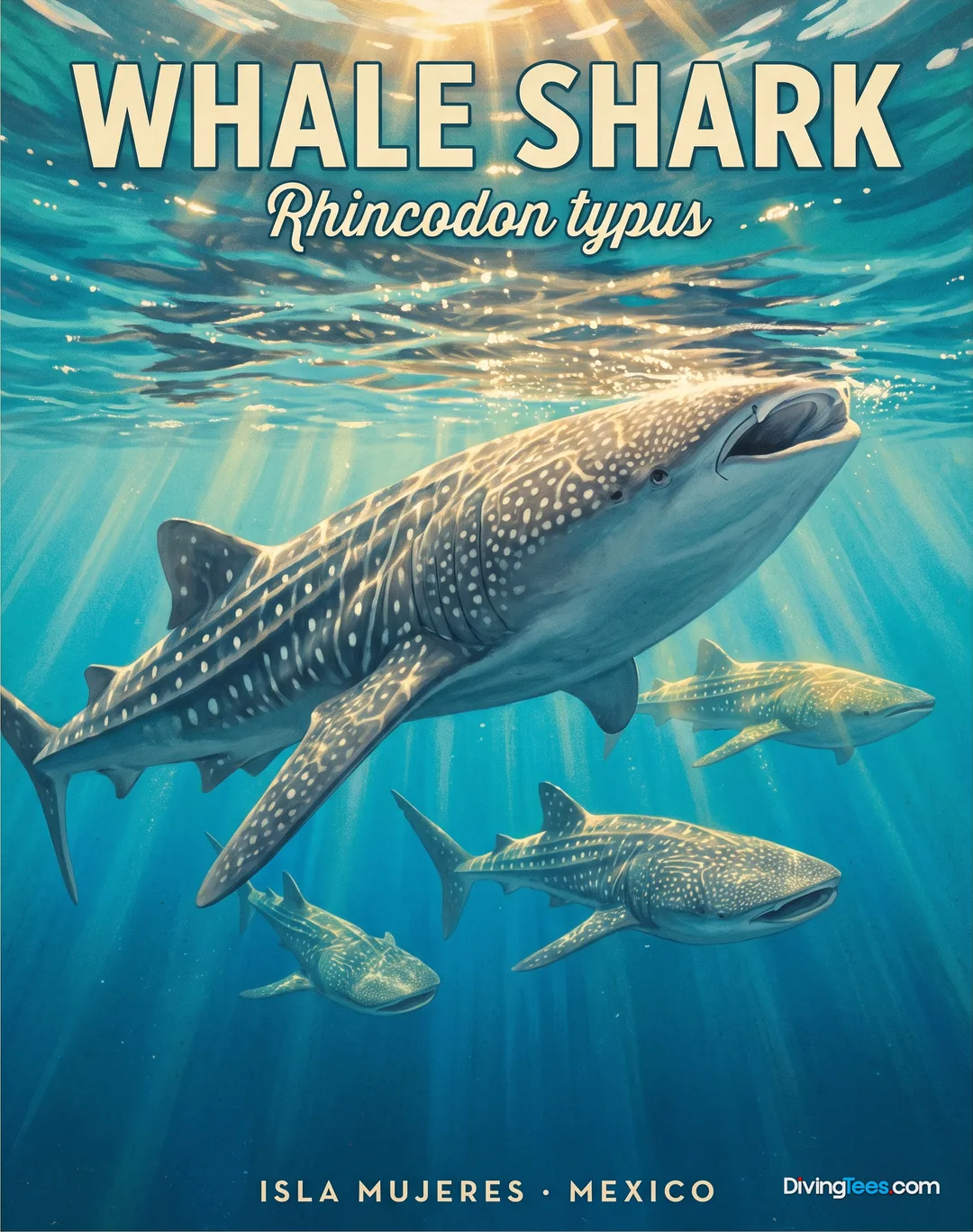
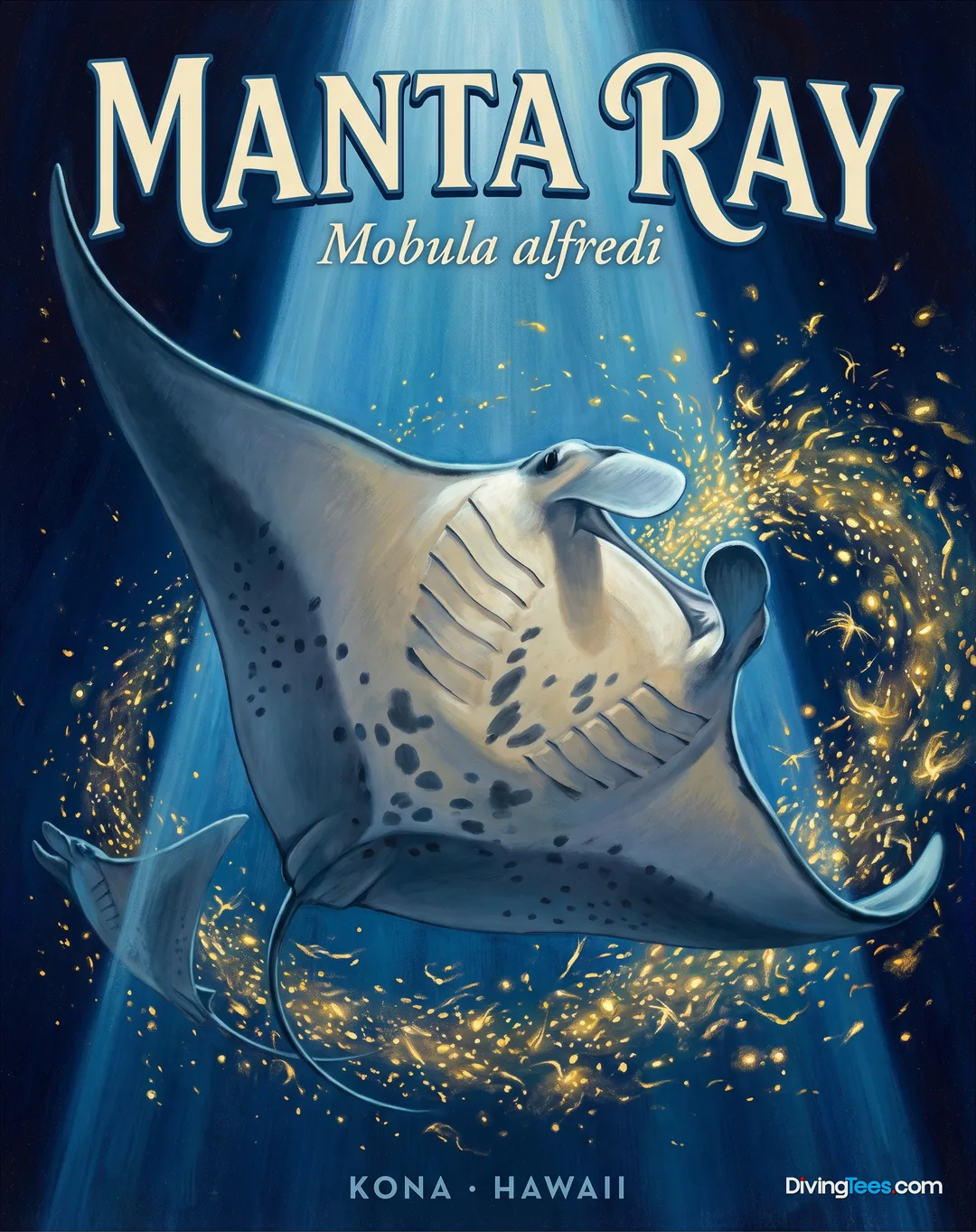
Hammerheads and whitetip reef sharks are recorded across all four sites, making them the animals most closely tied to the route rather than a lucky feature of one particular dive. Whale sharks appear at three sites, while silky sharks and Galapagos sharks add to the larger pelagic mix in the blue water. The site-specific possibilities give each descent its own reason. Aquamarina is where manta rays and amberjack are recorded, alongside the pinnacle's shark encounters. La Catedral is the place for tuna, jacks and lobsters, with moray eels, marble rays and eagle rays also recorded there. Los Tres Mosqueteros adds schooling bigeye jacks and dogtooth tuna to the current-swept pinnacles. None of these animals is promised, but the currents and isolated volcanic walls explain why the route attracts them.
Who puts you in the water
The listed guide ratio is two guides for twelve divers, with English as the crew language. Vivax asks each diver to have at least 50 logged dives and an AOWD certification or equivalent, a sensible threshold for Malpelo's strong currents and exposed volcanic sites. Briefings are part of the working rhythm, covering the site, the current and the way the group will use the tender. Full safety equipment is listed on board. The operation is for divers who can manage themselves in current and follow a guide's plan, not for a first liveaboard or a first experience beyond basic conditions.
The dive deck and the gear
The dive operation is built around two Norsafe Magnum 8.5 m tenders, each powered by a Yamaha 250 hp outboard. Divers board the tenders for the run to the site and return to the tender after surfacing, rather than relying on the liveaboard to sit beside every pinnacle. Vivax has a dedicated dive deck and two Coltri 13.5 hp compressors. Nitrox is free and comes from a membrane nitrox generator supported by a cascade system. Rental gear is available at extra cost, including a full set, individual BCD, regulator, open-heel fins and mask, 5 mm wetsuit, dive computer, flashlight and 15-litre tanks. The boat is not set up for technical diving.
Between dives
Between dives, the useful places are the shaded indoor saloon and the sun deck. The saloon gives the group somewhere to eat, listen to the next briefing and get out of the Pacific weather. The sun deck is the better place to dry off, watch the open water and let the surface interval pass without retreating to a cabin. Navigation days and the return crossing create longer pauses, but the boat's free time remains simple: rest, eat, talk through the last dive and prepare for the next one.
A day on board
A six-diving-day itinerary starts with the airport transfer to Cali, a hotel night and the road to Buenaventura. After boarding, dinner is served and the ship leaves for Malpelo around 18:00. The following day is for navigation and the briefing before the diving begins. The main run gives three dives per day, with the last diving day limited to two morning dives before Vivax starts back toward Buenaventura. Meals and snacks divide the surface intervals, while the saloon and sun deck hold the group between briefings, tender runs and rest. The return crossing ends with arrival at Buenaventura, breakfast on board, the drive back to Cali and the final airport transfer.
What you eat aboard
Meals, snacks, non-alcoholic drinks and water are included throughout the liveaboard trip. Food arrives around the diving rather than interrupting it: something before the first activity, proper meals between or after dives, and snacks ready for the gaps. Alcohol is not included. The table is functional on this route, giving divers the calories and fluids needed for repeated current dives without turning the boat into a dining destination.
Nights at sea
The cabins are compact, private and arranged for recovery between dives rather than long hours indoors. Single cabins have a 2 m by 0.80 m bed, while the full cabin gives one diver a 2 m by 1 m bed. The two queen cabins have a 2 m by 1.60 m double bed and can take two people. Cabins on both the main and lower decks have individually controlled air conditioning, natural light through portholes, a private bathroom and hot water. The lower deck places the single and queen cabins closer to the working part of the vessel, while main-deck singles make movement to the common areas simpler. There is no Wi-Fi, which is less a hardship here than an accurate description of a trip built around the Pacific and the next dive.
Single Cabin Main Deck Starboard
Single Cabin A
Single Cabin B
Full Cabin (Port and Starboard)
Queen Double Bed
Single Cabin Portside
What to know before boarding
The expedition runs from Cali to Buenaventura and back to Cali, with the airport as the start and end point. Transfers from Cali Airport to the hotel, from the hotel to Buenaventura, and back to Cali and the airport are included. The airport-to-hotel transfer takes about 50 minutes, and the Cali to Buenaventura road transfer takes about 2.5 hours. Arriving in Cali the day before the expedition is the sensible choice, since the trip includes a hotel night before departure.
What the boat does for the ocean
Malpelo Tours contributes to the foundation that protects Malpelo's sharks for each diver who travels with the operation. Vivax's diving also excludes shark feeding, leaving encounters to the natural food chain rather than conditioning animals to bait.
- Year built
- 1991
- Year renovated
- 2024
- Length
- 32 m
- Beam
- 8 m
- Maximum number of passengers
- 8
- Number of cabins
- 4
- Engines
- Scania DS 11, 70 kW, and a Perkins 40 kW generator
- Tenders
- 2 Norsafe Magnum 8.5 m boats with Yamaha 250 hp outboard engines
- Website
- malpelotours.com ↗
Hello, I'm Marina, DivingDeal.com's AI assistant. I answer in detail about hotels, dive centres and liveaboards.
Thinking about the whole trip and the flights? Talk it over with Edith →
Marina is an AI. Some links are affiliate links: DivingDeal may earn a commission, at no extra cost to you. Bookings are made with the partner.