
Costa Rica Adventure Divers
Google 4.7/5 (319 reviews)
Costa Rica · Americas
Rocky underwater reliefs around Isla del Caño, reef sharks in the blue, dolphins offshore and Corcovado’s rainforest above the waterline.
For subtitles in English: start the video firstthen click the gearat the top right of the video, select “Subtitles/CC”, then “Auto-translate” and choose “English”.
Isla del Caño’s rocky underwater reliefs are the reason to come, with boat dives aimed at reef sharks, rays and other pelagic life rather than continuous coral gardens. The Osa Peninsula works best as a combined wildlife journey: dive from Drake Bay, explore Golfo Dulce from Puerto Jiménez, then walk beneath the rainforest canopy of Corcovado. It is not a straightforward beach-and-diving package, but a properly varied stay in which the land is every bit as compelling as the water.
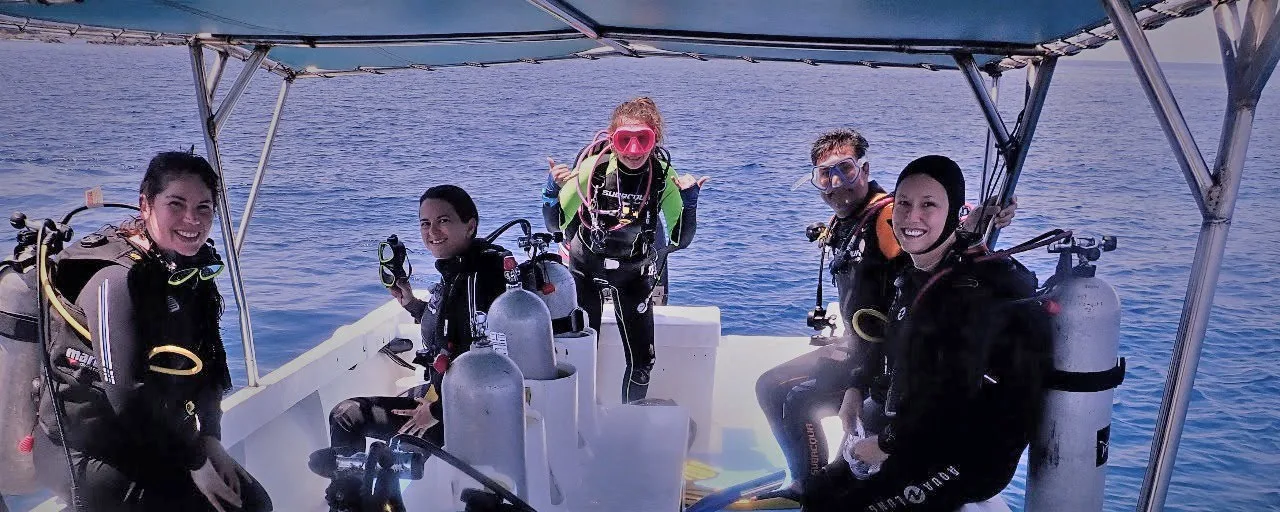
Diving is mainly by boat around Isla del Caño and within Golfo Dulce. Expect rocky habitats, underwater reliefs and drop-offs, with the interest coming from what passes through the water rather than from broad coral reef scenery. Currents are variable, so a site may feel calm on one descent and demand more attention on another. Crossings to Isla del Caño can be long from the coast, and sea conditions decide whether the planned route goes ahead. Visibility is not fixed either: Golfo Dulce is generally clearest from January to March, while rain and coastal run-off can reduce it. This is a wildlife outing built around conditions, not a predictable circuit of shallow reef dives. Surface support, entry arrangements and the timing of the return matter, particularly when a dive involves a longer boat run.
Reef sharks are a regular part of the picture around the protected waters of Isla del Caño, while dolphins are regularly encountered in the surrounding coastal waters. Manta rays and marine turtles are possible rather than dependable sightings. Humpback whales are the seasonal headline, usually present from about July to October, and may be encountered on the boat journey as well as on dedicated wildlife trips. The underwater setting is one of rocky reliefs and open water, so the attraction lies in watching large animals move through the blue rather than searching coral heads for small reef fish. Golfo Dulce adds a more sheltered setting for dolphins, while the reserve around Isla del Caño provides the stronger sense of an offshore wildlife dive.
December to April is generally the easiest period for diving, because the drier season usually brings more manageable sea conditions and more reliable access. January to March is the clearest window in Golfo Dulce. The price of that convenience is greater visitor numbers, especially around the Christmas and Easter holidays. During the rainy season, the forest becomes particularly active and the peninsula is quieter, but rain can increase coastal run-off and make both roads and boat outings less predictable. July to October adds the possibility of humpback whales, so the best month depends on whether smoother logistics or seasonal whale encounters matter more.
This suits divers who are comfortable with boat diving, changing conditions and a longer day on the water. Variable currents and the possibility of deeper or more exposed sites make Advanced Open Water-level skills useful, or equivalent BSAC experience. PADI and SSI divers should be confident managing entries, exits and a safety stop when conditions are not perfectly settled. Less experienced divers may still find suitable outings, but the crossing, weather and current rather than certification alone will shape the day.
From London Heathrow or Gatwick, or from Manchester, travel begins with an international connection to San José before the onward journey to the peninsula. From there, the options are a domestic flight of about 50 minutes to Puerto Jiménez or Drake Bay, a road journey of roughly six to nine hours, or road travel to Sierpe followed by a public boat of about an hour to Drake Bay. The Sierpe route avoids part of the difficult secondary-road journey. A boat connection from Golfito across Golfo Dulce is also possible, depending on the arrival point. Once there, distances between lodgings and jetties may require an arranged transfer, local taxi or vehicle, while some Puerto Jiménez accommodation is walkable from the centre.
Put Isla del Caño at the start of the stay, not on the day before a flight. Crossings and reserve access depend on sea conditions, and a weather postponement needs somewhere to go. Book the protected-island outing ahead through the authorised system, particularly in the busier dry-season months, and leave a spare day for a change of plan. If the road to Drake Bay is part of your route during the rainy season, check local conditions before committing to it, or use Sierpe and the boat. Pack proper rain protection and expect wet, sometimes in-water embarkations. Choose Drake Bay when Isla del Caño is the priority, and Puerto Jiménez when Golfo Dulce and Corcovado are the focus. Finally, arrive expecting rocky reliefs and pelagic wildlife, not a continuous tropical coral reef.
Allow seven to ten days, giving the sea enough room to dictate the Isla del Caño programme while leaving time for Golfo Dulce and Corcovado. Drake Bay is the practical base for the island, whereas Puerto Jiménez makes more sense for the gulf and the national park. Keep activities close to the chosen base where possible, since accommodation is scattered and transfers can take time. Non-divers have plenty to do, from rainforest walks and mangrove trips to dolphins, whales, kayaking and snorkelling when conditions permit.
Hello, I'm Marina, DivingDeal.com's AI assistant. I guide you through destinations, areas and countries.
Thinking about the whole trip and the flights? Talk it over with Edith →
Marina is an AI. Some links are affiliate links: DivingDeal may earn a commission, at no extra cost to you. Bookings are made with the partner.
Choose December through April for generally easier diving, more manageable seas and more reliable access. Golfo Dulce is generally clearest from January through March. Visit from July through October if humpback whales matter more, while the rainy season brings a quieter peninsula but can make roads, visibility and boat outings less predictable.
The Osa Peninsula suits divers comfortable with boat diving, changing conditions and longer days on the water. Variable currents and deeper or more exposed sites make Advanced Open Water skills, or equivalent BSAC experience, useful. You should feel confident managing entries, exits and a safety stop when conditions are unsettled.
Around the Osa Peninsula, expect rocky underwater reliefs, drop-offs and open water rather than continuous coral gardens. Reef sharks are regular around Isla del Caño, while dolphins occur in coastal waters and Golfo Dulce. Manta rays and marine turtles are possible, and humpback whales may appear from July through October.
Plan seven to ten days, with Isla del Caño early in the stay and spare time for weather changes. Use Drake Bay for the island and Puerto Jiménez for Golfo Dulce and Corcovado. Book the protected-island outing ahead, arrange transfers, and avoid scheduling it immediately before your flight.