Costa Rica · Americas
Diving Cocos Island: Seamounts, walls and hammerhead sharks
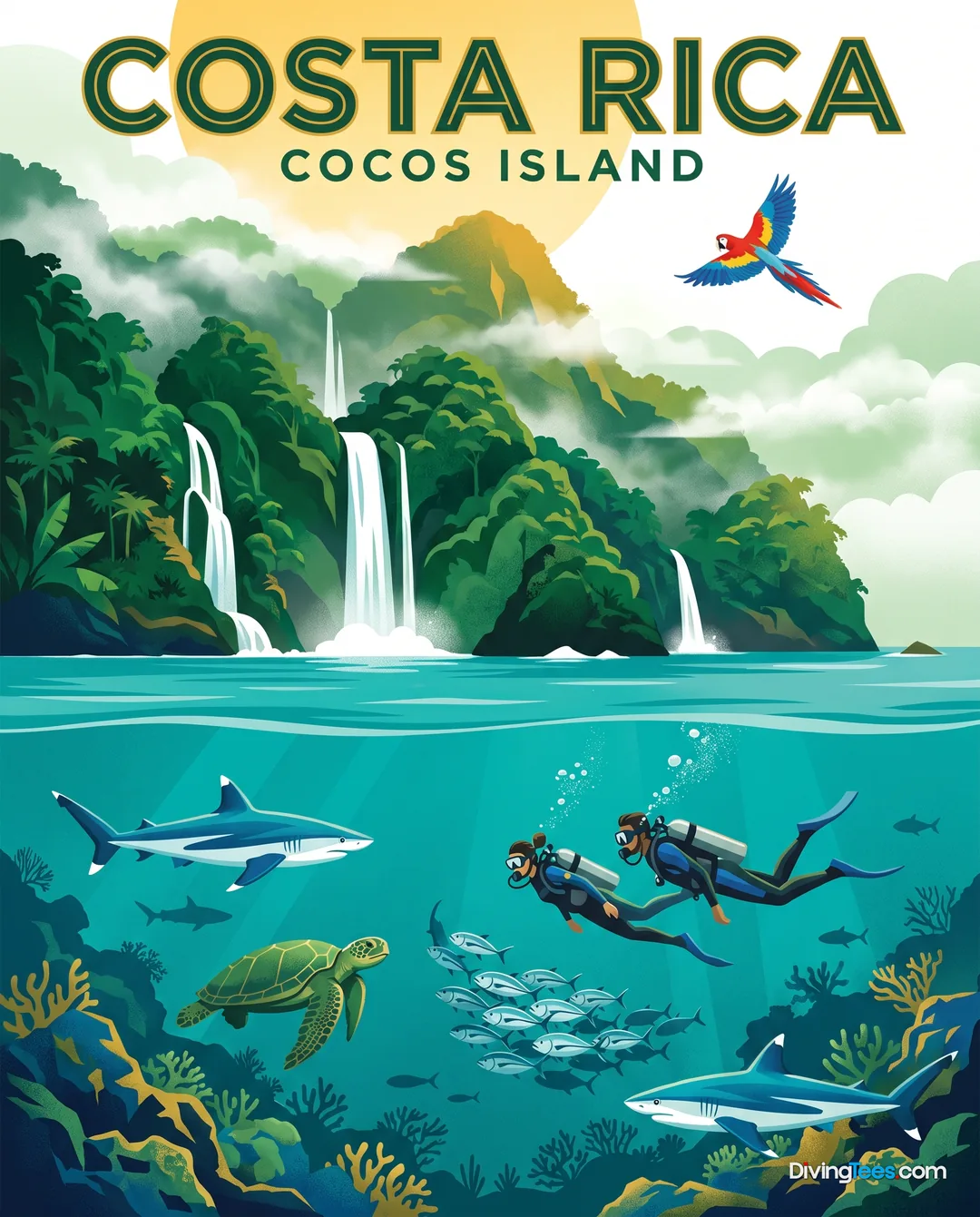
Volcanic pinnacles, whitetip reef shark gatherings, scalloped hammerhead sharks and deep walls define Cocos Island's demanding liveaboard diving.
What makes this destination special
- Scalloped hammerhead sharks at Alcyone cleaning stations
- Whitetip reef shark aggregations around Bajo Manuelita
- Dirty Rock's volcanic pinnacle descending to 35 metres
- Isla Manuelita walls reaching 50 metres
- Strong drift diving through Manuelita Channel
- Manta ray, Eagle ray and marble rays
- Clearer water around Wafer Bay from January to March
For subtitles in English: start the video firstthen click the gearat the top right of the video, select “Subtitles/CC”, then “Auto-translate” and choose “English”.
Overview
At Cocos Island, the dive day is built around offshore seamounts, walls and boat drops rather than easy access from a beach. Sites such as Dirty Rock and Alcyone put divers in deep, current-swept water where scalloped hammerhead sharks, rays and schooling fish may pass. Bajo Manuelita offers a different shape of encounter, with more sheltered sections where whitetip reef sharks gather. The setting is protected, remote and firmly expedition-like, with the liveaboard forming both transport and accommodation.
Diving here
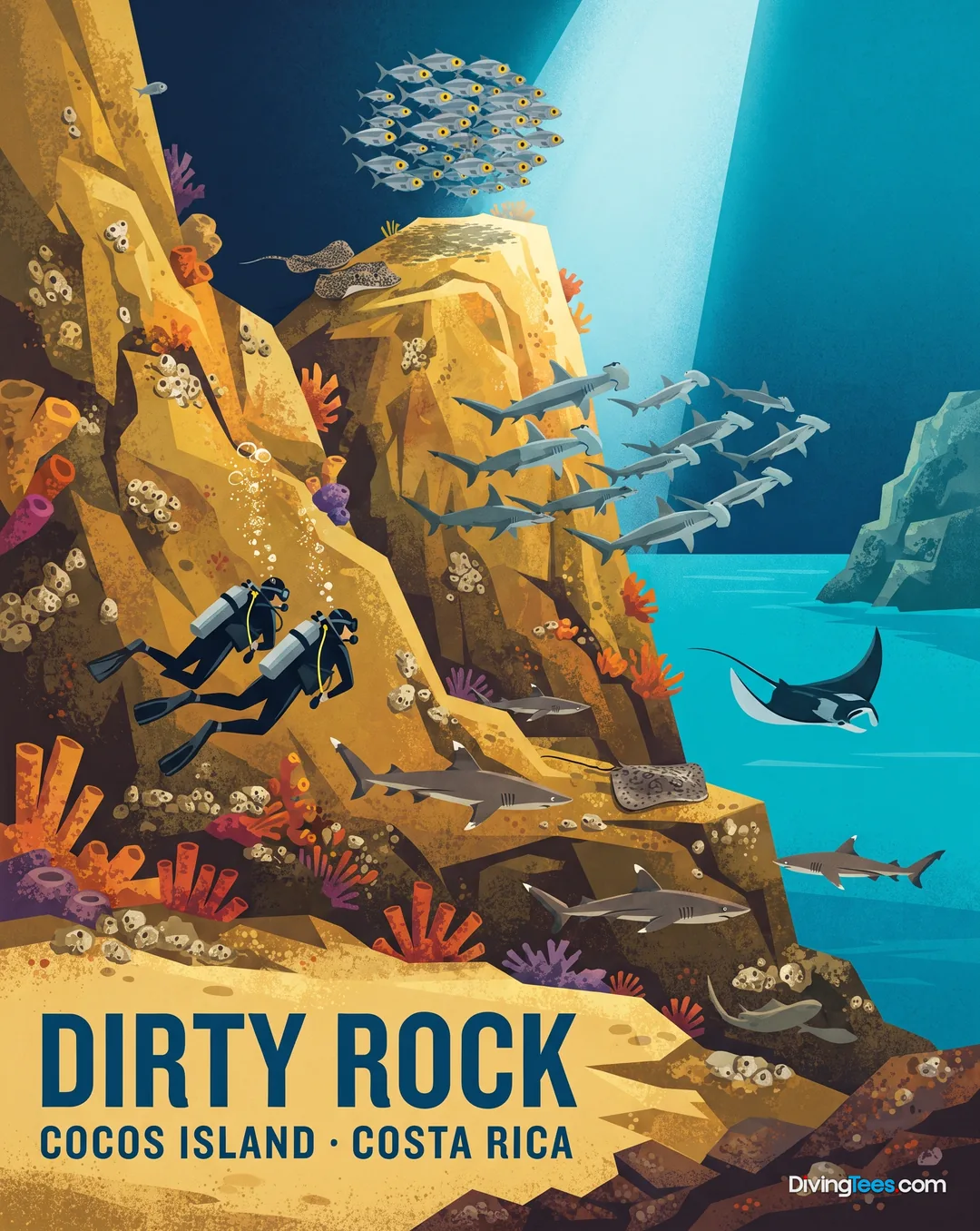
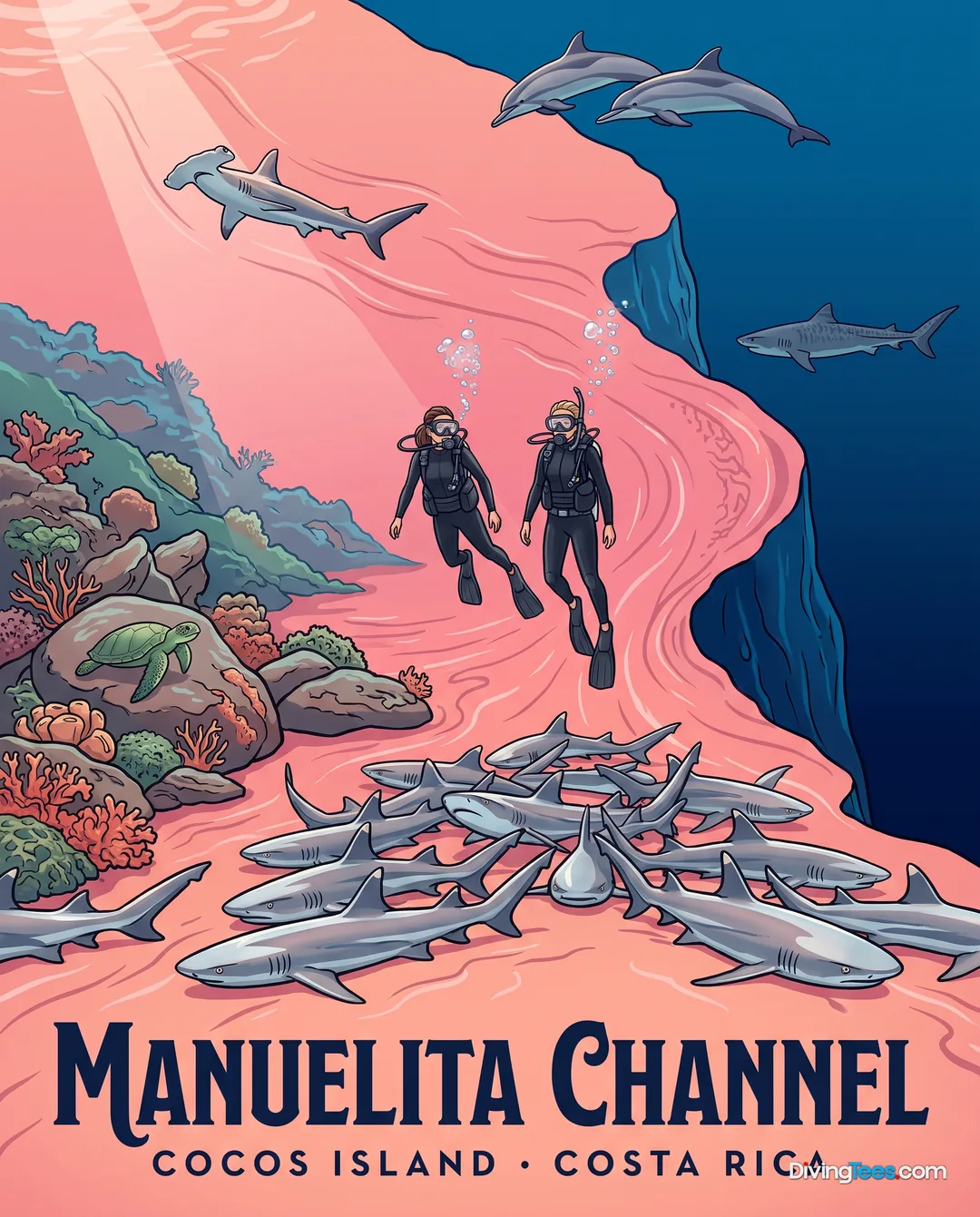
The underwater landscape is dominated by exposed pinnacles, steep walls and rocky reefs. Dirty Rock is a volcanic formation dropping to 35 metres, while Isla Manuelita combines inner reef areas with outer walls reaching 50 metres. Alcyone begins around 25 metres and works down towards 40 metres; Manuelita Channel runs from a shallow reef at 6 metres to a deeper wall at 39 metres. Currents are strong and variable, affected by tides, weather, thermoclines and oceanic conditions. Divers may drift along a wall, shelter briefly in the lee of a formation, or hold position near a cleaning station while pelagics move through. Visibility is similarly changeable, ranging roughly from 9 to 35 metres depending on the site. This is repetitive boat diving in exposed water, not relaxed reef sightseeing, and descents, ascents and gas management need to remain deliberate throughout the day.
Three dives not to miss
The underwater wildlife
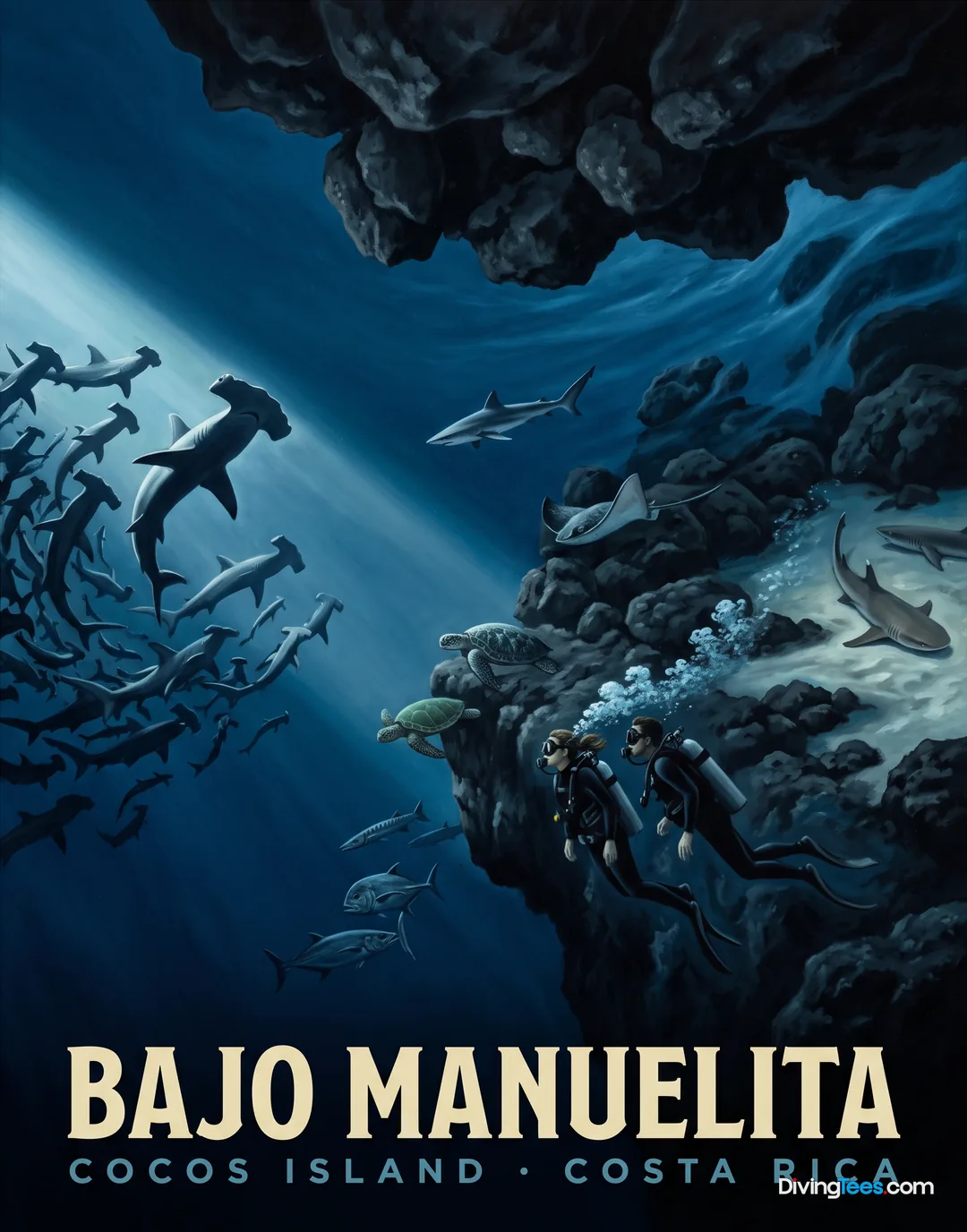
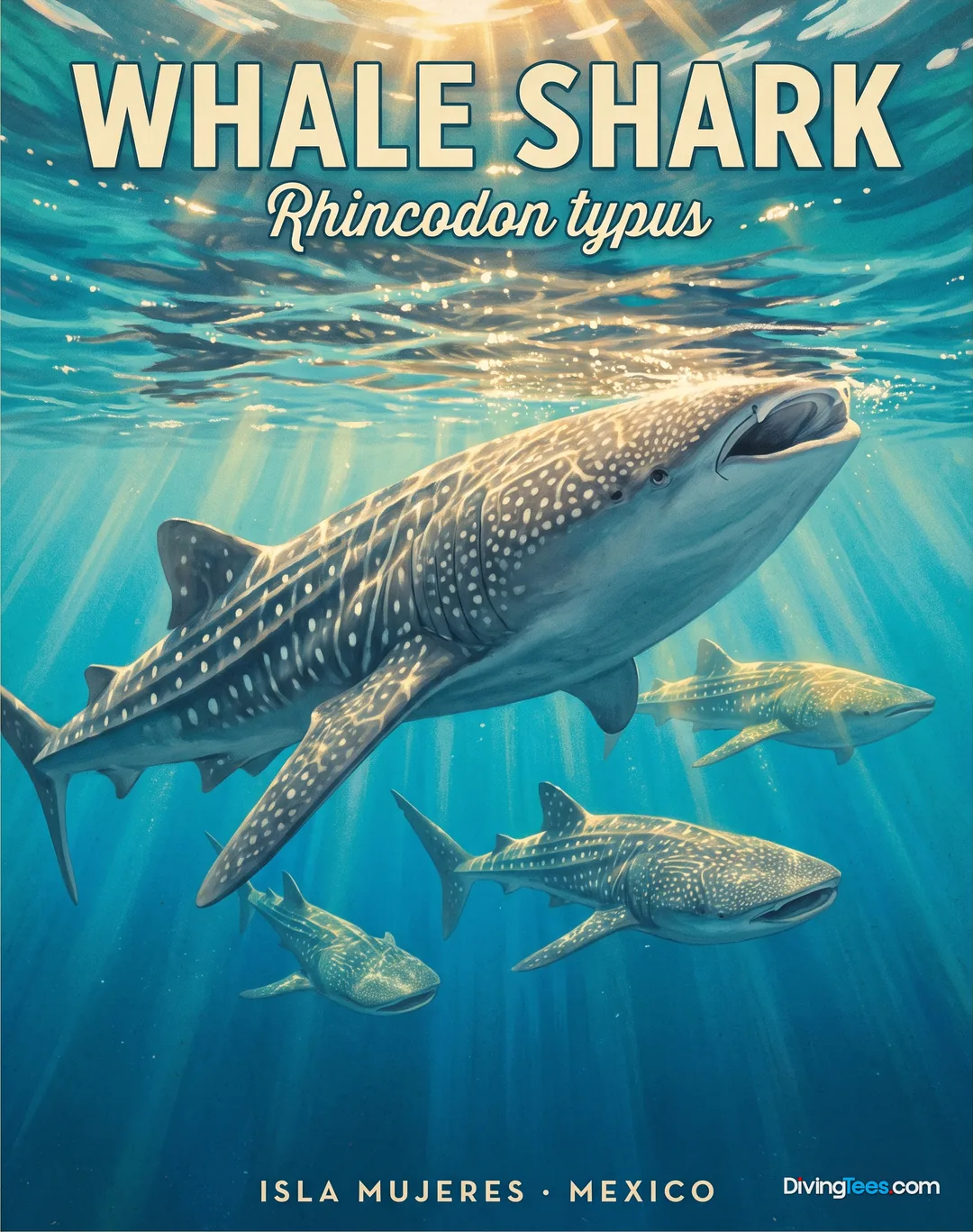
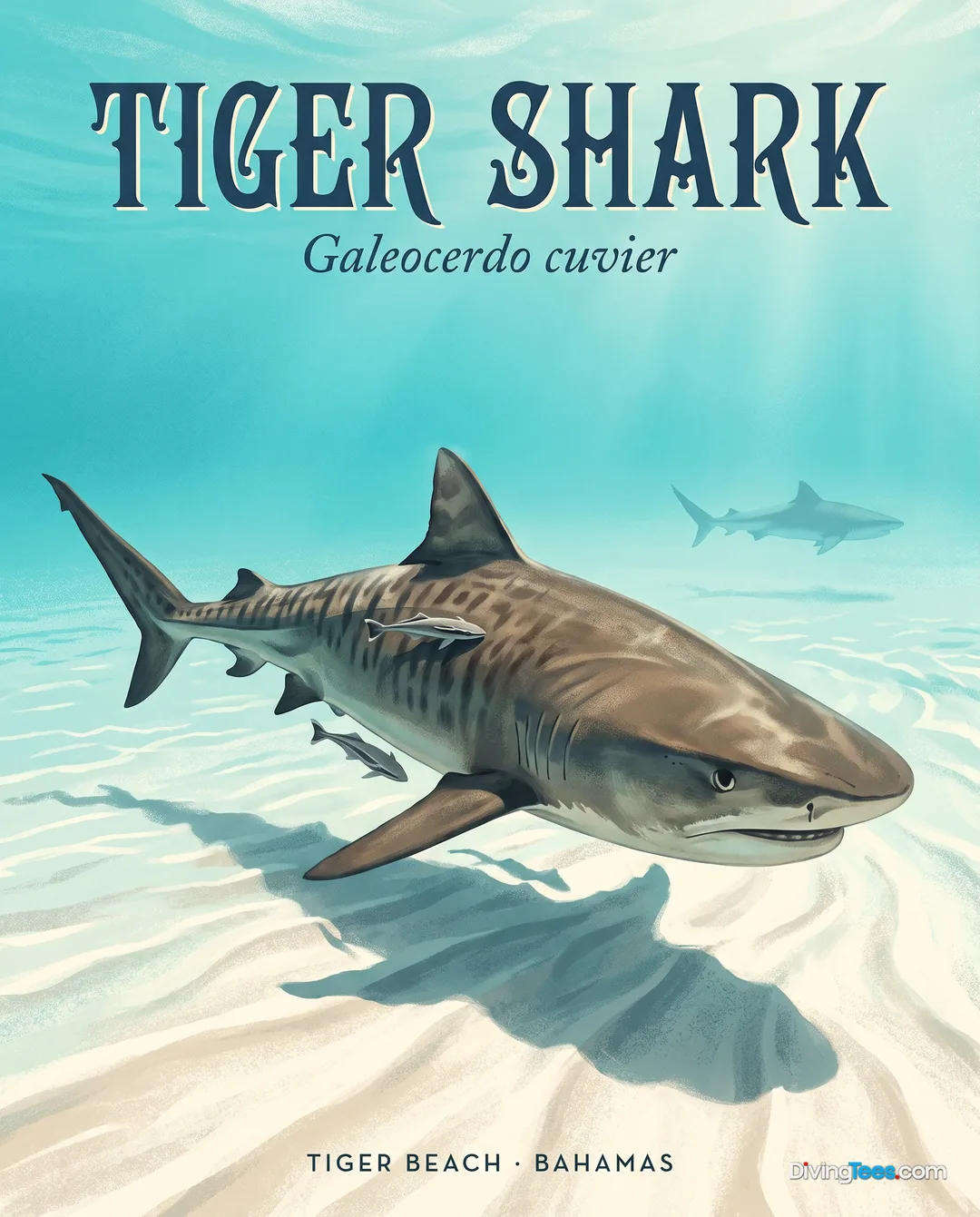
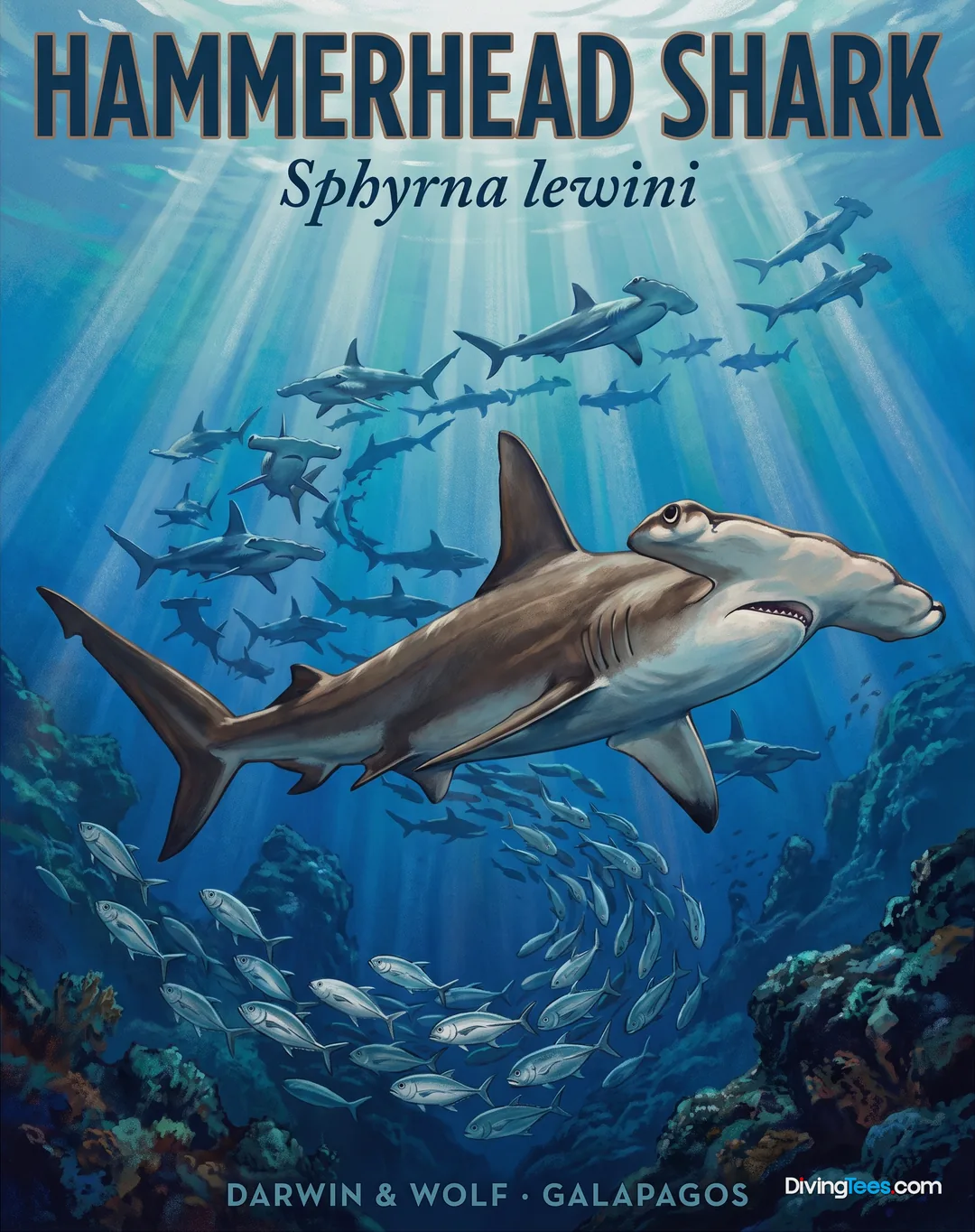
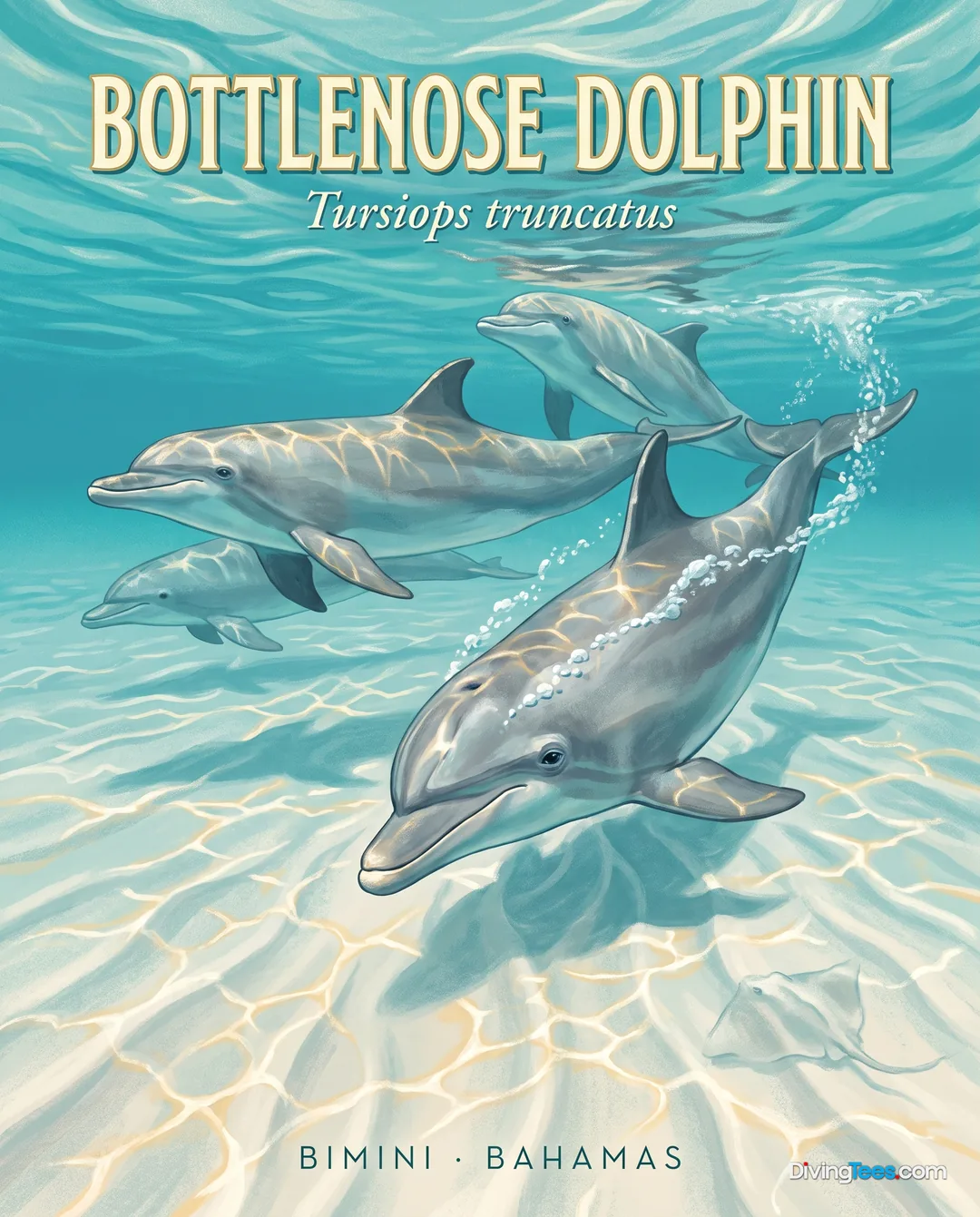
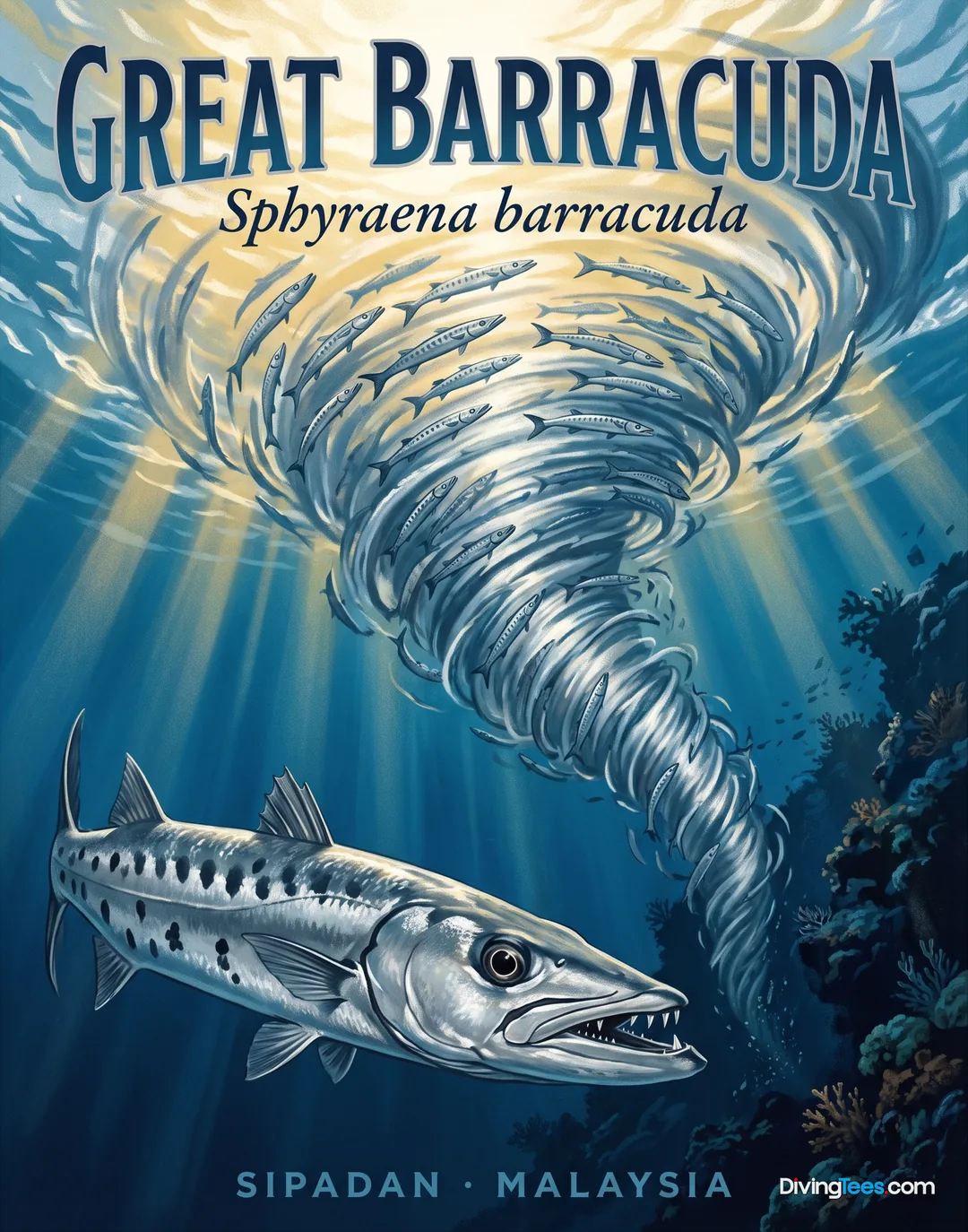
The main attraction is what moves through the blue water. Scalloped hammerhead sharks are associated with cleaning stations at Dirty Rock and Alcyone, while the exposed side of Bajo Manuelita and the outer walls of Isla Manuelita can bring further hammerhead encounters. Whitetip reef sharks gather in the more sheltered sections around Bajo Manuelita and Manuelita, sometimes joined by moray eel and spiny lobster on the reef. Manta ray, Eagle ray, marbled rays and marble rays are part of the wider pelagic mix, with yellowfin tuna, Jack and yellow snappers adding movement to the seamounts. Bottlenose dolphins, Tiger shark and silky sharks are also recorded. The clearest seasonal distinction in the site descriptions is practical: January to March is associated with clearer water, while June to November is linked with increased whale shark and larval activity at some sites.
Possible underwater encounters

When to go
For clearer-water diving, January to March is the most straightforward choice, particularly around Wafer Bay, where visibility is described as better during this period. June to November has a different appeal, with greater whale shark and larval activity noted at Wafer Bay and stronger shark activity reported around Manuelita Channel. Conditions remain governed by currents, thermoclines, plankton and oceanic weather rather than by a guaranteed calendar. The right season therefore depends on whether the priority is cleaner water or a greater chance of passing pelagics, while accepting that both come with exposed offshore conditions.
Level required
Cocos Island is for experienced divers, not a first step into current diving. Advanced Open Water, BSAC experience at an equivalent level, or comparable PADI or SSI training is appropriate, with deep and drift-diving competence particularly useful. Around 50 logged dives is recommended for sites such as Dirty Rock and Bajo Manuelita. Nitrox is a useful qualification for repetitive liveaboard diving, but it does not remove the need for careful depth, gas and ascent planning.
On the ground
Cocos Island is reached by boat only. From London Heathrow, London Gatwick or Manchester, the journey begins with travel to mainland Costa Rica, followed by domestic travel to the Pacific coast and embarkation on a liveaboard. The final approach is a multi-day offshore crossing, so this is not a destination that can be fitted around a short hotel stay or a flexible dayboat schedule. Connections need to allow for the mainland-to-coast leg and the boat's departure arrangements, rather than assuming that arrival in Costa Rica means diving can begin immediately. Once embarked, there is no airport transfer or shore-based dive-centre routine to organise: the liveaboard is the transport, base and daily dive platform for the island.
Local tips
Treat the crossing as part of the trip, not as an inconvenient prelude to a resort holiday. Pack equipment that is familiar and manageable on a moving boat; Cocos is a poor place to discover that a computer, reel or fin arrangement does not suit you. Be ready for repeated descents into current-exposed water, and make the gas plan fit the actual rhythm of boat dives rather than an imagined shallow itinerary. Keep luggage simple, because the liveaboard is your base throughout. Do not book this expecting flexible shore diving, beginner-friendly site selection or calm conditions. At sites such as Dirty Rock, Alcyone and Manuelita Channel, the practical skill is holding position or drifting correctly while remaining aware of depth and the boat's surface plan. The island is a strictly protected national park: anchoring, fishing, collecting marine life and touching or disturbing wildlife are prohibited, and access is regulated by permits and park rules.
Planning your stay
A typical Cocos Island trip lasts around seven to ten days, because the programme has to absorb the offshore crossing as well as the diving. Life is organised around repeated boat dives at exposed sites, surface intervals and occasional rest periods rather than excursions ashore. Wildlife observation from the liveaboard can fill transit time and pauses between dives. Non-diving companions should understand that there is no meaningful land-based sightseeing programme in the immediate dive area; this is essentially a diving-only voyage.
Hello, I'm Marina, DivingDeal.com's AI assistant. I guide you through destinations, areas and countries.
Thinking about the whole trip and the flights? Talk it over with Edith →
Marina is an AI. Some links are affiliate links: DivingDeal may earn a commission, at no extra cost to you. Bookings are made with the partner.
Map of dive sites in Cocos Island
Dive liveaboards Cocos Island
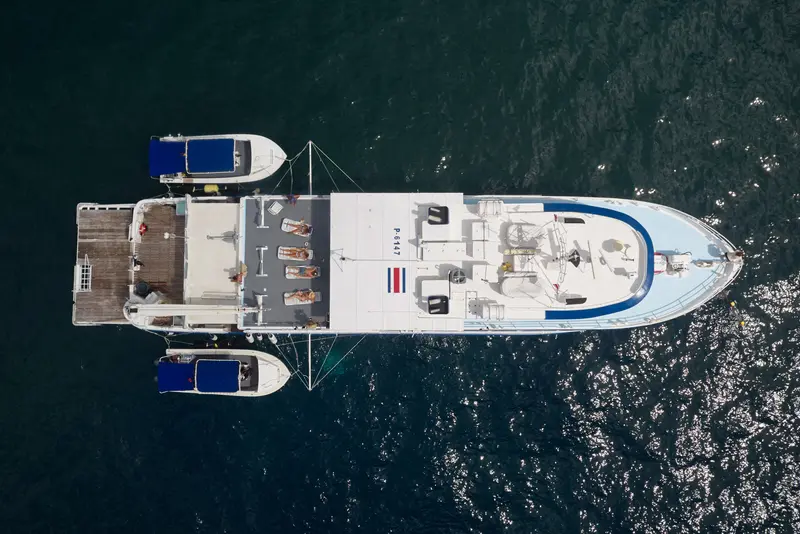
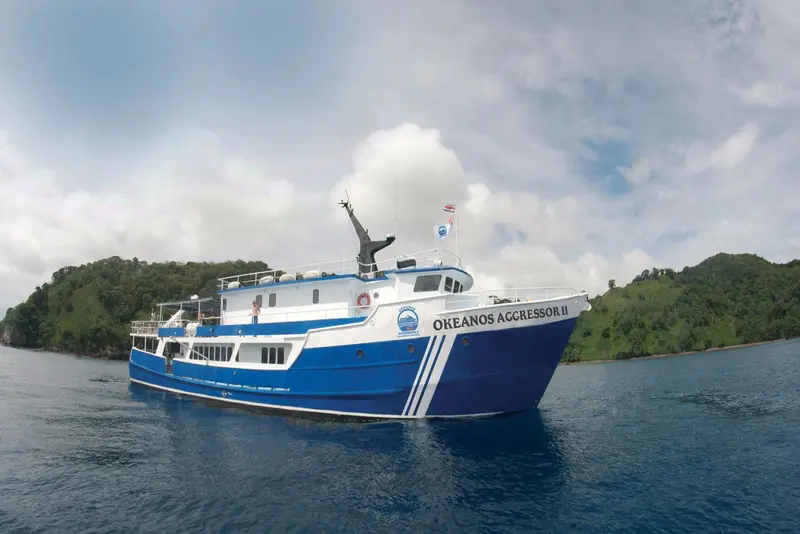
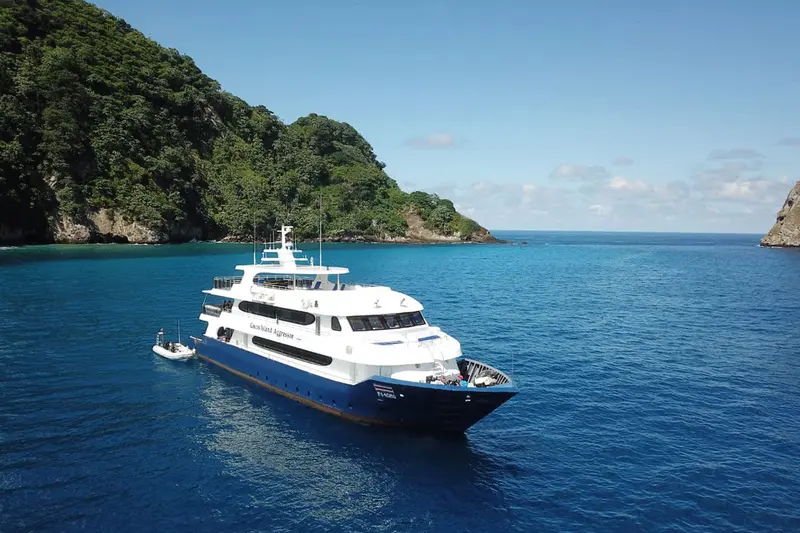
3 liveaboards run trips to Cocos Island.
Frequently asked questions about Cocos Island
When should you go to Cocos Island for diving?
Choose January to March if clearer water is your priority, especially around Wafer Bay. June to November brings a different focus, with increased whale shark and larval activity noted at some sites and stronger shark activity reported around Manuelita Channel. Currents, thermoclines, plankton and oceanic weather still make conditions variable.
What diving experience do you need for Cocos Island?
Cocos Island suits experienced divers rather than beginners. Advanced Open Water, equivalent BSAC experience, or comparable PADI or SSI training is appropriate, with deep and drift-diving skills particularly useful. You should be comfortable with strong, changing currents, exposed boat diving, deliberate descents and ascents, and careful depth and gas management.
What can you see while diving at Cocos Island?
Cocos Island offers scalloped hammerhead sharks at cleaning stations around Dirty Rock and Alcyone, plus whitetip reef sharks gathering in sheltered areas around Bajo Manuelita. Manta rays, eagle rays, marbled rays, tuna, jacks, snappers, dolphins, tiger sharks and silky sharks may also appear around pinnacles, walls and rocky reefs.
How should you plan a stay at Cocos Island?
Plan Cocos Island as a liveaboard expedition reached by boat from mainland Costa Rica, including domestic travel to the Pacific coast and a multi-day offshore crossing. Allow connections for the boat’s departure, pack familiar equipment, and expect repeated boat dives, surface intervals and rest periods rather than shore diving or a hotel-based routine.