
Oceans Unlimited
Google 4.6/5 (189 reviews)
Costa Rica · Americas
Rocky islets and coastal rock formations meet shifting visibility, Manuel Antonio’s forested shore, and seasonal humpback whale encounters from a practical Quepos base.
For subtitles in English: start the video firstthen click the gearat the top right of the video, select “Subtitles/CC”, then “Auto-translate” and choose “English”.
Quepos is a working coastal base for boat diving around the rocky islets and formations off Manuel Antonio. The underwater appeal lies less in a continuous tropical reef than in open Pacific character: changing visibility, moving water and the possibility of pelagic encounters. Above the surface, Manuel Antonio adds forest, beaches and wildlife, so a five- to seven-day stay can absorb a cancelled boat day without becoming a purely terrestrial holiday. It also suits non-diving companions unusually well.
Expect boat dives from Quepos towards the islets and rock formations along the Manuel Antonio coast. The terrain is rocky rather than a single, uninterrupted reef, and the character of each outing changes with swell, runoff and current. Current is variable, so a calm-looking plan can become a more active dive, with a drift dive or a downcurrent section possible when conditions dictate. Visibility commonly ranges from about five to twenty metres, clearest during the drier months and often reduced after rain. The centres adjust the route to sea conditions and diver experience, but this is not a place for assuming that short distances from harbour mean easy water. Some outings are straightforward for all levels, while deeper or more changeable dives are better matched to an Advanced qualification or equivalent experience.
The large-animal possibility is part of Quepos’s attraction. Humpback whales pass the coast during two windows, from December to February and again from July to November. An encounter is more likely to be a surface or pelagic event than something guaranteed on the reef during a particular descent, so whale watching should be treated as part of the wider boat day. Manta rays, sharks and marine turtles are possible, occasional encounters rather than dependable appointments. The rainy season can bring more nutrients and less clear water, but that same change may make the pelagic side of the destination more interesting. In clearer conditions, the pleasure is in reading the rock, the current and the visibility rather than ticking off a fixed species list.
December to May is generally the sensible window for clearer water. The dry season usually brings less coastal runoff, so visibility has a better chance of sitting towards the upper end of its usual range. That does not make every day predictable, because swell and the individual site still matter. The rainy season is quieter in visitor terms and may offer more pelagic activity, including a different feel to the boat outings, but rain can carry sediment and nutrients into the water and reduce clarity. Travellers who put whales first should consider both humpback windows, while those who want the best odds of visibility should favour the drier months.
Quepos can work for beginners, provided they describe their actual experience rather than relying only on their qualification. Conditions change with visibility, swell and current, and the route is adjusted accordingly. PADI, SSI and BSAC divers can find suitable outings, while an Advanced qualification is useful for deeper dives and more variable conditions. Someone new to boat diving or current should allow the centre to match the day’s route to their comfort, not to an imagined itinerary.
From London Heathrow, London Gatwick or Manchester, the usual onward route is through San José. From there, Quepos is reached either by the coastal road, which takes roughly three to five hours depending on traffic and the bus service, or by a domestic flight to the regional Quepos airport in under an hour. There is no structural ferry crossing in the journey. Once in the area, boats leave from the Quepos harbour or marina. Hotels in Quepos and Manuel Antonio connect with the harbour and dive centres by local bus, taxi or an arranged shuttle where available. Manuel Antonio accommodation is more dispersed and often uphill, so a taxi or shuttle is more practical than planning to walk with dive equipment.
Put the diving at the beginning of the stay, not on its final day. Quepos’s visibility and sea state can alter the route or stop a boat outing, so keep replacement days available. If diving is the priority, staying near Quepos makes mornings simpler than basing yourself high on the Manuel Antonio roads. Tell the centre your real experience with current, swell and boat diving, because nearby sites are not automatically gentle. Do not arrive at the terrestrial entrance to Manuel Antonio expecting to board there: the diving leaves from Quepos, and dive boats are not admitted to that land sector. In the rainy season, leave room for a weather change and accept that reduced visibility may accompany more pelagic interest. If whales matter, travel during one of their documented passage periods, but treat any sighting as a bonus rather than a promise. Keep a park or mangrove day ready when rain has affected the water.
A practical stay combines several boat days with time on land. Use the first days for diving and retain later days as alternatives if weather intervenes, then fill clearer breaks with Manuel Antonio National Park, its beaches and forest trails, or a trip into the Isla Damas mangroves. Quepos is the easier base for boat logistics, while Manuel Antonio offers a more dispersed hillside setting. Non-divers have plenty to do, from wildlife observation to kayaking and other water activities.
Hello, I'm Marina, DivingDeal.com's AI assistant. I guide you through destinations, areas and countries.
Thinking about the whole trip and the flights? Talk it over with Edith →
Marina is an AI. Some links are affiliate links: DivingDeal may earn a commission, at no extra cost to you. Bookings are made with the partner.
Visit Quepos from December to May if clearer water is your priority, as the drier season usually brings less coastal runoff. Humpback whales pass the coast from December to February and again from July to November. The rainy season can reduce visibility while adding nutrients and possible pelagic interest.
Quepos can suit beginners when they describe their actual experience with boat diving, current and swell. Conditions change, and some outings are straightforward while others involve drift diving or downcurrent sections. Deeper or more variable dives are better matched to an Advanced qualification or equivalent experience, with routes adjusted by the centre.
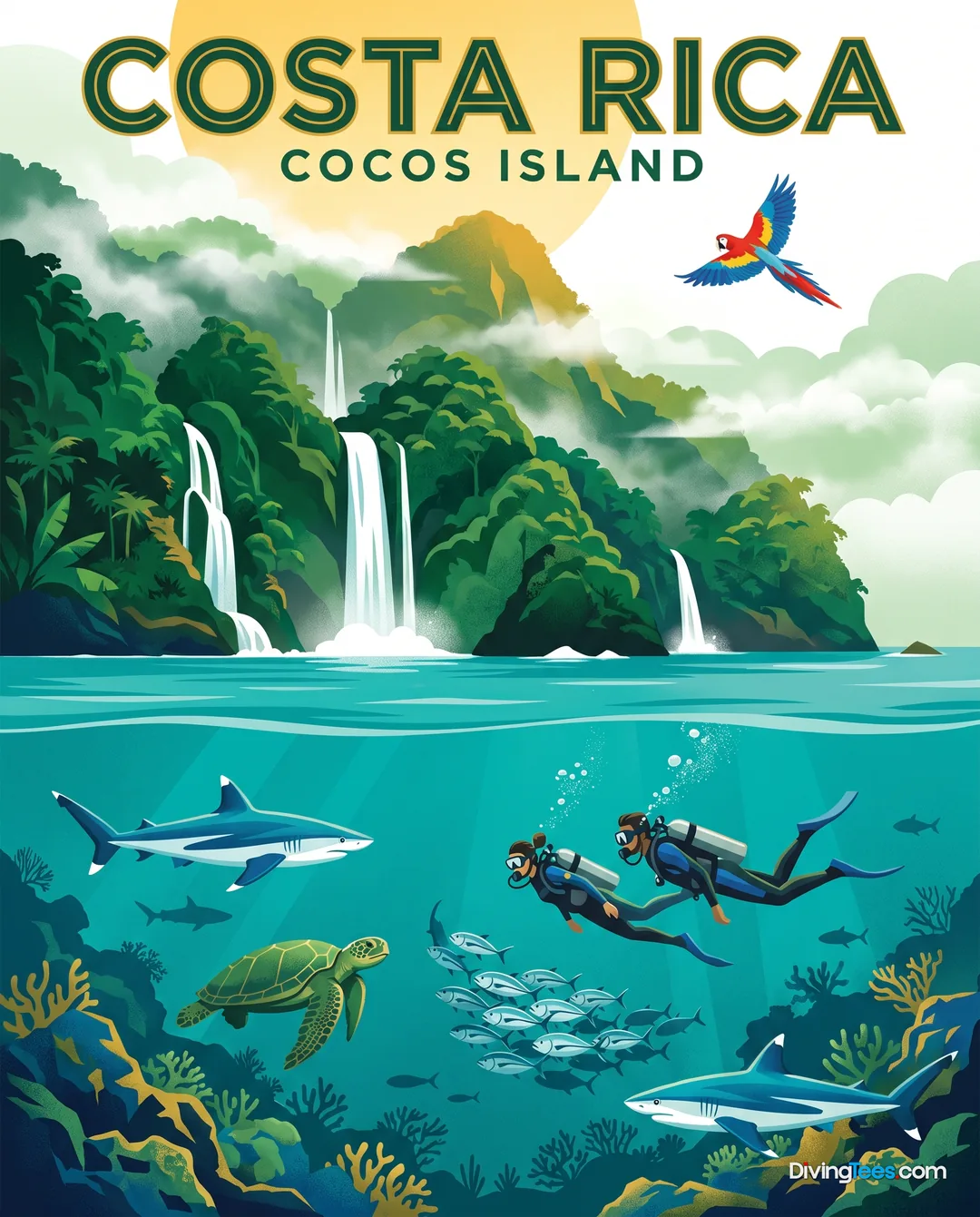
Diving in Quepos focuses on rocky islets and coastal formations off Manuel Antonio, with moving water and changing visibility rather than a continuous tropical reef. Humpback whales may pass during their seasonal windows, while manta rays, sharks and marine turtles are occasional encounters. Manuel Antonio also adds forest, beaches and wildlife.
Plan diving near the beginning of your Quepos stay and keep later days available if weather or sea conditions cancel a boat outing. Stay near Quepos for simpler harbour access, since boats leave from there rather than Manuel Antonio. Allow time for Manuel Antonio, Isla Damas mangroves and other land activities.