
Diving Shop Arabesque
Google 4.9/5 (462 reviews)
Japan · Asia
Lava arches and cavities, green turtles over black rock, endemic fish and seasonal hammerhead sharks give Hachijojima a distinctly volcanic Japanese character.
For subtitles in English: start the video firstthen click the gearat the top right of the video, select “Subtitles/CC”, then “Auto-translate” and choose “English”.
Hachijojima is a volcanic island where diving follows the shape of the old eruptions. Black rock, arches, cavities and drop-offs replace the continuous coral gardens of a tropical resort, with green turtles, tropical fish and local endemics providing the regular interest. Seasonal visitors add another layer: hammerhead and thresher sharks in late spring and summer, large migratory fish later on, and humpback whales in winter. It is a shore-based Japanese island stay, not a liveaboard destination.
Expect a mixture of shore dives and local boat trips, with the island’s volcanic geology doing most of the visual work. You move past dark rock, under arches and into cavities formed by earlier eruptions, then along rocky drop-offs where turtles and fish use the structure. Conditions depend heavily on which coast is exposed that day. Swell and variable current are part of the picture, and some outings may involve a drift dive or a downcurrent section rather than a static reef circuit. Visibility is commonly around 15 to 30 metres, with the clearest conditions generally in August and September, although surge and local weather can reduce it. Hachijojima suits divers who enjoy reading the water and the terrain, rather than expecting identical conditions from one outing to the next.
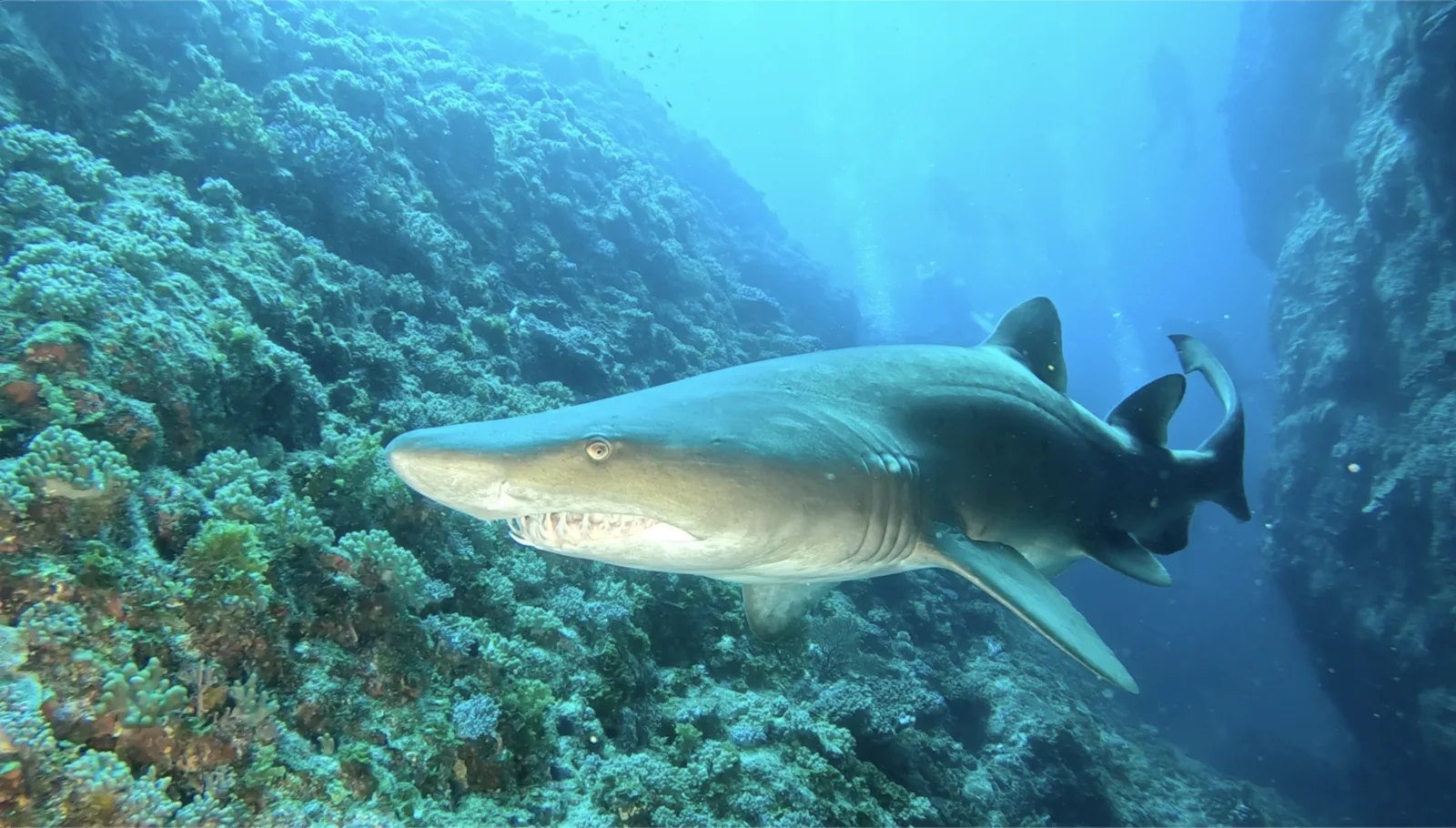
Green turtles are the dependable feature, appearing throughout the year among the volcanic rocks. The fish life includes tropical species, endemic fish, banded butterflyfish and redtail triggerfish, so the apparently dark terrain is far from empty. Hammerhead sharks and thresher sharks are the seasonal draw from May to July, with hammerheads also reported in August and September, but neither should be treated as guaranteed. August and September can bring larger migratory fish, while barracuda are an occasional possibility in October and November. Humpback whales provide a separate winter interest from December to April, when whale-watching can complement the diving. The attraction is the changing combination of resident turtles, rocky habitat and passing animals, not one fixed wildlife encounter.
May to October is the most straightforward period for a diving holiday. May to July gives the best reason to prioritise shark encounters, while August and September usually offer the clearest water and the possibility of larger migratory fish. October remains a useful month for diving, although Japanese holidays can make local arrangements busier. December to April brings the chance of humpback whales, but visibility and sea conditions are less consistently favourable on some sites. Turtles remain a year-round reason to dive, so the right season depends on whether the priority is volcanic scenery, clarity, sharks or whales.
Hachijojima can suit beginners as well as experienced divers, and local operators offer training and introductory outings. BSAC, PADI and SSI divers should still match their plans to the day’s coast, swell and current rather than relying on certification alone. Previous experience in a drift dive, a downcurrent or exposed rocky water is useful for the more mobile conditions. A calm conversation with the local team about the planned site matters more here than chasing a particular label of difficulty.
From London Heathrow, London Gatwick or Manchester, allow roughly 18 to 24 hours to reach Hachijojima, depending on the international connection, the wait in Japan and whether the final leg is by air or sea. The practical route is to reach Tokyo first, then continue from Haneda on a domestic flight of about 55 minutes. The alternative is the overnight passenger ferry from Takeshiba, which takes about 10 hours 20 minutes and may arrive at Sokodo or Yaene according to conditions. On the island, dive areas and accommodation are spread out, so arrange a hire car, taxi or transfer through the accommodation or diving operator rather than planning to walk between sectors.
Arrange the diving before travelling, particularly for September and October, when Japanese holidays can fill local boats and guided outings. Build spare days into the itinerary: a ferry, flight or boat trip can be disrupted by sea conditions, and a one-day diving plan is a poor fit for an island reached by a domestic connection or overnight crossing. Ask which coast is workable on the day, because exposure, swell, current and visibility can change the practical choice around the island. Do not select dates on turtles alone, since they are present year-round; choose May to July for the better shark window, or August and September for clearer water, without treating either wildlife encounter as promised. If using the ferry, allow a slower schedule. If flying, leave breathing space before the first dive after the journey. Keep the day before the return flight free of diving, and use it for hot springs, walking or whale-watching in season.
Plan Hachijojima as a five- to seven-day land-based stay, with diving fitted around weather and transport rather than packed into every available day. Accommodation and diving services are distributed across the island, so sort out ground transport before arrival. Non-diving days have real purpose here: volcanic walks, hot springs, beaches, rocky coasts and island culture are easy companions to the water. From December to April, whale-watching adds a seasonal reason to stay ashore.
Hello, I'm Marina, DivingDeal.com's AI assistant. I guide you through destinations, areas and countries.
Thinking about the whole trip and the flights? Talk it over with Edith →
Marina is an AI. Some links are affiliate links: DivingDeal may earn a commission, at no extra cost to you. Bookings are made with the partner.
Choose May to July if hammerhead and thresher sharks are your priority, while August and September generally bring clearer water and larger migratory fish. Turtles are present throughout the year. December to April offers humpback whale interest, although visibility and sea conditions can be less consistent at some sites.
Hachijojima can suit beginners and experienced divers, with local operators offering training and introductory outings. You should still discuss the planned site with the local team, because swell, current, exposed rocky water, drift dives and downcurrent sections may affect the outing. Certification alone should not determine your plan.
You can expect volcanic arches, cavities, black rock, rocky drop-offs and green turtles throughout the year. Tropical fish, endemic fish, banded butterflyfish and redtail triggerfish inhabit the terrain. Seasonal possibilities include hammerheads and threshers, larger migratory fish, occasional barracuda, and humpback whales during the winter season.
Plan a land-based stay with diving arranged before arrival and spare days for weather, sea conditions and transport disruptions. Accommodation and dive areas are spread across the island, so arrange a hire car, taxi or transfer. Keep time for volcanic walks, hot springs, beaches, island culture and whale-watching in season.