
Infini Plongee Guadeloupe
Google 4.9/5 (169 reviews)
Guadeloupe · Caribbean
Volcanic drop-offs, coral communities and small-boat departures from Rivière-Sens shape diving around Gourbeyre on southern Basse-Terre, Guadeloupe, with the volcanic island close at hand.
Gourbeyre is a land base for exploring the underwater reliefs south of Basse-Terre, rather than the name of one single celebrated reef. Boats leave from Rivière-Sens marina for volcanic drop-offs, walls and coral environments, with outings ranging from first dives to training and exploration. The arrangement suits divers who want several days on the water without committing to a liveaboard, while keeping the trails and volcanic landscapes of Guadeloupe National Park close by.
Expect boat diving from Rivière-Sens, with the volcanic character of southern Basse-Terre shaping the underwater scenery. Drop-offs and walls give the dives their structure, while coral ecosystems add the living surface to the rock. Currents are variable, so a site that feels straightforward on one outing may require more careful briefing on another. These are not uniform conditions across one named reef, and the day’s plan matters. Ask which sites are being targeted, how exposed they are, and whether the outing is intended as a discovery dive, a standard exploration or something more demanding. The small-boat format keeps the operation tied closely to the marina and the local coastline. It also makes Gourbeyre a useful base for divers who prefer returning to shore each day, rather than organising a cruise around a fixed itinerary.
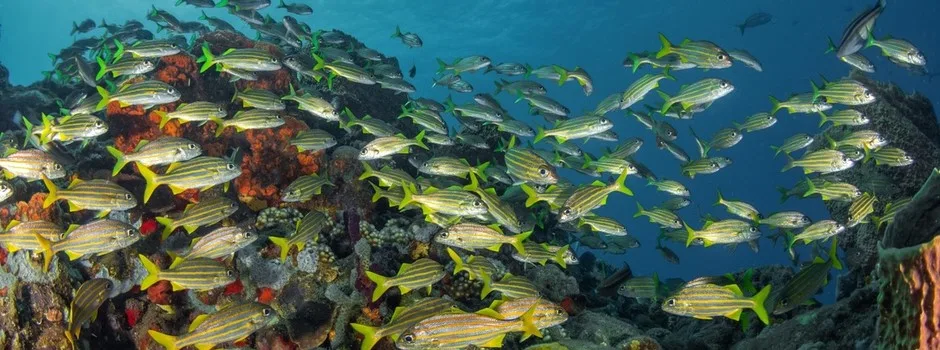
The marine setting combines volcanic relief with coral ecosystems around the southern Basse-Terre coastline. On the walls and drop-offs, the interest lies in the change from solid volcanic structure to living coral surfaces, with marine biodiversity occupying the ledges, faces and sheltered sections. Gourbeyre is not presented around a particular animal encounter or a seasonal migration, so the sensible expectation is a terrain-led dive rather than a wildlife appointment. The centres operate throughout the year, allowing divers to encounter these underwater communities as part of ordinary local outings. Conditions, current and the site selected on the day will influence how much time can be spent examining the walls and coral growth. Bring your attention to the relief itself, because that is what gives the diving its local identity.
Gourbeyre can be used for diving throughout the year, which makes it practical for a broader Guadeloupe stay rather than a narrowly timed expedition. There is no established best month to build the journey around, and no particular seasonal wildlife event is needed to justify the trip. The reason to keep dates flexible is the local combination of variable currents, boat operation and a choice of volcanic sites. Leave room in the itinerary for a land day, especially if you want to walk in the national park or explore the southern coast. Check the current and exposed-site plan with the centre before each outing, rather than assuming that one season defines every dive.
This coast is exposed to sargassum strandings, whose intensity varies greatly from year to year. To find out more, see the “Sargassum alert” panel on this page.
The destination suits all levels because local outings include discovery dives, exploration and training. Beginners can use the boat-based setting for an introduction, provided they are comfortable with the day’s conditions and follow the briefing closely. Experienced divers will find more to assess in the volcanic walls, drop-offs and variable currents than in a simple sheltered practice site. PADI, SSI and BSAC divers should confirm the planned depth and current profile with the centre, as conditions vary from one site to the next.
From LHR, LGW or Manchester, plan an air journey to Guadeloupe-Pôle Caraïbes, then continue by road across Basse-Terre to Gourbeyre. There is no ferry or domestic flight needed to reach the commune. Allow time for the road leg after landing, as the exact journey depends on the airport used and traffic. Once in the area, use Rivière-Sens marina as the fixed reference point for diving, since departures and centres are grouped there. Your accommodation may be in another commune, so arrange the road connection rather than assuming a dive transfer is included. Gourbeyre works best when the marina is treated as the daily starting point, not as a hotel-and-boat package.
Use Rivière-Sens marina as your practical anchor, and ask before booking which sites the boat will actually visit. Gourbeyre is a departure base, not a single underwater sector, so the answer tells you far more than the commune’s name. Ask about boat size and maximum passenger load as well, particularly if you prefer space on a smaller boat. Do not assume a shuttle from accommodation to the marina is included. Keep Bouillante and the Îlets Pigeon separate in your planning, because they are on Basse-Terre but form a different base on the west coast. Set aside a full day for the national park, volcanic scenery or a coastal activity instead of filling every morning with dives. Finally, check current and exposed-site access directly before each outing, and do not book Gourbeyre as a cruise destination: its practical rhythm is boat out, boat back, then a land-based evening.
A sensible stay is organised around morning or daytime boat departures from Rivière-Sens, with evenings back on land in Gourbeyre or a neighbouring commune. Choose accommodation with straightforward road access to the marina, because no standard diver shuttle should be assumed. Keep at least one non-diving day for Guadeloupe National Park, Basse-Terre’s volcanic landscapes, kayaking, sailing or snorkelling. Gourbeyre also works well for mixed groups, since non-divers can spend the day on land or on the water while the boat is away.
Hello, I'm Marina, DivingDeal.com's AI assistant. I guide you through destinations, areas and countries.
Thinking about the whole trip and the flights? Talk it over with Edith →
Marina is an AI. Some links are affiliate links: DivingDeal may earn a commission, at no extra cost to you. Bookings are made with the partner.
You can dive in Gourbeyre throughout the year, and no specific month or seasonal wildlife event defines the destination. Keep your dates flexible because currents vary, boat operations matter, and exposed volcanic sites may affect the plan. Leave room for a land day in Guadeloupe National Park or along the southern coast.
Gourbeyre suits beginners, training sessions and experienced explorers. Discovery dives introduce the boat-based setting, while volcanic walls, drop-offs and variable currents give experienced divers conditions to assess. Confirm the planned depth and current profile with the centre, and follow the briefing closely because conditions differ between sites and outings.
You can explore volcanic drop-offs, walls and underwater reliefs along southern Basse-Terre, with coral ecosystems covering parts of the rock. Marine biodiversity occupies ledges, faces and sheltered sections. The diving is centred on terrain and coral communities rather than a particular animal encounter or seasonal wildlife event, so focus on the relief.
Use Rivière-Sens marina as your daily diving reference point, and check which sites the boat will visit before booking. Choose accommodation with practical road access, since a shuttle is not assumed. Organise daytime boat outings with evenings ashore, and keep a non-diving day for the national park, volcanic scenery, kayaking or sailing.