

Seacretdive
Google 5/5 (359 reviews)
Guadeloupe · Caribbean
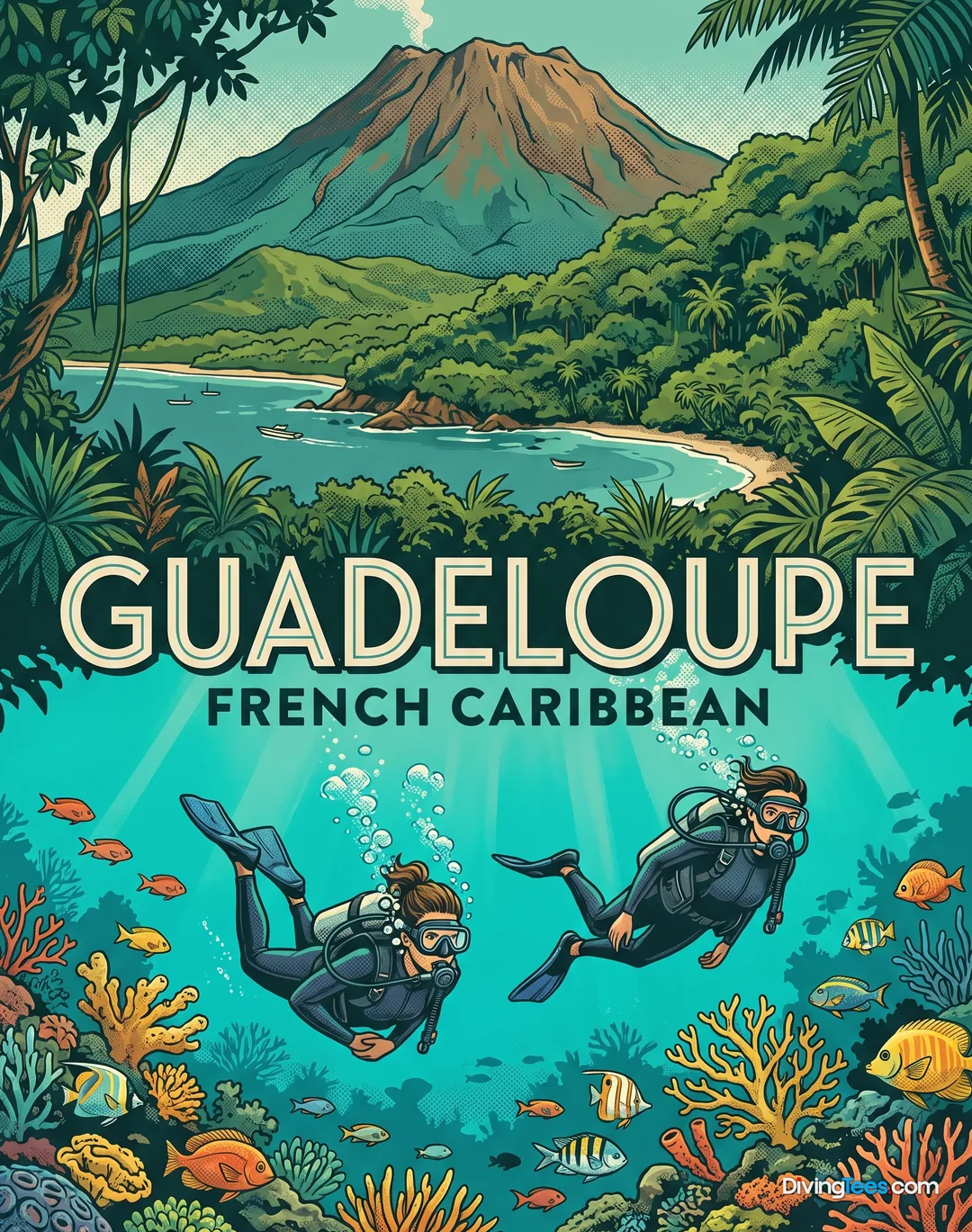
Here, volcanic walls, the Franjack at 23 metres, coral gardens and turtles shape boat diving along Guadeloupe’s sheltered western coast.
For subtitles in English: start the video firstthen click the gearat the top right of the video, select “Subtitles/CC”, then “Auto-translate” and choose “English”.
Basse-Terre is the Guadeloupe choice for divers who prefer volcanic scenery to flat lagoon profiles. Boat trips from the coast under the prevailing shelter reach walls, coral plateaux, sandy channels and wrecks, with the Réserve Cousteau providing the best-known setting around the Pigeon Islets. There is enough variety for a proper land-based diving holiday: gentle sites for relaxed days, deeper walls for qualified divers, and artificial reefs such as the Franjack and Gustavia.
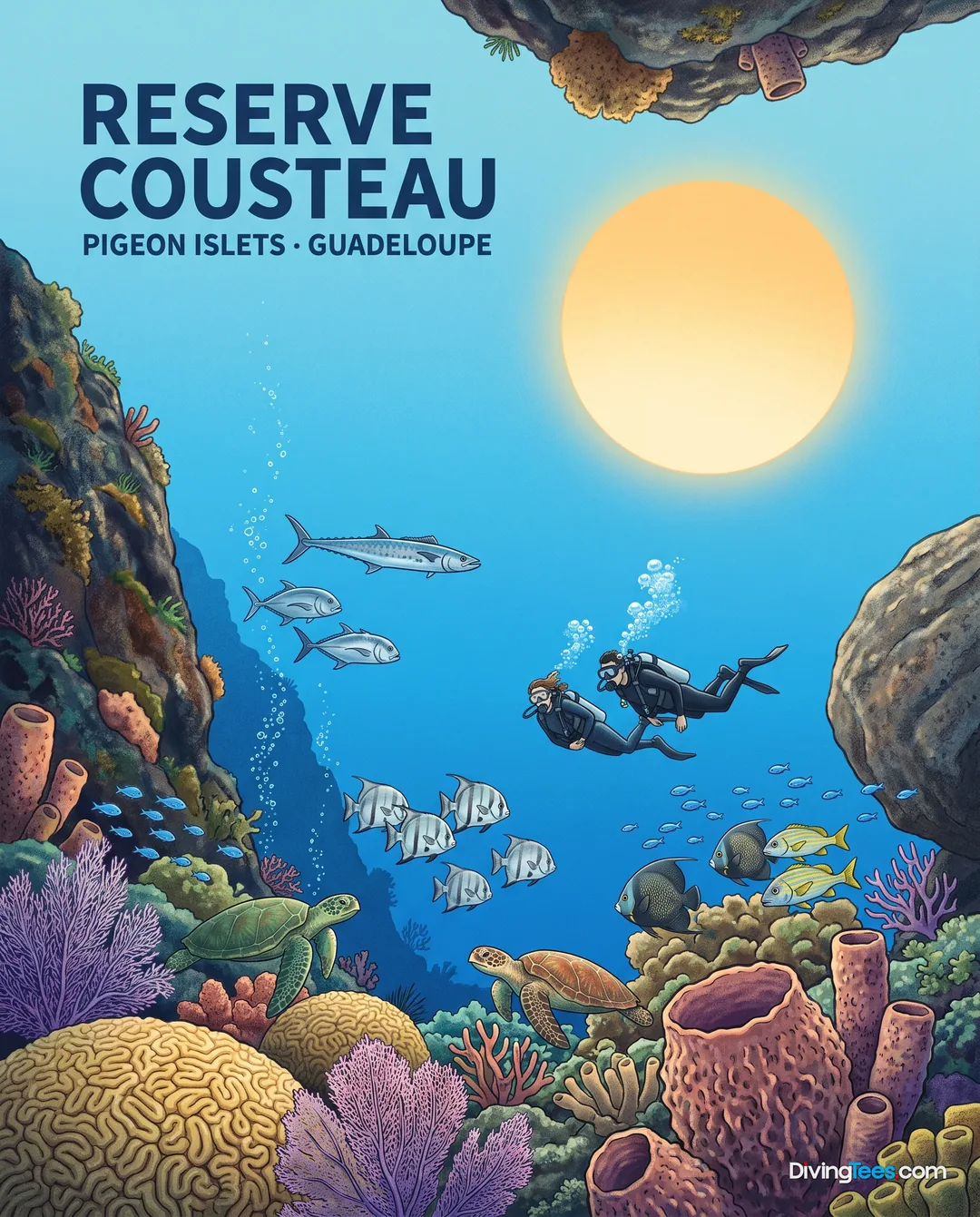
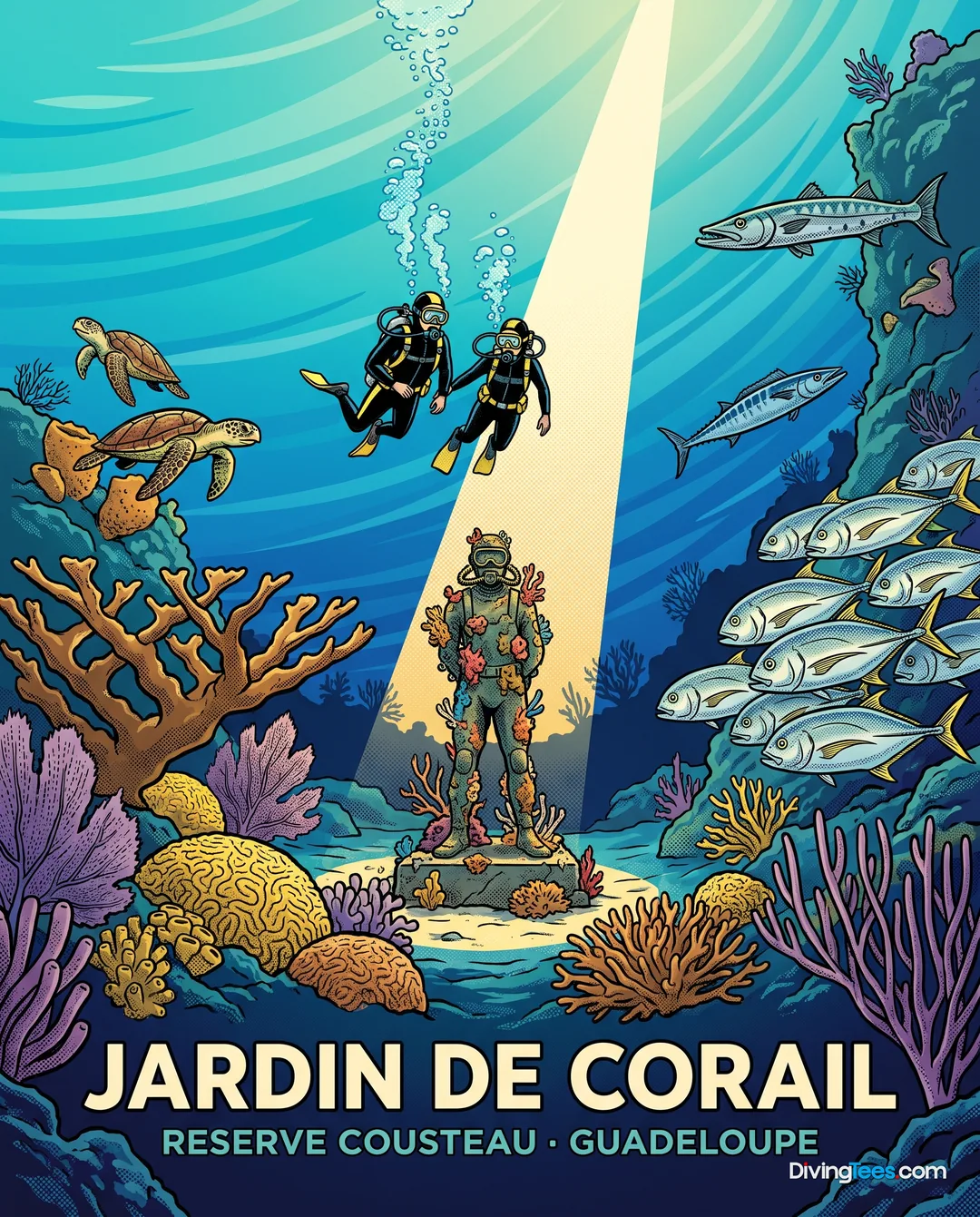
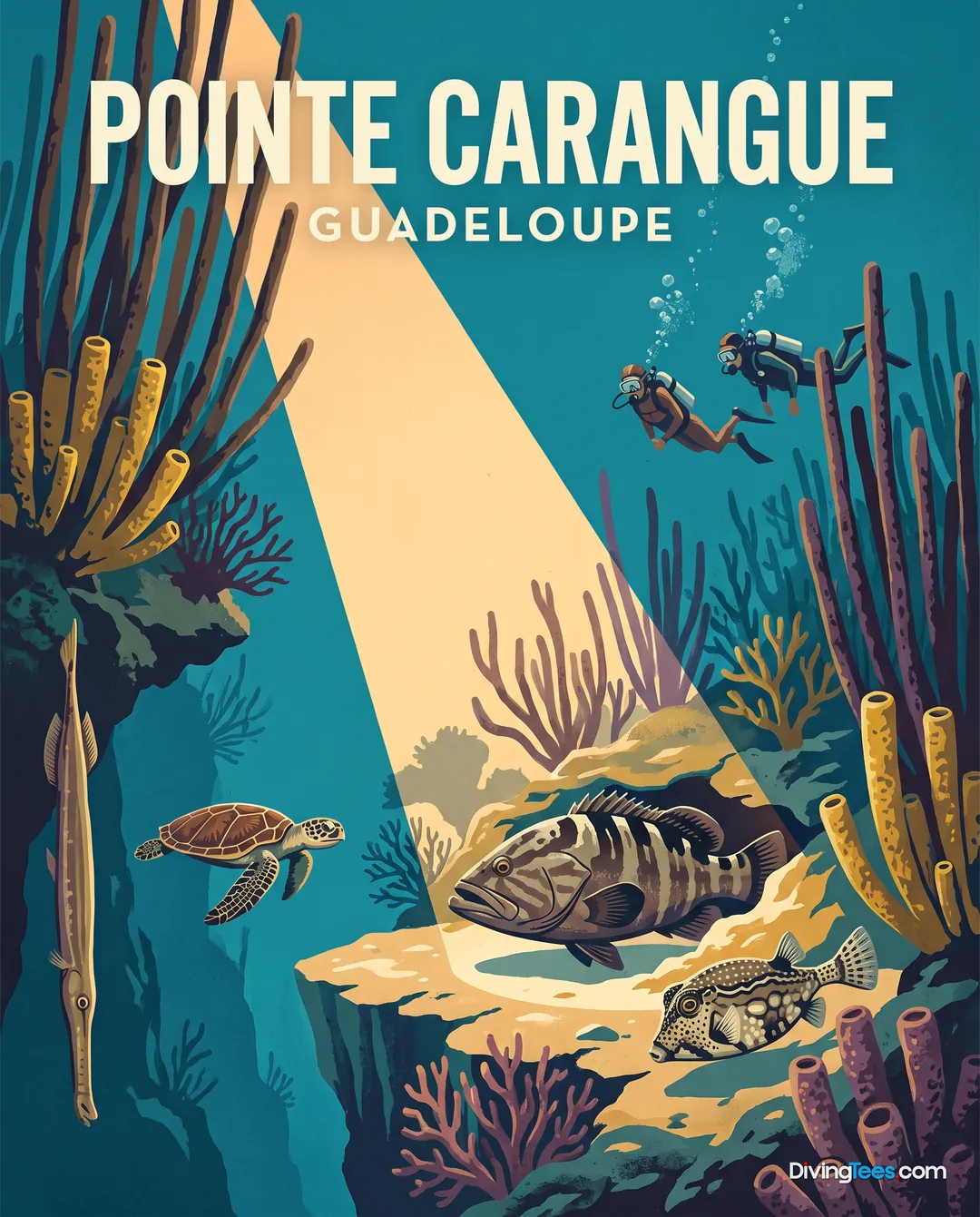
The underwater landscape is built around volcanic rock, coral gardens and drop-offs rather than a single uniform reef. At L’Aquarium, an arch and canyon section can be explored at around twelve metres, while other profiles reach sixty metres. Le Jardin de corail runs from a three-metre plateau to a deeper wall, and La Pointe Carangue combines a coral shelf with a drop-off towards forty metres. The Franjack lies upright on sand at about twenty-three metres, with the wheelhouse and engine holds offering a wreck-diving focus. Conditions are generally suitable for recreational diving, but current is variable and wall sites deserve attention to depth and position. Visibility is often good at the established sites, though it should not be treated as a fixed guarantee. Most diving is by local boat, with protected areas and moorings shaping how the outings are run.
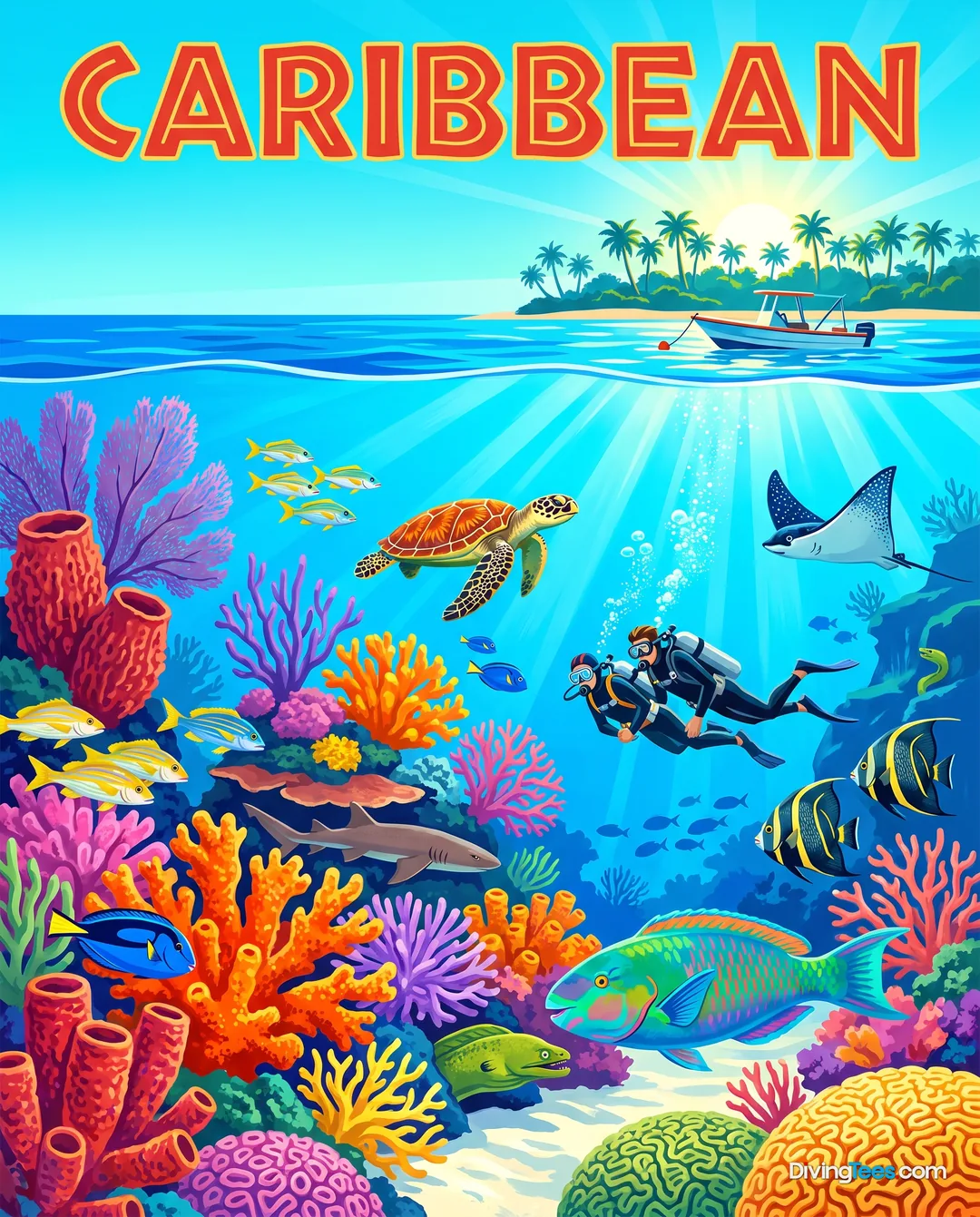
The shallower reefs put corals, sponge, sea fans and tropical fish in front of the diver, while sandy channels and rock formations provide a changing background. Green sea turtles and hawksbill turtles are a particular feature of the sheltered sites; La Caye is noted for resident examples and also works well for a night dive. On the walls and deeper profiles, Great barracuda, Spanish mackerel and jack add movement, with batfish, triggerfish, parrotfish and snapper appearing among the reef fish. Moray eel and lobster reward a slower look into cracks and structure. Encounters are linked more to the site and dive profile than to a documented calendar of seasonal visitors, so the attraction is the range of habitats rather than one guaranteed species at one time of year.
December to April is the clearest practical window for a Basse-Terre diving holiday. Rainfall is lowest then, and the site information also associates these months with calmer seas and better visibility, useful when boat plans include walls, wrecks and exposed rock formations. That matters especially at L’Aquarium, where the shallow canyon section depends on calm conditions because it is exposed to swell. May to November remains a workable period, with warmer water described for the region, but the trip benefits from more flexibility around sea conditions. A five-to-seven-day stay leaves room to move outings when the weather changes rather than forcing every dive into a fixed sequence.
This coast is exposed to sargassum strandings, whose intensity varies greatly from year to year. To find out more, see the “Sargassum alert” panel on this page.
Basse-Terre suits all levels, provided the diver is comfortable with the conditions of the chosen site. An Open Water Diver, BSAC Ocean Diver or equivalent can use the sheltered, shallower reefs and wreck profiles within recreational limits. Advanced training is useful for the deeper sections of the Réserve Cousteau, wall dives and sites approaching forty metres; Nitrox is also a sensible qualification for a run of boat dives. Good buoyancy matters more than bravado, particularly over volcanic rock, coral and protected shallows.
Travellers leaving from London Heathrow, London Gatwick or Manchester first reach the Guadeloupe archipelago, then continue by road to the Basse-Terre coast. Once in Guadeloupe, Basse-Terre is connected to Grande-Terre by road, so there is no compulsory sea crossing to reach the diving area. The practical issue is the second stage: international arrival, onward road transfer and the drive to the accommodation or local departure point need to be treated as separate parts of the journey. Divers normally stay on land and reach the centres, launch sites or embarkation points by road rather than walking straight from a hotel to the boat. Allowing some slack on the arrival day avoids turning a road transfer into a missed departure.
Do not plan Basse-Terre as a liveaboard destination. The diving is organised around shore-based, day-boat outings, so accommodation and road transfers matter more than building a continuous sequence of dives. Keep a weather-flexible day in the programme: the canyon and arch at L’Aquarium need calm conditions, and a swell-affected site is a poor place to force a dive simply because it was booked. Ask how the boat operates in protected areas and whether it uses dedicated moorings; anchoring over reef is not an acceptable substitute. A streamlined set-up, careful hose and camera management, and a genuinely settled trim are especially useful over volcanic rock and fragile coral. Use less sensitive sites for first dives, refresher work or a mixed-experience group rather than practising on the most delicate formations. At the Franjack, treat the wheelhouse and engine holds as a controlled wreck route, not an excuse to push beyond training or gas planning. La Caye is worth reserving for a night outing if the schedule allows.
A five-to-seven-day land stay gives enough time to combine the Réserve Cousteau, sheltered shallows, walls and the two wrecks without making every day dependent on one boat departure. Base the holiday on Basse-Terre rather than using the island only in transit; this keeps road logistics manageable and leaves room for non-diving days. The Parc national de la Guadeloupe provides a strong alternative for a non-diving companion, while coastal outings and viewpoints fill a weather day without turning the trip into a purely underwater itinerary.
Hello, I'm Marina, DivingDeal.com's AI assistant. I guide you through destinations, areas and countries.
Thinking about the whole trip and the flights? Talk it over with Edith →
Marina is an AI. Some links are affiliate links: DivingDeal may earn a commission, at no extra cost to you. Bookings are made with the partner.
Your last day stays dry: no diving in the 18-24 hours before a flight, the perfect window to see the destination from another angle.
 Nature
⏱ 4 h · ★ 5.0 (3 reviews)
from £59$78€70
see on Viator ↗
 Nature
⏱ 4 h · ★ 4.9 (154 reviews)
from £71$95€85
see on Viator ↗
Ratings and reviews collected by Viator and Tripadvisor.
December to April is the clearest practical window for diving in Basse-Terre, with calmer seas and better visibility. May to November can still work, with warmer water, but you should keep your itinerary flexible around sea conditions, particularly when planning boat trips to walls, wrecks and exposed rock formations.
Basse-Terre suits divers of all levels when you choose sites that match your experience. Open Water divers can enjoy sheltered, shallow reefs and suitable wreck profiles. Advanced training helps with deeper sections, wall dives and sites approaching forty metres, while good buoyancy is valuable around volcanic rock, coral and protected shallows.
In Basse-Terre, you can explore volcanic walls, coral gardens, drop-offs, sandy channels and wrecks. Shallow reefs support corals, sponges, sea fans and tropical fish, while La Caye is known for resident green and hawksbill turtles. Deeper sites may feature barracuda, Spanish mackerel, jacks, morays and lobsters.
Plan Basse-Terre as a land-based holiday using local day boats, accommodation and road transfers rather than a liveaboard. Leave flexibility for weather, especially at L’Aquarium, and ask how boats operate in protected areas. Base yourself on Basse-Terre, combine sheltered reefs, walls and wrecks, and reserve La Caye for a night dive.