
Piton Plongée
Google 5/5 (429 reviews)
Guadeloupe · Caribbean
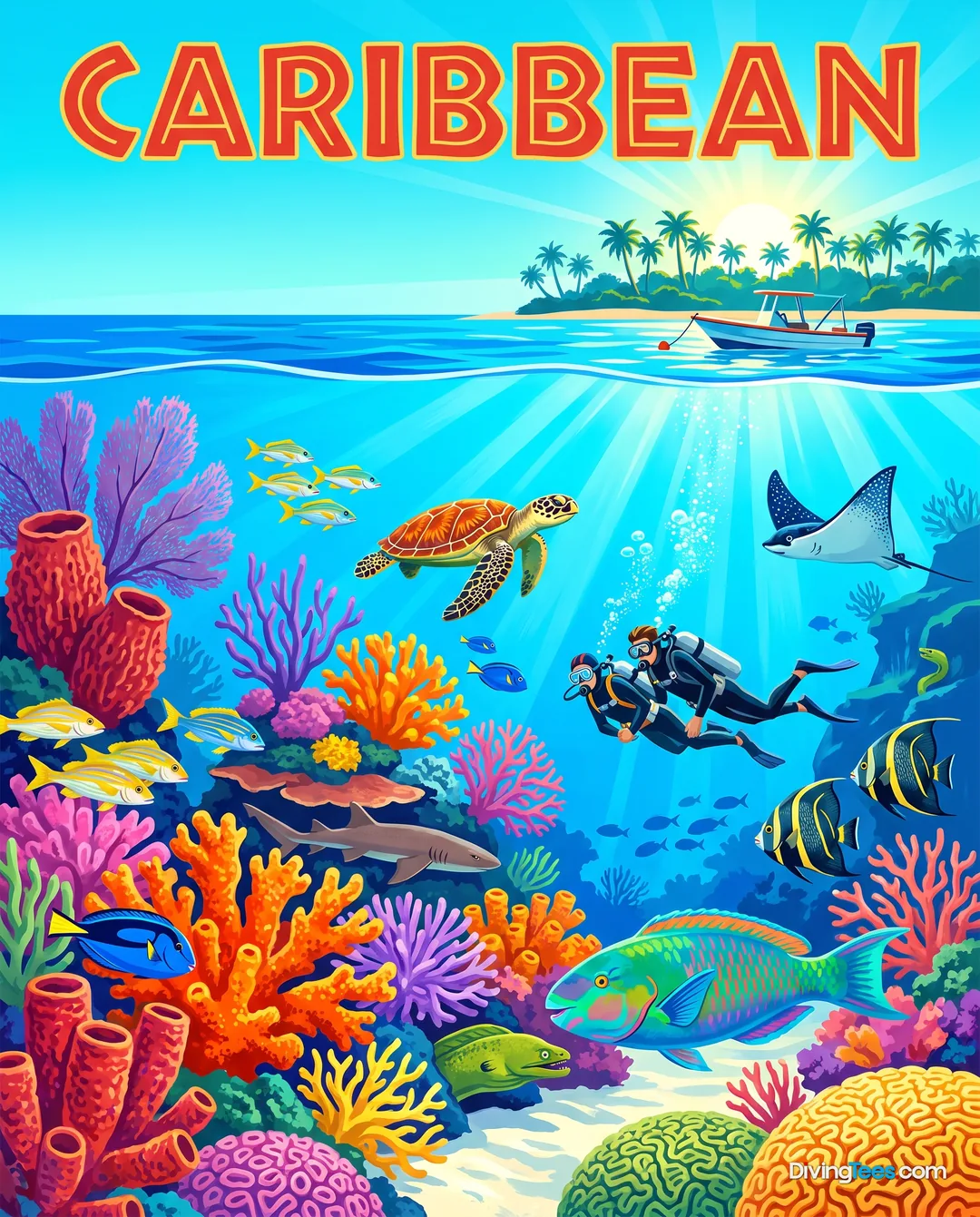
Sheltered bay reefs, coral walls to 30 metres, turtles and pelagic fish shape boat diving from Deshaies along north-west Basse-Terre.
For subtitles in English: start the video firstthen click the gearat the top right of the video, select “Subtitles/CC”, then “Auto-translate” and choose “English”.
Deshaies is a small shore-based diving base on the sheltered west and north-west coast of Basse-Terre. Local boats head out to coral massifs, reef gardens, walls and sandy-bottomed drop-offs rather than relying mainly on shore entries. The sites suit a mixed holiday: a diver can spend the morning underwater while a non-diving partner has beaches, forest walks and coastal outings nearby. It is a practical choice for a week built around relaxed boat diving rather than a liveaboard routine.
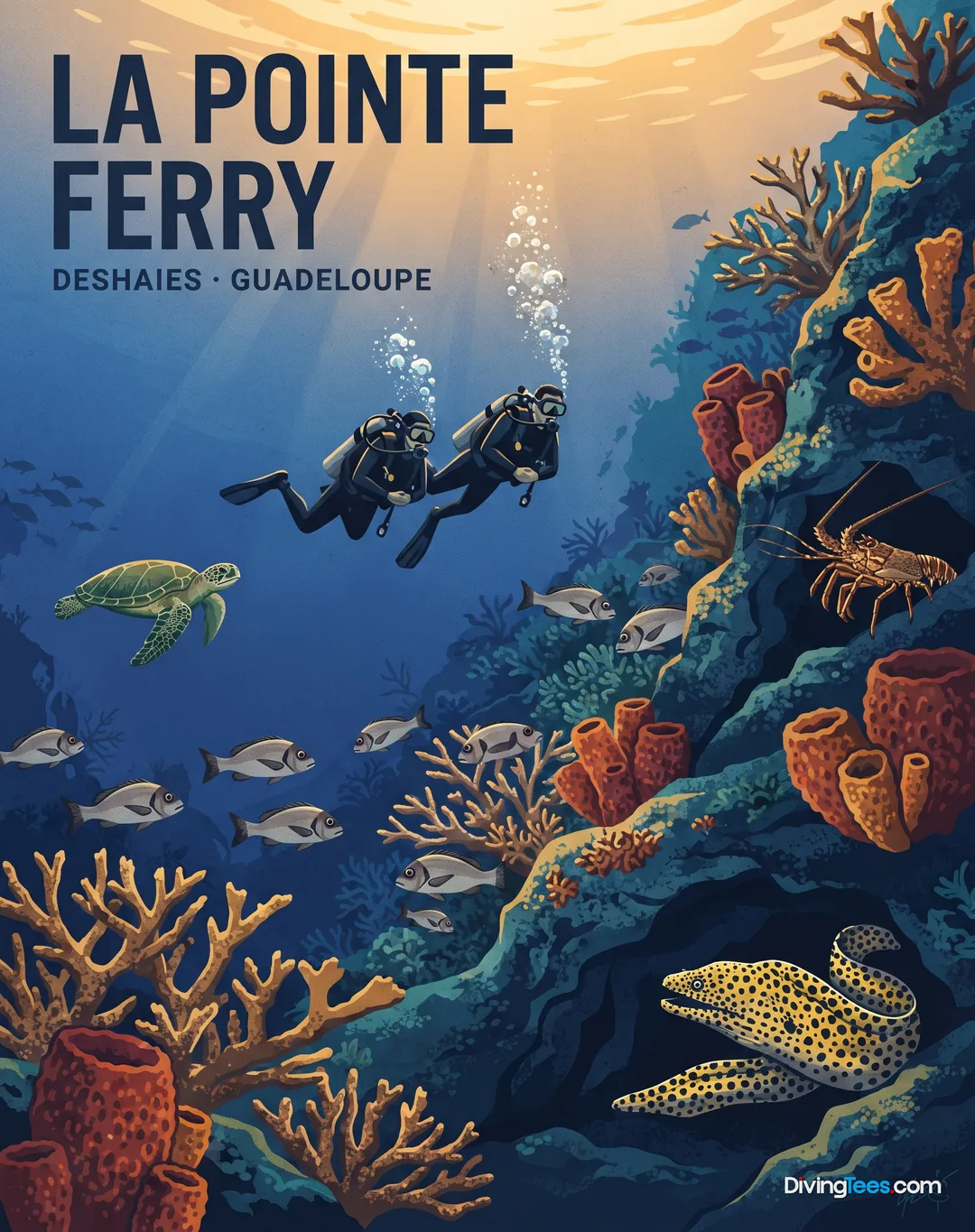
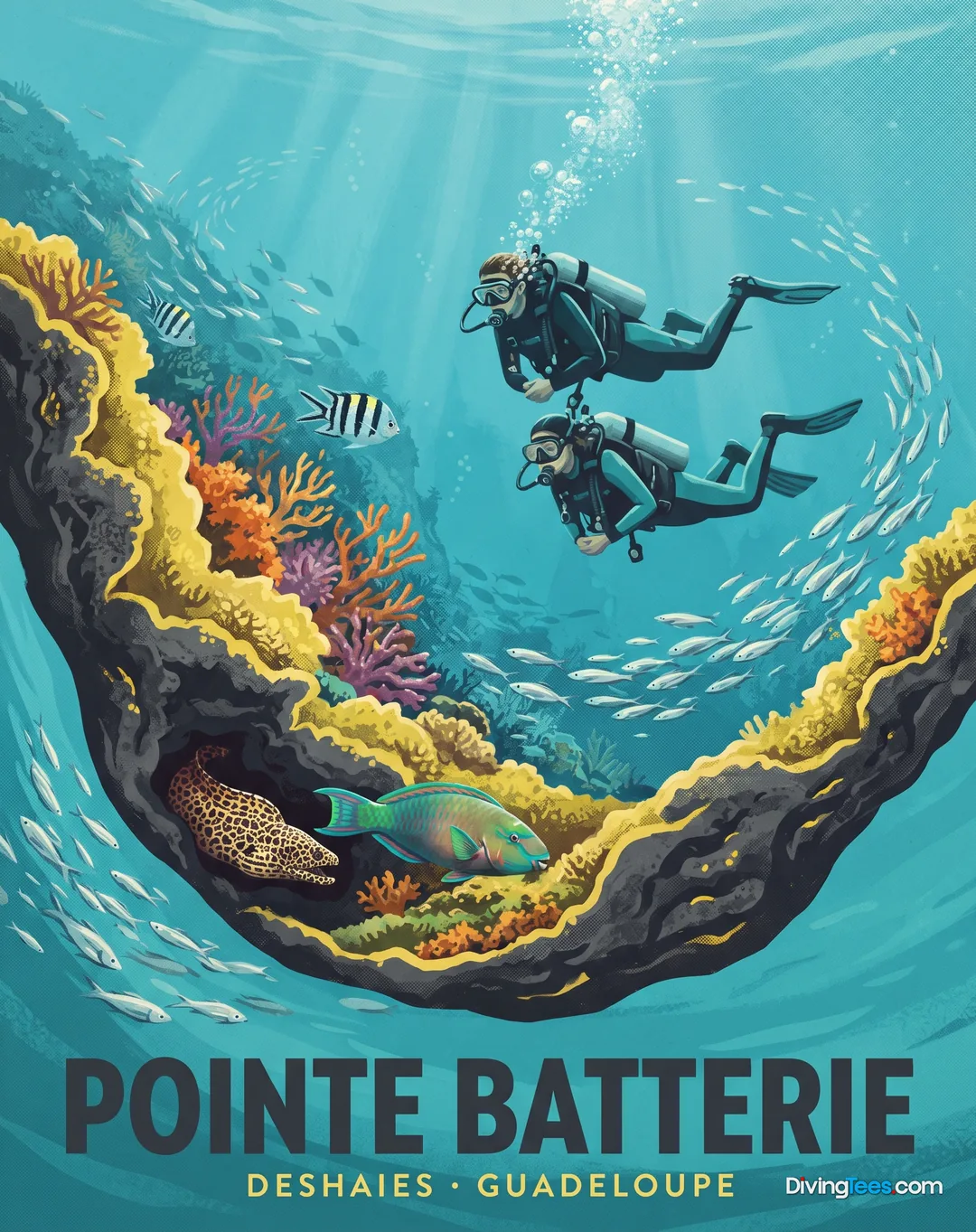
Underwater, the area is shaped by coral massifs, rocky crevices, short drop-offs and walls. Le Gros Morne stays between 3 and 18 metres, while Pointe Batterie follows a substantial coral arc down to 22 metres. Pointe aux Fous runs along the base of a cliff, with reef above a sandy seabed between 3 and 16 metres. Deeper profiles are available at Anse Thomas, Morphy and La Pointe Ferry, reaching 25 metres, while La Stanior descends to 30 metres and can feel more exposed. Currents are generally light, although La Stanior may vary around its wall. Visibility is variable; Pointe aux Fous is usually described in the 10–20-metre range. These are chiefly daily boat dives, with the skipper and guide adjusting the plan to the local sea state.
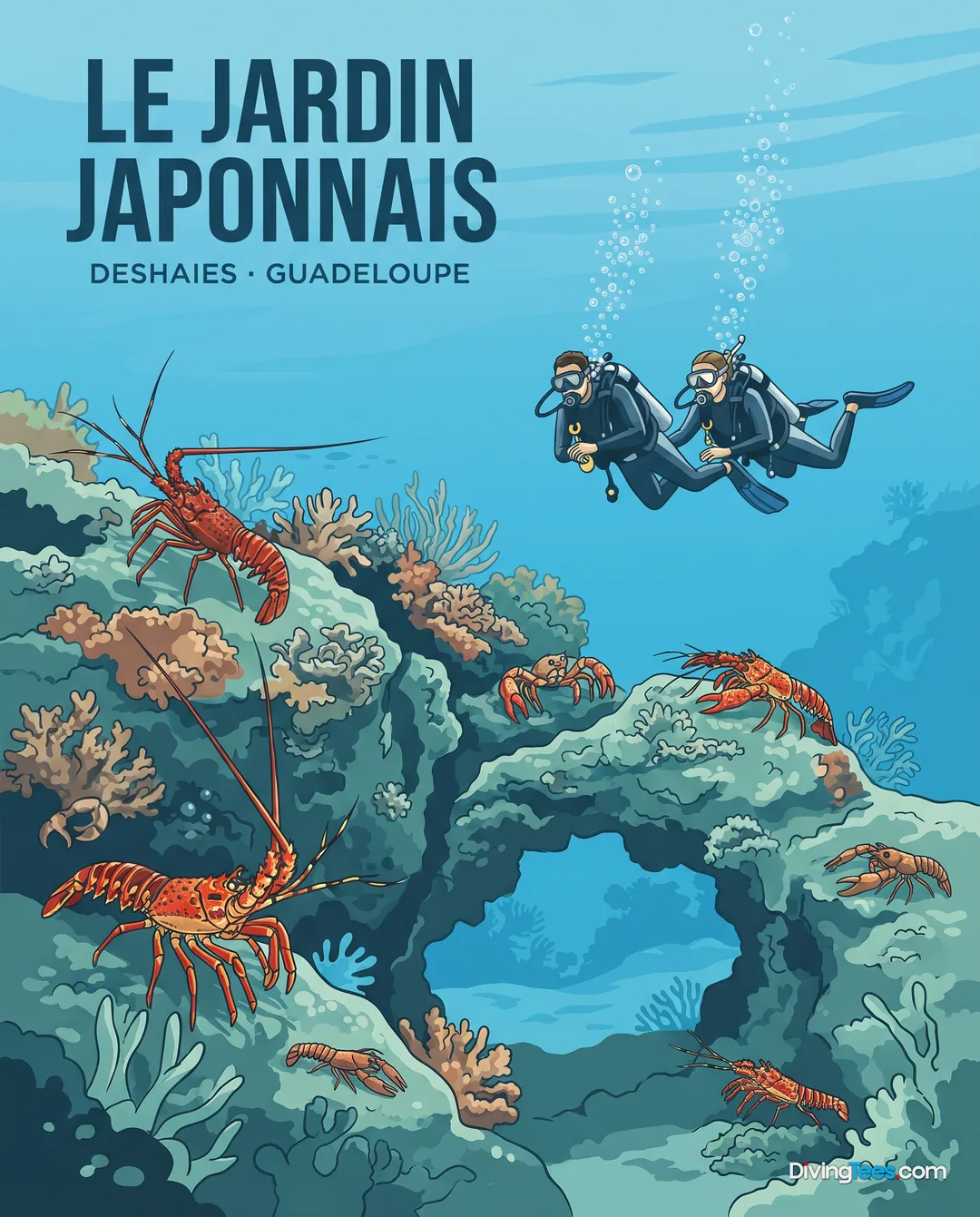
Sea turtles are a regular reason to slow down over the coral formations, with Anse Thomas and Morphy particularly associated with turtle encounters. Reef fish and seabreams occupy the shallower gardens, crevices and coral bands, while macro invertebrates reward careful looking around the rock and sand. Spiny lobster are another useful reason to inspect holes rather than simply swim past them. Pelagic fish are more strongly associated with La Stanior, where the deeper wall and more open water give the dive a different character. The material does not establish a separate seasonal wildlife calendar, so these encounters are best regarded as part of the normal diving interest rather than tied to a particular month.
May to September is the clearest choice for a Deshaies diving stay because this is when the sea is measured as calmest for boat operations. Calmer water matters here: the day depends on a launch, a crossing and a site-specific descent, so conditions affect both comfort and the choice of wall or reef. This window also makes it easier to enjoy shallower profiles such as Le Gros Morne or Pointe aux Fous without rushing the dive. Outside it, the trip may still work, but the boat plan needs to remain flexible and should be checked locally rather than assumed in advance.
This coast is exposed to sargassum strandings, whose intensity varies greatly from year to year. To find out more, see the “Sargassum alert” panel on this page.
The area is suitable for all levels when the site matches the diver’s experience. Open Water, PADI or SSI equivalents, and BSAC qualifications are enough for the shallower reef profiles, including Pointe Batterie and Pointe aux Fous. Advanced training is useful for the deeper walls and for divers who want to work comfortably around the 20–30-metre range, particularly at La Stanior. Light current is the norm, but good buoyancy and controlled finning matter around coral shelves, arches and drop-offs.
From London, the route begins with an international flight from Heathrow or Gatwick; Manchester is the other stated UK departure point. Deshaies is reached by road on Basse-Terre after arrival in Guadeloupe, with no compulsory sea transfer to the town itself. The diving logistics then change character: each outing starts at a local shore-based centre, continues by boat to the reefs and returns to land afterwards. Accommodation in or near Deshaies keeps the daily run manageable. Depending on where it is based, the centre can be reached on foot, by hire car or by taxi, but a car is useful for visitors staying outside the village. Allow for a road journey before the boat departure rather than treating the sites as walk-in dives.
Base the trip in or close to Deshaies if the intention is to dive this sector regularly; staying much farther away can turn every boat morning into an unnecessary road transfer. Before boarding, ask whether the plan is for the sheltered west coast or a more exposed sector, since that distinction can change the entry and the site used on the day. Do not arrive expecting diving directly off the beach: the normal sequence is road to the centre, then boat to the reef. A hire car removes much of the friction if the accommodation is outside the village, while a taxi works better when everything is nearby. On a week of repeated boat dives, Nitrox may be worth considering for comfort if it is available locally. Keep protected areas and mooring buoys in mind, never anchor on the reef, and leave the coral, animals and feeding behaviour undisturbed.
A five- to seven-day stay gives enough time to settle into the boat routine without making every day a dive day. Mornings can be reserved for the reefs and walls, with afternoons for Deshaies, beaches or a forest walk. A non-diving companion has genuine alternatives close by, so the holiday does not depend on filling every day underwater. Keep one quieter day before the flight for land-based activities and an unhurried finish.
Hello, I'm Marina, DivingDeal.com's AI assistant. I guide you through destinations, areas and countries.
Thinking about the whole trip and the flights? Talk it over with Edith →
Marina is an AI. Some links are affiliate links: DivingDeal may earn a commission, at no extra cost to you. Bookings are made with the partner.
Your last day stays dry: no diving in the 18-24 hours before a flight, the perfect window to see the destination from another angle.
 Nature
⏱ 4 h · ★ 4.9 (154 reviews)
from £71$95€85
see on Viator ↗
 Nature
⏱ 4 h · ★ 5.0 (3 reviews)
from £59$78€70
see on Viator ↗
Ratings and reviews collected by Viator and Tripadvisor.
May to September is the calmest period for boat departures from Deshaies. Calmer seas can make crossings and descents more comfortable while helping operators choose between sheltered reefs, walls and shallower profiles. Outside this period, diving may still be possible, but you should keep plans flexible and check conditions locally.
Deshaies suits divers of all levels when the site matches their experience. Open Water, PADI or SSI equivalents, and BSAC qualifications are enough for shallower reefs such as Pointe Batterie and Pointe aux Fous. Advanced training is useful for deeper walls, especially La Stanior, and good buoyancy helps around coral and drop-offs.
Diving in Deshaies features coral gardens, rocky crevices, arches, faults, sandy seabeds and walls. Sea turtles are particularly associated with Anse Thomas and Morphy, while reef fish, seabreams, spiny lobster and macro invertebrates reward careful observation. La Stanior offers a more exposed wall where pelagic fish are associated with deeper open water.
Base yourself in or near Deshaies so repeated boat departures do not require long road transfers. Plan for road travel to the local centre, followed by boat diving and a return to land. A hire car helps outside the village, while a five- to seven-day stay allows diving mornings, land activities and a quieter final day.