
Ti'Bulles
Google 4.8/5 (110 reviews)
Guadeloupe · Caribbean
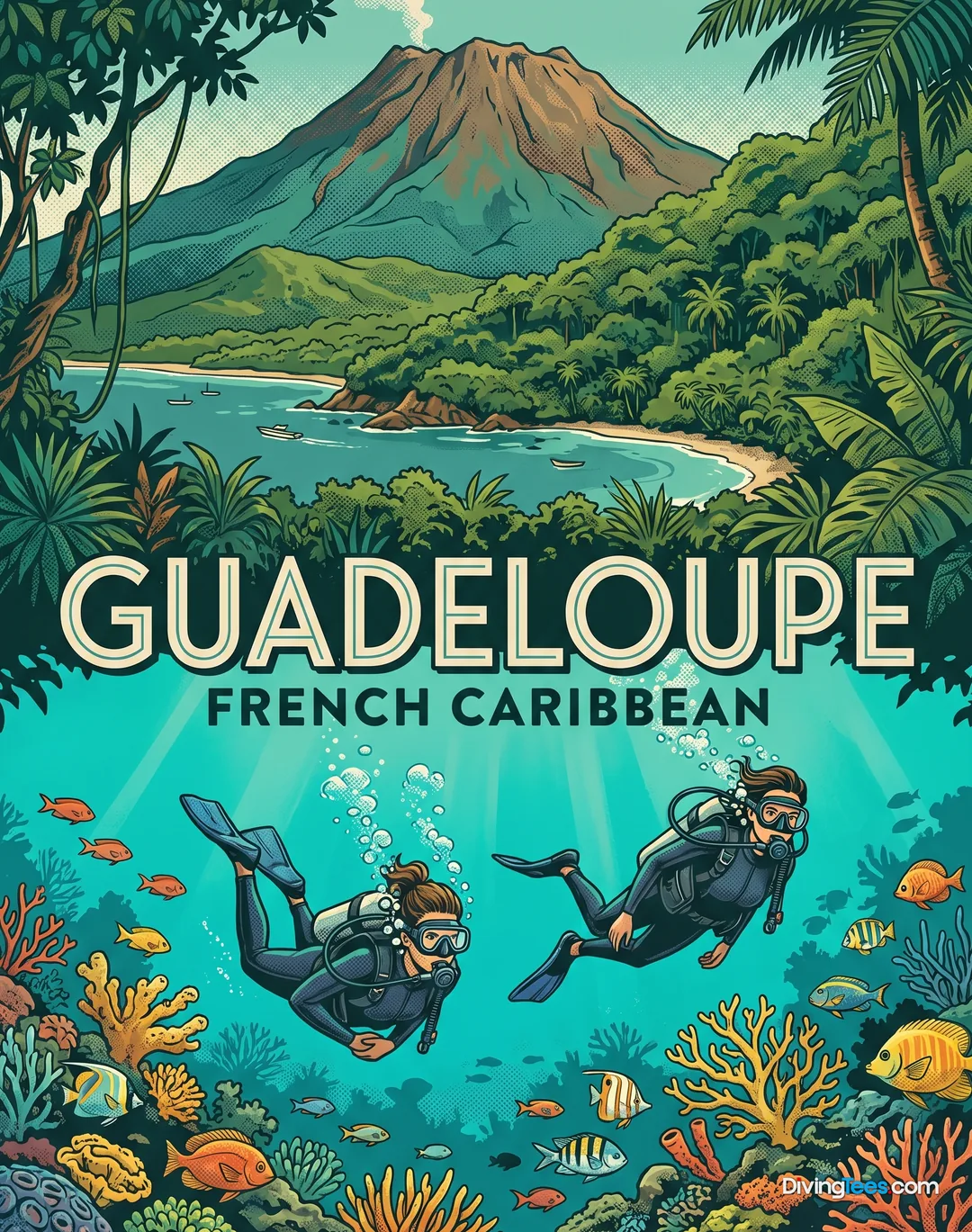
Coral gardens, exposed walls, a shallow wreck and drift dives meet around Marie-Galante, with quiet island days to fill the surface interval.
The Épave gives Grand-Bourg an easy underwater starting point, while Tombant Ravine brings walls, swell and the possibility of stronger current. From this base on Marie-Galante, diving ranges from calm coral gardens to drift dives and deeper-looking terrain, without turning the island into a busy dive resort. It is a shore-based destination for small-group exploration, with enough variation to keep experienced divers interested and straightforward options for newcomers, training and mixed-ability groups.
Grand-Bourg does not revolve around one style of dive. Jardin de Corail and other calmer sites provide a gentler introduction, while Tombant Ravine offers a more exposed wall where swell and current can shape the dive. Grand Ancre, Trois Trous and Site à Bara add further local variations, and the Épave stays shallow enough for introductory outings. Drift dives are part of the appeal, but the current is variable and can be strong, so a planned route may become a moving-water dive rather than a slow circuit. Visibility should be treated as part of the day’s conditions, not as a fixed promise. Ask what is workable before boarding, particularly when the walls are exposed. The practical attraction is the ability to switch between quiet reef, wall, drift and wreck diving from a base on land.
The reefs around Marie-Galante bring the familiar Caribbean cast without requiring every dive to be a hunt for one headline animal. Barracudas may patrol the blue, turtles can turn a reef passage into a slower-looking dive, and leopard rays add a striking encounter when the bottom opens out. Morays belong in the cracks and recesses, with smaller reef life occupying the coral around sites such as Jardin de Corail. These are possibilities rather than appointments, so the best approach is to leave room for the dive itself rather than promise a particular sighting. There is no useful seasonal wildlife timetable to build the trip around. Local briefings on the day remain the sensible way to understand what is being seen and where conditions are allowing the best searching.
Grand-Bourg is best planned as a flexible island trip rather than around one supposedly perfect month. The useful period is one in which several dive days can remain open, because swell may make the exposed walls less attractive and current can change the character of a planned outing. Calm reefs and the shallow Épave provide alternatives when Tombant Ravine is uncomfortable. Leave room around the ferry as well, since a disrupted crossing can remove a dive from the day. In practical terms, choose dates that allow weather and sea conditions to decide which part of Marie-Galante you dive, rather than forcing every outing into a fixed sequence.
This coast is exposed to sargassum strandings, whose intensity varies greatly from year to year. To find out more, see the “Sargassum alert” panel on this page.
This suits beginners as well as experienced divers. Introductory dives, training and calm reef sites give new divers a sensible entry point, while drift dives, walls, stronger current and more exposed terrain reward those already comfortable in moving water. No particular advanced certification is identified as essential. BSAC, PADI and SSI divers should bring the experience that matches the planned outing, especially for current-affected or exposed sites. Mixed groups can share the Épave or quieter reefs, then split for the more demanding dives.
From London Heathrow or Gatwick, or from Manchester, plan the journey around reaching Pointe-à-Pitre, because the practical final link to Grand-Bourg is the ferry. The crossing to Marie-Galante usually takes about an hour, then a road journey brings you to Grand-Bourg. Check the ferry timetable before fixing dive departures, and allow more than the bare minimum between connections. Once on the island, accommodation in or near the town may put the centre within walking distance, but lodgings elsewhere require road transport. A general shuttle service should not be assumed. The ferry is the structural constraint, so a same-day arrival and boat dive leaves little room for disruption.
Arrange the diving before arriving. Grand-Bourg is not a place where it makes sense to step off the ferry and assume a boat will have space, particularly if your stay is built around several planned days. Keep the ferry and the dive departure separate in your thinking, with a proper margin for a late crossing. Before each outing, ask which sites suit the swell and where the current is expected to run. If Tombant Ravine or another exposed wall is compromised, switch to a calm reef or the shallow Épave rather than forcing the original plan. Mixed-ability groups should use those calmer options for a shared dive, leaving walls and drift dives to the divers who are happiest in moving water. Do not book Marie-Galante as a cruise-diving stop. Its rhythm is a land-based stay, with local boats chosen around the day’s conditions and the island’s transport.
Allow five to seven days on Marie-Galante, enough time for several diving days without making every ferry connection critical. Stay in Grand-Bourg or within practical road distance of the town, depending on whether walking access to the centre matters. Keep a day for the island itself: beaches, villages, old sugar works, mills and distilleries give non-divers something substantial to do. A final land day also makes a more comfortable end to the stay than scheduling everything around the last boat.
Hello, I'm Marina, DivingDeal.com's AI assistant. I guide you through destinations, areas and countries.
Thinking about the whole trip and the flights? Talk it over with Edith →
Marina is an AI. Some links are affiliate links: DivingDeal may earn a commission, at no extra cost to you. Bookings are made with the partner.
Plan Grand-Bourg as a flexible island trip rather than around one perfect month. Keep several dive days open because swell can make exposed walls less appealing, while current may change the character of an outing. Calm reefs and the shallow Épave provide alternatives. Leave room around the ferry in case a crossing is disrupted.
Grand-Bourg suits beginners, experienced divers and mixed-ability groups. Introductory dives, training and calm reef sites offer a sensible entry point for new divers. Those comfortable in moving water can consider drift dives, walls, stronger current and exposed terrain. No particular advanced certification is identified as essential, but your experience should match the planned outing.
Diving in Grand-Bourg can include coral gardens, exposed walls, a shallow wreck and drift dives around Marie-Galante. Barracudas may patrol the blue, while turtles, leopard rays and morays may appear around reefs, cracks and recesses. Smaller reef life occupies the coral, but sightings remain possibilities shaped by the day’s conditions.
Plan Grand-Bourg as a land-based island stay, arranging diving before arrival and checking which sites suit the swell and current. Reach Pointe-à-Pitre, take the ferry to Marie-Galante, then continue by road to town. Stay in or near Grand-Bourg, allow margin around ferry connections, and keep time for beaches, villages and historic island attractions.