CMAS
Fyremi - Les Aquanautes
Google 5/5 (512 reviews)
Martinique · Caribbean
Coral plateaux, sponge-covered walls, shoals of fish and the dark outline of Diamond Rock make Le Marin a practical base for southern Martinique by boat.
For subtitles in English: start the video firstthen click the gearat the top right of the video, select “Subtitles/CC”, then “Auto-translate” and choose “English”.
Le Marin is a marina base rather than a single underwater venue. From the Tortue basin, boats reach the sheltered plateau at Pointe Borgnèse, the Aquarium, Caye des Boucaniers, coastal walls and, when conditions and experience allow, Diamond Rock. That gives a week’s diving some useful shape: straightforward shallow water for settling in, followed by deeper or more exposed terrain. Stay ashore, return to the same marina each day and keep a land-based holiday companion close to the bay, beaches and southern Martinique.
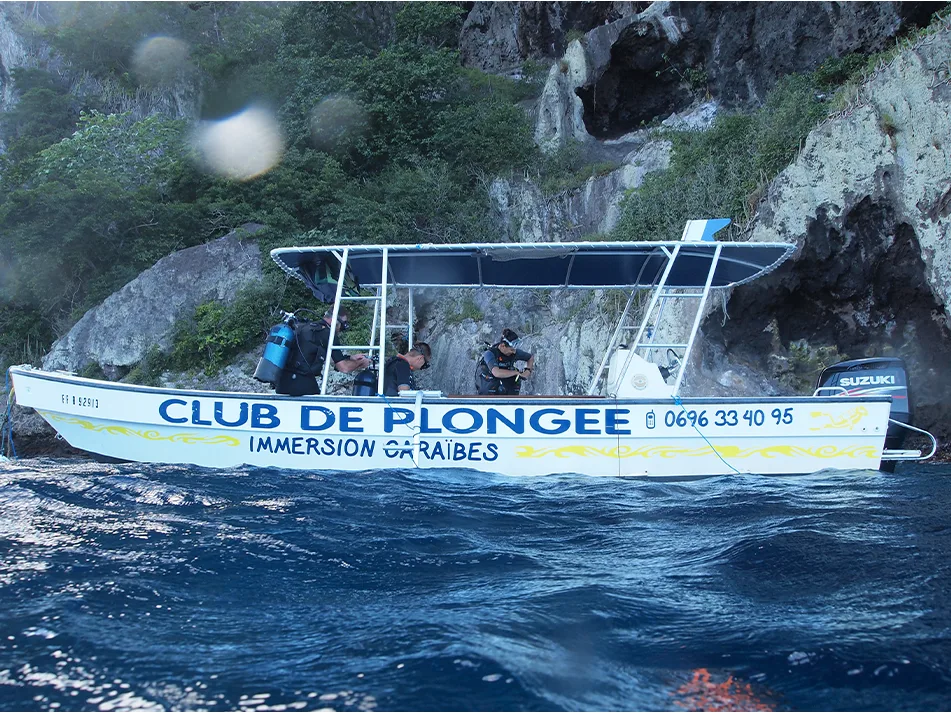
Most outings leave by boat from the marina and combine coral plateaux, walls and sites around the bay with longer runs towards Diamond Rock. Pointe Borgnèse and the Aquarium are the gentler introductions, while Caye des Boucaniers can feel rough on the surface and the more exposed or deeper sectors suit experienced divers. Currents are variable, so a calm-looking departure does not automatically mean a slack-water dive. Visibility is generally around 10 to 20 metres, enough to appreciate sponges, shoals and the shape of a wall without assuming gin-clear conditions. The day may involve a sheltered descent, a reef or wall route, a controlled ascent and a safety stop before returning to the boat. It is boat diving throughout, with several departures spread across the day rather than a shore-entry routine.
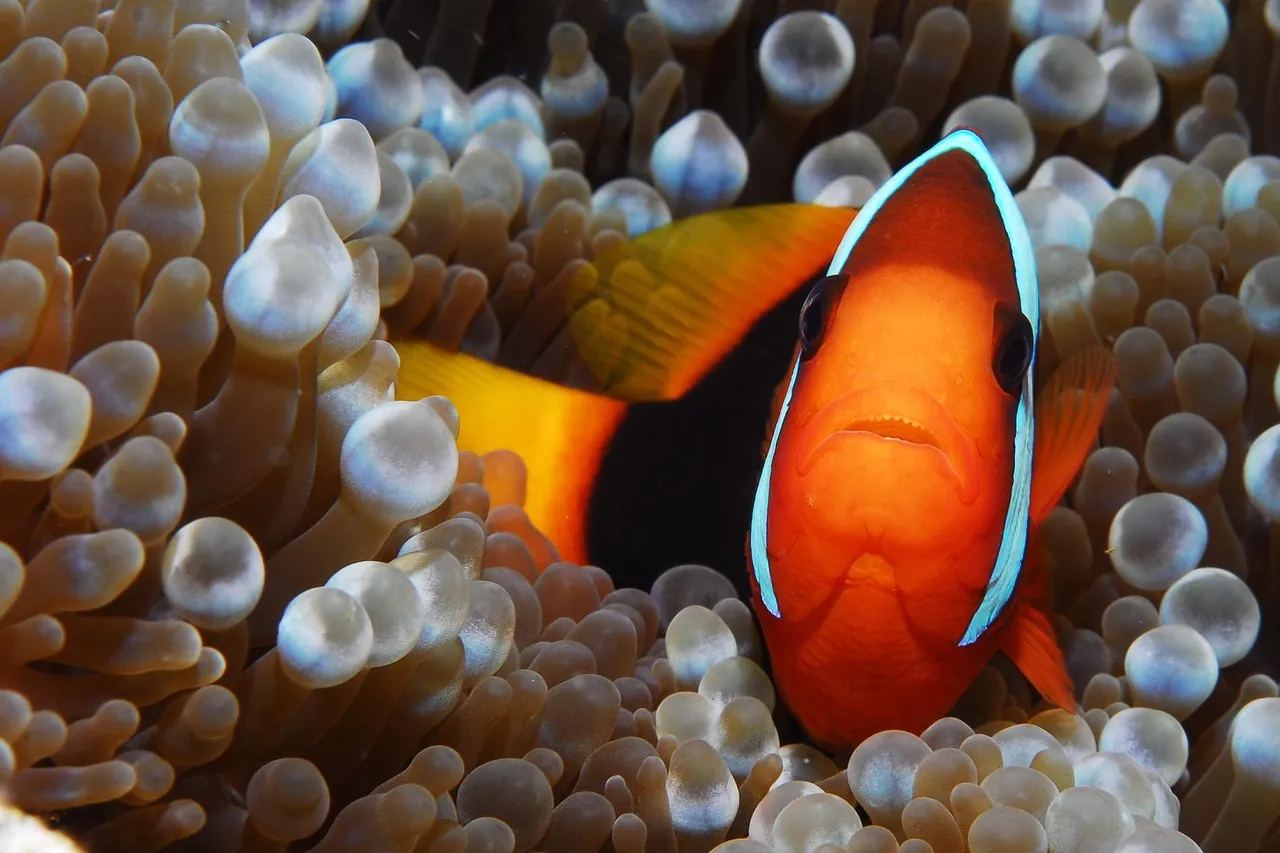
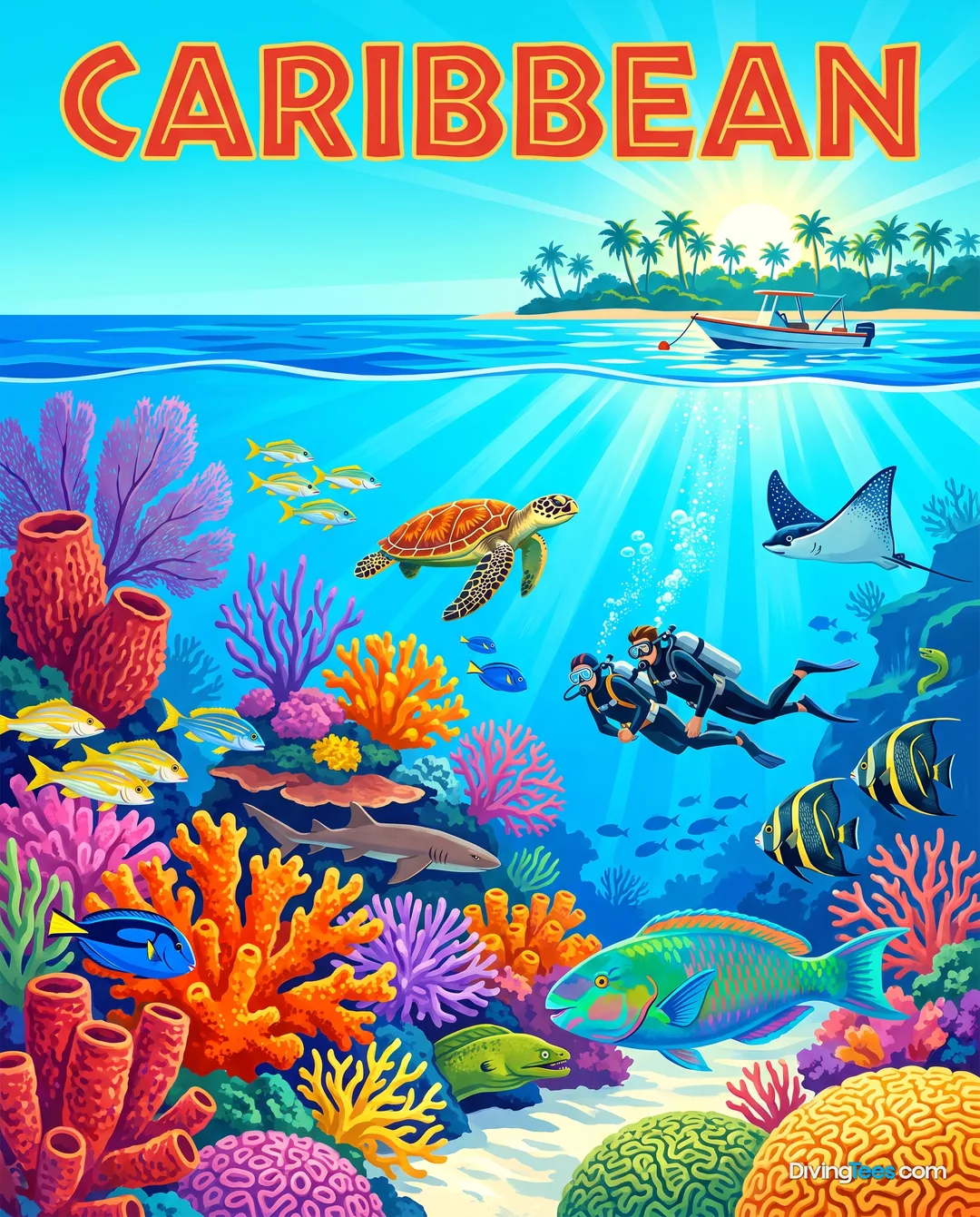
The underwater cast is familiar Caribbean fare, but the terrain gives it variety. Look across coral plateaux for shoals of fish and parrotfish, then inspect the wall faces for sponges and smaller movement in the relief. Turtles may pass through, while lobsters and moray eels reward a slower look into cracks and overhangs. These encounters are possible around the southern sites, including the areas reached towards Diamond Rock, but they are wildlife encounters rather than a timetable. There is no particular seasonal animal appointment to build the trip around. The sensible approach is to choose the site for its terrain and conditions, then allow the turtles, lobsters, moray eels and fish to provide the surprises.
Le Marin is best planned with flexibility rather than around a single headline season. The area offers no established calendar window that should dictate the whole holiday, while visibility commonly sits somewhere between 10 and 20 metres. Conditions matter more at site level: a sheltered plateau may remain comfortable when Caye des Boucaniers is lively at the surface, and exposed routes towards Diamond Rock need the day’s assessment. A seven-day stay works well because it leaves room to alter the order of dives, keep a day free and avoid treating one weather or sea-state decision as a verdict on the whole trip.
This coast is exposed to sargassum strandings, whose intensity varies greatly from year to year. To find out more, see the “Sargassum alert” panel on this page.
Le Marin suits the full range, provided the site is matched honestly to experience. Non-certified divers can use a baptism or training route, while BSAC, PADI and SSI certified divers can join exploration outings. Pointe Borgnèse and the Aquarium are sensible first choices for a new diver or anyone returning after a break. Caye des Boucaniers, deeper sectors, exposed water and Diamond Rock call for stronger comfort in open water, good buoyancy and the judgement to decline a site when conditions do not suit.
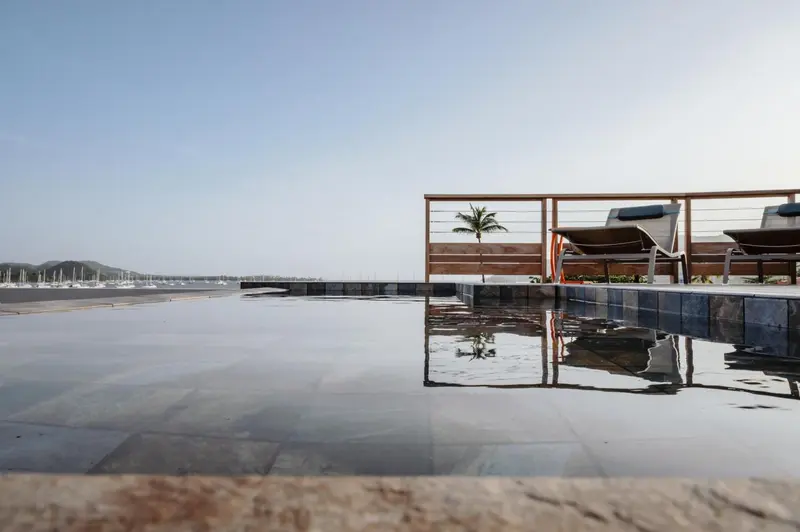
From London, set off from Heathrow or Gatwick, or from Manchester, and reach Martinique through the international airport Aimé-Césaire. From there, Le Marin is reached by road, normally in a hire car, taxi or arranged transfer. There is no ferry or domestic flight needed for the final approach. Allow for the road journey and traffic rather than fixing your plan to an unrealistically precise arrival time. The marina is the practical focus once you arrive. Staying in or near it can put the dive centres within walking distance; accommodation farther out means arranging a car, taxi or transfer for daily departures and for exploring the south.
Book the boat places before arrival, then ask for a morning or less-requested departure if you would rather avoid a heavily loaded boat. Tell the organiser your actual experience, not just the highest certification on your card, so a shallow plateau, wall or exposed route can be matched sensibly. Start with Pointe Borgnèse or the Aquarium if this is your first day, especially after travel. Do not accept Caye des Boucaniers as an automatic beginner choice when the surface is agitated. Treat Diamond Rock as a conditions-and-level decision, not a box to tick. Keep one non-diving day in the programme, and do not schedule a flight immediately after diving. If a site lies within the protected area, use the ecological mooring provided and leave the substrate and marine life alone. Staying near the marina removes a surprisingly tiresome daily transfer, while the Tortue basin keeps the boat operation simple.
Allow about a week, using Le Marin as a fixed land base rather than moving between dive areas. Several daily boat departures make it possible to alternate shallow and more demanding outings, with a rest day or a land excursion in the middle. A marina-based room may allow walking to the boats. Elsewhere, plan on a hire car, taxi or arranged transfer. Non-divers can use the marina and bay, join suitable water activities or explore the beaches, villages and viewpoints of southern Martinique.
Hello, I'm Marina, DivingDeal.com's AI assistant. I guide you through destinations, areas and countries.
Thinking about the whole trip and the flights? Talk it over with Edith →
Marina is an AI. Some links are affiliate links: DivingDeal may earn a commission, at no extra cost to you. Bookings are made with the partner.
You can plan Le Marin flexibly rather than around a particular seasonal window. Visibility commonly ranges from ten to twenty metres, but site conditions matter more. A sheltered plateau may remain comfortable when Caye des Boucaniers is lively at the surface, while routes towards Diamond Rock need the day’s assessment. Keep your itinerary adaptable.
Le Marin can suit non-certified divers through baptism or training routes, as well as certified divers joining exploration outings. Pointe Borgnèse and the Aquarium are sensible introductions for beginners or returning divers. Caye des Boucaniers, deeper sectors, exposed water and Diamond Rock require open-water comfort, good buoyancy and sound judgement.
Around Le Marin, you can explore coral plateaux, sponge-lined walls and tropical shoals. Parrotfish move across the reef, while turtles may pass through. Look slowly into cracks and overhangs for lobsters and moray eels. These wildlife encounters are possible around the southern sites, including areas reached towards Diamond Rock, but they are not scheduled sightings.
Use Le Marin as a fixed land base for about a week, with boat places booked before arrival. Start at Pointe Borgnèse or the Aquarium, then vary shallow and more demanding outings as conditions allow. Keep a non-diving day, avoid scheduling a flight immediately after diving, and stay near the marina or arrange daily transport.