
Kawan Plongee
Google 4.9/5 (269 reviews)
Martinique · Caribbean
Coral reefs, sandy tongues between plateaux, and the open-water drop towards Les Trois Vallées shape Sainte-Luce’s practical diving appeal.
For subtitles in English: start the video firstthen click the gearat the top right of the video, select “Subtitles/CC”, then “Auto-translate” and choose “English”.
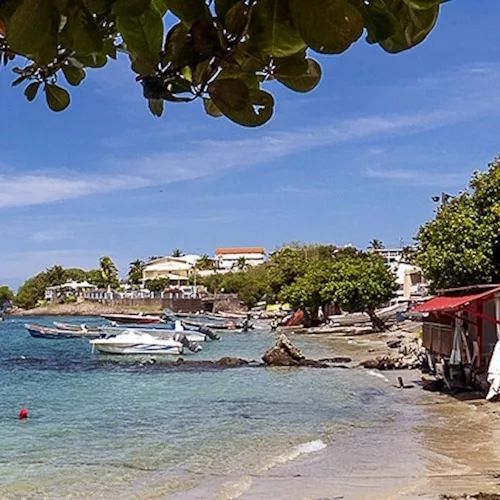
Sainte-Luce works as a shore-based Martinique holiday with reefs close enough for an easy first dive and boat trips when you want more open water. Grande Caye is the obvious introduction, with a profile suited to baptisms, refresher dives and snorkelling. From there, local operators reach coral plateaux, sandy channels and sites towards Sainte-Anne, including Les Trois Vallées. It is a sensible choice for divers who want several days underwater without making the entire trip about diving.
The local character is coral rather than wrecks or deep-wall diving. Around Sainte-Luce, plateaux are broken by tongues of sand, giving a dive a changing rhythm of reef, open bottom and reef again. Grande Caye keeps things straightforward, while sites farther offshore expose you more to the day’s current and visibility. Conditions are variable rather than reliably still, so a planned outing may become a gentle reef dive or a more demanding drift dive depending on the site. Published visibility spans roughly fifteen to sixty metres, an unusually broad range that reflects weather and freshwater run-off as much as the site itself. Most diving is organised by boat from land, with Sainte-Anne and Les Trois Vallées extending the day’s possibilities.
What you notice first at Sainte-Luce is the reef structure: coral surfaces, sandy breaks and the way algae can occupy areas affected by stress. This is not a destination to sell on a guaranteed parade of named animals. The underwater interest lies in reading the condition of each patch, from functioning coral habitat to areas marked by bleaching or coral mortality. Heavy rain and river discharge can alter the water and the reef’s appearance, sometimes making a nearby site a better choice than an exposed one. Snorkellers can appreciate the same coastal cayes, while divers see more of the plateaux and their edges from a boat.
December through August is the more dependable window for planning a Sainte-Luce diving holiday. September and October fall within the rainy season and are the months to treat with the greatest caution, because tropical downpours can reduce visibility, stir freshwater into coastal areas and disrupt boat outings. The issue is not simply a grey day on the beach: the reef may look markedly different after rain, and an open-water site can become less attractive than Grande Caye. Leave room in the itinerary rather than booking every day underwater, especially towards the end of summer and into autumn.
This coast is exposed to sargassum strandings, whose intensity varies greatly from year to year. To find out more, see the “Sargassum alert” panel on this page.
Sainte-Luce suits all levels, provided the site matches the diver rather than the destination label. Grande Caye is suitable for a baptism, a first Caribbean dive or a gentle reintroduction after time out of the water. PADI, SSI and BSAC divers should find the progression familiar, from sheltered coastal reef to boat sites where current and visibility need more attention. Experience with drift diving is useful for exposed outings, but no advanced qualification is presented as a general requirement. Ask about the day’s conditions before committing to a site beyond the coast.
From London Heathrow, London Gatwick or Manchester, the journey is by air to Martinique’s international airport near Le Lamentin. There is no ferry or internal flight to arrange for Sainte-Luce. From the airport, continue by road towards the commune, normally allowing less than an hour in light traffic but leaving extra margin at busy times. Once in Sainte-Luce, a car or taxi may be needed between accommodation and the chosen diving departure, because centres are not gathered around one single harbour. Staying beside the seafront or close to a diving operation makes the daily routine easier if you prefer not to hire a car.
Start with Grande Caye if this is your first day, if you are returning to diving after a gap, or if the offshore forecast looks unhelpful. Treat it as an acclimatisation dive, not proof that every Sainte-Luce outing will be equally gentle. Before booking a boat trip, ask which exact area it reaches: Sainte-Luce covers both nearby coastal reefs and more distant sites towards Sainte-Anne, with different travel times and exposure. Keep the plan flexible after heavy rain, and ask what freshwater run-off or swell has done to each sector rather than relying on a headline visibility figure. A sun hat, eye protection and skin cover earn their place during surface intervals and boat rides, and should not be assumed to come with every hire package. Do not fill September and October with consecutive dives. A spare day can preserve the worthwhile outings when rain changes the water.
A week or more gives Sainte-Luce room to work properly: begin with a coastal reef, add boat days towards the outer plateaux, and keep time for Sainte-Anne or a weather-related change of plan. Non-divers have beaches, coastal boat trips, snorkelling and the seafront around the village, so the holiday does not need to run on a dive timetable. Accommodation near the waterfront or a diving departure reduces dependence on taxis and keeps surface days uncomplicated.
Hello, I'm Marina, DivingDeal.com's AI assistant. I guide you through destinations, areas and countries.
Thinking about the whole trip and the flights? Talk it over with Edith →
Marina is an AI. Some links are affiliate links: DivingDeal may earn a commission, at no extra cost to you. Bookings are made with the partner.
December through August is the more dependable period for a Sainte-Luce diving holiday. Treat September and October cautiously, as heavy rain can reduce visibility, bring freshwater run-off into coastal areas and disrupt boat outings. Leave space in your itinerary, particularly towards the end of summer and into autumn, rather than booking every day underwater.
Sainte-Luce suits different experience levels when the site matches your ability. Grande Caye works for a baptism, a first Caribbean dive or a gentle return after time away. Boat sites require more attention to current and visibility, while drift-diving experience is useful for exposed outings. No advanced qualification is presented as generally required.
Sainte-Luce offers coral plateaux divided by tongues of sand, with reef, open bottom and reef again. Grande Caye provides a straightforward coastal introduction, while boat trips reveal plateaux edges and sites towards Sainte-Anne, including Les Trois Vallées. The interest is in changing reef condition, from functioning habitat to areas affected by bleaching or coral mortality.
Base yourself on land and organise dives by boat from Sainte-Luce, adding Sainte-Anne or Les Trois Vallées when conditions suit. Begin with Grande Caye, then keep offshore outings flexible after rain. Staying near the waterfront or a diving operation can simplify transport. Leave non-diving time for weather changes, beaches, coastal trips and snorkelling.