Liveaboards · Sint Maarten
Caribbean Explorer II — a seasoned Caribbean liveaboard built around diving
Deal on this boat
Per person
£2,384$3,187€2,847 £1,638$2,189€1,956
Discount calculated by us, against the boat's usual price for a trip of the same length.
See all discounted dates ↓What makes this boat unique
- The 8-day, 7-night route runs between St. Kitts, Saba and St. Maarten, northbound or southbound.
- Up to 28 dives are offered during the trip, including night diving.
- The boat carries up to 18 passengers in nine air-conditioned staterooms, each with a private bathroom.
- Nitrox, rental equipment, Nitrox certification and scuba courses are available as optional extras.
- Optional land excursions add time ashore in historic Saba and St. Kitts.
For subtitles in English: start the video firstthen click the gearat the top right of the video, select “Subtitles/CC”, then “Auto-translate” and choose “English”.
The invitation
Caribbean Explorer II is for divers who want the Northeastern Caribbean reached from the water, not reduced to a day boat itinerary. Saba brings volcanic walls, pinnacles and protected reefs; St. Kitts adds wrecks, historic remains and coral labyrinths. The boat stays focused on getting divers into those sites repeatedly, with up to 28 dives across the trip and night diving included. It also works for a mixed group: non-divers and snorkelers are welcome, and optional shore excursions open up Saba and St. Kitts without taking the whole trip away from the sea. This is not the newest vessel in the fleet. Its appeal is a proven diving layout, a small passenger count and a route that puts two very different islands into one week.
Boarding
The first impression is of a working dive vessel rather than a floating resort. Caribbean Explorer II is an all-aluminum boat built in 1978 and renovated in 1999, with the practical, lived-in feel that comes from years spent carrying divers. Once aboard, movement is straightforward: staterooms are paired with private facilities, the air-conditioned salon gives the group a place to eat and gather, and the dive deck sits at the centre of the day. The boat has a large sundeck aft of the salon, so the route can be watched from outside between dives. There is no need to dress the experience up. The vessel’s age is visible in its character, while the layout keeps attention where it belongs: on the next briefing, the next entry and the next reef.
The atmosphere on board
The atmosphere is shaped by a small group and a crew that works close to the diving. With up to 18 passengers, the same faces appear at breakfast, on the dive deck and at dinner; by the middle of the week, the boat feels more like a shared expedition than a hotel. The crew speaks English and includes local and international members. Their useful role is practical: keeping the deck moving, looking after the boat and helping guides deliver the dives. Guides are also attentive to individual interests, adjusting what they point out underwater rather than treating every diver as if they came for the same thing. Evenings stay informal: dinner, conversation, and a drink after diving, with hot cocoa after the night dive for those who return from the water still carrying the day with them.
The sites you’ll dive
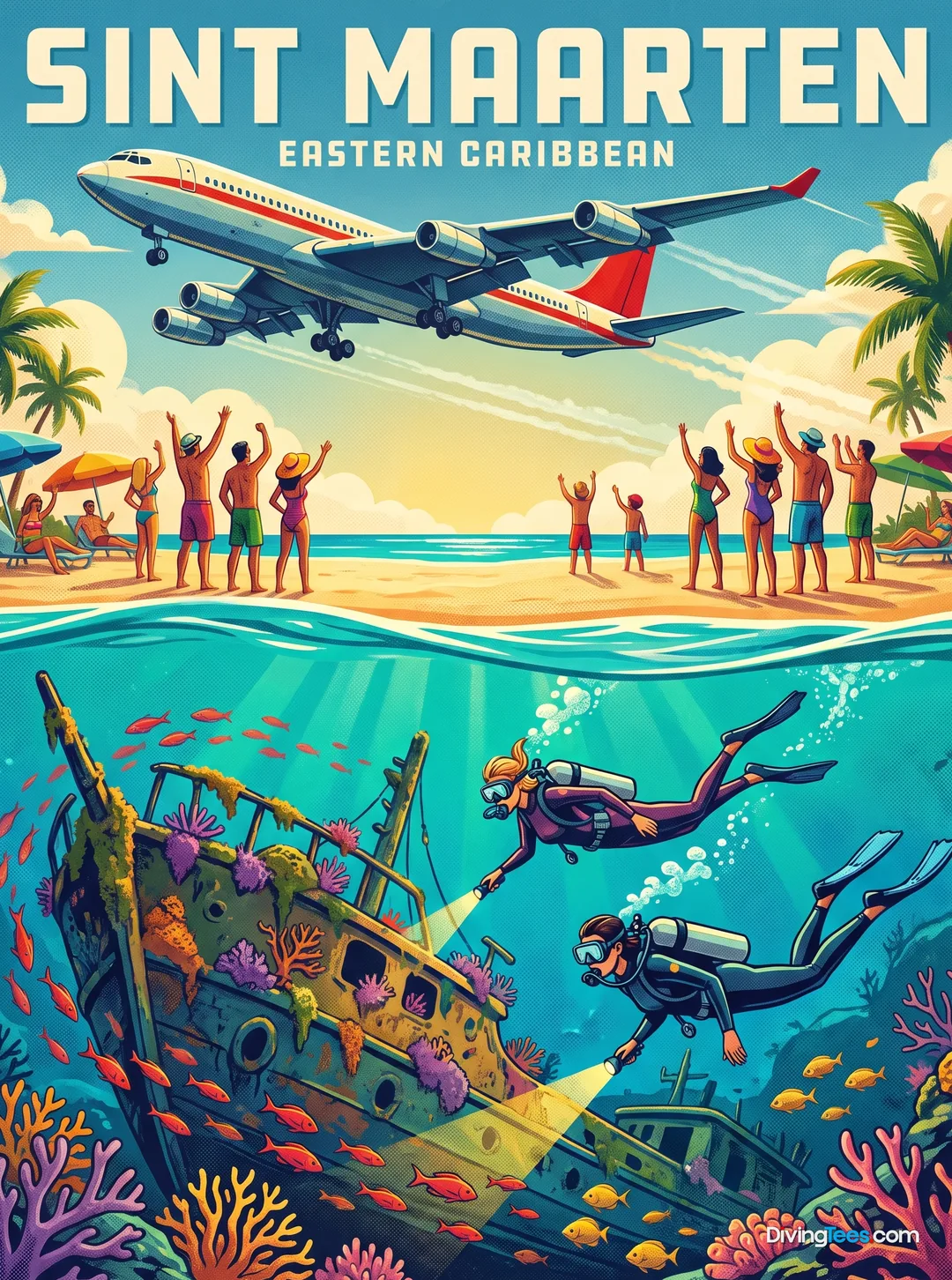
The route links St. Kitts, Saba and St. Maarten over 8 days and 7 nights, northbound from St. Kitts to St. Maarten or southbound in reverse. Saba is the underwater centrepiece: the island’s volcanic shape continues below the surface as pinnacles, seamounts, walls and finger reefs inside Saba Marine Park. St. Kitts changes the picture with wrecks, historic relics and coral labyrinths along the southern shore. Night dives add a different kind of site, where the reef becomes a search for smaller life rather than a wide daytime view. The boat can put divers directly onto some wrecks and reefs by giant stride, while the tender handles diver pickup where the site demands it. Optional land tours give the same islands a second reading above water, particularly historic St. Kitts and Saba.
Itineraries, dates and prices
Prices per person. Each month shows its lowest price: click a month, or pick an itinerary.
Next departures · 150 departuresfrom £1,638$2,189€1,956
October 2026
November 2026
December 2026
Green dot: a discounted departure that month. Discount calculated by us, against the boat's usual price for a trip of the same length.
See dates and prices
If you click these links and make a purchase on the partner site, DivingDeal may earn a commission, at no extra cost to you.
Dates and prices taken from Divebooker and liveaboard.com, updated 25 October 2026
Who puts you in the water
English is the working language for the crew and dive team. The guides organise the water work around the route, from reef and wreck dives to night entries, and pay attention to what individual divers want to see. Nitrox training and scuba certification courses are available onboard, so the boat also suits divers who want to add a qualification during the trip. Oxygen and first-aid kits are carried onboard, while the bridge has radio, GPS, radar and sonar. The published route is suitable for beginners and experienced divers alike.
The dive deck and the gear
The dive deck is built for repeated use: individual gear lockers, tank racks, air and Nitrox filling stations, a bathroom, a camera table with low-pressure air, and separate freshwater rinses for scuba equipment and cameras. A charging station supports cameras, strobes and batteries, useful on a route that includes wrecks, reefs and night dives. The onboard Nitrox system produces 32% Nitrox, available as an optional extra rather than included by default. DIN adapters are available, and rental equipment can be arranged onboard. Divers enter from the platform and are collected by a 16-foot rigid-hull inflatable with a 25 hp engine, which also handles passenger transport. Some sites allow a giant stride directly from the liveaboard.
Between dives
Between dives, the choice is simple: stay in the cool salon, move out to the sundeck, or settle at the boat’s relaxation areas and watch the islands pass. The salon’s video library, audio and video equipment, library and lounge give non-divers and tired divers somewhere to disappear for an hour. Cameras have their own room and separate freshwater rinse, so wet gear does not take over the social spaces. When the itinerary allows time ashore, optional excursions visit historic sites on Saba and St. Kitts. Those breaks change the pace without pretending the boat is anything other than a dive platform with a comfortable place to recover.
A day on board
The day begins with breakfast, then the first two dives arrive in the morning with a snack between them. Lunch at 12:30 pm breaks the first half of the day before two afternoon dives, again separated by food and surface time. Dinner follows around 6:30 pm, giving the group a proper pause before the night dive. That final entry changes the feel of the day: the deck is darker, the search becomes slower and more deliberate, and hot cocoa is waiting when divers climb back aboard. Across the trip, the rhythm can reach five dives a day, including the night dive. The order is what makes the week work—eat, dive, recover, dive again, then decide whether the fifth entry is worth staying up for.
What you eat aboard
Food follows the diving rather than interrupting it. Breakfast is served from 7 to 8 am, with a cold option for late risers, then two morning dives separated by a snack such as fresh-baked pastry or cookies. Lunch comes at 12:30 pm before the two afternoon dives, and dinner is served around 6:30 pm, followed by dessert. The cooking combines local recipes, American favourites and dishes created by the chef, with Western and local food on the menu. Vegetarian and vegan options are available. Snacks continue through the day, and hot cocoa follows the night dive. Alcoholic and non-alcoholic drinks are included; beer and wine are available, with wine served at dinner. On a five-dive day, that timing is not decoration. It is the structure that keeps the group fed without making divers wait around hungry.
Nights at sea
The nine staterooms are air-conditioned and have private bathrooms, with a porthole for outside light. They are compact rooms designed for sleeping between dives, not for spending the afternoon in bed. That matters less when the main salon is cool, the sundeck has loungers and the dive deck is where most of the useful living happens. The salon is semi-enclosed and air-conditioned, with dining tables, a lounge area, television, CD/DVD entertainment, a video library and a light table. A cabin gives privacy; the shared spaces carry the trip. After a night dive, the boat offers somewhere cool to sit, dry off and talk before turning in.
Staterooms
What to know before boarding
Northbound trips run from St. Kitts to St. Maarten; southbound trips run from St. Maarten to St. Kitts. Airport transfers can be arranged as an optional extra. Arriving the night before embarkation is the sensible choice, especially when flights connect through another island or delays would otherwise put the boat at risk.
Deck plan
What the boat does for the ocean
Caribbean Explorer II is certified as a Green Fins eco-liveaboard. The certification means the vessel has committed to the Green Fins Code of Conduct and met a minimum environmental-performance standard during its annual assessments.
- Year built
- 1978
- Year renovated
- 1999
- Length
- 35.1 m
- Beam
- 6.1 m
- Maximum number of passengers
- 18
- Number of cabins
- 9
- Number of bathrooms
- 9
- Engines
- 2 × GM 12 V 71 450 hp each
- Tenders
- 4.9 m rigid-hull inflatable (25 hp engine)
- Website
- explorerventures.com ↗
Hello, I'm Marina, DivingDeal.com's AI assistant. I answer in detail about hotels, dive centres and liveaboards.
Thinking about the whole trip and the flights? Talk it over with Edith →
Marina is an AI. Some links are affiliate links: DivingDeal may earn a commission, at no extra cost to you. Bookings are made with the partner.