
FlyingFish Scuba School, Puneet Gautam
Google 4.8/5 (697 reviews)
India · Indian Ocean
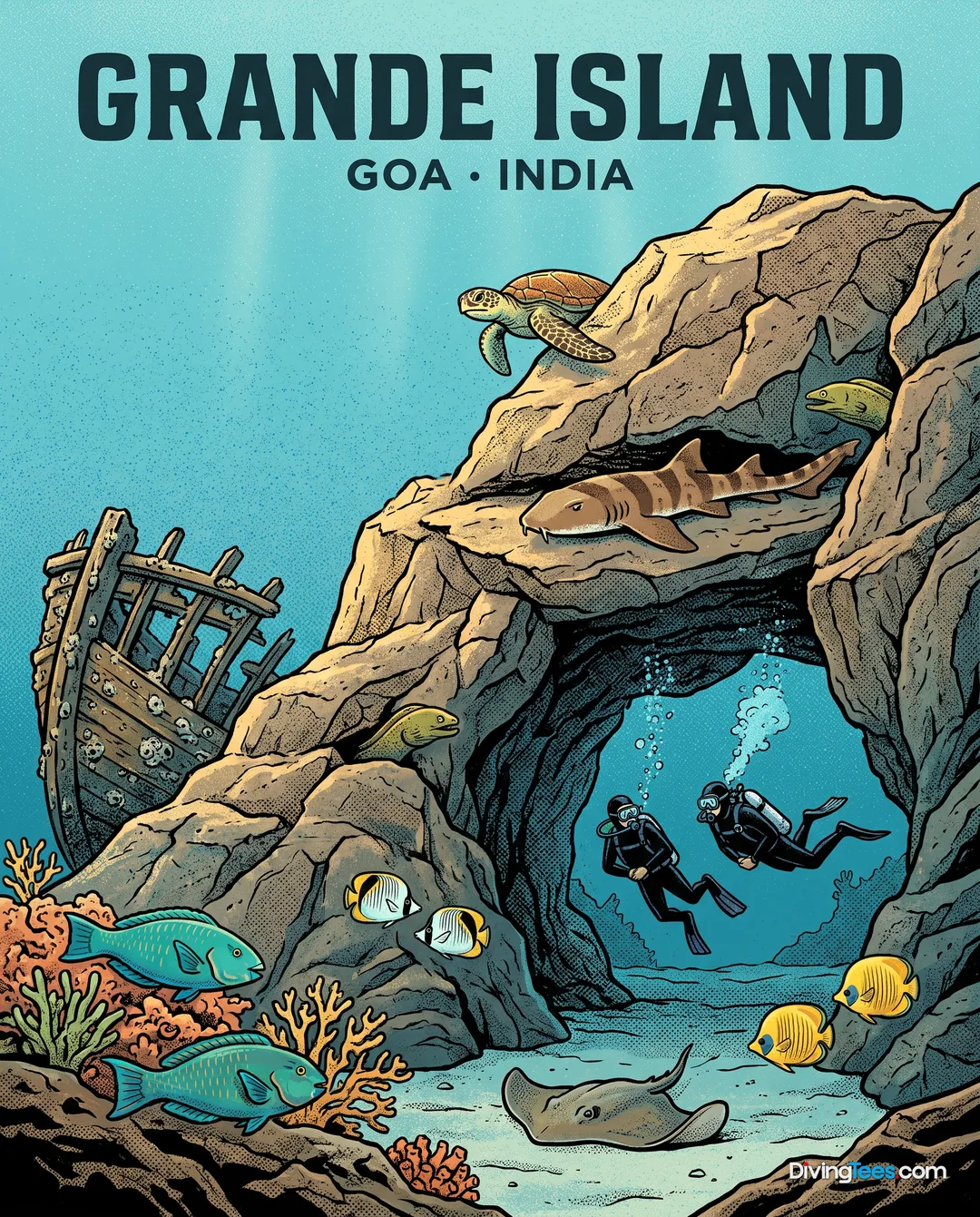
Grande Island brings reefs, accessible wrecks, tropical fish and eels into 8–20 metres, with Goa’s beaches, heritage sights and river outings close at hand.
For subtitles in English: start the video firstthen click the gearat the top right of the video, select “Subtitles/CC”, then “Auto-translate” and choose “English”.
Grande Island gives Goa its clearest underwater reference point: reefs and accessible wrecks descending through 8–20 metres, close enough for a straightforward day boat from the coast. This is not a remote diving outpost or a liveaboard itinerary. Goa works better as a beach-and-sightseeing holiday with diving fitted into the middle of the stay. The arrangement suits divers who want warm-weather travel, manageable depths and time ashore, provided they accept a seasonal sea and visibility that can be modest.
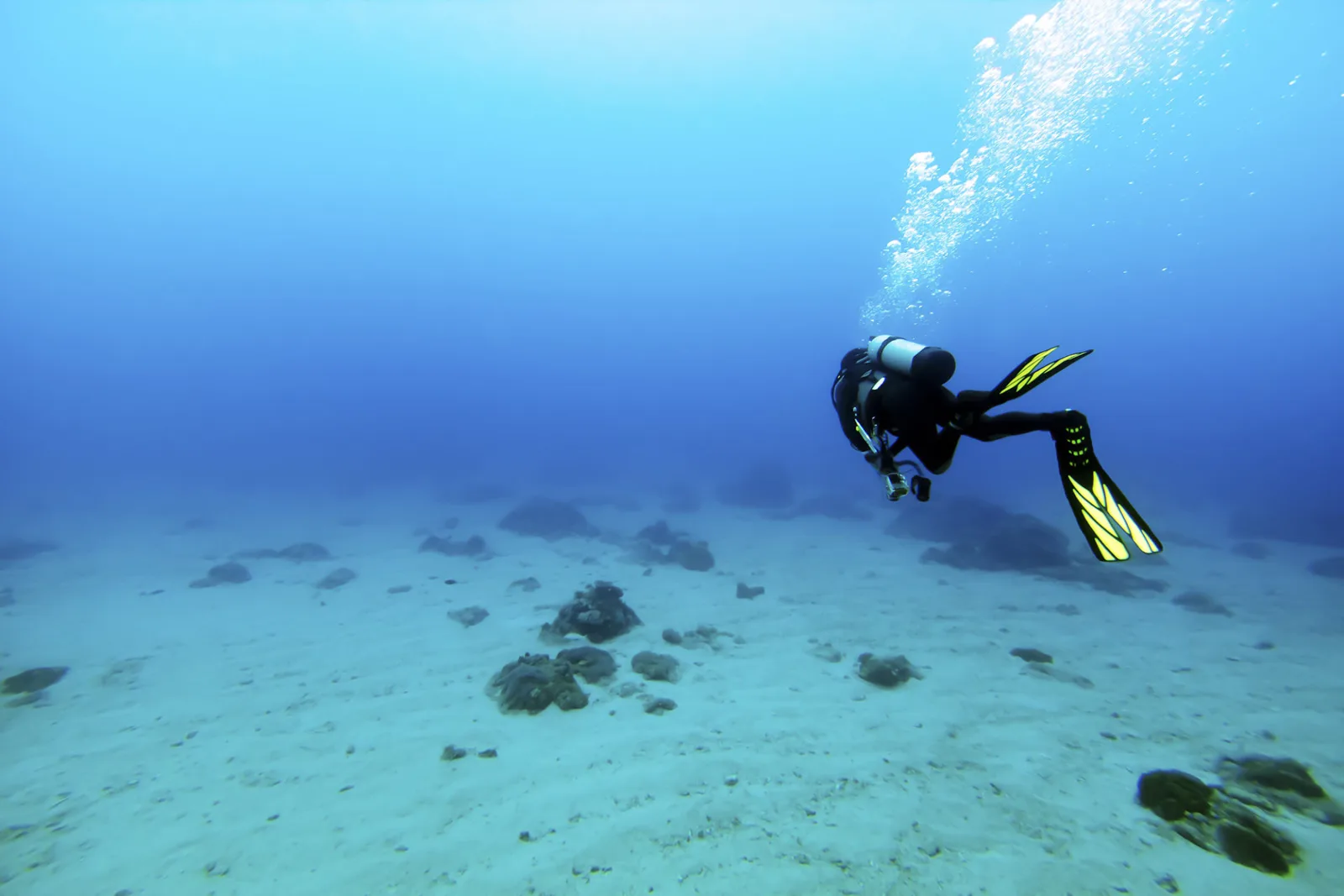
Goa is predominantly boat diving, with local operators running day trips to offshore reefs, islands and wrecks rather than relying on an extensive shore-diving network. Grande Island is the most tangible example: depths of roughly 8–20 metres keep the profile within reach of Open Water divers, while reefs and wrecks give the dive some structure beyond a simple fish survey. Currents are variable, so an apparently easy site can still require attention to the descent, the line and the return to the boat. Visibility around Grande Island is commonly about 3–8 metres and may fall further when swell, runoff or suspended sediment affect the water. Early departures are generally the sensible choice, before boat traffic builds and conditions become less settled. Expect individual site decisions to change with the day, not a fixed sequence of dives.
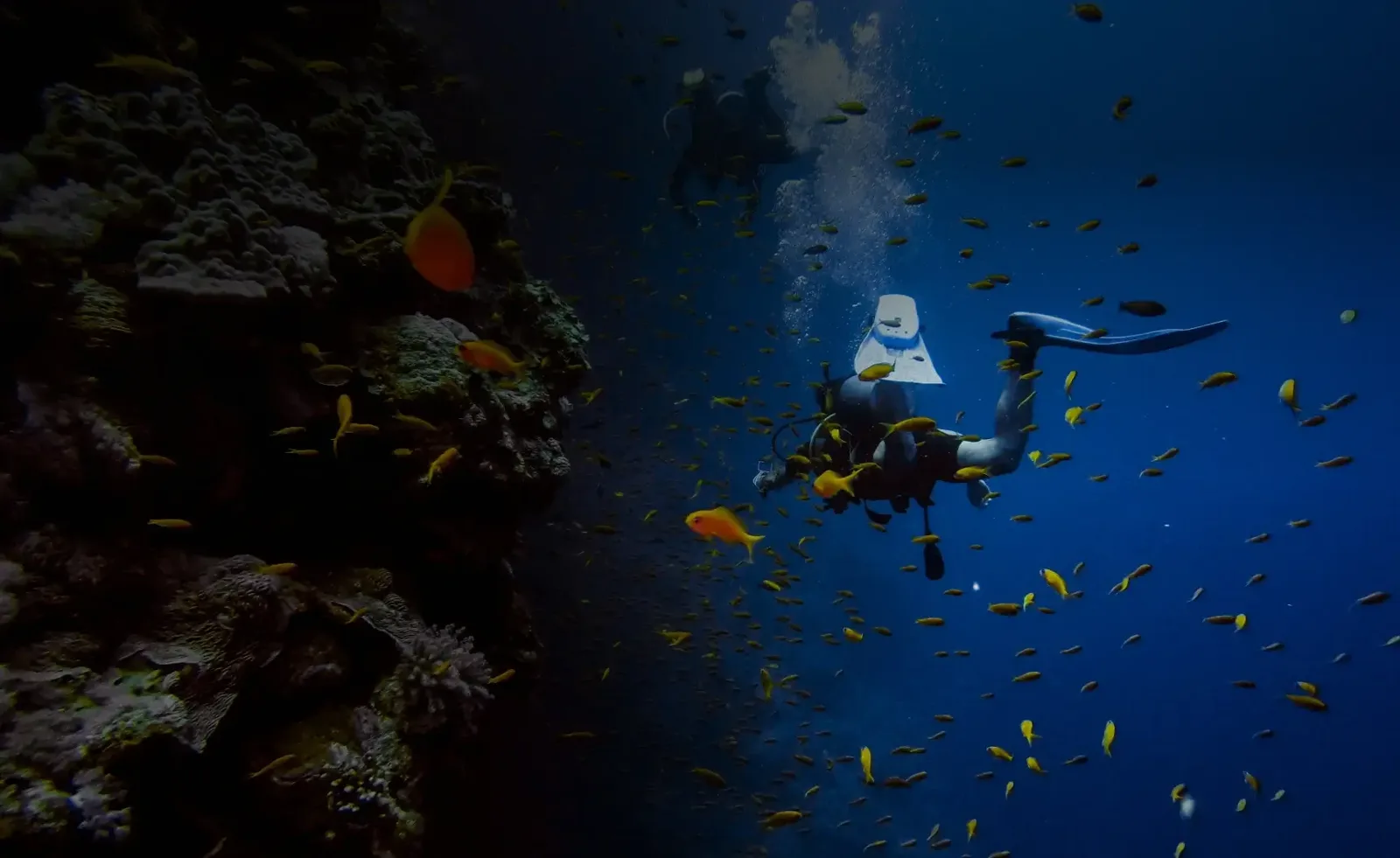
Grande Island’s underwater life is described in practical rather than spectacular terms: tropical fish move across the reef, while eels occupy cracks and shelter around the structure. The mixture of natural reef and wreck gives divers two different things to watch for: fish movement over open surfaces and the more patient search of holes, edges and shadowed sections. Occasional larger marine life is possible, but it is a bonus rather than a dependable reason to book a particular day. The available site information does not attach named species to a particular month, so Goa is best approached for its combination of reef life, eels and the chance of something bigger, rather than as a seasonal wildlife safari.
The measured calm-water and lower-rain period runs from October through May, while the practical diving season is concentrated from October to March. The reason is the southwest monsoon: from June to September, swell, rain and runoff disrupt boat operations and put more sediment into the water. Post-monsoon conditions offer the most workable compromise for offshore diving, with winter months generally the safer choice for planning several dive days. October to March is also the period when visibility is expected to be at its most useful, although no fixed range should be assumed. Outside the main window, the problem is not simply less pleasant water; boat departures may be limited or cancelled.
Goa is suitable for all levels, particularly on the 8–20 metre profiles around Grande Island. Open Water divers can find manageable depths, but should be comfortable with boat procedures, limited visibility and the possibility of current. Advanced Open Water is useful rather than essential when conditions or site choice demand more independence. Nitrox is worth considering for repetitive day-boat diving, where several dives may be planned close together. The same advice applies across PADI, SSI and BSAC qualifications: experience in variable visibility matters more than collecting another speciality card.
From London Heathrow, London Gatwick or Manchester, allow roughly 12–16 hours in total, normally with a connection before the final flight into Goa’s main airports. The journey is therefore a multi-leg trip rather than a simple direct run, and the connection deserves some margin when building the itinerary. Once on the coast, divers usually reach the departure point by taxi; those staying on the main beach strips may be able to walk to the local dive centre. Exact transfers depend on the chosen beach base. Some departure points may also involve a ferry or boat crossing from a river or island access point, so the final leg is not identical for every Goa diving area.
Treat Goa as a weather-sensitive block of diving, not the one fixed feature of the holiday. Keep a spare day in the plan so a marginal sea state can move the boat programme without wrecking the rest of the trip. The first dives of the day are usually the soundest bet: calmer water, less boat traffic and a better chance of making the most of limited visibility. Nitrox is particularly practical if several repetitive day-boat dives are planned. Choose a base with access to more than one offshore option, because current and visibility can make one site less attractive on a given morning. The main trap is expecting a tropical reef safari; Goa is site-by-site, seasonal and mixed with ordinary coastal tourism. Put demanding sightseeing after the dive block rather than immediately before the flight home, and do not build a diving itinerary around June to September, when monsoon conditions can remove the boat option altogether.
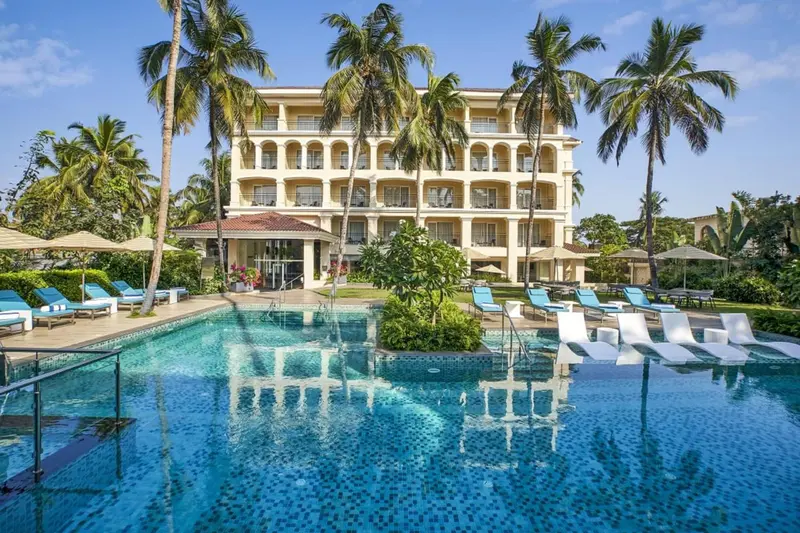
Five to seven days allows a sensible run of diving without making the holiday entirely dependent on the sea. A typical stay combines morning boat dives with unhurried afternoons on the beach or in Goa’s heritage areas. Old Goa provides a strong land-based counterpoint to the offshore sites, while river or backwater-style boat outings fill a non-diving day. Non-divers are well served, which makes Goa practical for couples or mixed groups. The diving should sit inside the holiday, not dictate every day of it.
Hello, I'm Marina, DivingDeal.com's AI assistant. I guide you through destinations, areas and countries.
Thinking about the whole trip and the flights? Talk it over with Edith →
Marina is an AI. Some links are affiliate links: DivingDeal may earn a commission, at no extra cost to you. Bookings are made with the partner.
Your last day stays dry: no diving in the 18-24 hours before a flight, the perfect window to see the destination from another angle.
 Culture
⏱ 6 h · ★ 5.0 (70 reviews)
from £81$108€96
see on Viator ↗
 Culture
⏱ 7 h · ★ 5.0 (33 reviews)
from £35$47€42
see on Viator ↗
 City
City⏱ 7 h · ★ 5.0 (7 reviews)
from £78$104€93
see on Viator ↗
 City
City⏱ 3 h · ★ 5.0 (6 reviews)
from £49$66€59
see on Viator ↗
Ratings and reviews collected by Viator and Tripadvisor.
Plan diving in Goa mainly from October through March, when offshore conditions are generally more workable and visibility is expected to be at its most useful. The southwest monsoon from June to September can bring swell, rain, runoff, cancelled departures and extra sediment. October through May is generally calmer overall.
Goa suits divers of all levels, particularly around Grande Island, where depths remain manageable for Open Water divers. You should still be comfortable with boat procedures, limited visibility and possible current. Advanced Open Water training is useful when conditions or site choices require more independence, but it is not essential.
Diving in Goa offers Grande Island reefs and accessible wrecks, with tropical fish moving across the reef and eels sheltering in cracks and around structure. Natural reef and wreck sites provide different areas to explore. Occasional larger marine life may appear on offshore boat dives, but it is not dependable.
Build Goa as a beach and sightseeing holiday with diving fitted into the middle of your stay. Keep a spare day in case weather changes the boat schedule, choose a base with access to more than one offshore option, and favour early departures. A typical stay combines morning boat dives with beaches, heritage areas or river outings.