Indian Ocean
India: Goa and Andaman island diving
From Velha Goa’s baroque churches to Havelock’s offshore reefs, India joins a continental journey with island diving reached through Port Blair and ferry.
What makes this country unique
- Goa’s Konkan coast and its Portuguese Catholic heritage
- Havelock between January and April
- Barracuda and giant trevally around Havelock
- Fish curry rice with coconut and tamarind
- Port Blair’s Cellular Jail and ferry harbour
- Grande Island’s wreck and rocky reefs
- Mapusa Friday Market beyond the beaches
For subtitles in English: start the video firstthen click the gearat the top right of the video, select “Subtitles/CC”, then “Auto-translate” and choose “English”.
This country for a diver
India is a country of contrasting dive settings rather than one continuous coast. Goa places boat diving around Grande Island alongside a mature mainland holiday base, while Havelock brings a more isolated Andaman experience reached through Port Blair. Across both areas, the diving is boat-led, suitable for all levels, with variable current, moderate tourism pressure and mixed reef health. The common thread is flexibility: conditions and site choice matter more than a single signature reef, and the wider journey can be as distinctive as the underwater days.
How the country divides
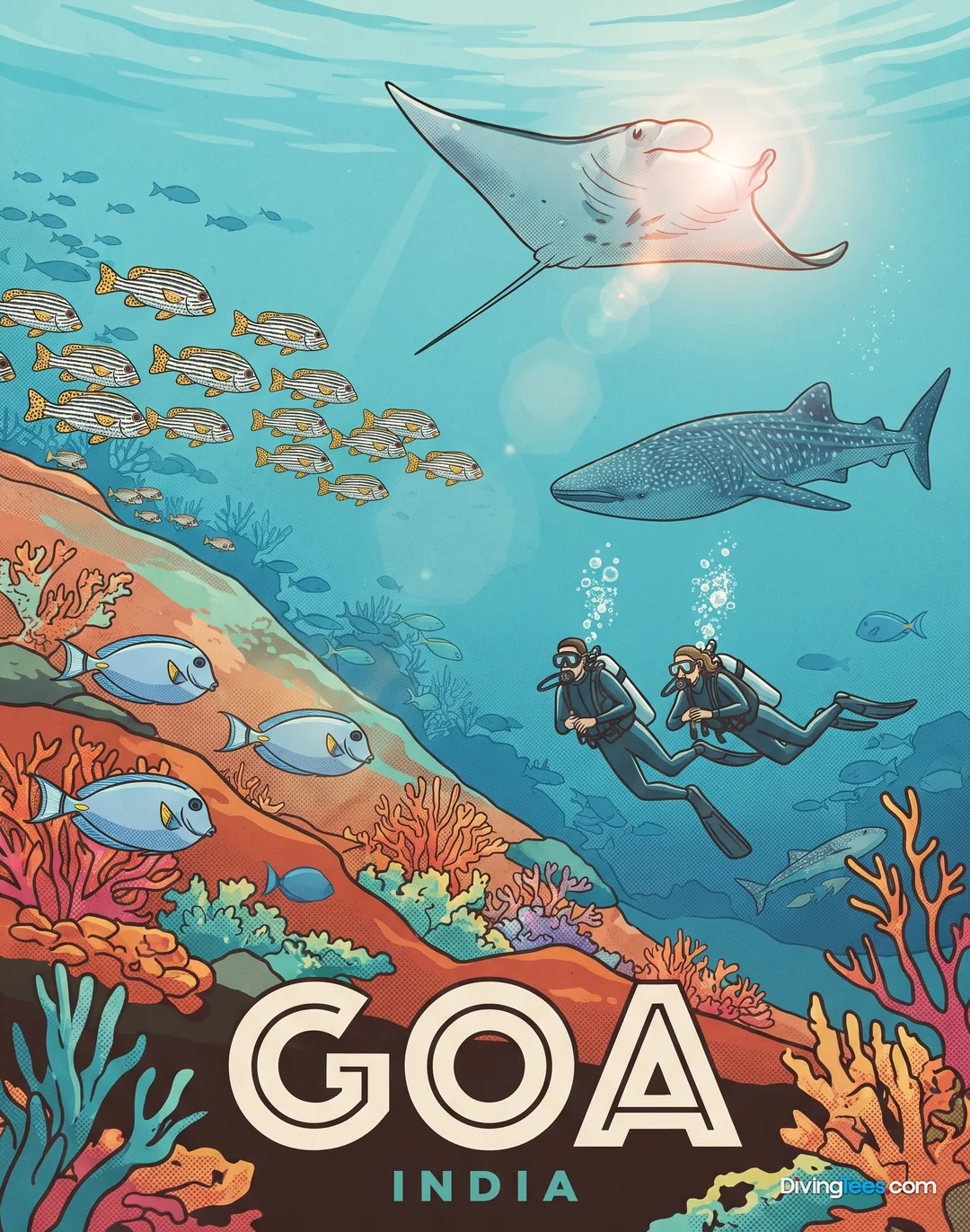
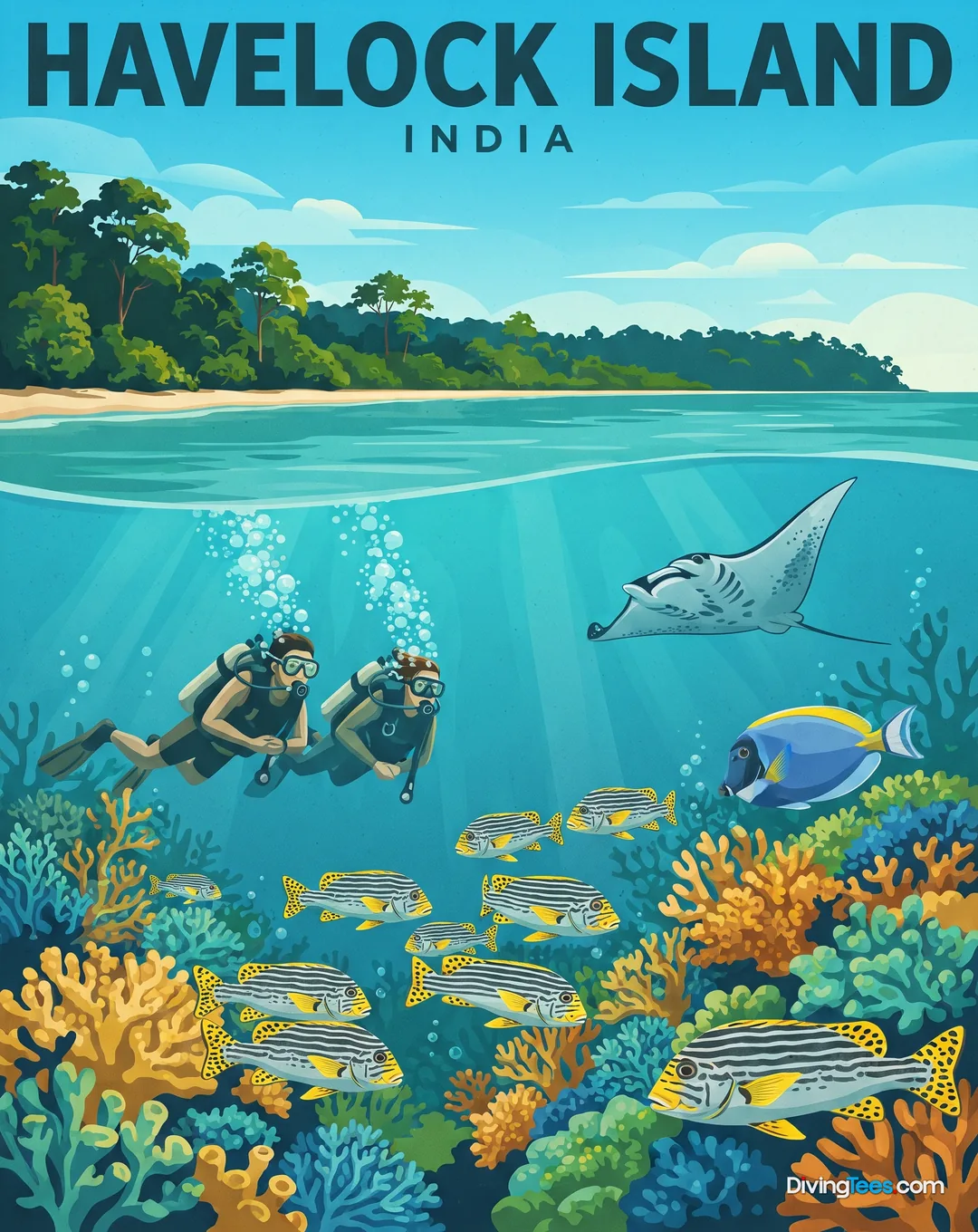
India divides naturally between Goa on the western Konkan coast and Havelock in the Andaman Islands. Goa is the easier mainland choice: its diving is organised around Grande Island, with nearby wreck and reef outings, while Panaji, Margao and the Portuguese heritage of Velha Goa provide a substantial land-based stay. Havelock is for divers who want the island itself to shape the trip. Reaching it means travelling through Port Blair and taking a ferry, but the reward is a more remote base with offshore sites such as The Wall and Pilot Reef. Goa’s season runs from October to May, making it the broader seasonal option. Havelock is open from January to April, better suited to a shorter, deliberately timed Andaman block. Neither should be treated as a quick add-on to a mainland itinerary: they offer different travel rhythms as well as different diving contexts.
Diving destinations
Dive centres

Hotels
When to go, and where by month
January through April is the useful overlap, when both Goa and Havelock are in season. That gives the traveller a choice between staying on the mainland and making the island journey, or combining the two with enough time allowed for transfers. Goa remains in season through May, whereas Havelock’s window closes after April. The calendar then falls quiet from June through September, the monsoon-sensitive part of the year when a fixed boat-diving plan becomes harder to protect. Goa reopens from October, continuing through November and December, while Havelock is not part of that later window. In practical terms, Goa is the more forgiving choice for an autumn or early-winter trip; Havelock belongs to the first four months of the year. The shared January-to-April period is therefore not simply a peak-season overlap: it is the only period in which the two areas can sensibly be considered together for one itinerary.
Marine life, coast by coast
The wildlife picture is weighted towards Havelock rather than shared evenly across the country. Around Havelock, divers may encounter barracuda, giant trevally, bigeye trevally, grouper and morays, with dolphins adding an open-water possibility. The reef scenery also includes hard and soft coral, gorgonians and coral growth, giving the area a broader natural focus than a simple wreck stop. Seahorses, triggerfish, fusiliers and Moorish idols add interest for slower searches between the larger fish. Goa’s country-level appeal is better read through its reef and wreck setting, whereas Havelock is the place to choose when marine-life variety is an important part of the itinerary.
Getting between the areas
Goa and Havelock are separated by 2,111 kilometres, and they do not form a simple adjoining dive circuit. There is no direct flight from Goa to Havelock: the journey runs through Port Blair, followed by a ferry of roughly ninety minutes to the island. The return follows the same chain. In a two-week holiday, combining one week in Goa with one week in Havelock costs at least two full days in transfers once airport travel, connections and the ferry are included. The Indian railway can help with mainland travel to or from Goa, but it does not reach the Andaman Islands. Leave margin in Port Blair rather than building a tightly timed connection, particularly when the island block contains several planned boat days.
Take off your mask
India’s land experience changes sharply between Goa and the Andaman. Around Panaji, Fontainhas brings coloured houses and wooden balconies, while the Mandovi waterfront mixes cafés, local ferries and casino boats. Velha Goa offers baroque churches including the Basilica of Bom Jesus and Sé Cathedral. For everyday food, Panaji, Margao and Mapusa have neighbourhood restaurants serving fish curry rice, while taverns are the place for pork vindaloo, chicken cafreal, xacuti and sorpotel. Bebinca and sannas belong to Goa’s Catholic table, and feni made from cashew or coconut is the local drink to encounter there. Mapusa Friday Market and Panjim Municipal Market show the working side of the state; Anjuna and Arpora are more visitor-facing. Port Blair brings the Cellular Jail and the ferry waterfront, while Havelock’s restaurants serve seafood thalis, Bengali and Tamil curries, fish, prawns and crab. Diwali, Holi and the Goa Carnival animate the wider calendar, with Christmas and Easter especially visible in Goa’s Catholic communities.
What holds true everywhere here
The practical constant is to build flexibility into a boat-diving holiday in India. Goa needs more than one offshore option because a change in visibility or current can affect the day’s choice; Havelock needs slack around the Port Blair ferry connection. Several consecutive diving days are more resilient than a single short block, particularly during a monsoon-sensitive window. Nitrox, where available, suits repetitive boat days better than collecting specialist qualifications for their own sake. Good buoyancy matters at both areas: reef contact damages the mixed coral environment, while a downcurrent or drift dive demands calm control through the safety stop. Keep the most demanding sightseeing after the main dive block rather than compressing it around flights.
Frequently asked questions about India
When should you plan a diving trip to India?
For Havelock, plan your India trip between January and April, when the destination is highlighted for diving. You can combine island diving with time in Port Blair, whose Cellular Jail and ferry harbour are part of the itinerary, then continue by ferry to Havelock and its offshore reefs.
What kind of diving settings can you choose in India?
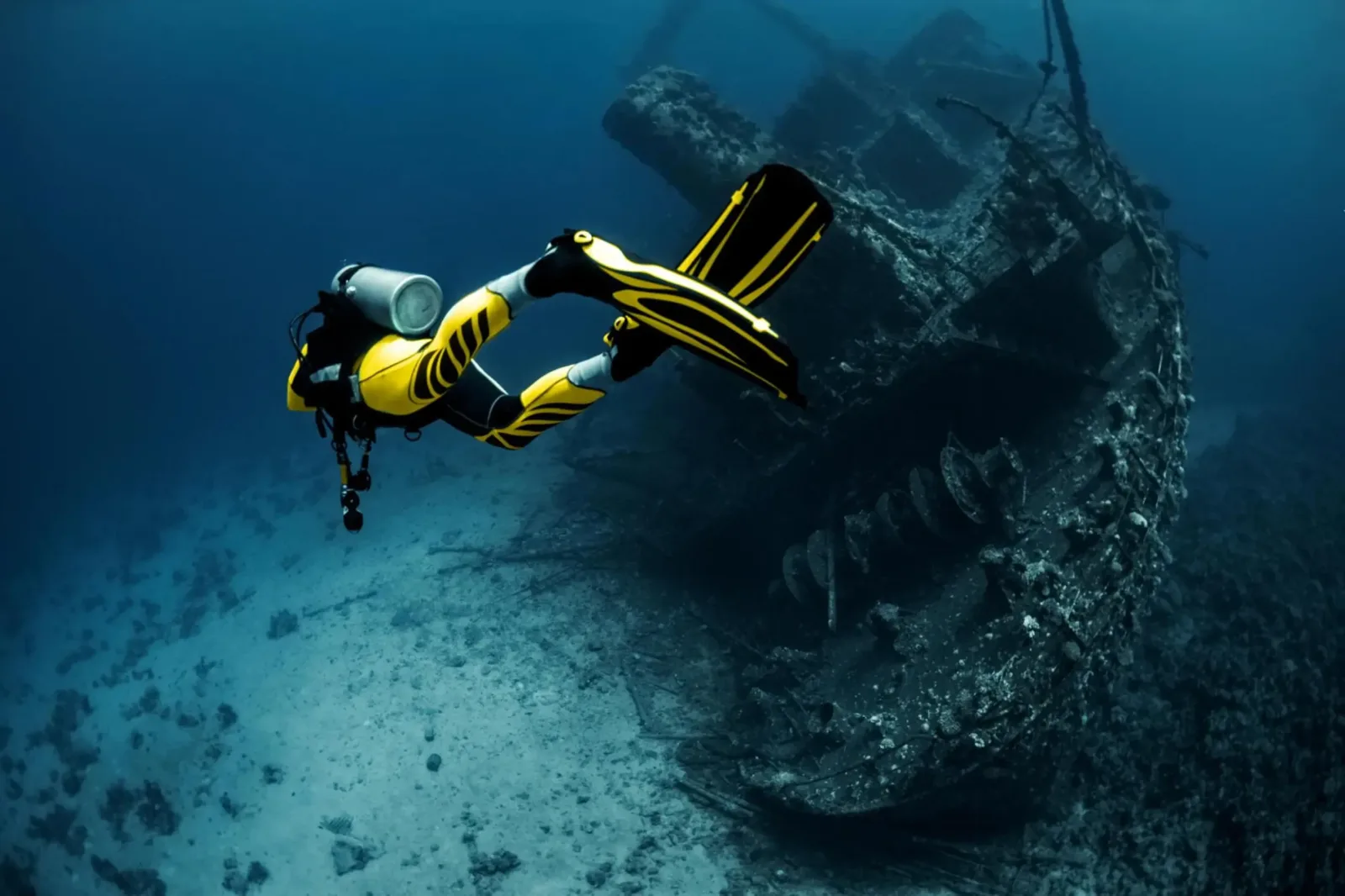
India gives you a mix of reef, wreck and rocky-reef settings. Around Goa, you can explore Grande Island’s wreck and rocky reefs, while Havelock offers offshore reefs with hard and soft coral, gorgonians and coral growth. Slower searches can reveal smaller reef life among these varied underwater environments.
What marine life might you see while diving in India?
Around Havelock in India, you may encounter barracuda, giant trevally, bigeye trevally, grouper and morays, with dolphins possible in open water. Seahorses, triggerfish, fusiliers and Moorish idols add variety, while hard and soft coral, gorgonians and coral growth shape the surrounding reef scenery.
How can you plan a diving stay in India?
Plan your India stay around the area you want to dive. Reach Havelock through Port Blair and its ferry harbour, and allow time for the island’s offshore reefs. In Goa, combine Grande Island’s wreck and rocky reefs with Velha Goa, Portuguese Catholic heritage and Mapusa Friday Market.