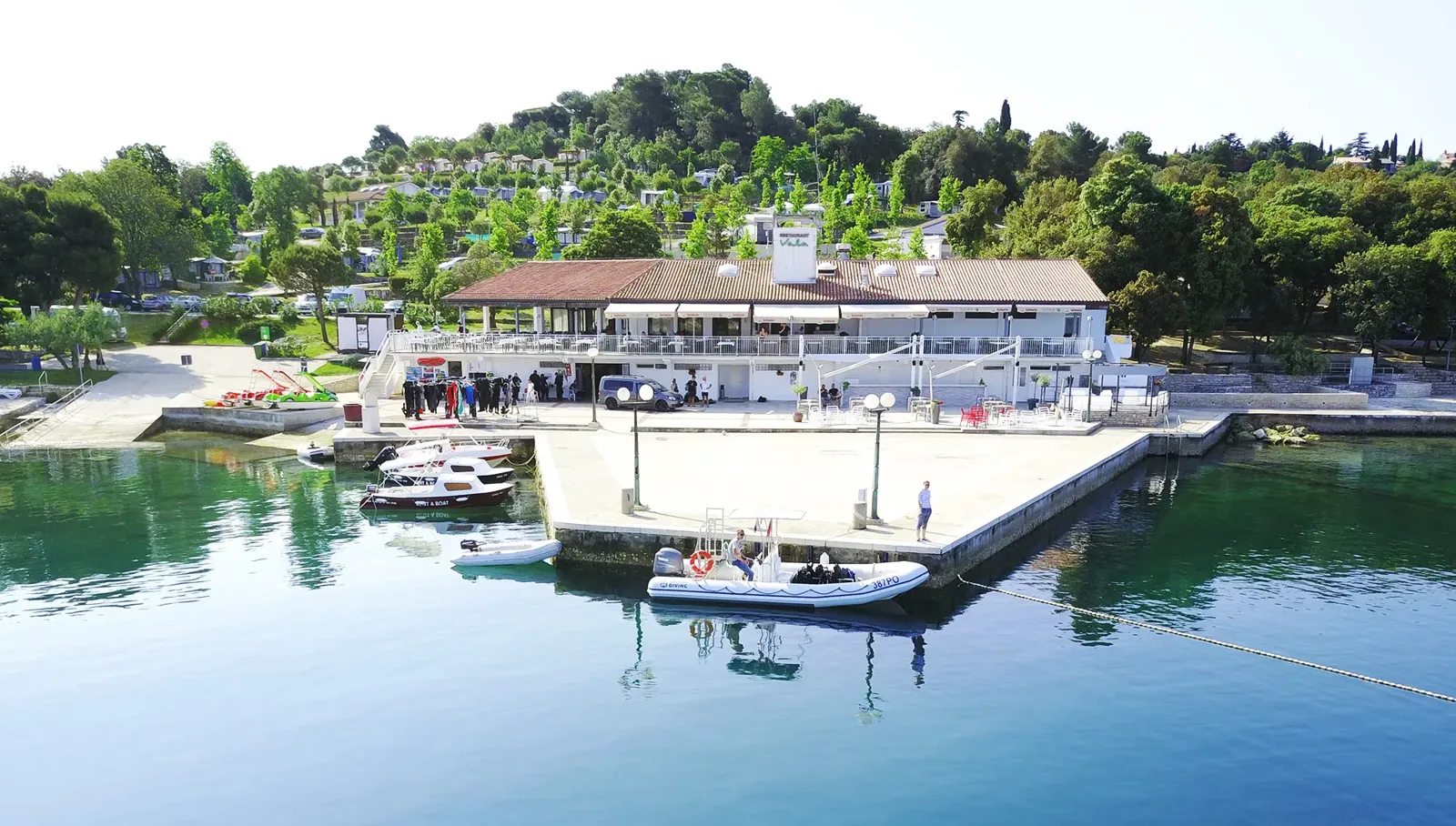

Triton Diving
Google 4.9/5 (151 reviews)
less than 1 km away as the crow flies
Istria · Croatia · Mediterranean
Max. depth · 37 mThe Giuseppe Dezza wreck offers a deep dive into history, with a split hull allowing exploration of both formidable bow and stern sections resting upright on the seabed.
For subtitles in English: start the video firstthen click the gearat the top right of the video, select “Subtitles/CC”, then “Auto-translate” and choose “English”.
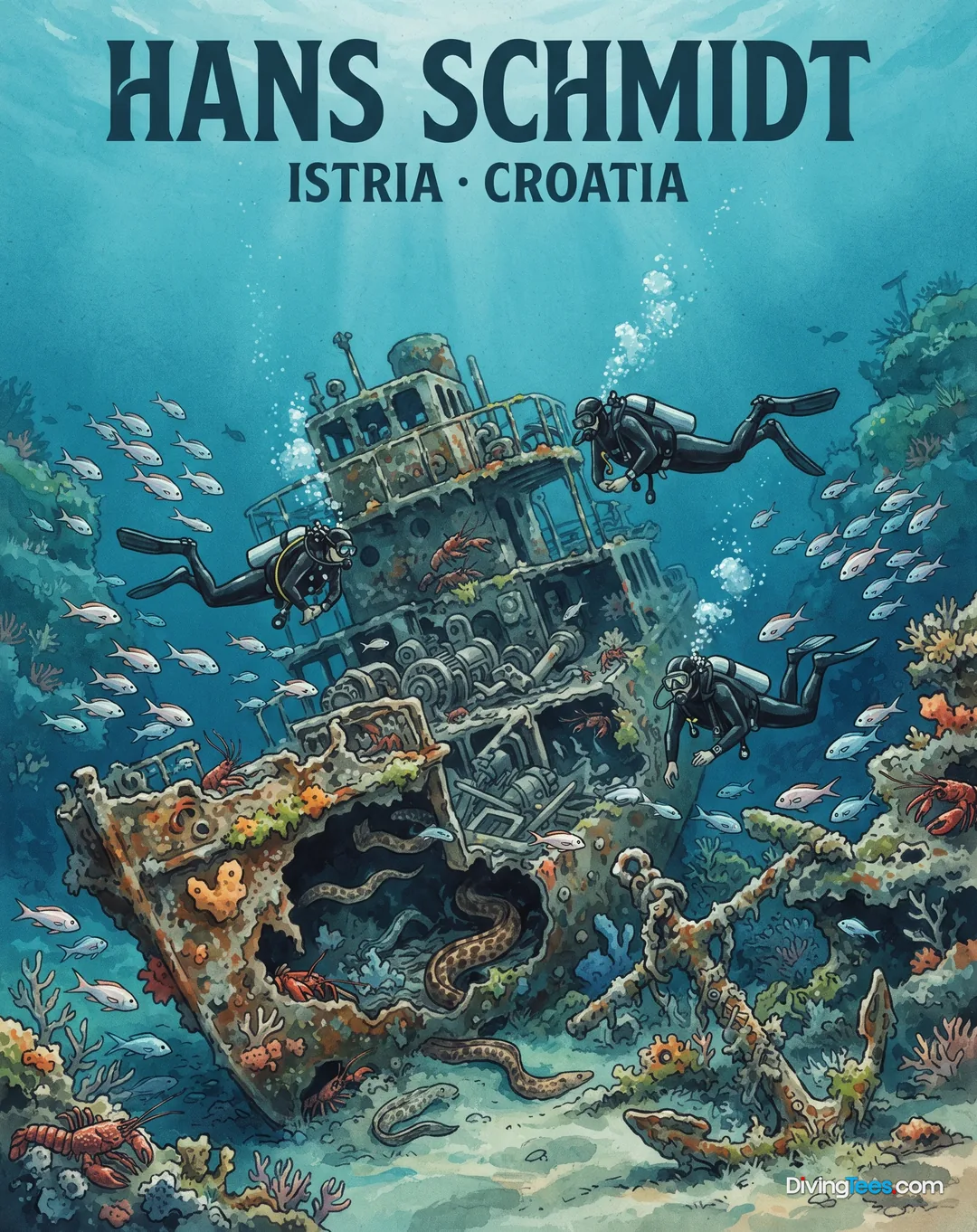
The Giuseppe Dezza, initially a fast destroyer named Pilade Bronzetti, now rests in two distinct sections on the seabed, a stark reminder of its wartime fate. Built in 1913 and later converted to a gunboat, it was eventually torpedoed in 1944. Its destruction cleaved the vessel, with the bow and stern sections now separated by approximately 50 to 100 metres, offering two separate but equally compelling dive targets for exploration.
Approaching the wreck, you'll first make out the outlines of the hull, largely intact and sitting vertically on its keel. The main deck of the intact stern section sits around 22 metres, with the deepest parts reaching 37 metres. For many, this stern is considered the primary attraction, featuring a prominent anti-aircraft gun and other military equipment still in position, providing clear historical detail.
The bow section, while slightly more challenging to reach for some without a scooter given the distance, also holds its own appeal. Both parts of the wreck are covered in a diverse array of marine growth including sponges and algae, which have claimed the metal as their own over decades. Navigation between the two main sections requires careful management of your bottom time, especially when considering the maximum depth.
As you move around the wreck, keep an eye out for resident marine life that has made the Giuseppe Dezza its home. Rockfish and lobsters are often found tucked within crevices or under overhangs, while schools of fish frequently patrol the wreck's superstructure. The presence of these species highlights the wreck's role as an artificial reef, adding a layer of ecological interest to its historical significance.
The sheer scale of the armament, particularly the large anti-aircraft gun on the stern, makes for iconic photographic opportunities. The wreck's integrity, despite being severed, allows for a clear understanding of its original design and function, presenting a tangible link to naval history that divers can observe up close. Attention to buoyancy is key, ensuring you maintain a respectful distance from the fragile structures and resident marine life.
The upright position of both wreck sections offers a unique experience, allowing you to trace the contours of the decks and gun emplacements as they would have been during its operational life. Descending along the mast or superstructure, you gradually take in the details, from ammunition remnants to various ropes that still hint at the ship's rigging, all framed against the deep blue of the Adriatic.
While internal penetration is not recommended or feasible, the external exploration of the Giuseppe Dezza is rich in detail. The interplay of light filtering through the water columns, coupled with the impressive scale of the vessel, creates a somber yet captivating atmosphere. This wreck isn't just a dive; it's a visit to a piece of history, preserved beneath the waves, welcoming divers who appreciate detailed exploration over confined spaces.
This site is classified for advanced divers due to its depth, which ranges between 32 and 37 metres. The top of the wreck's deck begins closer to 22 metres. The best period for diving the Giuseppe Dezza is typically from April to September, when conditions are generally more favourable for deeper dives.
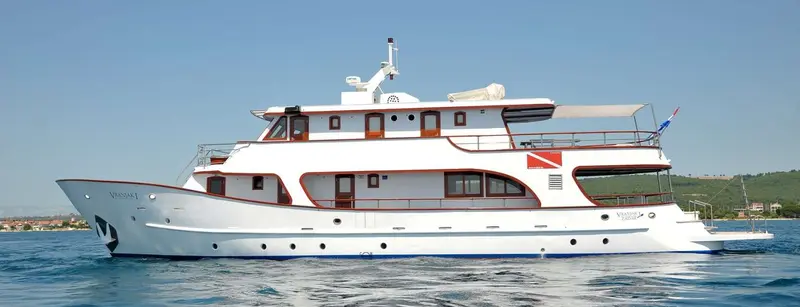
One liveaboard runs trips to Istria.
The best period for diving Giuseppe Dezza is typically from April to September, when conditions are generally more favourable for deeper dives. This timing suits the wreck’s depth and allows you to explore its two distinct sections, which rest upright on the seabed as separate dive targets.
Giuseppe Dezza is classified for advanced divers because of its depth. You can explore the wreck externally, with the deck beginning around 22 metres and the deepest areas reaching 37 metres. Careful management of your bottom time and buoyancy is important, particularly when considering the distance between the two sections.
Giuseppe Dezza lies between 32 and 37 metres, while the top of the wreck’s deck begins closer to 22 metres. Both sections sit upright on their keels, giving you a chance to follow the deck contours and superstructure while managing depth and bottom time during the dive.
On Giuseppe Dezza, you can see two largely intact wreck sections, an anti-aircraft gun and other military equipment. Sponges and algae cover the metal, while rockfish and lobsters shelter in crevices and under overhangs. Schools of fish patrol the superstructure, adding marine life to the historic wreck.