
Adriatic Diving Center
★ 4.8/5 (160 reviews)
less than 1 km away as the crow flies
Croatia · Mediterranean
Upright wartime wrecks, lobster-filled steelwork, rocky walls and shallow caves shape Istria's diving from Pula to Rovinj and Kamenjak.
For subtitles in English: start the video firstthen click the gearat the top right of the video, select “Subtitles/CC”, then “Auto-translate” and choose “English”.
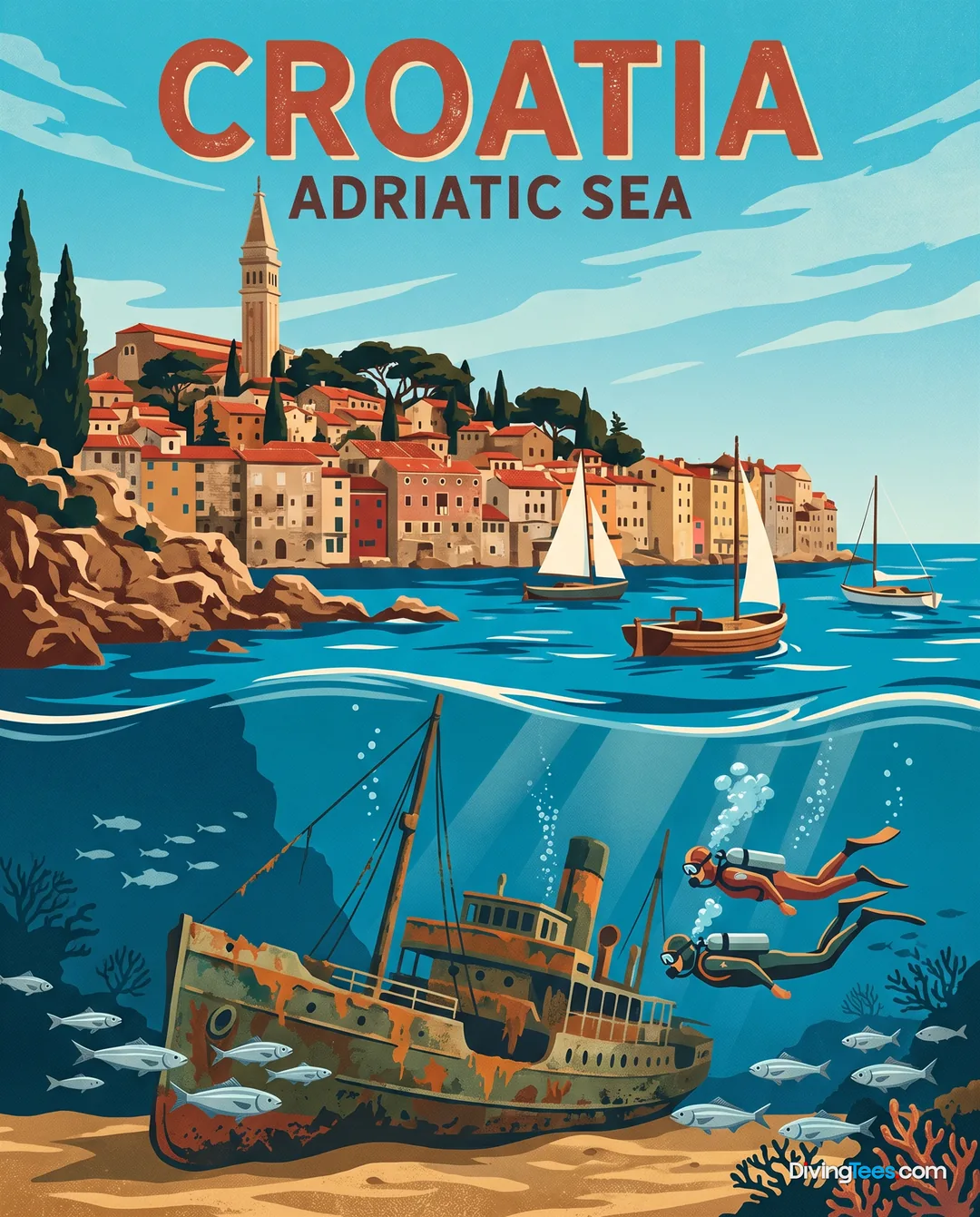
Istria is a coastal diving holiday built around maritime history. From bases near Pula, Rovinj, Vrsar, Rabac and Umag, boats reach wartime wrecks while shore dives around Kamenjak and Pula provide caves, tunnels and rocky ground. The diving suits a mixed group: beginners can stay close to shore, while experienced divers can work through deeper wreck profiles such as Baron Gautsch, Hans Schmidt and Varese. On land, Roman Pula, Rovinj's old town and the inland villages make sensible companions to a week in the water.
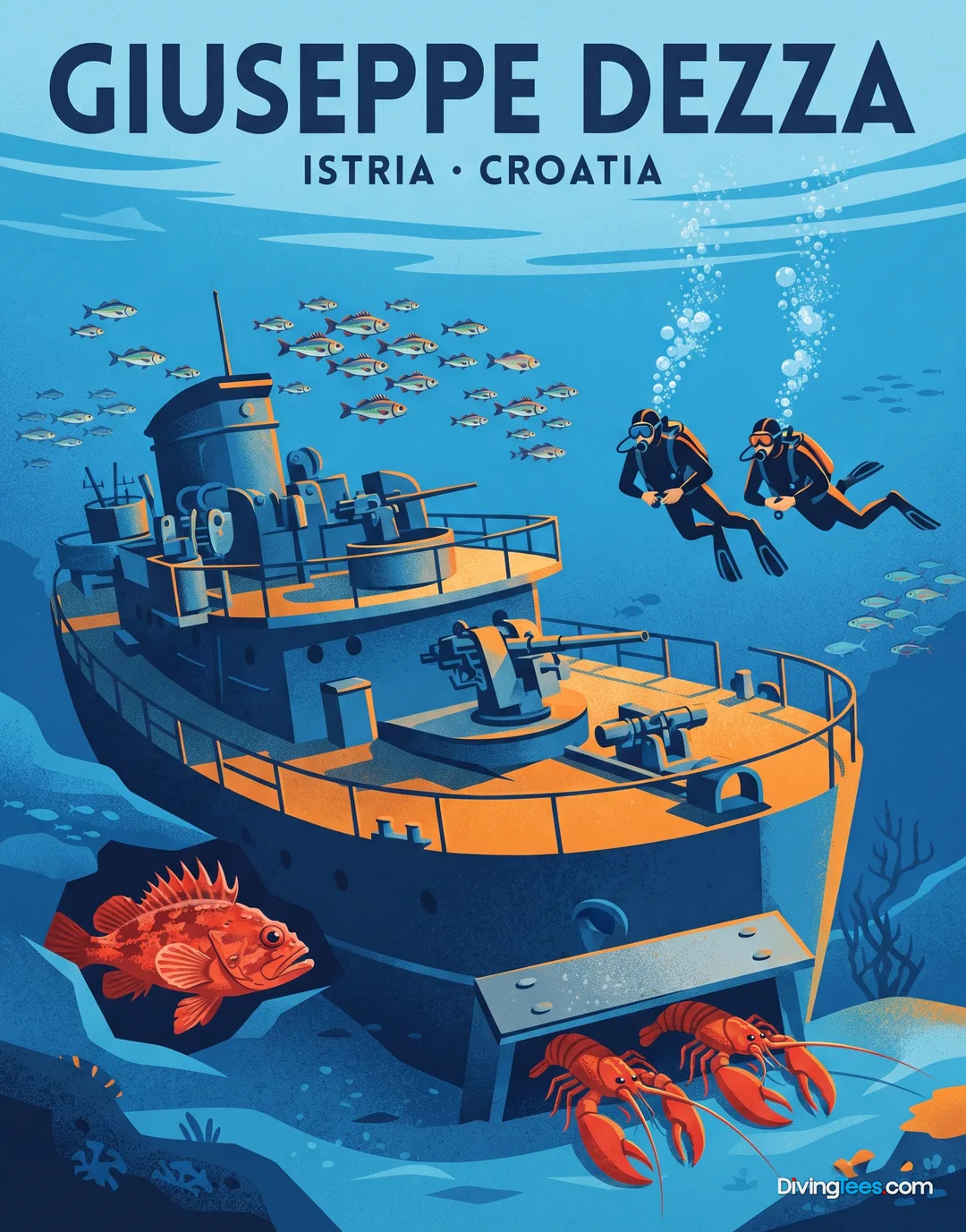
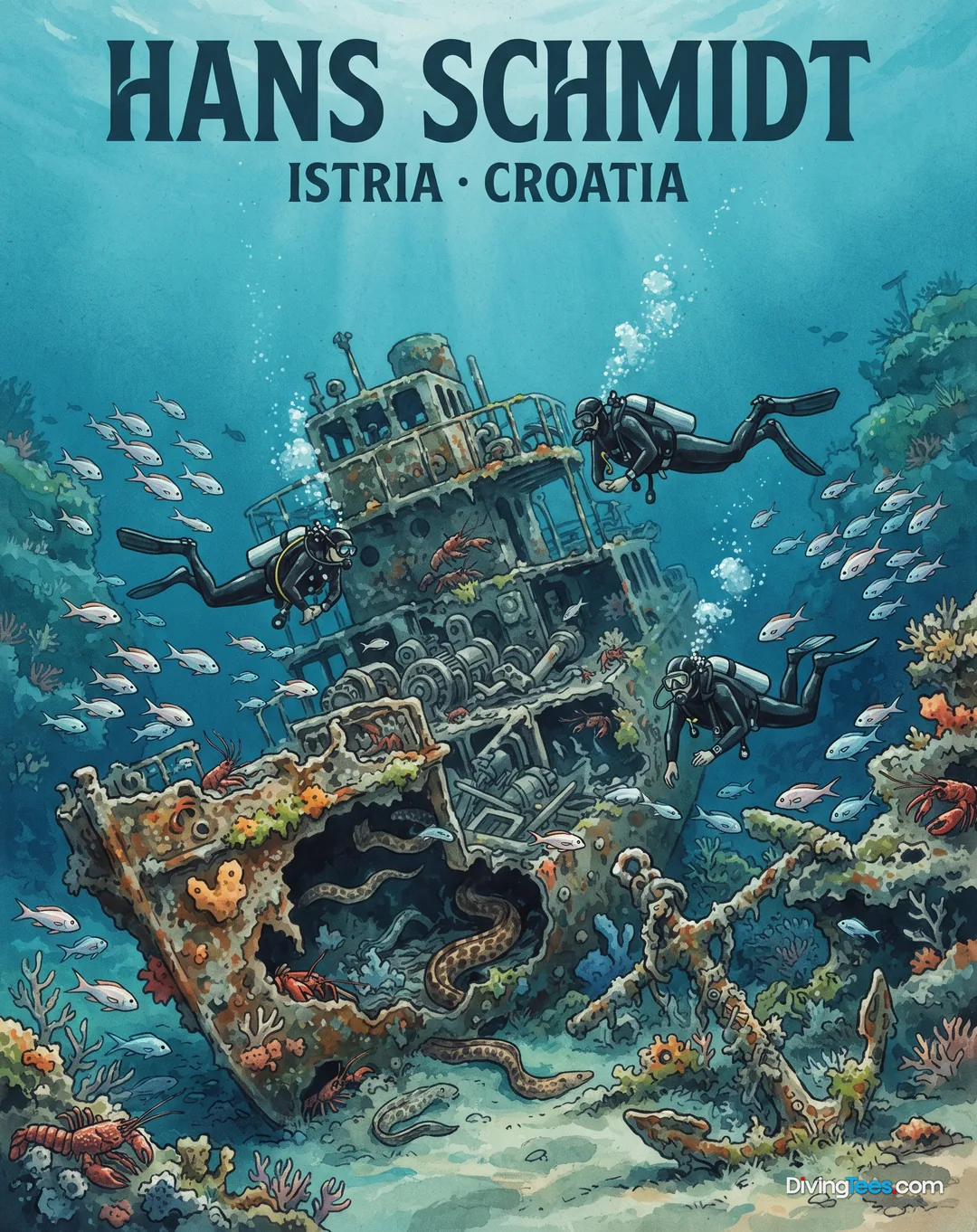
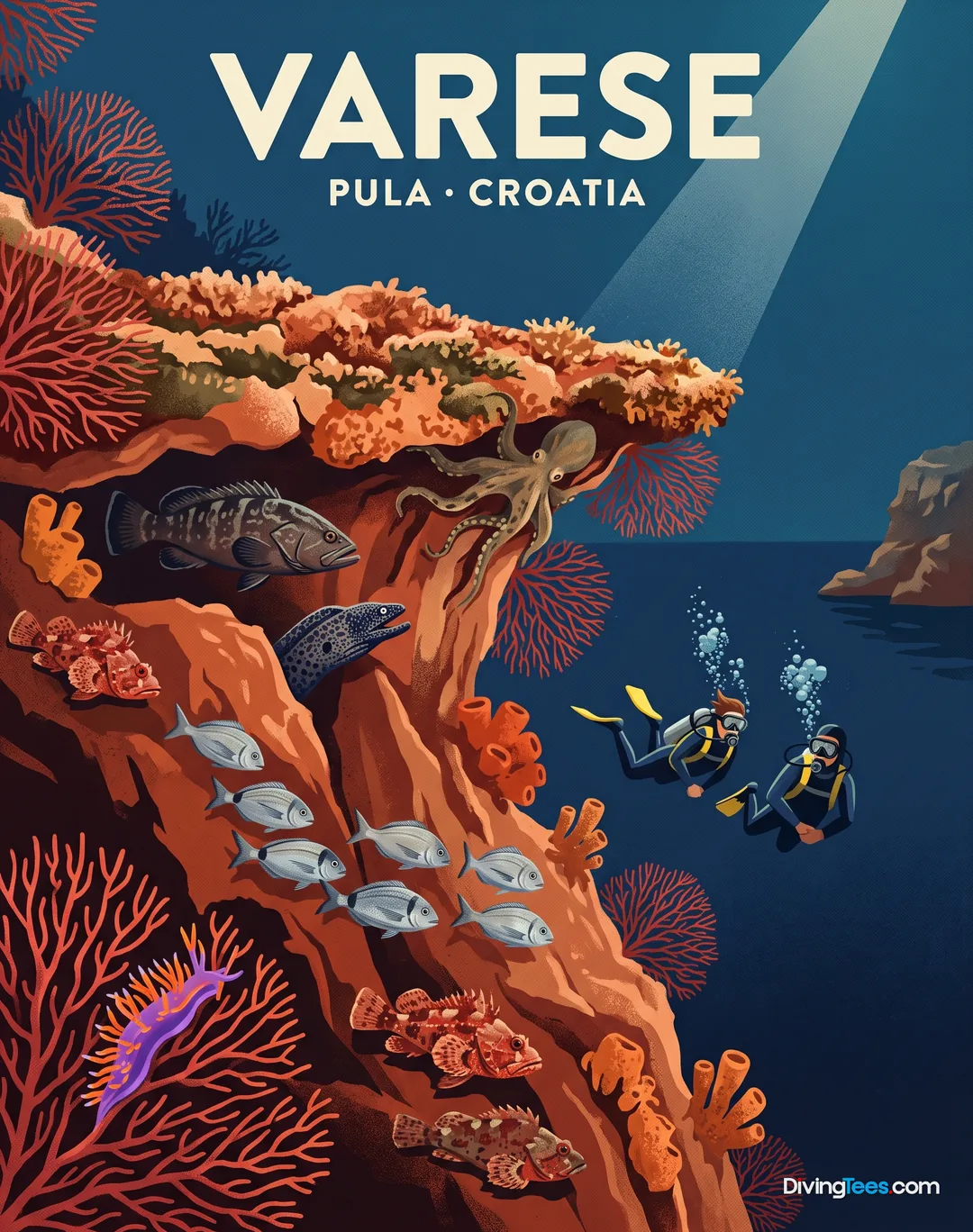
The underwater character is predominantly rocky Adriatic terrain and metal. Coastal sites bring walls, caves, tunnels and uneven rock, with particularly straightforward shore access around Cape Kamenjak and Pula. Boat diving adds substantial wrecks: the Baron Gautsch lies upright at 40 metres, Giuseppe Dezza is split between 32 and 37 metres, Varese reaches about 41 metres, and Hans Schmidt runs from 28 to 43 metres. Current is generally light, although local passages and changing conditions still matter. Visibility is often good, but coastal water, boat traffic and episodes of plankton can reduce it. Most dives are guided day trips from shore-based centres, rather than liveaboard itineraries. The deeper wrecks reward controlled descents, careful gas planning and sensible limits more than rushed penetration.
The wrecks provide the most distinctive wildlife encounters. Conger eel and Lobster shelter in the framework of Baron Gautsch, while the broken structures of Giuseppe Dezza and Varese offer close inspection of encrusted metal and open interiors. Hans Schmidt's scattered cargo and unusual anchor are set among sponges and local marine life. Schools of fish move around the wrecks and rocky ground, and Scorpionfish can be found where camouflage is easy among the Adriatic rock. These encounters are not tied to a documented migration window, so the practical expectation is to see them throughout the main diving season, from spring into autumn. A torch is useful in the darker sections of wreckage, caves and tunnels, where animals are easier to spot without disturbing them.
The measured calmest period runs from April to September, making this the most dependable window for deeper wreck plans and boat schedules. Rainfall is lowest from June to August, which suits a holiday that combines diving with coastal walks and town visits. The broader diving season extends into October, while late spring and autumn usually bring fewer tourists and less crowded boats than July and August. Summer offers the most settled holiday infrastructure but also heavier port and pleasure-boat traffic. Early autumn is a useful compromise: the main diving season is still operating, yet the coast is generally less busy on land and underwater.
Istria works for all levels, provided the site matches the diver. Sheltered coastal dives and selected shore sites suit beginners, training and refresher work. Advanced Open Water, or an equivalent BSAC qualification and experience, is appropriate for the principal wrecks beyond 18 metres. Baron Gautsch, Giuseppe Dezza and Hans Schmidt call for sound deep-diving skills; Wreck Diver training is useful where penetration is planned. Varese reaches about 41 metres and includes internal exploration, so logged deep-wreck experience matters more than simply holding a card. Nitrox is practical for repeated boat dives, but it does not replace depth and wreck discipline.
From London Heathrow, London Gatwick or Manchester, the usual approach is a seasonal European flight to Pula when the timetable suits, or a flight to Zagreb followed by roughly two and a half to three and a half hours by road. Driving is realistic from northern Italy, Austria and Slovenia, using the E751, the Učka tunnel or the Kaštel/Plovanija border route towards Umag. Road travellers should allow for motorway tolls and, through Slovenia, the required motorway vignette. Seasonal fast ferries also link Venice, and sometimes Trieste, with Poreč, Rovinj, Umag and Pula, but these are a spring-to-early-autumn option. Once in Istria, a car simplifies access to small ports, marinas and dive-camp bases; some urban marinas are walkable or a short taxi ride from suitable accommodation.
Build the trip around permissions, not just a map. Baron Gautsch is not a wreck to approach independently: ask in advance how the restricted area is being handled and book it through an authorised organised group. Brijuni requires advance planning, a permitted centre, a professional guide and one of the designated sites; independent diving is not allowed and group numbers are controlled. Do not put Lim Channel into a self-guided itinerary, as diving there is prohibited. In July and August, request early departures around Pula and Rovinj, before pleasure-boat traffic thickens. Keep the first day flexible if arriving by road from Zagreb, Slovenia or Italy, and place the deeper wrecks mid-stay rather than after a long journey. Staying near the marina or camping base avoids carrying kit through an old town. A surface marker buoy is particularly important for shore work where summer boat traffic is busy, and a car is useful if changing sectors.
Seven to ten days gives the destination room to breathe. A sensible plan starts around Premantura or Kamenjak for shore dives and caves, then moves towards Rovinj or Vrsar for wrecks and walls, with Rabac or Umag as alternatives rather than compulsory add-ons. Keep a non-diving day for Brijuni, Pula's amphitheatre, Rovinj or the inland villages around Motovun and Grožnjan. The coastal bases are better suited to a stay than a liveaboard, and choosing accommodation near the departure marina keeps early starts uncomplicated.
Hello, I'm Marina, DivingDeal.com's AI assistant. I guide you through destinations, areas and countries.

Thinking about the whole trip and the flights? Talk it over with Edith →
Marina is an AI. Some links are affiliate links: DivingDeal may earn a commission, at no extra cost to you. Bookings are made with the partner.
★ 4.8/5 (160 reviews)
less than 1 km away as the crow flies

★ 4.7/5 (287 reviews)
8.4 km away as the crow flies

★ 4.8/5 (136 reviews)
less than 1 km away as the crow flies
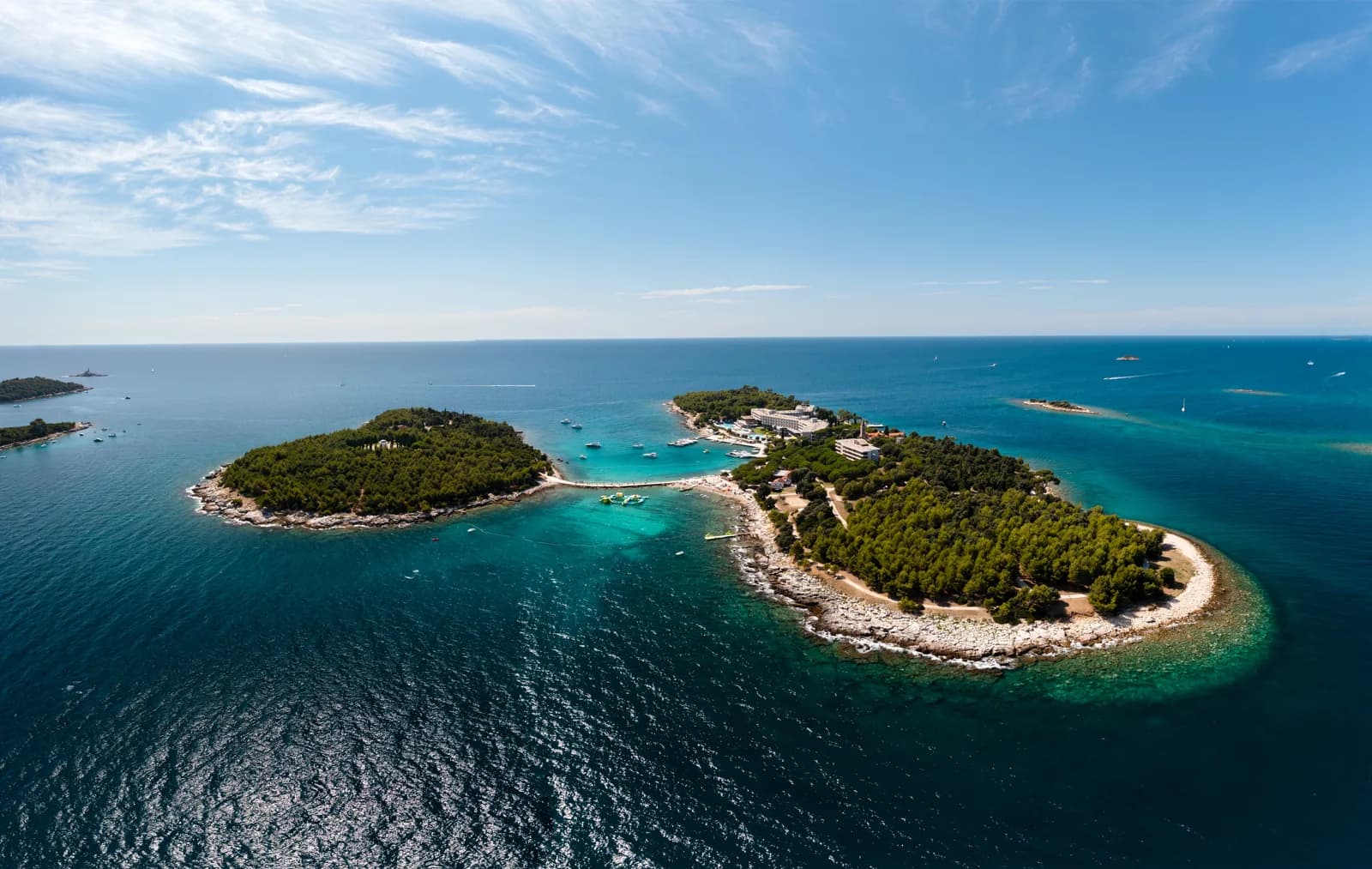
★ 4.8/5 (136 reviews)
12 km away as the crow flies
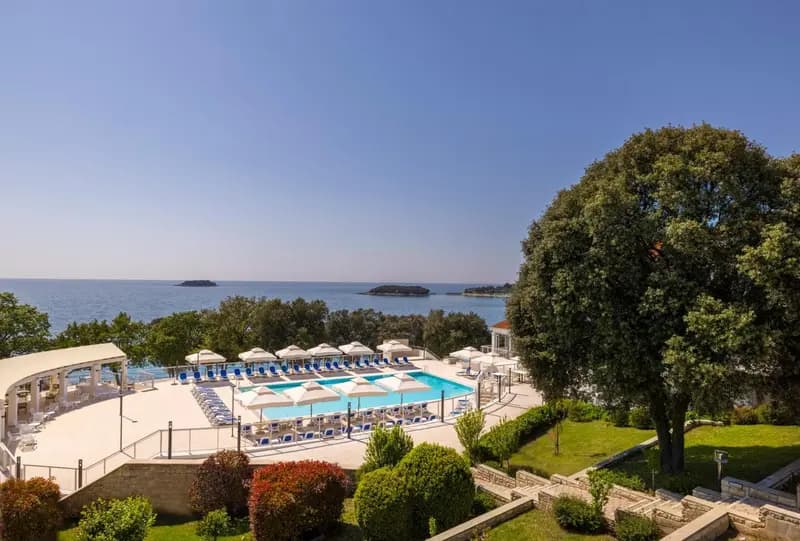
★★★
★ 9.1/10 (2,026 reviews)
less than 1 km away as the crow flies
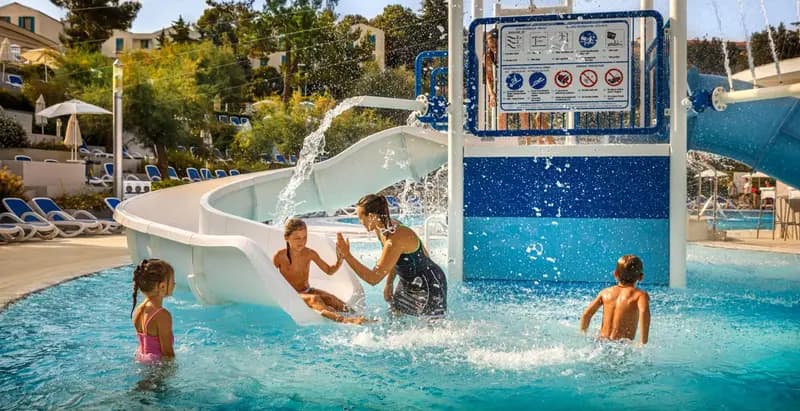
★★★
★ 8.8/10 (1,016 reviews)
1.6 km away as the crow flies
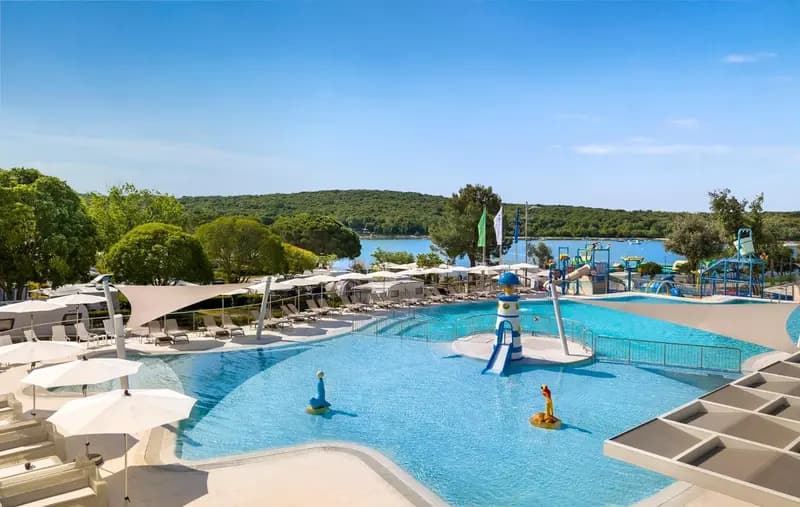
★★★★★
★ 8.7/10 (2,029 reviews)
14 km away as the crow flies
★★★★
★ 8.6/10 (3,054 reviews)
12 km away as the crow flies
Your last day stays dry: no diving in the 18-24 hours before a flight the perfect window to see the destination from another angle.
 Nature
⏱ 3 h · ★ 5.0 (15 reviews)
from €130
see on Viator ↗
 City
City⏱ 8 h · ★ 5.0 (14 reviews)
from €389
see on Viator ↗
 Culture
⏱ 10 h · ★ 5.0 (12 reviews)
from €385
see on Viator ↗
 Culture
⏱ 7 h · ★ 5.0 (9 reviews)
from €649
see on Viator ↗
Ratings and reviews collected by Viator and Tripadvisor.