
Subseason Diving Mali Lošinj
Google 4.9/5 (75 reviews)
Croatia · Mediterranean
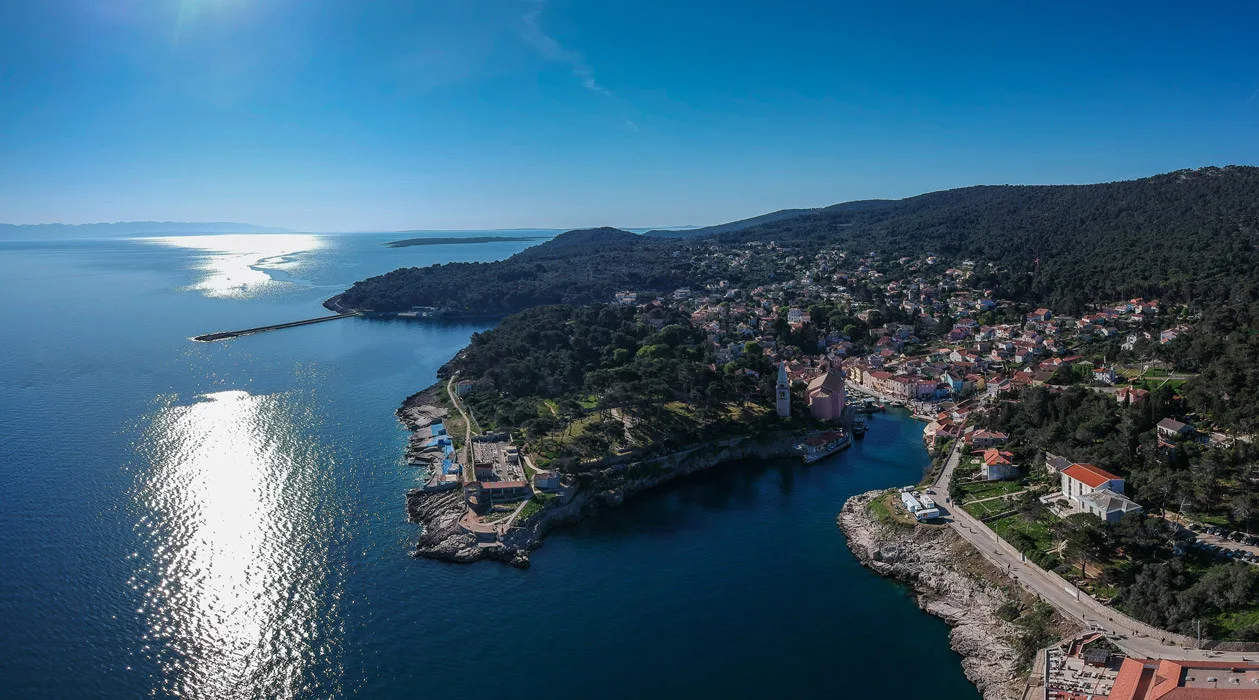
Čikat’s historical objects at 5–15 metres sit alongside Adriatic walls, caves and wrecks reaching beyond 40 metres around the Lošinj archipelago.
For subtitles in English: start the video firstthen click the gearat the top right of the video, select “Subtitles/CC”, then “Auto-translate” and choose “English”.
Mali Lošinj is a practical base for moving between very different kinds of dive. Start in Čikat, where a historical underwater park places objects in just 5–15 metres, then use the harbour for boat trips towards reefs, walls, caves and wrecks around the neighbouring islands. The town gives a mixed group room to spread out: newer divers can stay close to shore, while experienced divers can plan deeper wrecks and more demanding archipelago outings without living aboard a boat.
The diving changes noticeably with the departure point. Čikat offers sheltered coastal water, historical objects and shallow reliefs suited to a first dive or a refresher. Artatore and Koludarac add coastal reef terrain, while boat trips reach the walls, cavities and reefs around Susak, Srakane, Ilovik, Unije and Premuda. Wrecks form the deeper end of the range, with some lying beyond 40 metres. Currents are variable rather than a defining feature of every dive, so a site may involve calm exploration, a controlled descent along a wall or a drift dive, depending on the location and conditions. Visibility is generally good to very good, commonly 10–30 metres. The result is a destination for shore dives and daily boat sorties, not a single fixed underwater style.
Underwater life here is tied closely to the rock, the walls, the caves and the wreck structures. At Čikat, the historical objects give a shallow route through the bay, with the interest coming from examining what has been placed on the bottom as well as the surrounding relief. On the natural reefs and vertical faces, slow finning and close observation reveal the fauna living around cracks, ledges and shaded surfaces. Wrecks change the experience again, concentrating attention on their structure and the life attached to it. The archipelago outings to Susak, Srakane, Ilovik, Unije and Premuda bring more exposed reef and wall diving. Conditions and boat plans determine which setting you meet on a given day rather than a fixed seasonal wildlife calendar.
Go at the beginning or end of the main summer season if a quieter town and less crowded boat programme matter most. High summer brings the greatest activity around Mali Lošinj and the busiest period for boat outings, which can suit divers wanting to cover the outer islands, provided they accept a livelier base. The area is not tied to a rainy season or monsoon pattern. Visibility is generally good, often 10–30 metres, but the more useful planning rule is to leave room for changing sea conditions, particularly when deeper wrecks or distant islands are central to the trip.
Mali Lošinj suits all levels, but not every dive suits every diver. Čikat’s 5–15 metre historical park and nearby coastal sites work well for beginners, discovery dives and a steady return to the water. Advanced Open Water or an equivalent qualification is sensible for deeper walls and wrecks, while a recognised Wreck qualification is useful where penetration is involved. Some wrecks pass 40 metres, so depth experience, gas planning and a conservative approach matter more than the presence of easy dives nearby. BSAC, PADI and SSI divers can match the itinerary to their existing training.
From London Heathrow, London Gatwick or Manchester, the practical air route is via Rijeka Airport on the island of Krk, followed by road travel and a ferry. By road, drive to Rijeka or Krk, then take the compulsory vehicle ferry from Valbiska to Merag or from Brestova to Porozina, cross Cres and continue to Mali Lošinj. A catamaran also runs from Rijeka, and there is a maritime connection from Zadar. Allow time for the ferry or catamaran timetable, which changes with the season, rather than treating the crossing as a simple urban transfer. A car is useful for exploring the island; around Čikat and the centre, walking or a taxi may be enough.
Use Čikat first, even if the main aim is an outer-island wreck. The 5–15 metre historical park is a useful way to settle into the local conditions, check buoyancy and keep the first day adaptable. Book several dedicated boat days for Susak, Srakane, Ilovik, Unije or Premuda, because these are not shore dives from central Mali Lošinj. Keep one flexible day in the programme: losing a distant boat trip to the sea can otherwise remove a major part of the plan. Do not read the shallow Čikat profile as a verdict on the whole area. Check the depth and the actual dive plan for every wreck, including whether it means an external circuit or penetration. If staying away from Čikat or the centre, confirm how you will reach the daily meeting point rather than assuming a universal shuttle. Accommodation near Čikat reduces that recurring transfer.
A seven- to ten-day stay gives the destination room to work properly. Use the opening days for Čikat, Artatore or Koludarac, then group the outer islands into dedicated boat excursions rather than scattering them between local dives. Leave a day for a deeper wreck or a second attempt at a weather-dependent outing, and keep other days for Mali Lošinj’s waterfront, maritime heritage, coastal walks, bays and boat excursions. Non-divers have plenty to do without following every departure.
Hello, I'm Marina, DivingDeal.com's AI assistant. I guide you through destinations, areas and countries.
Thinking about the whole trip and the flights? Talk it over with Edith →
Marina is an AI. Some links are affiliate links: DivingDeal may earn a commission, at no extra cost to you. Bookings are made with the partner.
Choose the beginning or end of the main summer season if you prefer a quieter town and less crowded boat programme. High summer brings more activity and busier outings, which may suit you if you want to visit outer islands. Visibility is generally good, but changing sea conditions still require flexibility.
Mali Lošinj accommodates different experience levels, but each site requires an appropriate plan. Čikat’s shallow historical park and nearby coastal sites suit beginners, discovery dives and refreshers. Deeper walls and wrecks call for advanced training, while penetration requires recognised wreck experience. Depth awareness, gas planning and conservatism remain important.
You can explore Čikat’s historical underwater objects, coastal reliefs around Artatore and Koludarac, and the walls, caves, cavities and reefs around nearby islands. Boat outings may reach Susak, Srakane, Ilovik, Unije and Premuda. Wrecks add deeper structural sites, with marine life around rock, ledges and shaded surfaces.
Start with Čikat to settle into local conditions, then reserve dedicated boat days for Susak, Srakane, Ilovik, Unije or Premuda. Keep a flexible day for changing sea conditions and check every wreck’s depth and dive plan. Accommodation near Čikat can reduce transfers, while a car helps you explore the island.