
Marine Sport Dive Center
Google 4.8/5 (140 reviews)
Croatia · Mediterranean
Rocky ledges, small caves, red coral and boat trips to Brseč and Cres make Mošćenička Draga a practical base for exploring the Kvarner coast.
For subtitles in English: start the video firstthen click the gearat the top right of the video, select “Subtitles/CC”, then “Auto-translate” and choose “English”.
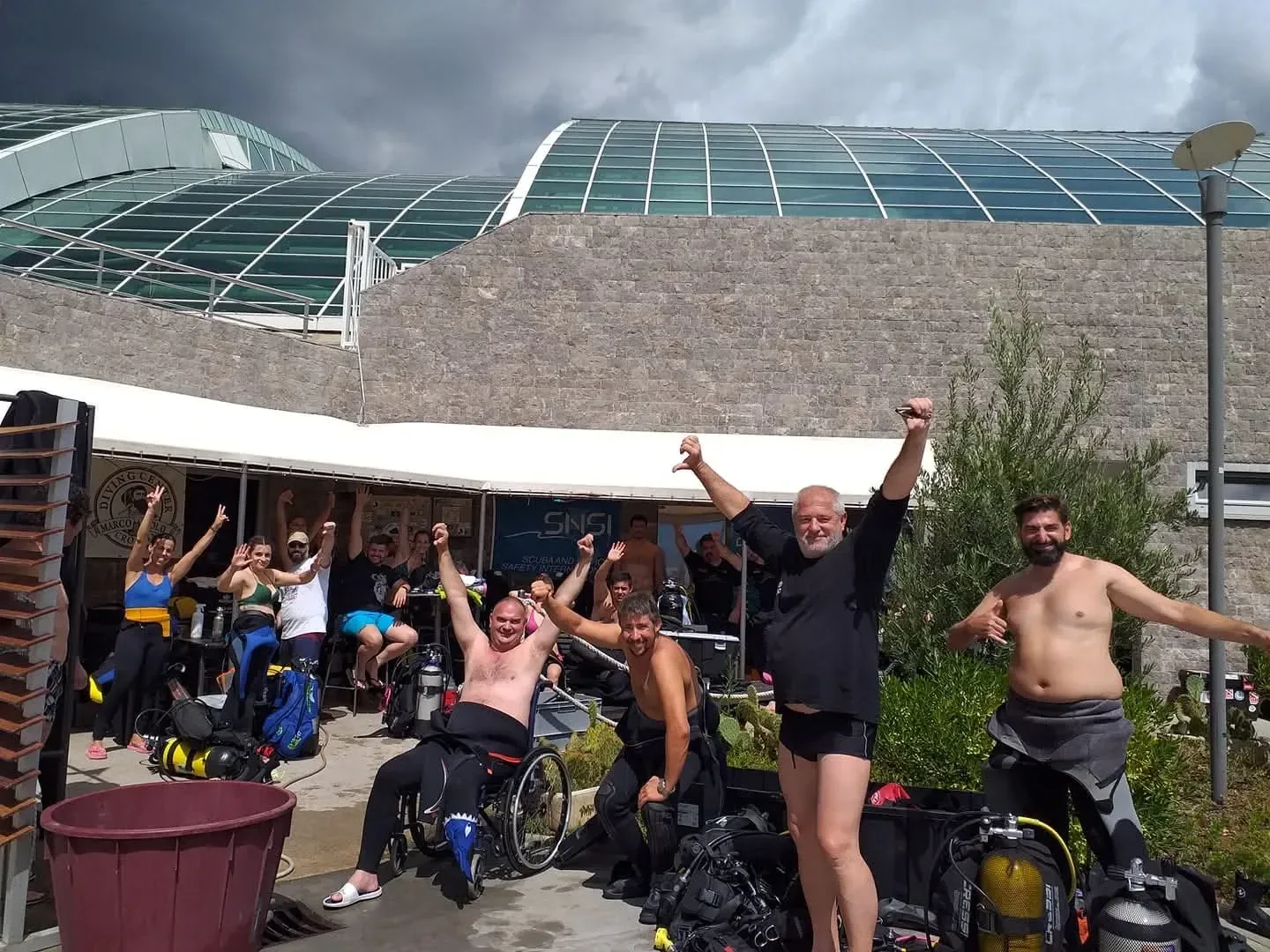
Mošćenička Draga works as a shore-and-boat base rather than a destination built around one headline site. From the centre, local dives begin with equipment moved by trolley, making repeated coastal dives straightforward. Boats leave the harbour for Brseč, northern Cres and nearby sectors where the scenery changes to walls, pinnacles and small caves. That gives beginners room to learn on simpler rocky and sandy ground, while experienced divers can use the same base for deeper, more structured outings.
Underwater, the coastline shifts between sand, rock, walls, pinnacles, fissures and small caves. The local shore dives are useful for settling into conditions, but the more distinctive terrain lies on the boat routes towards Brseč, northern Cres and the neighbouring coast. Walls descend through several depth bands, so the guide can match the dive to certification, gas and experience rather than forcing every diver onto the same profile. Currents are variable, and conditions should be checked for each site, particularly where a wall or pinnacle creates more exposed water. Visibility can be perfectly serviceable without being treated as a fixed promise. Take a lamp for cracks and small caves, and expect the shape of the dive to depend on the chosen site. Some outings are suitable for relaxed exploration, while deeper walls and pinnacles demand more deliberate planning and, in places, Advanced Open Water certification.
The attraction is Mediterranean life set against hard limestone rather than a single seasonal spectacle. Search the rock and sheltered cracks for octopus, nudibranchs and rock fish, then look into the small caves and fissures with a lamp. Squid can feature on night dives, alongside the nocturnal activity of octopus and other creatures that are easy to miss in daylight. Red coral adds colour to suitable deeper walls and rocky ground. What appears on a particular dive depends on depth, shelter, light and conditions, so the pleasure lies in looking closely rather than expecting a guaranteed encounter. Shore dives offer time for patient observation, while the boat sites around Brseč and Cres add walls, pinnacles and cave edges where the scenery changes as much as the wildlife.
The practical diving season runs from May to October, with May, June, September and October the most appealing months for a balanced visit. The shoulder months bring the same broad seasonal window without the full pressure of the summer beach season and heavier boat traffic. That matters at a compact coastal base, where shore access and harbour departures are part of the daily rhythm. July and August remain usable, but allow for a busier station and more activity on the water. A spring or early autumn stay also makes it easier to combine several boat outings with quieter shore dives, rather than fitting every dive around peak holiday movement.
Beginners can start with the coastal sites and training dives offered locally, where sandy and rocky ground provides a manageable introduction. Certified divers can progress to walls, pinnacles, caves and deeper profiles around Brseč and the neighbouring coast. The exact requirement depends on the site, not simply on whether the dive leaves from shore or boat. Advanced Open Water is useful for deeper walls and some structured pinnacle dives, while current awareness and sensible depth experience become increasingly important on the more exposed outings. BSAC, PADI and SSI divers should have suitable logged experience for the planned profile.
From London or Manchester, treat Mošćenička Draga as a road-access destination on the Croatian coast, reached through the coastal route or via Istria. No ferry or domestic flight is needed to reach the resort itself, although the final road leg should be built into the journey rather than treated as an airport transfer. Once in Mošćenička Draga, accommodation near the centre or waterfront keeps the daily logistics simple. Nearby shore dives can be reached on foot, with assembled equipment moved from the dive centre on a trolley. Boat trips to Brseč, northern Cres and the neighbouring coast depart from the local harbour, so the dive day stays organised around that departure point.
Make the first dive a shore dive if conditions allow. It gives you a practical feel for the local water before committing to a boat day, and the equipment is taken to the entry point by trolley rather than carried blindly over distance. Do not assume every worthwhile site is a beach entry: Brseč, northern Cres and the larger walls and pinnacles require a boat. Ask exactly which profile is planned, because a shallow coastal introduction and a deep pinnacle or wall are very different propositions. In the busier summer period, arrange boat days ahead because only a limited programme may run each day. Keep a lamp in the kit for the small caves and fissures, and for night dives. Staying centrally avoids repeated transfers, but check the precise shore entry before setting off with equipment.
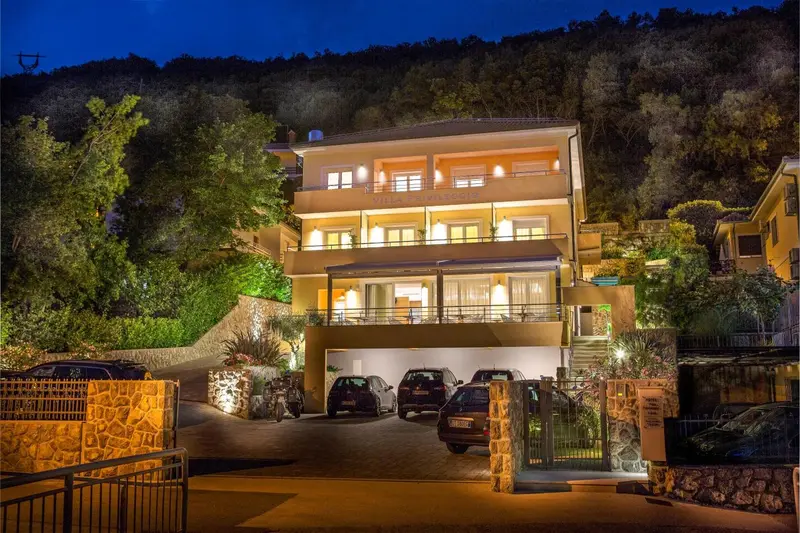
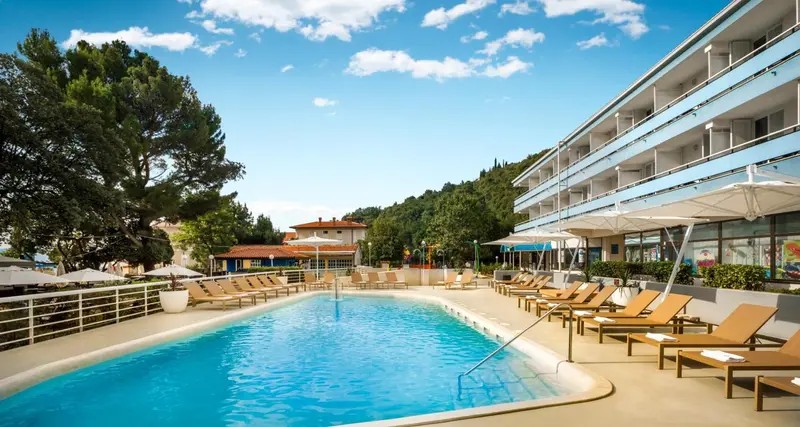
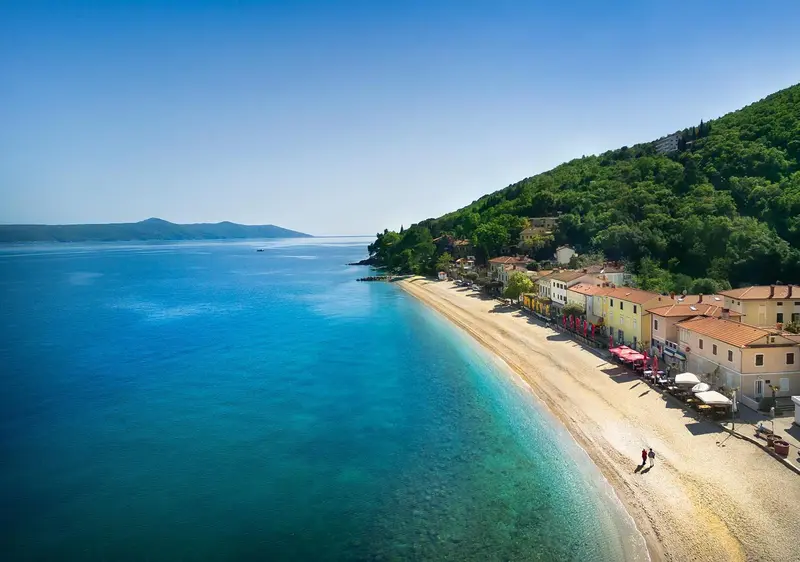
A four- to seven-day land-based stay gives enough time to mix nearby shore dives with boat days towards Brseč, Cres and the neighbouring coast. Keep the first day flexible for a coastal check dive, then use settled days for the longer harbour departures. Staying in or near the centre means the waterfront, beach and dive logistics are close together. Non-divers have beaches, the promenade, Mošćenice, the Učka landscape and day trips towards Rijeka or Opatija.
Hello, I'm Marina, DivingDeal.com's AI assistant. I guide you through destinations, areas and countries.
Thinking about the whole trip and the flights? Talk it over with Edith →
Marina is an AI. Some links are affiliate links: DivingDeal may earn a commission, at no extra cost to you. Bookings are made with the partner.
Mošćenička Draga can be dived from May to October, with May, June, September and October offering an appealing balance. July and August remain usable, but the station and water may be busier. Spring or early autumn suits combining quieter shore dives with boat outings and avoiding heavier summer beach activity.
Mošćenička Draga suits beginners starting with local coastal sites, training dives and manageable sandy or rocky ground. Certified divers can progress to walls, pinnacles, caves and deeper profiles around Brseč and the neighbouring coast. Advanced Open Water is useful for deeper walls and some structured pinnacle dives, where current awareness and depth experience matter.
Mošćenička Draga offers Mediterranean marine life among sand, limestone, walls, pinnacles, fissures and small caves. Look for octopus, nudibranchs, squid and Mediterranean rock fish, using a lamp in cracks and cave edges. Red coral appears on suitable deeper walls and rocky ground, while night dives reveal squid and nocturnal octopus activity.
Plan a land-based stay in or near the centre, where shore access, the waterfront and dive logistics are close. Begin with a shore dive if conditions allow, then schedule boat trips from the harbour towards Brseč, northern Cres and neighbouring sectors. Arrange summer boat days ahead, keep a lamp ready, and check each planned profile.