
“Calypso Scuba Diving“-Omiš
Google 4.8/5 (153 reviews)
Croatia · Mediterranean
Vruja’s underwater springs, light-filled caves, rocky walls and boat-accessed wrecks sit beside Omiš’s fortified town and the Cetina canyon.
For subtitles in English: start the video firstthen click the gearat the top right of the video, select “Subtitles/CC”, then “Auto-translate” and choose “English”.
Omiš is a shore-based diving holiday with the Cetina estuary and a medieval town above water, and caves, overhangs, wrecks and rocky relief below it. Local centres combine straightforward shore dives with boat trips along the coast and towards nearby islands, so a week can move from a shallow introduction to a deeper karst outing without changing base. It suits divers who want several days underwater, but also want walking, paddling or a canyon adventure between dives.
The diving is built around limestone scenery rather than one uniform reef. Expect rocky walls, overhangs and caves, with some sites shallow enough for beginners and others better suited to experienced divers. Vruja Bay changes the scale of the outing, bringing underwater springs, karst formations, caves and significant depth. Currents are variable, so the briefing matters, particularly when a boat trip reaches a more exposed coastal or island site. Visibility is generally described as clear, although it can vary with local conditions. Shore entries keep some dives simple, while boats open the way to wrecks, more distant walls and sites that cannot be reached from Omiš itself. Night dives are also available, subject to the centre’s programme and the diver’s experience.
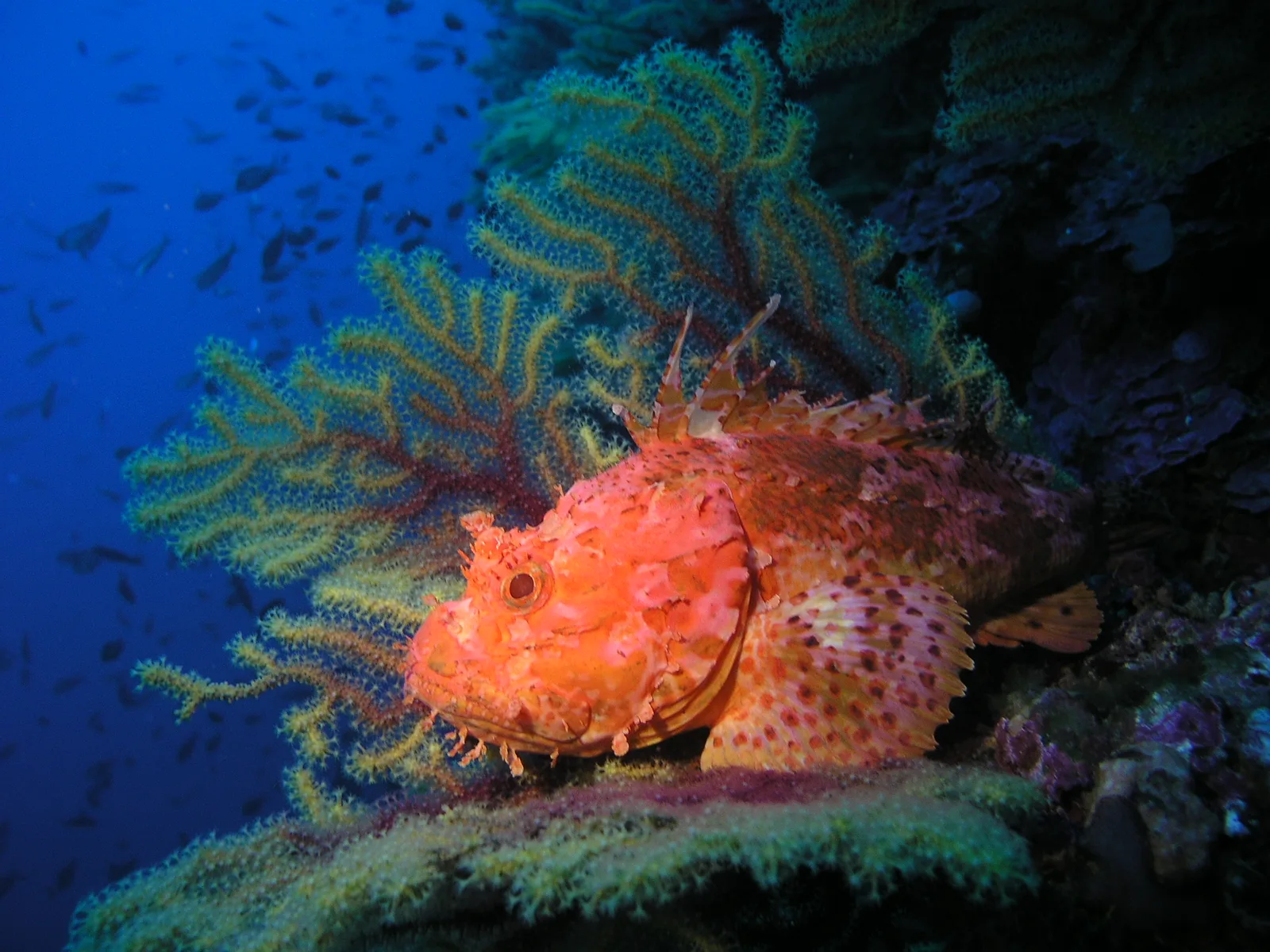
Marine life is found among the hard surfaces that dominate Omiš underwater: rocky ground, walls, overhangs, cave mouths and wreck structure. The attraction is the change in habitat as a dive moves from a shallow coastal shelf into shadow, along a drop or across an artificial refuge. In Vruja, springs and karst relief give the underwater landscape a more unusual character than a straightforward reef dive. Clear water helps with the visual detail of the rock and the entrance zones of caves, while night diving changes what is visible without requiring a different destination. No particular seasonal wildlife encounter defines the area, so come for the combination of terrain and marine life rather than a promised species timetable.
The sensible window is outside the busiest part of high summer, when the coastal road, beaches and boat traffic put more pressure on the town and nearby sites. Omiš remains usable in summer, but a trip in the shoulder periods should feel less crowded around shore-based locations and easier to organise around the boat schedule. Whichever part of the season you choose, leave room for a change of plan: weather can affect longer outings, and a five- to seven-day stay gives useful flexibility. Keep one day free from diving for the Cetina valley or the old town, rather than trying to fill every day with boats.
Omiš works for mixed groups. Beginners can start with shallow discovery dives and shore sites where no current is reported, while more experienced divers can look towards deeper coastal relief, wrecks and Vruja. Advanced Open Water or an equivalent qualification is useful for deeper Vruja dives and some cave or wreck outings. A wreck specialty is appropriate for wreck diving. Any move beyond a simple, lighted cave zone requires suitable cavern or cave training and specialised supervision, not merely confidence in open water.
From London Heathrow, Gatwick or Manchester, the practical arrival route is to fly to Split and continue by road along the coast to Omiš. The drive is roughly 30 minutes from Split in normal conditions, but summer traffic can make it considerably longer, so do not build a tight connection around the nominal journey. No ferry is needed to reach Omiš itself. Once there, centres operate from the town and coastal area, and many accommodation options near them are walkable. Lodgings farther away may require a taxi or an organised transfer. The boats then handle the journey to coastal and island dive sites, with the exact distance depending on the outing booked.
Treat the word Omiš as a wider diving base, not just the water immediately outside town. Before booking, ask whether a day means a local shore dive, Vruja, or a longer coastal or island boat trip. That distinction affects depth, travel time and the kind of terrain you will see. Do not approach Vruja as a routine beginner excursion: springs, caves and deeper karst relief need an honest match between the plan and your qualification. In caves, stay within the lighted zone unless you have the proper training and procedures; an opening or shaft of blue water is not a safety margin. Groups with mixed experience should book different depths or penetration plans rather than forcing everyone onto one profile. Stay in or near Omiš if several boat days are planned, keep a day for the Cetina valley, and never put a distant boat return immediately before your flight home.
Allow five to seven days to combine local dives with boat trips and a weather margin. Omiš works particularly well for a mixed party: divers can head for caves, walls or wrecks while others walk the fortified old town, use the beaches, paddle near the estuary or explore the Cetina canyon. A day without diving is not an afterthought here, as the valley offers rafting, canyoning, climbing, ziplining and walking. Staying close to town simplifies early starts and boat transfers.
Hello, I'm Marina, DivingDeal.com's AI assistant. I guide you through destinations, areas and countries.
Thinking about the whole trip and the flights? Talk it over with Edith →
Marina is an AI. Some links are affiliate links: DivingDeal may earn a commission, at no extra cost to you. Bookings are made with the partner.
Omiš remains usable through summer, but shoulder periods can feel less crowded around shore sites and may be easier to organise around boat schedules. Weather can affect longer outings, so keep flexibility in your plans. Leave a day for the Cetina valley or fortified old town instead of diving every day.
Omiš suits mixed groups, with shallow discovery dives and shore sites for beginners where no current is reported. Experienced divers can choose deeper relief, Vruja and wrecks. Advanced Open Water or equivalent training helps for deeper Vruja dives, while wreck, cavern or cave outings require the relevant qualifications and supervision.
Omiš offers limestone scenery including rocky walls, overhangs, caves and cave mouths, with clear water helping reveal the terrain. Vruja Bay adds underwater springs, karst formations and deeper relief. Boat trips reach wrecks and more distant coastal or island sites, while night dives change what you see around local habitats.
Use Omiš as a base for local shore dives, Vruja outings and longer coastal or island boat trips, and ask the centre which type is planned. Staying near town helps with starts and transfers. Allow flexibility for weather, keep a day for the Cetina valley, and avoid a distant boat return immediately before flying.