
Deep Blue Diving
Google 5/5 (145 reviews)
Croatia · Mediterranean
Gorgonian-covered walls, quiet training bays, rocky reliefs and deep wrecks give Rogoznica a practical base for varied Croatian diving.
For subtitles in English: start the video firstthen click the gearat the top right of the video, select “Subtitles/CC”, then “Auto-translate” and choose “English”.
Rogoznica works as a shore-based diving holiday rather than a liveaboard destination. From its sheltered bay, you can make easy local dives, then head by boat towards deeper walls, gorgonians, rocky drop-offs and wrecks. That spread suits a mixed group particularly well: one diver can build confidence in a calm bay while another spends the day on a more demanding site. Between dives, the marina, coastal paths and nearby Dalmatian towns keep non-divers occupied.
The diving shifts from calm, shallow bays to exposed coastal and island sites with walls, rocky relief and wrecks. Gorgonians are a feature of the deeper scenery, while smaller rock formations offer more intimate dives close to shore. Depths range from beginner-friendly water to walls and wrecks well beyond the usual recreational profile, so the boat brief matters. Currents are variable rather than constant, but exposed sides can produce a local current and a drift dive. Ask which way the group expects to travel before entering, especially where a downcurrent could carry divers away from the planned line. Summer visibility is commonly around 15 to 20 metres, although swell, coastal run-off and suspended particles can reduce it. Boat trips open the more dramatic sites, while sheltered bays provide useful alternatives when conditions turn.
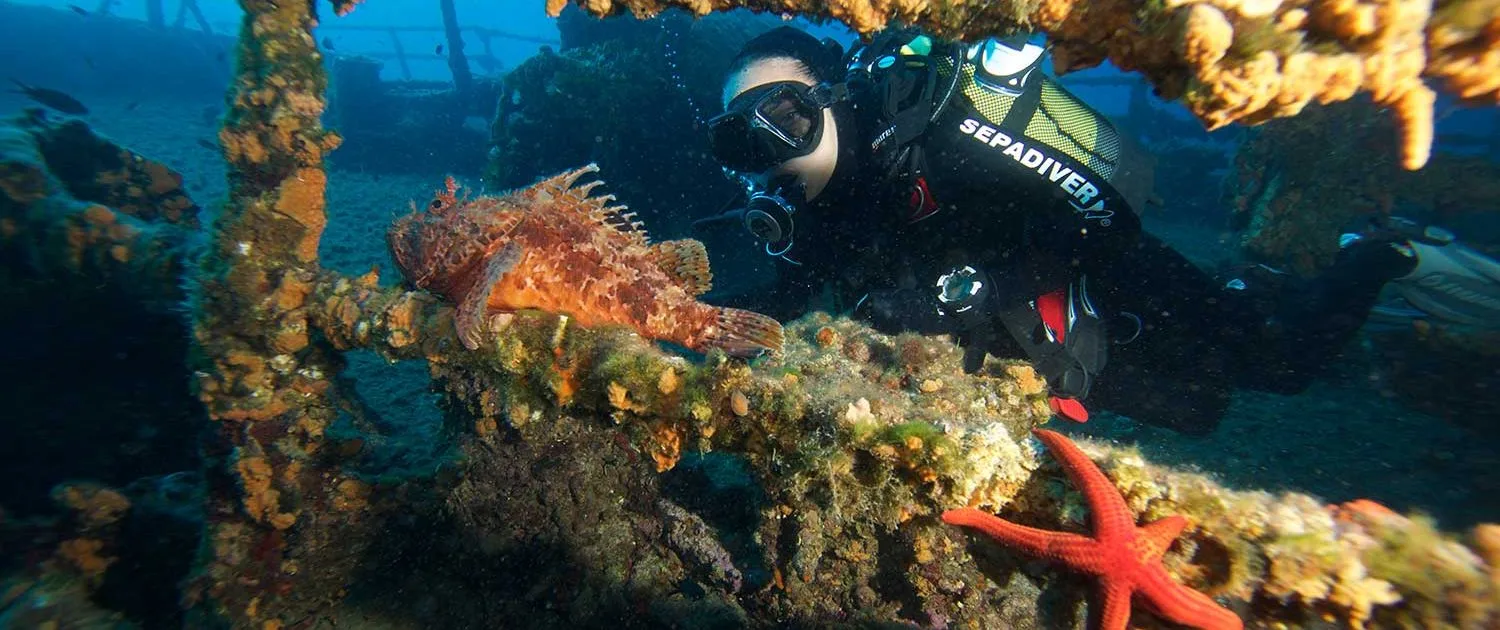
Underwater, the strongest visual feature is the hard-substrate habitat itself: gorgonians on walls and drop-offs, bare and encrusted rock, and the benthic life gathered across smaller reliefs. The setting rewards two different approaches. On a wall, look across the larger shape and its hanging gorgonians; on a shallow rocky dive, slow down and search close to the surface for small subjects. Night dives near the local sites make those modest formations worth revisiting with a torch, particularly for macro photography. Wrecks add a different kind of structure, but the marine-life appeal is not tied to a single seasonal animal. Plan around the most settled period and the sites available that day, rather than expecting a guaranteed wildlife calendar.
May, June and September make the most balanced months for Rogoznica. Centres are generally operating, the boat programme is easier to enjoy, and the coast is less crowded than during July and August. That matters when several dives depend on a boat, a marina departure and exposed sites that may need changing with the conditions. Summer usually brings the most favourable visibility, but high season also brings more leisure traffic around marinas and popular anchorages. A spring or early autumn stay therefore gives you a better chance of combining boat walls with sheltered local dives without making every day compete with the busiest holiday period.
Rogoznica suits all levels, provided the site is matched to the diver rather than the other way round. Sheltered bays support beginners, try-dives, courses, refresher sessions and some night diving. Advanced Open Water is useful for deeper walls and wrecks, while a Wreck qualification is appropriate for wreck-focused outings. Several regional wrecks and walls go well beyond a normal recreational profile, so logged depth experience and calm, controlled buoyancy matter. BSAC, PADI and SSI divers should confirm the planned maximum depth before booking.
From London Heathrow, London Gatwick or Manchester, the usual route is by air to Split, followed by a road transfer to Rogoznica. No ferry is structurally required, and there is no domestic flight to arrange. By road, approach via the coastal D8 or the A1, leaving towards Šibenik or Prgomet before continuing to the coast. From Split, use a hire car, taxi, private transfer or bus, bearing in mind that services and timetables change with the season. Once in Rogoznica, the marina and some central accommodation are walkable, but carrying equipment from elsewhere may require a short taxi or car journey. The practical detail to settle in advance is how your kit reaches the boat each morning.
Before booking, ask for a clear split between local dives, island or coastal boat trips, walls and deep wrecks. The name of a site is not enough: confirm its maximum depth and the qualification expected, because some regional wrecks sit far outside a standard recreational plan. Keep a sheltered bay as a deliberate fallback, not as an afterthought, and put the longer exposed trips on the days with the most favourable sea conditions. On exposed sites, ask for the intended current direction and whether the dive is planned as a drift dive. If you carry your own kit, stay near the marina or clarify the transport arrangement rather than assuming every short road distance is walkable. Photographers should pack a torch for night dives and shallow rocky reliefs. Finally, check that a wreck advertised for Rogoznica is actually in this local area, since regional listings can blur neighbouring Adriatic sectors.
Allow five to seven days for a sensible mix of boat diving, one or two easy local dives and days out of the water. Rogoznica works best as a land base, with daily departures from the bay and nearby sheltered sites available for training, night diving or a change of plan. Non-divers can use the marina, coves and boat excursions, or visit Primošten, Šibenik and Trogir. Keep the final day for a land-based outing rather than another immersion before flying.
Hello, I'm Marina, DivingDeal.com's AI assistant. I guide you through destinations, areas and countries.
Thinking about the whole trip and the flights? Talk it over with Edith →
Marina is an AI. Some links are affiliate links: DivingDeal may earn a commission, at no extra cost to you. Bookings are made with the partner.
May, June and September offer a balanced time to dive in Rogoznica, with operating centres, accessible boat programmes and fewer crowds than July and August. Summer commonly brings visibility of fifteen to twenty metres, but busy marinas and anchorages can affect the experience. Sheltered bays remain useful when conditions change.
Rogoznica suits different experience levels when you choose sites carefully. Sheltered bays support beginners, try-dives, courses, refreshers and some night dives. Deeper walls and wrecks require advanced experience, while wreck-focused outings suit divers with a Wreck qualification. Confirm the planned maximum depth and qualification before booking any boat trip.
Diving in Rogoznica includes gorgonian-covered walls and drop-offs, bare and encrusted rock, smaller reliefs and deep wrecks. Wall dives reveal hanging gorgonians, while shallow rocky sites reward slow searches for small subjects and macro opportunities. Night dives near local sites offer another way to explore these formations with a torch.
Plan Rogoznica as a shore-based diving holiday, using the sheltered bay for easy or training dives and boats for walls, island sites and deeper wrecks. Keep sheltered sites as a fallback when conditions change, confirm depth, qualifications and current plans, and arrange how your equipment reaches the boat. Leave the final day for land-based activities.