

Dive Center Blu
Google 4.9/5 (108 reviews)
22 km away as the crow flies
Elba · Italy · Mediterranean
Descend into the protected waters of Pianosa, an island marine park where decades of restricted access have preserved a vibrant underwater ecosystem.
For subtitles in English: start the video firstthen click the gearat the top right of the video, select “Subtitles/CC”, then “Auto-translate” and choose “English”.
Pianosa is located in the Tuscan Archipelago, a flat island renowned for its historical past as a high-security prison and its present status as a marine protected area. Access to the waters around the island has been severely restricted for over a century, nearly a quarter of that time under strict navigation and fishing bans. This isolation has allowed the marine environment to remain exceptionally intact, offering a glimpse into what the Mediterranean was once like, undisturbed by human impact.
The dive sites around Pianosa are exclusively accessible through dive centers accredited by the Tuscan Archipelago National Park Authority. This controlled access ensures minimal impact on the fragile ecosystem, with only five dedicated mooring buoys for immersion and two for service vessels. Dives are typically scheduled on specific days of the week and at set times, requiring coordination with authorized operators, and are always accompanied by certified environmental underwater guides, further reinforcing the conservation efforts.
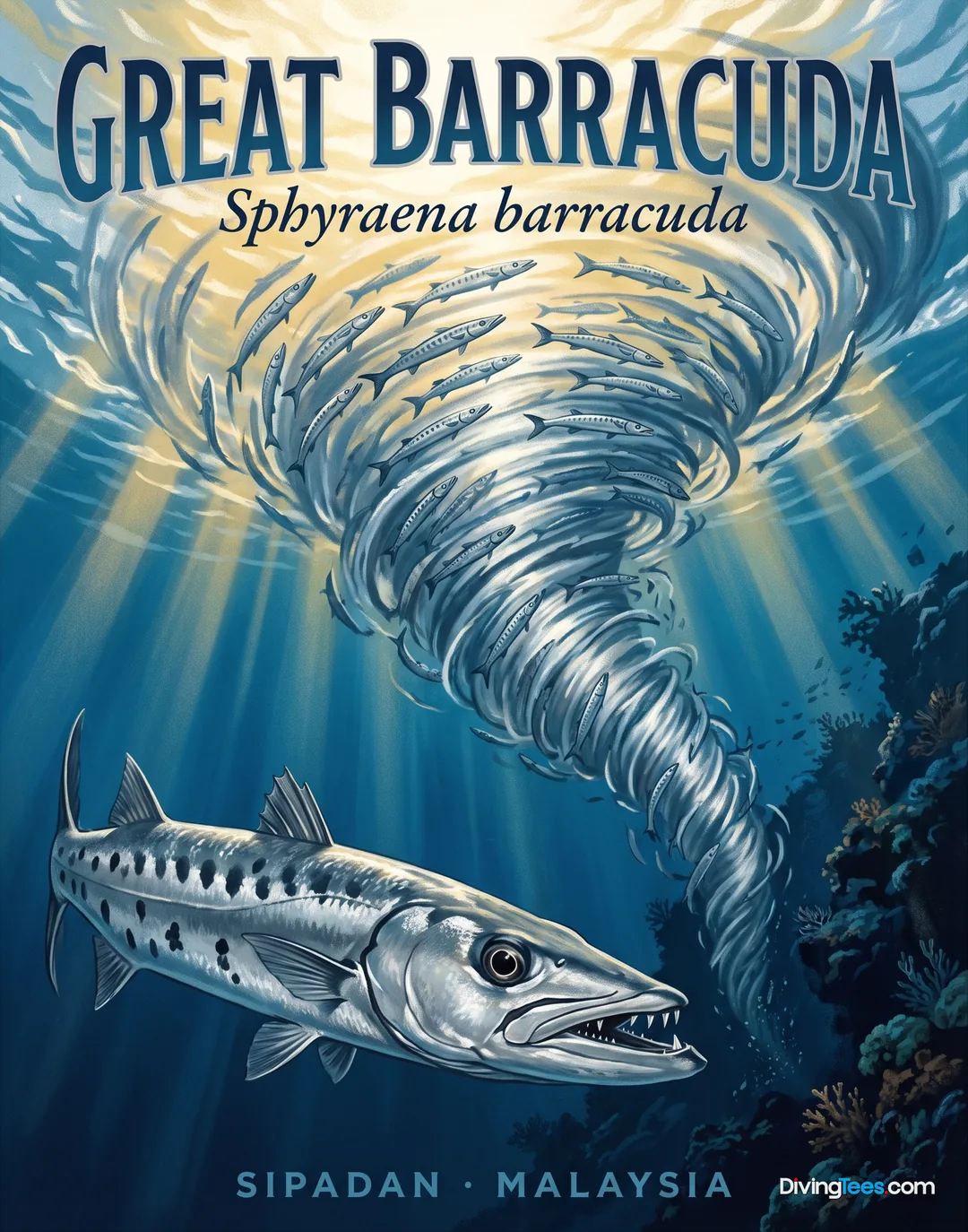
Below the surface, the conservation status of Pianosa becomes immediately apparent. The reef systems teem with life, a direct result of the long-term protection. You will encounter dense schools of barracudas (Sphyraena barracuda) moving in unison, their silver bodies reflecting the light as they patrol the reef edges. The absence of traditional fishing pressure has allowed these populations to flourish, providing dynamic encounters not commonly seen in more accessible areas.
Resident populations of large groupers (Epinephelus marginatus) are a highlight here. These robust fish, often solitary, can be observed holding territory among the rocks and crevices of the reef structure. Their calm demeanor, unaccustomed to human interference, allows for closer viewing opportunities without disturbing their natural behavior. The healthy state of their population indicates a thriving ecosystem maintaining its natural predator-prey balance within the park.
Beyond the reef fish, the pelagic landscape around Pianosa offers the chance to encounter majestic eagle rays (Myliobatis aquila). These powerful rays, often cruising gracefully in the blue, are visible gliding over the reef or traversing deeper sections of the dive. Their presence is a strong indicator of the rich food sources available within the protected waters, making Pianosa an important feeding ground within the wider archipelago.
The overall marine environment benefits from the strictly enforced no-take zone, contributing to the exceptional preservation of both flora and fauna. Visibility is generally good, allowing for clear views of the expansive reef structures and the diverse inhabitants. The limited number of dives per week and the small group sizes, typically a maximum of six divers per guide, mean each experience feels intimate and personal, emphasizing the privilege of diving in such a preserved area.
Approaching Pianosa, you'll notice the flat profile of the island, a distinctive geographic feature that belies the dramatic underwater topography and thriving ecosystems beneath the waves. The unique combination of natural preservation, strict access regulations, and historical isolation creates a dive experience that stands apart in the Mediterranean. It offers a tangible connection to an ecosystem allowed to develop largely free from human disturbance for decades.
The careful management of dive tourism means that every dive here contributes to the ongoing conservation of the Tuscan Archipelago National Park. This site is not just about observing marine life; it’s about experiencing a marine environment in its most authentic state, one where natural processes dominate and human interaction is carefully managed to ensure long-term sustainability for both the ecosystem and the diving community.
This site is reserved for Advanced Open Water divers or equivalent certification, with some sources indicating suitability for experienced divers. Access is strictly controlled, limited to specific days and times. Dives are always accompanied by environmental underwater guides from accredited dive centers.
Diving at Pianosa is not available on an unrestricted schedule. Access is limited to specific days and set times, so you need to coordinate with an authorized dive center before planning your visit. Only dive centers accredited by the Tuscan Archipelago National Park Authority can arrange trips to the site.
Pianosa is reserved for Advanced Open Water divers or equivalent certification. Some guidance also considers the site suitable for experienced divers. Every dive is accompanied by an environmental underwater guide from an accredited dive center, so you must meet the required qualification and follow the controlled diving arrangements.
Pianosa offers protected reef ecosystems filled with marine life. You may encounter dense schools of barracuda patrolling reef edges, large grouper holding territory among rocks and crevices, and eagle rays gliding over the reef or through deeper sections. The protected waters also support an undisturbed range of reef flora and fauna.
Diving at Pianosa is strictly controlled to protect its marine park environment. Trips use only designated mooring buoys, operate through accredited dive centers, and are accompanied by certified environmental underwater guides. Limited diving, small groups, and long-term restrictions help preserve the reefs and allow natural marine communities to thrive.