
Murena Diving Sporting Club Trieste
Google 4.9/5 (23 reviews)
Italy · Mediterranean
Karst drop-offs, shallow rocky ground, local wrecks and guided dives beneath Miramare Castle shape a shore-and-boat escape beside Trieste's harbour.
For subtitles in English: start the video firstthen click the gearat the top right of the video, select “Subtitles/CC”, then “Auto-translate” and choose “English”.
Miramare's castle cliff gives Trieste its most distinctive underwater address, but this is not a single-site resort. Diving spreads along a karst coastline of rock faces, shallow reefs, local wrecks and short boat trips, with access from Trieste, Barcola, Grignano, Sistiana and Muggia. The city supplies the cultural setting, while the coast provides practical diving for a mixed group of abilities. Miramare adds a very different experience: a tightly controlled, naturalist visit in protected water rather than an independent exploration.
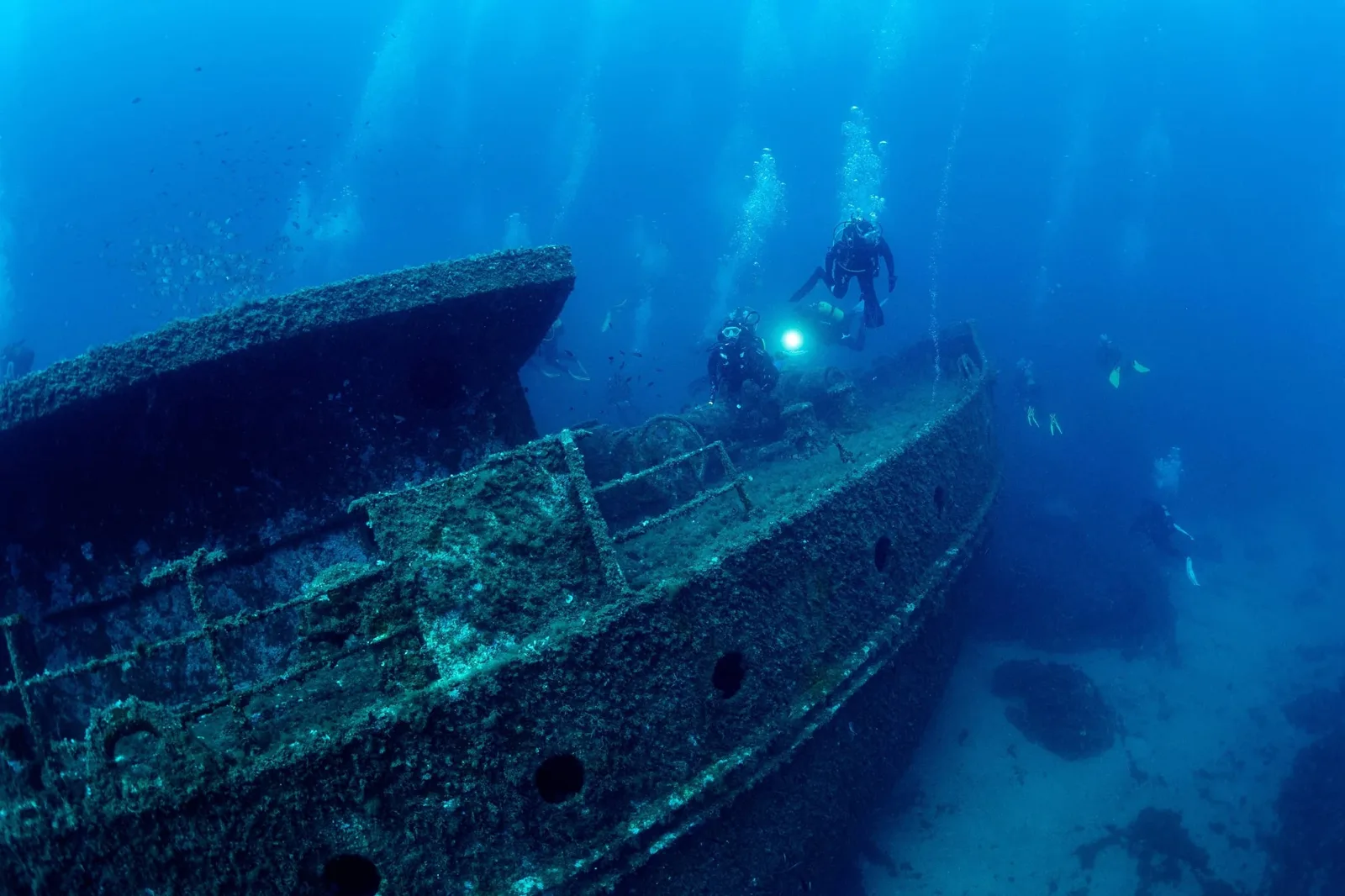
Expect Adriatic rock rather than coral: uneven coastal ground, ledges, drop-offs and shallow rocky areas, with local wrecks providing a change of texture. Some sites are reached from shore, others by short local boat outings, so the dive can feel either pleasantly direct or more like a small expedition along the coast. Currents are variable, and a downcurrent or drift dive is a possibility to discuss locally rather than assume away. Visibility can be affected by swell and coastal run-off, so the same rock face may look very different from one day to the next. Miramare follows its own rules and rhythm. The authorised route runs in a corridor by the castle cliff, reaching about nine metres, with guides and limited groups. It is a shallow interpretive dive, not a deep wreck descent.
Trieste's underwater interest lies in the life attached to Adriatic rock, the protected shallows of Miramare and the contrast between ordinary coastal diving and a no-take reserve. Rock surfaces, marine plants and small coastal animals are the natural focus, with the reserve's long protection giving the guided visit a stronger biodiversity story than a casual swim elsewhere along the gulf. Miramare's guides put the scenery into context, so the dive works as a natural-history outing as much as a conventional underwater tour. Visits run from late spring into autumn. Outside that window, plan wildlife expectations around the individual site and the condition of the water rather than a fixed seasonal species list.
For the Miramare experience, late spring to autumn is the useful window because authorised guided visits operate then. The wider coast is less neatly reduced to a single calendar, so a sensible trip leaves room to adapt the boat programme to swell, coastal run-off and changing visibility. Keep a shore or cultural day available rather than building every day around a departure. That matters particularly in a city-and-coast destination, where a cancelled boat does not have to ruin the day. Book Miramare as a timed, guided activity and treat ordinary coastal diving as the flexible part of the programme.
The coastline suits all levels, provided the chosen site matches the diver's experience and the day's conditions. Shore diving offers a straightforward way to stay close to the coast, while boat sites and variable currents ask for more comfort with navigation and changing conditions. BSAC, PADI and SSI divers should find the relevant training background familiar, but no particular advanced qualification is central to the destination. Miramare is especially approachable for newer divers, although its shallow depth and guided format may feel restrictive to experienced deep or wreck divers.
From London Heathrow, London Gatwick or Manchester, allow for a connection if flying to Trieste's regional airport, as dependable European airline options should be checked before committing to dates. The alternative is a road journey through northern Italy, Slovenia or the Croatian coast, useful for divers carrying substantial equipment but requiring a longer overland plan. There is no structural ferry requirement. Once in the area, do not assume that the city centre serves every departure. Barcola, Grignano, Sistiana and Muggia are separate coastal bases, reached according to the centre and site by vehicle, taxi, organised transport or, for some local arrangements, on foot. Confirm the exact port and meeting point before travelling.
Treat Miramare as a regulated reserve, not as a convenient place to drop in independently. The central zone is fully protected: no fishing, anchoring, unauthorised swimming or diving, and no collecting or touching its rock, plants or animals. Reserve the authorised guided visit and expect a limited-group route beside the castle cliff, to about nine metres. Before booking any other dive, ask whether it leaves from the shore or a boat, and from which coastal sector. Trieste, Barcola, Grignano, Sistiana and Muggia are not interchangeable meeting points. Build the accommodation and transport plan around that answer. Keep spare time for a shore dive or a city day if swell affects the boat schedule. The most common false expectation is that Miramare will provide a deep, independent dive. It is a shallow naturalist visit, while the broader coastline supplies the more conventional exploration.
A stay works best from a land base, with Trieste providing the town, harbour and cultural days, and the surrounding coast supplying the dives. Choose accommodation according to the departure sector rather than assuming that every site lies close to the historic centre. Use non-boat days for shore diving, Miramare's scheduled visit, the castle and park, or the Karst plateau. The arrangement suits a mixed party, since a non-diver has plenty to do while a dive outing is under way.
Hello, I'm Marina, DivingDeal.com's AI assistant. I guide you through destinations, areas and countries.
Thinking about the whole trip and the flights? Talk it over with Edith →
Marina is an AI. Some links are affiliate links: DivingDeal may earn a commission, at no extra cost to you. Bookings are made with the partner.
Late spring through autumn is the useful period for Miramare’s authorised guided visits. For the wider coast, keep your schedule adaptable because swell, coastal run-off and changing visibility can affect conditions. Leave room for a shore dive or cultural day, so a disrupted boat departure does not determine your entire stay.
Trieste suits divers of different experience levels when the site matches your ability and the day’s conditions. Shore dives stay close to the coast, while boat sites and variable currents require more comfort with navigation and changing conditions. Miramare is approachable for newer divers, though experienced deep or wreck divers may find it restrictive.
Expect Adriatic rock rather than coral, including uneven ground, ledges, drop-offs and shallow rocky areas. Marine plants and small coastal animals live around these surfaces, while local wrecks add a different setting. Miramare offers protected shallows and a guided natural-history experience, contrasting with ordinary coastal dives along the gulf.
Use Trieste as a land base, then plan dives around the actual departure sector, such as Barcola, Grignano, Sistiana or Muggia. Confirm whether each outing leaves from shore or boat and check the meeting point. Book Miramare as a timed guided activity, and keep spare time for shore diving, the castle, park or city.